

The Safety Rule You Can't Dismiss When Grilling Hot Dogs
We may receive a commission on purchases made from links.
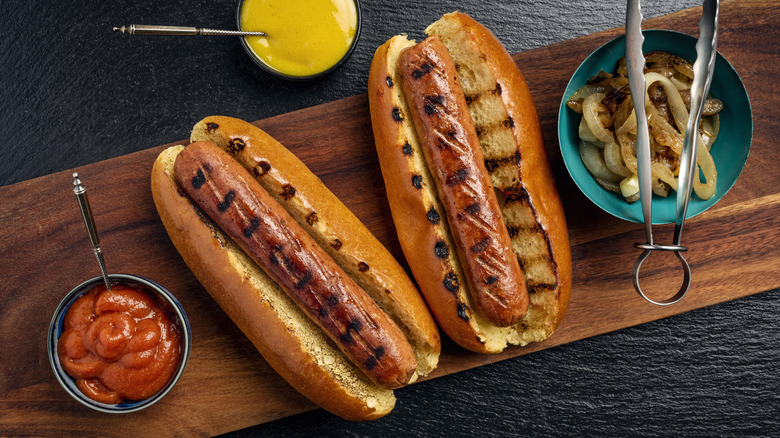
It's well known that hot dogs and grills are the most agreeable companions, but if you're letting a stack of uncooked dogs sit idly by, awaiting their turn to be cooked, you're not going to make the perfect grilled hot dogs. In fact, you might be on the verge of making yourself and others sick.
Yes, hot dogs typically come pre-cooked, but that doesn't make them immune to harmful bacteria. When stored outside of a cold environment like a refrigerator, hot dogs run the risk of entering what's known as the "danger zone." This zone falls between 40 degrees Fahrenheit and 140 degrees Fahrenheit. Anything left out to linger in the danger zone is at risk of extremely rapid bacterial growth. These bacteria can be anything from Staphylococcus aureus to salmonella or E. Coli. All of which can cause brutal symptoms ranging from nausea and diarrhea to more severe problems requiring medical attention. Hot dogs shouldn't be left out in this temperature window for longer than two hours at a time or one hour if the surrounding temperature is 90 degrees Fahrenheit or above.
Ways to avoid the danger zone when grilling hot dogs
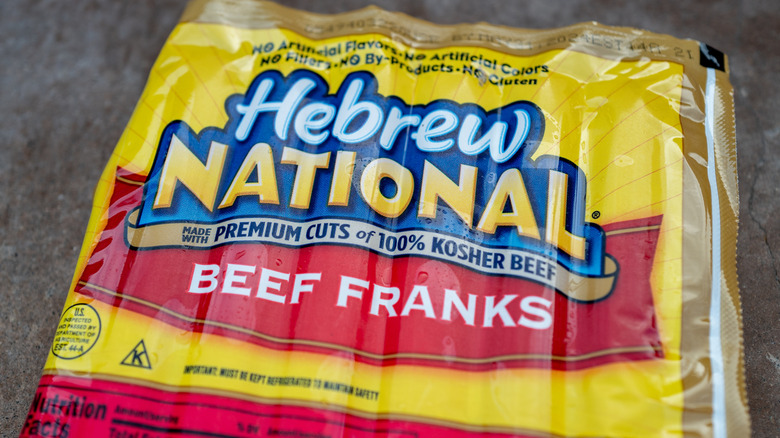
Instead of toeing the line between the best and worst ways to cook a hot dog, stick with the right way by maintaining food safety this barbecue season (and every other one moving forward). You can keep waiting hot dogs safe from the danger zone a couple of different ways. The first way to prevent bacterial growth is to keep the hot dogs in the fridge until you're ready to grill them up. However, this method only works if you have someone available to watch the grill or grab the hot dogs when you're ready to cook them, so the grill is never left unattended.
The second method is to have a cooler next to your grill filled with ice and the amount of hot dogs you plan to cook. How long food stays safe to eat in a cooler depends on several factors, including how much ice is in the cooler and how often the lid is opened. To make sure the cooler stays colder than the danger zone, you can use a thermometer to monitor the temperature. If you don't already have one, this two-pack of refrigerator thermometers will make the temperature less of a gamble. If you plan on keeping other ingredients in the cooler too, make sure the raw food and hot dogs are securely wrapped or separated to prevent juices from leaking. Grilling season is arguably the best season, but preventing foodborne illness should be a top priority.