

The Grilling Safety Step That's Too Easy To Forget After The BBQ Is Over
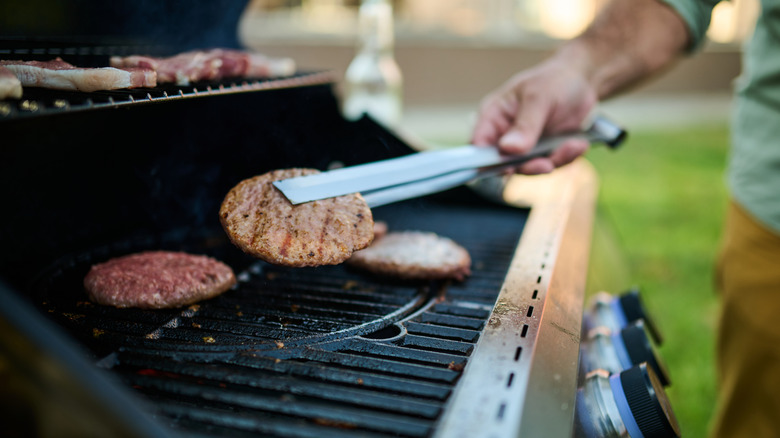
It's easy to get overwhelmed when you're trying to make the most of the summer grilling season. Taking charge of the grill and preparing food while entertaining guests at the same time is no easy feat, after all. With so much going on, it's not uncommon for dangerous grilling mistakes to go unnoticed, such as forgetting to close the tank valve.
While turning the burner knobs off stops the flames, this doesn't completely shut off the fuel supply. Closing the valve after every grilling session helps minimize the risk of a gas leak. It also comes in handy if someone accidentally bumps a grill knob and unknowingly empties the tank. In both cases, there is a risk of the setup catching fire or exploding if the leaked gas comes into contact with a spark, open flame, or other ignition source.
While modern gas grills are designed with safety in mind, certain components, including hoses, regulators, and fittings, are still mechanical, so they may show wear over time. Not closing the valve after use can cause the propane to leak if any of these components are loose, damaged, or have a failing seal. This explains why thousands of home fires are linked to grilling every year. When it comes to blazes caused by gas grills, 6% of structure fires and 13% of outdoor fires are due to leaks or breaks (per National Fire Protection Association).
Follow proper gas tank shutdown practices after a cookout
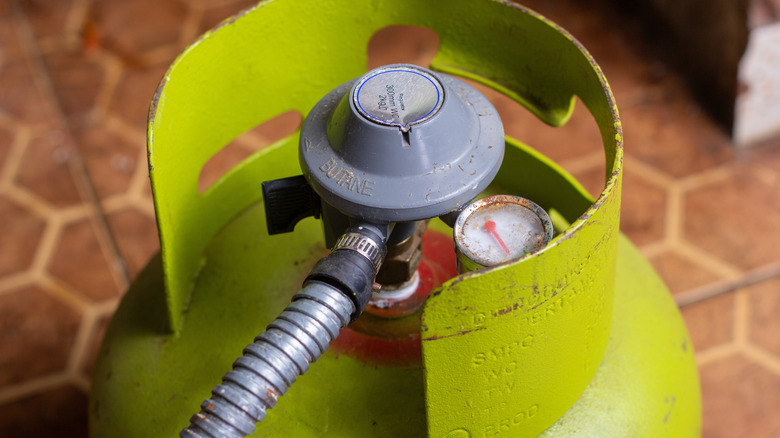
Once the barbecue is over, it is imperative that you follow the proper shutdown procedure to stay safe and prevent any incidents involving your propane gas tank and grill. After switching off the burners, close the gas valve by turning it clockwise until it reaches the point where you can no longer turn it further. After cleaning your grill, allow it to cool completely before moving it or covering it for protection against bad weather — one of the hacks that come in handy for grilling season. The entire process takes only a few minutes but makes a big difference in ensuring safety between cookouts.
Periodically inspect the valve and its connected components. In particular, look for signs of cracks, brittleness, and any damage. If a visual inspection is not enough, do a test for leaks using a mixture of soap and water. Open the valve, and then spray or brush a solution of dish soap and water on the fittings and hose, paying close attention to see if bubbles start to form. Should they appear, this is confirmation that there is a leak. This should be addressed properly, either by tightening the fittings or replacing the part, before the grill is used again.