

Only Buy Tequila If You Can Spot These Words On The Label
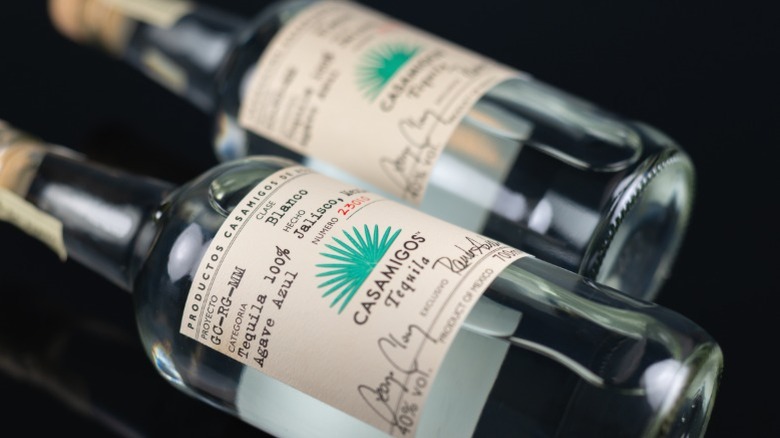
Whether you're buying tequila to make margaritas or just to drink straight, you'll have plenty of options. Because it's an increasingly popular liquor that doesn't always require aging, it has become a top choice for distillers looking to get in on the market, including celebrities starting their own tequila brands. But how do you know what kind of tequila is worth buying and what is best left on the shelf? You can do your own research, but the first rule is to only buy products with "100% agave" printed on the label.
Agave is what tequila is made of — specifically, blue Weber agave. Agave is a flowering succulent plant native to the Caribbean and Mexico, and it can be distilled into the spirit we call tequila. Due to its sweet, mild flavor and relative ease of cultivation, blue Weber agave is the crop of choice for tequila production — and it is the required variety according to tequila's Appellation of Origin Declaration.
That doesn't mean every bottle of tequila is pure agave. Plenty of tequila is so-called "mixto." It contains as little as 51% agave-derived sugars, with the rest consisting of other types of sugar (like cane or corn) that are added before fermentation. These products are often just labeled as "tequila," which is why the "100% agave" specification is key. Needless to say, tequila that's made with only agave-based sugars is purer, cleaner, and better-tasting than mixto tequila.
Other tequila label information to look out for
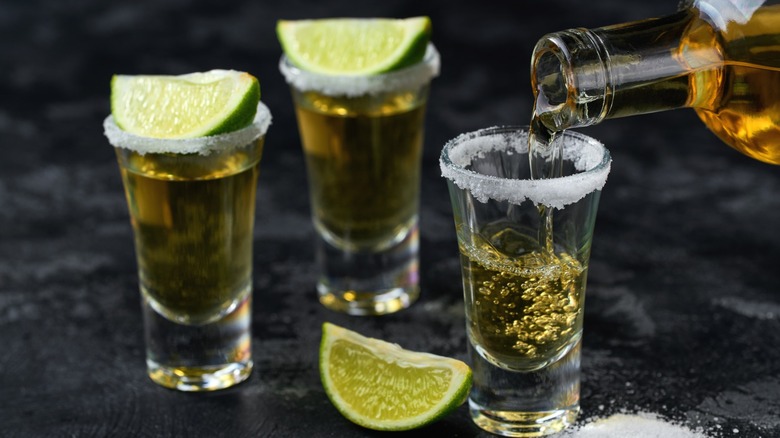
While knowing to look for "100% agave" on a tequila label is useful information, it's not the whole story — and in fact, there might be another level of purity beyond it. You see, enough people know that "100% agave" is preferable that there's a niche for another, even more exclusive set of brands that sell themselves as "additive-free". By law, "100% agave" tequilas are allowed to contain up to 1% of additives by weight. These aren't necessarily harmful or disgusting ingredients — like the stuff that made Prohibition-era booze pretty gross – but tequilas sold without them are even more rarefied.
Then there are agave spirits. While all tequilas are agave spirits, not all agave spirits are tequila. The word "tequila" is protected, and it means the liquor was made in specific areas of just five Mexican states with blue Weber agave. Agave spirits, on the other hand, just have to be spirits made with agave – the methods, sources, and other details are not set in stone. That doesn't mean it's necessarily a low-rent tequila knockoff, mind you — mezcal is an agave spirit — but it's worth knowing the difference when you're looking for legit blanco, reposado, or añejo tequila.