

12 Salad Tips You Seriously Need This Summer
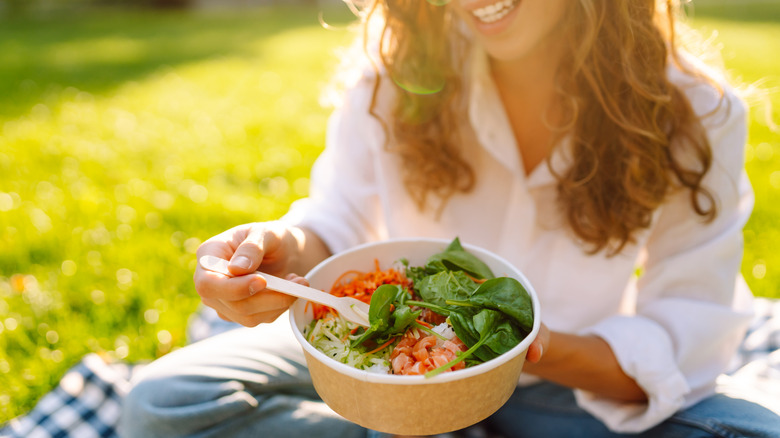
Summer has arrived, and with it the urge to eat lighter and healthier without too much effort. Thanks to the heat, the longer days, and markets brimming with fresh produce, a bowl of something cold, bright, and fresh feels like exactly what you need. But, there is often a gap between the salad you imagined and the pile of veggies sitting in your bowl, and that's where chef Mark Wynsma comes in.
Chef Wynsma is the Head R&D Chef at Sweetgreen and a Johnson & Wales culinary graduate who has spent years developing the kind of bowls that turn salad skeptics into regulars. Here, he gives us twelve ways to rethink everything from your base of salad greens to the protein you add, as well as brings our attention to the parts of a vegetable you have probably been throwing away. If you are ready to put them to use, start with these salad recipes and build from there.
Go beyond the single green
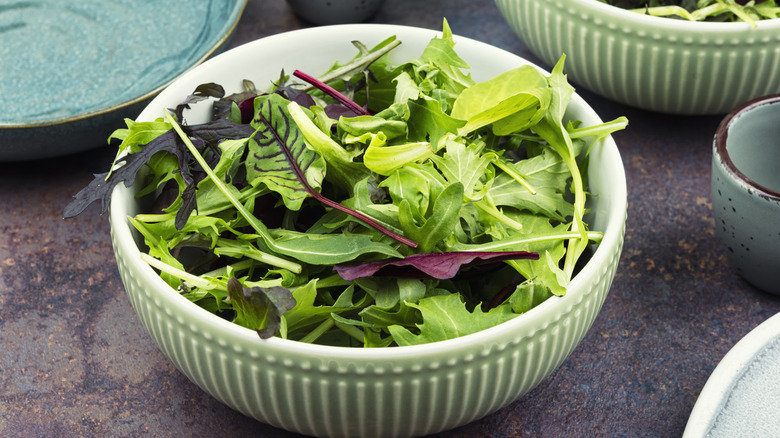
Undoubtedly, you have walked past the salad section at your grocery store and picked up a bag of either baby spinach or arugula for your summer salad. At best, maybe a pre-mix. While these are all reliable and fine, building a memorable salad on the basis of a single green is maybe asking for too much from a humble leaf.
The best move, according to chef Mark Wynsma, is to visit a farmer's market for the freshest and most seasonal produce that pre-washed supermarket bags simply cannot match. Chef Wynsma shares his go-to method: "I usually look for three to five varieties that bring something different to the bowl — something crisp and structured, like little gem lettuce; something a little bitter, like frisée or mustard greens; something sweeter, like butterhead or oakleaf; and then something colorful or unexpected, like Rosa di Verona or red-veined arugula. In the summer especially, I also love using really hydrating greens like romaine or spinach, which are both on Sweetgreen's summer menu."
If you are not sure where to start, aim for variety. But, keep in mind that you also want the tastes and textures to complement each other. A good baseline is one bitter, one sweet, one crisp, and one wild card. Play around with the proportions and the salad bowl you end up with will look and taste interesting from the first bite.
Dress by the five pillars of taste
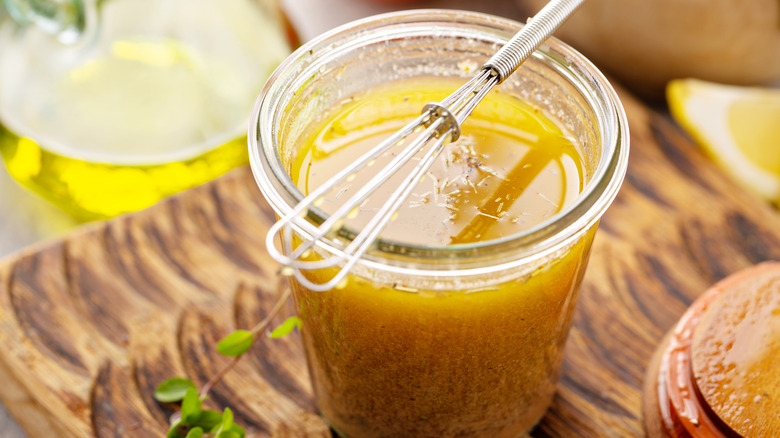
If you have learned to make a salad dressing by following a recipe or sticking to careful ratios and measurements of various ingredients, chef Mark Wynsma wants you to shake things up. The best salad dressings come from experimenting, veering off course, and, along the way, discovering some unusual flavor combinations.
According to chef Mark Wynsma, "It's all about balance! When finishing your dressing, taste it, and think through the five pillars of flavor, sweet, salty, bitter, sour, and umami." This is the kind of advice that sounds easy enough until you actually try it, but most home cooks are wary of adding more than two or three of those taste pillars. Before you reach for your shaker to whisk up the dressing, remember your vinaigrette could get the acid and the salt right but miss the depth that a small hit of umami would bring (enter a small spoon of miso or a few drops of soy sauce).
In the same way, a creamy dressing could benefit from a bitter element, like extra mustard, to keep it from tasting flat. Use these five pillars of taste more like a diagnostic tool rather than a strict checklist. Chef Wynsma urges you to keep at it. As he says, "It takes some time, discipline, and confidence to stray from a recipe, but trust your tastebuds and add more of something if you think it needs it!"
Rethink your acid
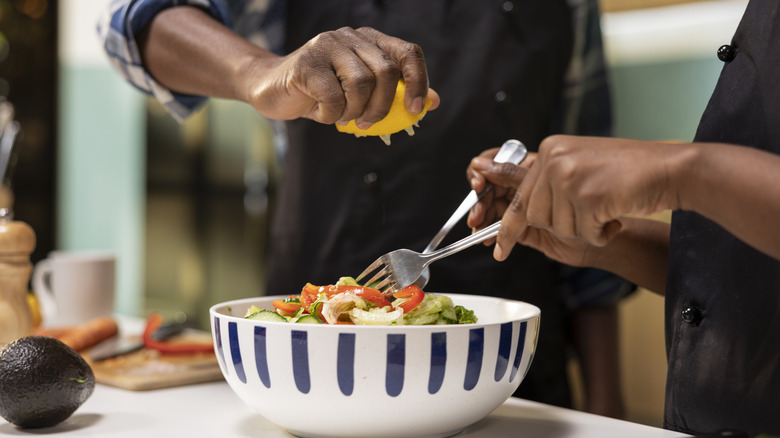
Nothing brightens a salad dressing more than an acidic element. Acid as a flavoring has the power to brighten, lift, and cut through fat in a way that nothing else can. The issue here is that most of us default to the same few variations without ever stopping to ask what else could be doing that job. And, dare we day, do it with with considerably more personality.
Chef Mark Wynsma shares: "When I think about acid alternatives, I might add kimchi, umeboshi (a dried sour Japanese sour plum), Yuzu Kosho, sauerkraut, green tomatoes, or pickles/pickle brine." What these have in common is that they do not just bring acidity, they bring a depth of taste with salinity, heat, and funk in every spoonful. Let's break each addition down. Pickle brine comes already seasoned with a complexity that straight vinegar cannot replicate. Umeboshi, the Japanese sour plum, brings a concentrated tartness plus a novel fruity edge that is particularly good on grain-based salads. Sauerkraut adds a welcome tanginess and holds up well without getting soggy if you are a fan of prepping salads in advance.
Basically chef Wysnma wants you to know that acid does not have to come from a bottle. Anything fermented, pickled, and certain fresh fruits, carry enough of it to do the job well. It's time to think outside the box to take your summer salad to the next level.
Build texture like a chef
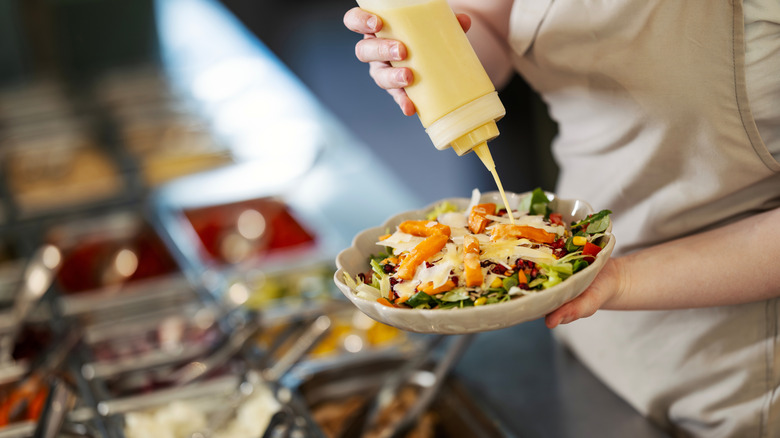
You've done everything by the book. The greens in your salad bowl are fresh. The dressing hits all the right notes. The ingredients are present and accounted for. But, somehow eating it feels monotonous and boring. Nine times out of ten, the problem is texture. Professional chefs think about texture the way they think about flavor: As something that needs to be built deliberately, not left to chance. Chef Mark Wynsma is explicit about this. He says, "Texture is just as important as flavor when it comes to developing any kind of composed dish, especially salads."
He breaks down his framework into three categories. Crunch for him can come from several directions. You can play around with crisp, fresh veggies. Then there's also fried proteins or nuts and seeds, to name just a few.
Creaminess, chef Wynsma points out, is really about mouthfeel and richness. Cheese is the most obvious route, but dairy worked into a dressing or even silken tofu can achieve the same effect. When developing Sweetgreen's Fresh Tomato Vinaigrette for its Summer Panzanella, he drew inspiration from gazpacho and added a spoonful of mayonnaise to a very light dressing. The result was a creaminess that rounded everything out without heaviness.
And, finally, you have chewiness. You can achieve this by adding grains, roasted vegetables, or torn bread into your bowl as a final flourish. Chew is ultimately what makes a salad feel like a meal, rather than a starter.
Stack your proteins
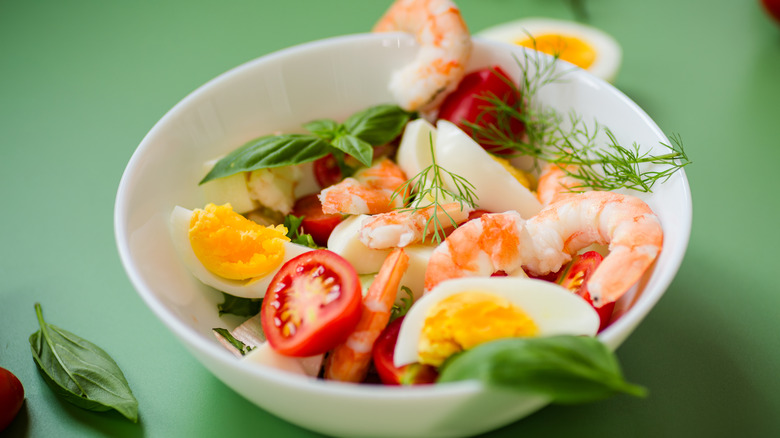
According to chef Mark Wynsma, "A simple salad can become a full meal with almost any protein you love, but the real trick is layering different protein sources." Take a single-protein salad. Perfectly reasonable on its own — think a piece of juicy grilled chicken on a bed of leaves or flaked tuna over tomatoes and boiled eggs. Absolutely nothing wrong with any of these options. However, if you have ever finished one of those salads and found yourself hungry an hour later, or vaguely underwhelmed despite eating something substantial, the issue is probably that you were working with one protein when what was really required were several.
Chef Wynsma likes to "think beyond just one topping and build in a few elements that add both flavor and staying power — things like quinoa, cheese, a hard-boiled egg, and, if you're adding chicken, chicken breast since it's the most protein-dense part of the chicken. That combination helps make the salad feel more substantial, balanced and satisfying."
The broader principle here is to stop thinking of protein as a topping and start thinking of it as a whole spectrum. Quinoa adds a chew to the entire bowl. Cheese brings richness and salt in delicious bursts of flavor. And, eggs add creaminess and weight. All of thes combined with chicken or another meat will keep you satiated for much longer.
Wilt with intention
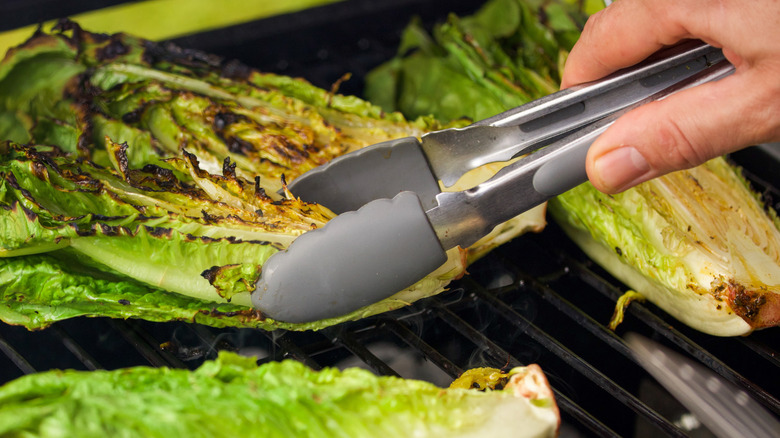
Softness in a salad does not spell failure, and chef Mark Wynsma is here to explain why. Somewhere along the way, we decided that a good salad meant everything raw and everything crisp. While that instinct is not entirely wrong, wilting and softening certain ingredients is often an approach professional kitchens stand by. The question is when to apply these techniques and to what.
Chef Wynsma exhorts, "I love macerating any kind of high-fiber greens or shaved raw cabbage or Brussels sprouts to help with digestion. Pickling certain vegetables such as carrots or beets can also denature the firm texture."
The first approach of maceration involves tossing the specific ingredients in a little salt, acid, or sugar, and letting them sit a while to draw out moisture. This softens the cell structure, and makes them significantly easier to digest without cooking them at all. What results is a texture that sits between raw and cooked, with a concentrated flavor the untreated version simply does not have.
The second technique chef Wynsma loves is pickling, which he uses on firm vegetables, like carrots and beets. For a quick pickle, a simple ratio of equal parts vinegar and water with a pinch of sugar and salt, poured hot over thinly sliced vegetables, is enough to transform them within thirty minutes. The goal is not to cook your salad ingredients, but rather to add layers of texture and flavor to the ingredients in the bowl.
Waste nothing
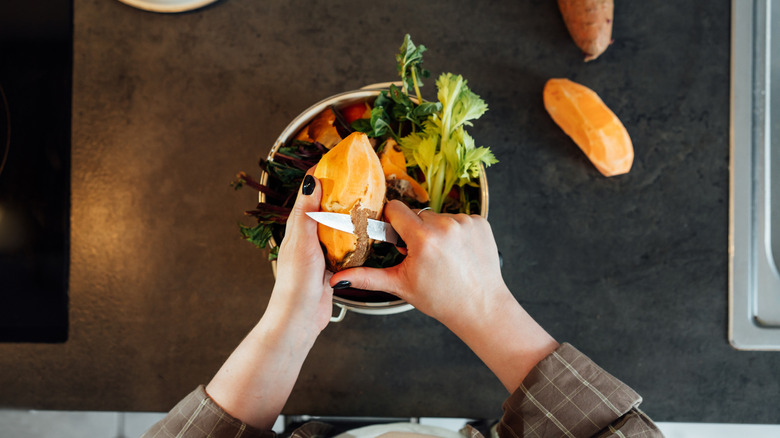
Chef Mark Wynsma espouses a philosophy of "no waste". For him, it's important to use as much of an ingredient as possible. For example, "Broccoli stems are just as delicious as the flowerettes and add a nice crunchy texture — they just need to be cut into smaller pieces."
He takes things further and even pickles watermelon rinds for an unexpected sweet and sour note to summer salads. He adds beet greens to his green leaf base for his salad bowls. These are mild enough to add color and variety to any salad blend. He also states, that kale stems and carrot peels, sautéed briefly in a little oil, become something worth adding rather than something to discard.
Ultimately, the effects of these small habits is cumulative. Before anything goes in the bin, ask whether it could be shaved, pickled, sautéed, or simply sliced thinner. All it takes is looking at the whole ingredient, rather than only the parts you have always used. Nothing more is required in terms of extra shopping or money.
Find your flavor bridge

Ever wonder why your salad feels disconnected. You have the correct greens along with interesting toppings and a decent dressing, but when you eat it, the components feel like they are sitting next to each other rather than working together. What you need is what chefs refer to as the flavor bridge. For chef Mark Wynsma, "a sauce or dip can make a plate cohesive. If you take Sweetgreen's Hot Honey Chicken Plate for example, each component complements one another, (golden quinoa, blackened chicken, napa slaw, roasted sweet potatoes, and crispy onions) but the Hot Honey Mustard is the ingredient that elevates each component on the plate and makes it a cohesive idea." This is the one ingredient that brings the entire meal together by connecting everything else on the plate.
We want to point out here that a salad flavor bridge is not always about the dressing. In fact, it can be an herb that appears both in the greens as well as the dressing, thus tying the two together. It can appear in the form of a fat, like extra virgin olive oil or spoonful of tahini, that carries flavor across each bite. The point being that this element recurs and creates a taste that is designed rather than just assembled, or worse yet, thrown together.
Dress at the right moment

This is one rule that is as straightforward as it gets. Dress your salad as close to serving as possible. Chef Mark Wynsma is unambiguous on this: When he is taking a salad to a gathering, the dressing travels separately and goes on at the last moment. The goal is simple, to avoid what he calls "a sad, wilty salad." But, like most rules worth knowing, this one comes with exceptions, and the exceptions are just as useful as the rule itself. Chef Wynsma points to coleslaw, potato salad, and macerated berries or stone fruit as dishes that actually benefit from sitting in their dressing. These are ingredients with enough density and structure that they taste better over time, rather than disintegrating.
The practical takeaway for home cooks is to think about what you are dressing before you dress it. Delicate greens need the dressing at the last possible moment. Grains, legumes, roasted vegetables, and anything sturdy can be dressed earlier and will benefit from the wait. If you are building a salad with multiple components, consider dressing each element separately, each on its own timeline, rather than tossing everything together at once.
Prep like a pro
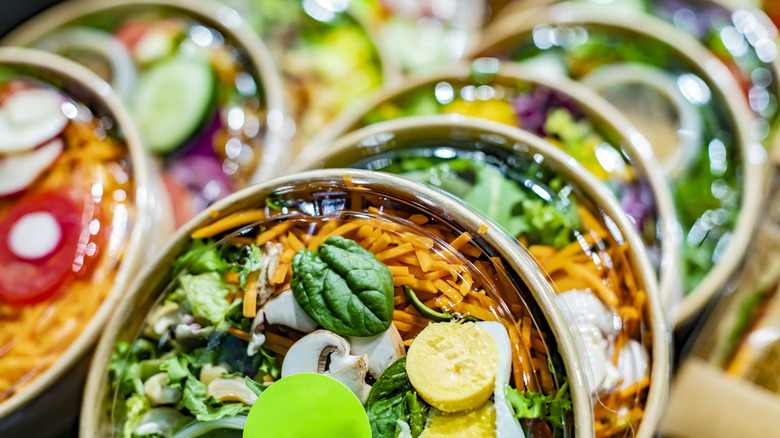
Thanks to countless TikTok and Instagram videos, we know the drill, and spend a large part of our weekends ensuring that our meals are planned, shopped, and prepped for. However, there is still a gap between how home cooks prepare their greens and how professional kitchens do it. And, this comes down to paying attention to the little details. For chef Mark Wynsma, the first habit all professional kitchens follow is seasoning the greens directly. "I will typically always season my greens which is a habit I picked up working in fine-dining restaurants." Greens that have been lightly seasoned before the dressing goes on absorb flavor differently. They become part of the dish rather than a vehicle for everything else on top of them
The second habit that any salad aficionado will swear by is to dry your greens properly before building the bowl. Wet greens are one of the most common and most fixable problems when making a salad at home. Water sitting on the surface of any leaf dilutes the dressing and may even prevent the dressing from adhering to the leaf at all. A simple solution for this is to invest in a salad spinner. Once the leaves have been dried with the spinner, take it one step further and spread them on a clean kitchen towel for a few minutes to ensure optimum readiness. At the end of the day, these two simple techniques will make every other element in the bowl perform better.
Salad is the whole meal
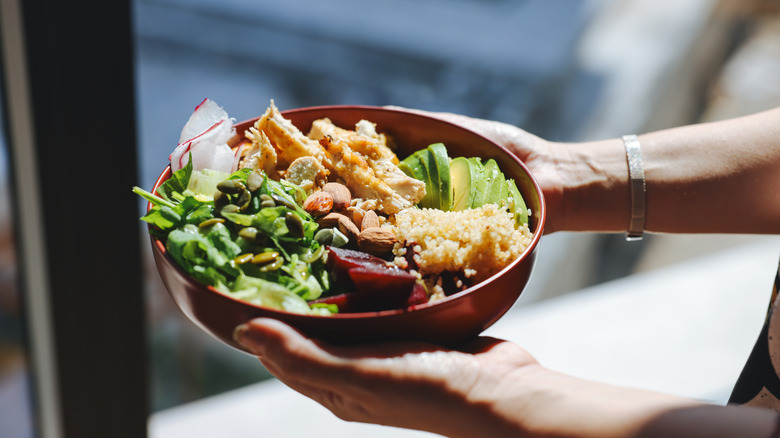
When we asked chef Mark Wynsma, "what piece of conventional salad wisdom is completely wrong?," this is what he had to say: "The first is that salad is a starter or a side, or that a salad will not fill you up. As discussed, a salad can be an entire meal if you think outside the construct of a "salad"."
With regard to satiety, the solution lies in how the bowl is built. When you assemble your salad with layered proteins, a grain base, healthy fats, and enough textural variety to keep you engaged, it becomes a complete meal. And, one that has the benefit of having greens in it.
If you still think that salads equal boredom, chef Wynsma makes an equally strong case for shaking things up with unexpected additions. "Maybe instead of salt, you use miso paste to season your protein or salad dressing," he says or "maybe you add your favorite salty nut mix as a fun topping. Salads can be really fun and exciting if you think outside the box a little!" Stop thinking about building a salad and start building a meal that includes salad components. You could even go one step further and turn your salad into a sandwich, but that's an entirely different topic altogether.
Shop seasonally and swap smartly
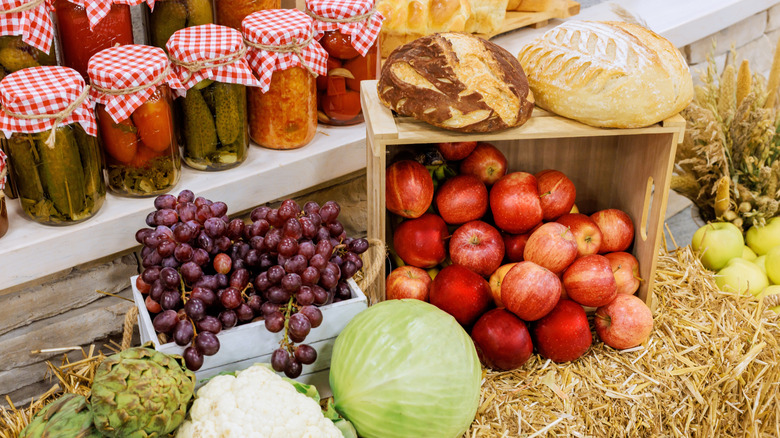
When it comes to salads, the best ingredients are always the ones that are in season at the moment. Ingredients simply taste best when they are at their peak. A tomato in August needs not much more to taste fabulous. The same cannot be said about the same tomato in February, sadly. Chef Mark Wynsma approaches this angle in a practical matter. When something is not available, his first option is to find an alternative that occupies the similar flavor and texture profile. He elaborates: "First, I would try to find a fresh substitute, for example, using sweet potatoes in place of Delicata squash, or scallions in place of ramps. I would also consider using frozen, which is picked and frozen during peak season for things like peas, green beans, corn, berries, and peaches."
The skill that he refers to here is to learn to shop with flexibility rather than a fixed list. Don't walk into a market with a specific list of ingredients. Instead approach building your perfect summer salad bowl with a framework. Pick out something crisp, add a element of sweetness, and then something with acid. Round off the bowl with an ingredient with heft and packed with nutrition, like a protein of your choice. All this will produce better results and ultimately cost less as well.