

The Reason Grocery Store Strawberries Aren't As Flavorful As We Remember
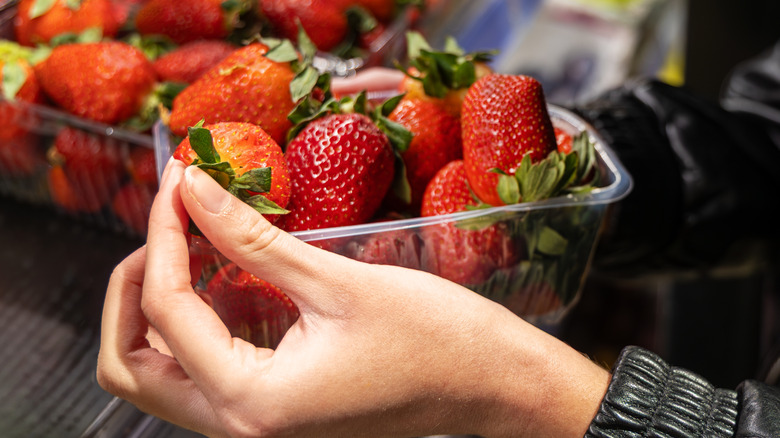
Chances are, unless you have access to freshly picked strawberries from a local farm or garden, you've never experienced what a strawberry truly tastes like. Before the mid-20th century, many households relied on neighboring farms for produce rather than national grocery chains. You could count on fresh-picked strawberries to taste sweet while also keeping mind that their freshness would only last a short time after harvest.
After World War II, the American food system started to dramatically change, and strawberries changed with it. National grocery store chains began expanding, interstate highways connected markets across the country, and refrigerated trucking made it possible to transport perishable items long distances. Regions with favorable growing conditions for strawberries, like California, became major strawberry-producing hubs, but to supply the entire nation the delicate berries needed to withstand the journey. Enter: strawberry breeding.
Growers began selecting strawberry varieties with traits that would promote the fruit's longevity while still looking fresh. These traits included firmness, high yields, uniform size, and a bright red color. When seedlings with this combination of traits were produced, they were propagated and the process was repeated over many generations to reinforce those characteristics.
As a result of selectively breeding strawberries to reduce loss and increase widespread availability, flavor took a back seat. The only fighting chance at saving some of the sweetness strawberries still produce is to pick them at peak ripeness. Unfortunately, strawberries destined for supermarkets are typically harvested before reaching peak ripeness, which doesn't inhibit their vibrant red hue from developing, but it does limit flavor.
How to find flavorful strawberries today
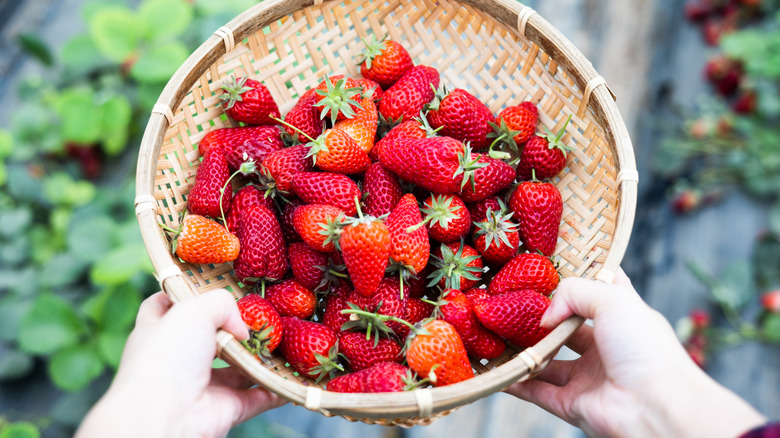
The truth is, the most flavorful strawberries are still freshly picked and eaten shortly after. If you're in an area with warm weather, strawberries are fairly easy to grow and maintain. Alternatively, if you're not able to grow them yourself, purchasing strawberries from a local farm or farmer's market is also a great option and often provides a chance to experience varieties not sold in stores.
To identify flavorful strawberries, no matter where you're sourcing them from, size isn't the best indicator of flavor. Bigger strawberries aren't necessarily better, while smaller strawberries don't always mean they're sweeter. Instead, you'll want to look for ones that aren't dull red in color, heavily blemished, dark and wrinkly, or missing their leafy top. If you can find strawberries whose red color spans all the way from the leafy vine to the bottom, those are likely going to be sweet and flavorful.
Once you've got a winning batch, you can stretch the lifespan of strawberries with a simple wash. Once the berries are dry, store them in a ventilated container — not the common storage container that will totally ruin your strawberries — and put them in your fridge's crisper drawer.
If all else fails, frozen strawberries may be the solution. Frozen strawberries at the grocery store are picked at peak ripeness before being flash-frozen, which means they can sometimes be more flavorful than their fresh counterparts.