

15 Restaurants Responsible For Creating Iconic Dishes
We often look at cuisine as a kind of entity that forms itself, an amalgamation of countless cooking hours at the hands of many faceless people driven by influences both inside and outside their own culture. From that, specific dishes are formed which are representative of a time, a place, a heritage, a guiding culinary philosophy, and so on. But then sometimes a dish is thrown together on a whim at a busy restaurant and then it just lives forever.
A number of the most well-known dishes are so embedded in our eating landscape, even cross-culturally, that we don't know their origin stories or even think in those terms. Yet, many iconic eats had to literally be invented, because of course they did.
It's hard to imagine a world without these 15 dishes, and we have these restaurants to thank for birthing them into existence. Some are wholly original, some are spun off, some are hotly debated, and at least one or two were driven by improvised desperation. See where some of your favorite menu items were first constructed.
California roll — Tojo's Restaurant
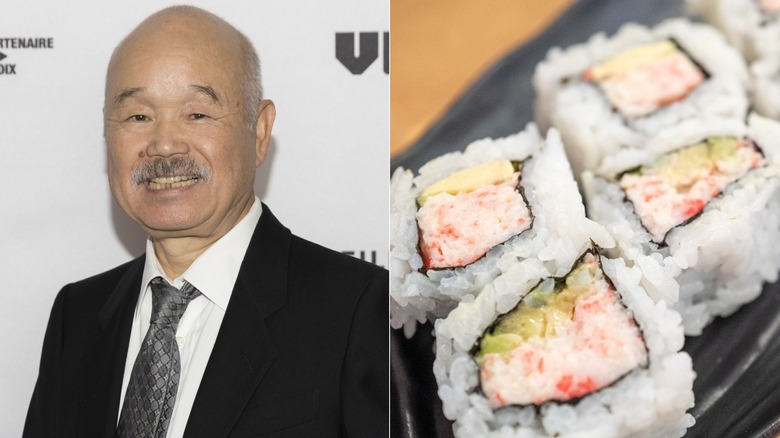
The California roll may not be the most authentic dish in the world (it's not even from California), but to be fair, true authenticity is less prevalent than we sometimes think. And if you really have a problem with it, you can still pay a visit to the chef who created the California roll and let him know. His name is Hidekazu Tojo, and his restaurant in Vancouver's Japantown is the birthplace.
An immigrant from Osaka, Tojo came to Vancouver in 1971 with a classic sushi education under his belt. He especially had training in the ways of omakase, an approach to sushi that eschewed a fixed menu and prioritized the desires of customers over orthodoxy. This is essentially how his Togo Maki — as the roll is called there — came about.
Customers complained about the seaweed and the raw fish, so he hid the sushi (nori) on the inside of the rice, replaced the fish with avocado and boiled crab, and added some mayo — a condiment an impoverished Tojo ate all the time back in Japan. And thus, the California roll, as it came to be known, was born. It should be said that there are rival claims to the roll's creation: namely Chef Ichiro Mashita of Tokyo Kaikan and Ken Suesa of Kin Jo Sushi (both of Los Angeles). But Tojo's seems to be the consensus original.
Buffalo wings — Anchor Bar
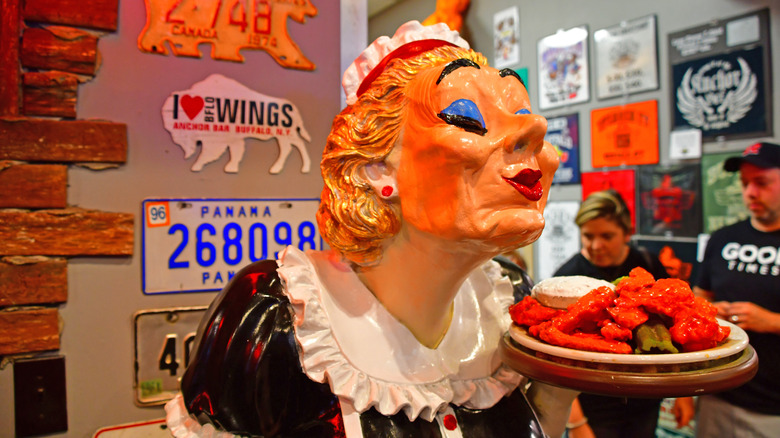
If Buffalo gave us nothing else other than Buffalo wings, we would still be indebted to The City of Good Neighbors. But it was also the place where pacemakers, windshield wipers, and daycare centers were first introduced, among other things. Truly, Buffalo is a cradle of innovation. But let's forget all that other stuff and get back to what's important: the wings.
Both legend and history have it that the Anchor Bar, in 1964, was where owner Teresa Bellissimo had a moment of divine inspiration. She was overstocked with very perishable chicken wings, trying to figure out what to do about it, when it hit her: Let's deep-fry them, douse them in a hot sauce (specifically, cayenne pepper and melted butter with a hot sauce) and accompany them with blue cheese for dipping.
At first just a regional hit, Buffalo chicken wings began to appear down the Eastern seaboard, then to America, and then the world, creating gleefully messy fingers and mouths everywhere. And they're a very democratic eat, allowing anyone to cook pub-style Buffalo wings at home (if done right). Thank you, Ms. Bellissimo.
Chicken Parmigiana — Bamonte's
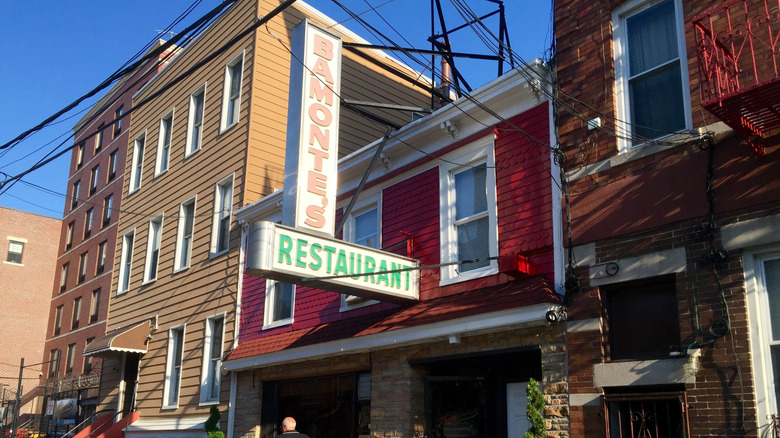
It's an old Brooklyn red sauce joint that seems straight out of the movies. And it is (well, "The Sopranos"). Bamonte's is an Italian restaurant that harks back to a time in Williamsburg long before hipsters, pet spas, and boutique thrift stores. Opened in 1900 by immigrants from Salerno, it was originally called Liberty Hall and was more of an event space than a ristorante. And although it would see lots of meetings over the years (many of which were underworld-related) it eventually became known as a go-to Italian eatery that claims to have, among other things, invented chicken parm.
It was reportedly the founder and family patriarch, Pasquale Bamonte, who first concocted a dish nearly any American would recognize. The tale goes that, in 1945, Pasquale had run out of eggplant for his parmigiana di melanzane (aka eggplant parm, the original parm) when in walked a bunch of hungry high school baseball players. He got the okay from them to use chicken instead of eggplant, and a star was born. You can still go to Bamonte's today, pass by the old cigarette machine on the way to your table, and order the OG chicken parm.
Lobster roll — Perry's
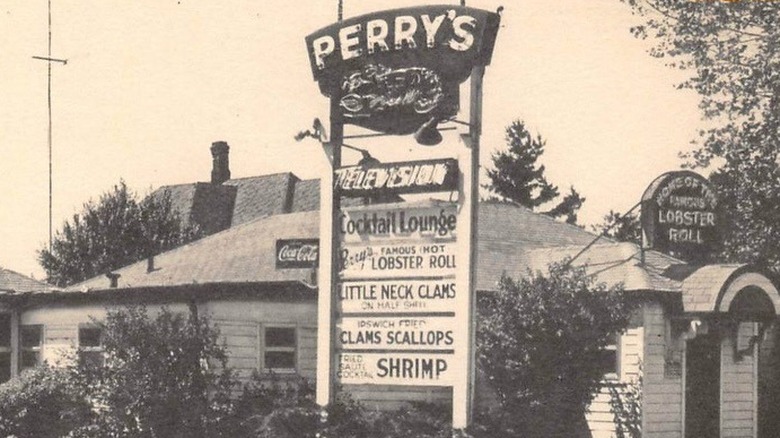
Where does the lobster roll actually come from? Who wouldn't want to know, at least after a sumptuous bite of one. It's a dish that's quintessentially New England, making it no surprise one of those states in the Northeast corner of the country is responsible for its provenance. That state is Connecticut, the town is Milford, and the restaurant is Perry's. According to legend, in the 1920s owner Harry Perry obliged a travelling salesman's request for a lobster sandwich to go (dude was travelling, after all).
Other customers clamored for this buttery concoction (the Connecticut style of lobster roll is still steadfastly butter-forward and mayonnaise-free), and eventually Perry subbed out the sliced white bread for, well, a sub, in order to hold in all the meat. Once the humble seaside meal went extra-regional starting in the 1970s, the popularity and prestige across the country soared (and so did the prices). And, although, it was very likely that lobster meat sandwiches had already existed in fishermen's lunchboxes, very few dispute the Perry's origin story regarding the lobster roll as a commercial entity.
Caesar salad — Caesar's
Like America itself, the Caesar Salad was said to have been born on July 4. Unlike America, however, the Caesar Salad is Mexican. Picture this: It's 1924. You're Caesar Cardini, Italian immigrant and owner of the restaurant Caesar's Place in Tijuana. It's Prohibition in the U.S., meaning tons of West Coasters are dashing over the border, to your city, to your eatery, to escape the ban on alcohol and have a good, perfectly legal time. And they're not just thirsty, they're hungry.
What do you have on hand to assuage this sudden influx of flappers, cake-eaters, and hotsy-totsies? Well, Romaine lettuce. Okay, it's a start. There's also Worcestershire sauce, eggs, lemons, Parmesan cheese, and garlic oil. There goes your dressing. Toss it all together among your hungry diners, serve it out, and change the history of salad forever.
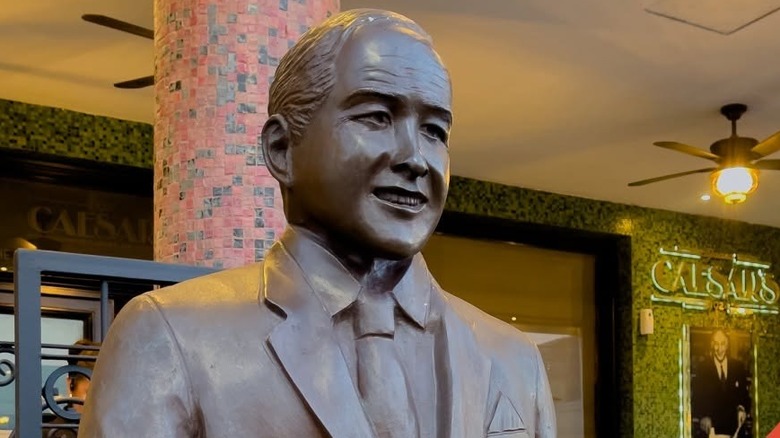
Over a third of American restaurants offer a Caesar salad, and over 40 million bottles of Caesar salad dressing are bought by American shoppers each year according to 2024 data by Technomic and Nielsen IQ (per AP News) — not to mention the multitudes who've discovered the secret to making restaurant-grade Caesar salad at home. No wonder Cardini has a statue in Tijuana, unveiled in 2024 to commemorate the 100th anniversary of his forever appetizer.
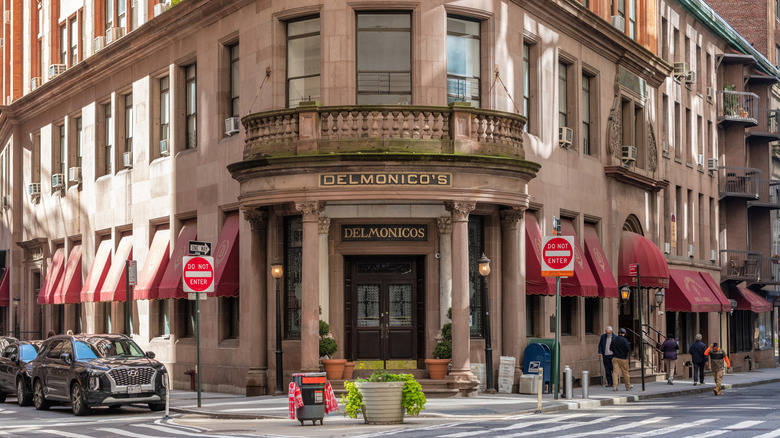
Eggs Benedict — Delmonico's
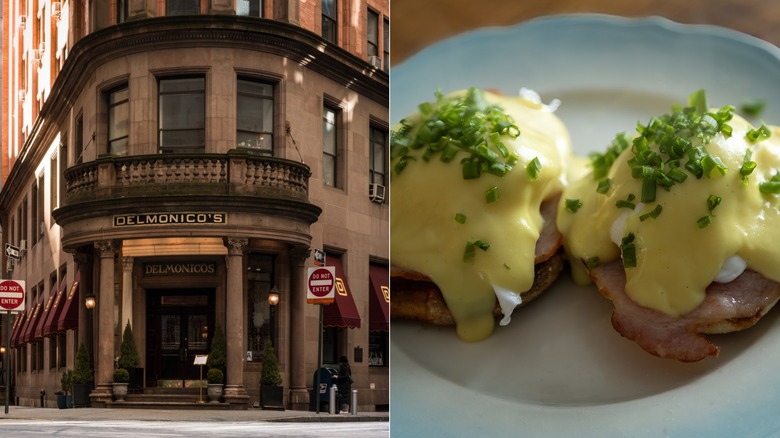
The story of Delmonico's is really the story of American fine dining. The Financial District institution – existing today in its original building on Beaver Street and William Street in Manhattan — served its first a la carte meal in 1837. Founded by the Delmonico brothers, Giovanni and Peter, first as a humble cafe, it's impossible to overstate Delmonico's Promethean importance on the restaurant scene in America. It was one of the first such places to have menus, tablecloths, a hot lunch, a wine list; to host receptions, to allow women to eat without a man in their company. It was even where Samuel Morse sent the first transatlantic cablegram.
Along with inventing dishes liked the baked Alaska and lobster Newburg, Delmonico's is credited with creating the first eggs Benedict, named after regulars Mr. and Mrs. LeGrand Benedict (can you even be poor with a name like that?). Apparently the couple were jaded by the menu, having eaten there all the time, and so the kitchen combined poached eggs, ham, bread, and a dressing of hollandaise sauce. With that, it feels like the restaurant not only invented a menu item, but brunch itself.
Hamburger — Louis' Lunch
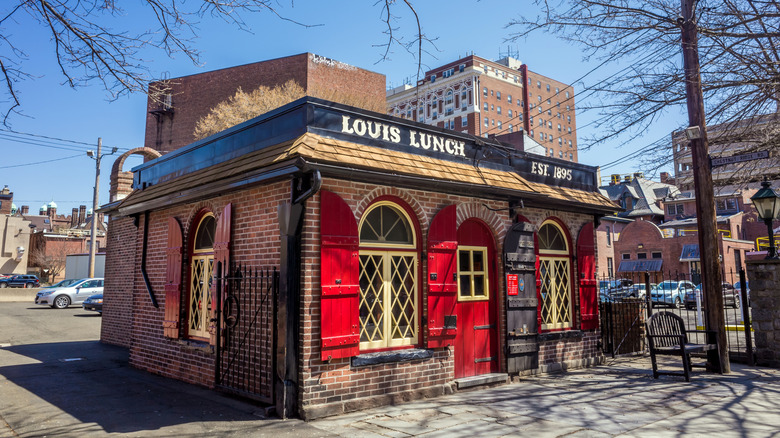
It can be difficult to find any invention story that doesn't have a bit of skepticism and pushback — both fair and unfair. This goes doubly so in the world of food, where trendsetters and innovators are lionized. On the website of Louis' Lunch – the thumb-sized food shack opened in 1895 by Danish immigrant Louis Lassen — it's there for all to read: "According to the Library of Congress, 'Louis' Lunch in New Haven, Connecticut, is recognized as the birthplace of the hamburger sandwich.'"
Well, if Congress said so. What have they ever gotten wrong? Millions already know the story: One of Lassen's customers was in a rush (funny how many great meals are invented for, and by, people in a rush), so the owner-operator took ground beef and smashed it between two slices of toast. But other challengers to the title have come forth, namely one Fletcher Davis of Athens, Texas, with a Texas State Representative even drafting a bill to get him recognized as the creator of the hamburger. As for Louis' Lunch, the Lassen family still owns it and makes the burgers like patriarch Louis did over a century ago: ground beef, tomato, and onion on white toast — no ketchup, no mustard (although cheese has been added as an option).
Cobb salad — The Brown Derby
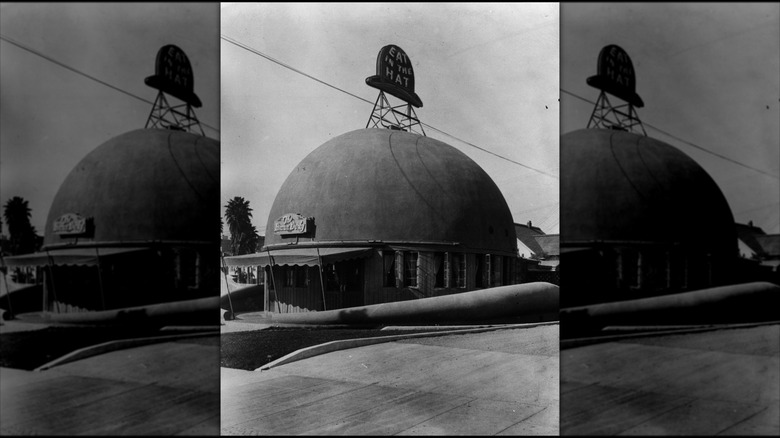
In the "Curb Your Enthusiasm" episode "Trick or Treat" from Season 2, Larry challenges one Cliff Cobb, who claims his grandfather invented the Cobb salad in Chicago. Unable to let this boast go unchecked, Larry does some research to find the real origin story of the famous salad, disproving Cliff Cobb.
As Larry gleefully outlines, the Cobb salad was, in fact, invented by a totally different man named Bob Cobb, owner of famed Hollywood restaurant The Brown Derby. This is, by all accounts, true in real life, and yet another example of an immortal meal being first thrown together in a hurry. This time in the late 1930s for showbiz legend Sid Grauman, the man who built the tourist-swarmed Chinese Theater.
Bob Cobb grabbed lettuce, tomatoes, chives, cheese, bacon, and hard-boiled eggs, chopped and tossed it all together, dressing it simply and sparsely. Grauman came back the next day for it, word spread, and that impromptu "Cobb salad" soared into eternity — far outlasting the Brown Derby itself, which closed in the '80s.
Disco fries — Tick Tock Diner
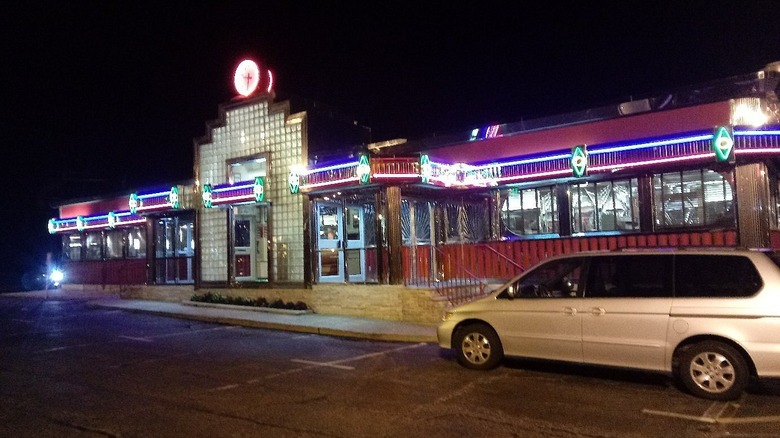
Like Bruce Springsteen, disco fries have risen up from humble New Jersey roots to become a rock n' roll icon, er, late-night diner favorite. And like The Boss, it's hard not love: big crisp french fries, hot brown gravy, shredded mozzarella. What's with the name, though? The dish doesn't exactly scream Studio 54. What it does scream, however, is the perfect after-hours nosh for drunk people leaving the disco.
This sloshed post-dance club scene was all the rage in '70s Jersey. Tick Tock Diner, in the town of Clifton, took the initiative and concocted the poutine-like dish, replacing cheese curds with mozzarella, ensconcing its place in food invention lore.
Given the very existence of poutine, along with the simplicity of the ingredients, it's doubtful the kitchen staff at Tick Tock Diner were the first to combine fried potatoes, a thick brown sauce, and cheese. But when you name it, and the name sticks, and everybody pretty much makes it the same way you made it, it's fair to award you the creator crown.
Reuben sandwich — Reuben's Delicatessen or Blackstone Hotel
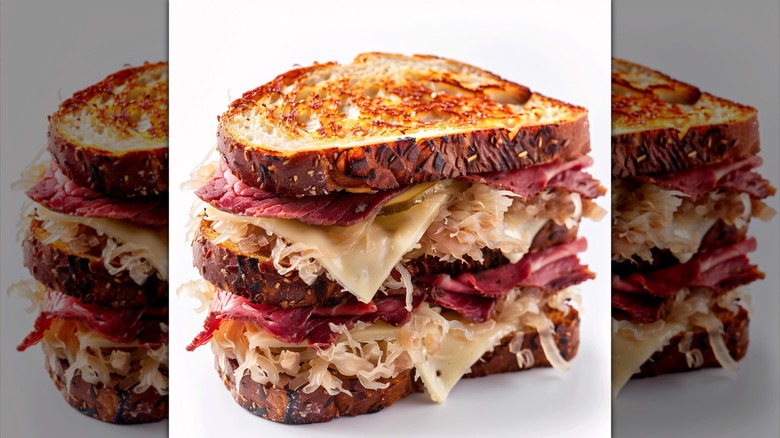
Story number one: Arnold Reuben, who owned well-known Reuben's Delicatessen in New York City, invented the namesake sandwich in 1914, calling it Reuben's Special. Or, it was invented there in the late 1920s or 1930s for Reuben's son, Arnold Reuben, Jr. (we'll call this latter story 1-A.) Problem here is that the first iterations of the sandwich supposedly involved any kind of meat, not just corned beef (strike one), and used cole slaw instead of sauerkraut (strike two).
Story number two: The sandwich was invented in the 1920s, when Swiss-trained chef Bernard Schimmel accommodated a card-playing patron's request for a late-night corned beef and sauerkraut sandwich, mixing in Thousand Island dressing under his own volition. That patron's name was Reuben Kulakofsky, and thus the sandwich was named. What backs this version up is a contest entry by one of the Blackstone employees, in which the sandwich came in first place. That evidence might very well be the clincher.
General Tso's chicken — Shun Lee Palace
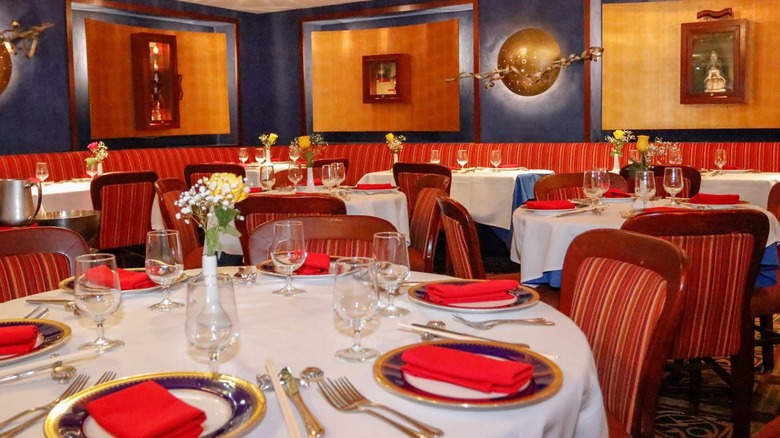
This dish is a kind of a symbol for the non-Chinese-ness of American Chinese food. Yes, it's named after a real Qing dynasty military leader named General Tso (well, actually Zuo Zongtang). But that's where the straightforwardness ends.
The original original chicken dish in question is credited to Hunanese chef Peng Chang-kuei, who fled Mao's China for Taiwan and opened a restaurant in Taipei. But even Peng himself disassociated his creation from what Americans know as General Tso's chicken.
This version, the U.S. version, is credited to one Tsung Ting Wang, owner-chef of Shun Lee Palace in New York City. In the 1970s, he apparently nicked Peng's original recipe after visiting Taiwan, making the chicken crispier and the sauce sweeter, thus adapting it to American palates. The bitter irony is that Peng would eventually open his own restaurant in NYC shortly after, where he, begrudgingly, had to alter his original General Tso's to the sugary one people became used to.
Hawaiian pizza — Satellite Restaurant
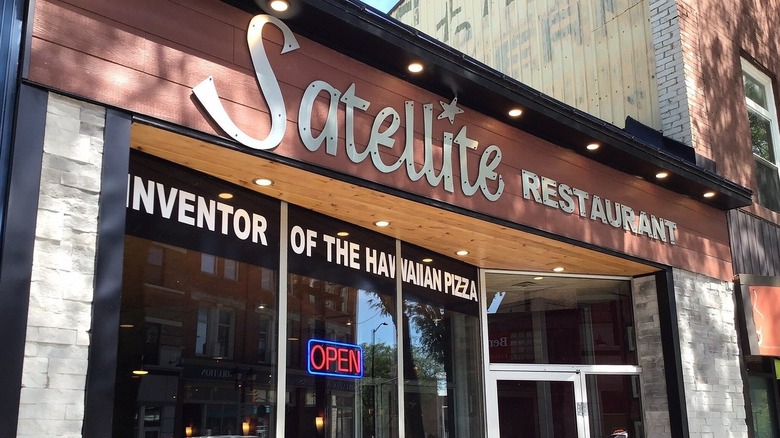
Whether this dish is an icon or not is an extremely subjective thing. For some pizza purists, it's an abomination, full stop. For others, it's a delicious, creative combination of sweet and savory. What it definitely is not, however, is from Hawaii. In fact, it's from a place that's almost the opposite of Hawaii: Canada.
Hawaiian pizza was invented in 1962, so it's not exactly a new kid on the block. At the time, pizza was still only in the American public's mainstream consciousness a couple decades when Sam Panopoulos of Satellite Restaurant in Chatham, Ontario decided to — for reasons known only to him — dump canned pineapple on a pizza, balance it out with salty ham, and slap it with the Hawaiian moniker.
From day one, the pie had its critics. But it's since become a staple specialty pizza all around the world — so much so that even a Neapolitan pizzaiola is putting pineapples on his pizzas, which is both a full circle moment and a damn-near apocalyptic omen.
Hot dog — Feltman's of Coney Island
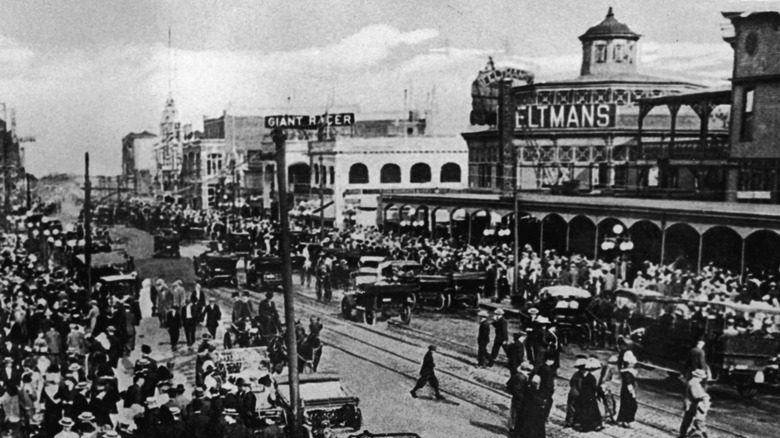
Can something like the hot dog really be considered "invented?" Like the hamburger, it can just feel like a chance derivative, a zigging off an already made path instead of a zagging. And it was indeed a German transplant who would take an Old World food item and remix it into something that has become one of the definitive American foods.
Reinforcing Coney Island, Brooklyn as the true home of the hot dog, Charles Feltman predated his former employee Nathan Handwerker (of Nathan's Famous) by creating the modern hot dog in 1867. He wanted to give beachgoers the ability to eat frankfurters by placing them on a long bun and making it handheld. Eventually, Feltman would be outsold and overshadowed by Handwerker forever more (the cruelty of history).
But Feltman's name will always be in the annals, and his authorship is unquestioned –- unlike the myth that every hot dog you eat shaves off 10 minutes of your life. Let's hope for Joey Chestnut's sake this isn't true.
French dip — Philippe The Original
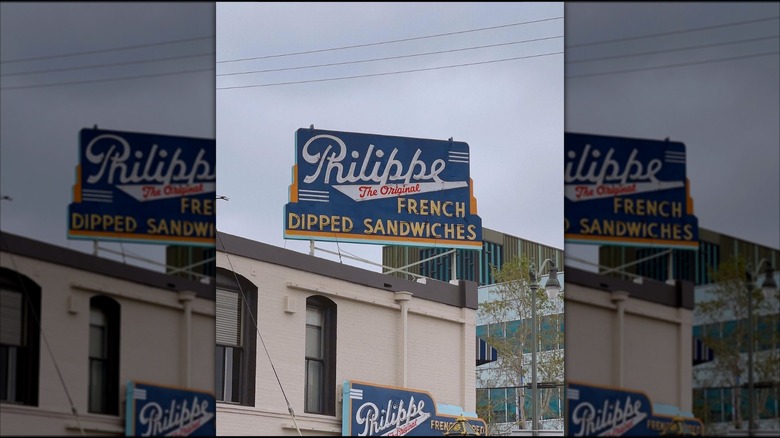
As French as french fries, French's mustard, and former "Third Rock From The Sun" actor French Stewart, the French dip is a million-percent American invention. The claim on its creation is fought between two Los Angeles eateries: Phillippe the Original and Cole's.
Phillippe Mathieu, founder of the former, accidentally dropped a French roll into a pan full of meat juice, which was then eaten by a game customer anyway — sparking the idea of a formal sandwich. This allegedly happened in 1918. Cole's, on the other hand, insists that the sandwich was invented there as far back as 1908 for a customer with sensitive gums, dipping their bread to soften it up.
Certainty is elusive here, but by most accounts, it seems that the evidence for Phillippe Mathieu as the true inventor outweighs Cole's. However, it's still mostly circumstantial: Mathieu himself is French, and there was no mention of the sandwich being tied to Cole's until after Mathieu's claim had been established.
Deep dish pizza — Pizzeria Uno
New York pizza, with its thin crust, is really just a take on classic Neapolitan pizza. Whereas Chicago-style deep dish feels more like its own thing (even if it also feels more like a casserole, as Jon Stewart once said).
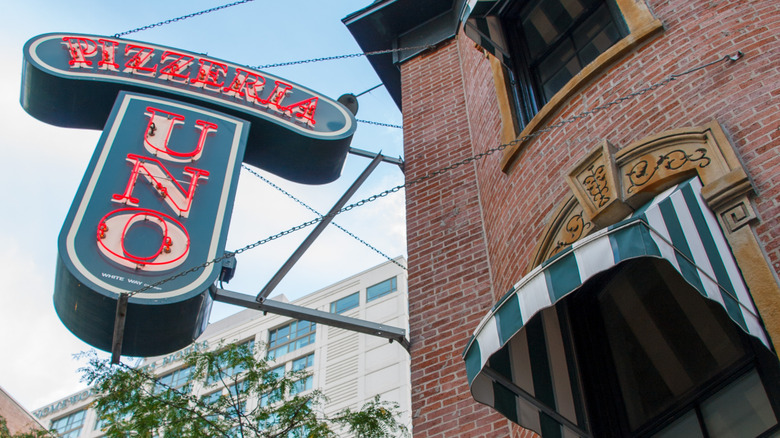
The restaurant where it was invented is rarely debated. That would be Pizzeria Uno, the now-famous national chain that began as a single restaurant on East Ohio Street in Chicago. It's the humans behind it that are debated. The popular claim is that businessmen Ike Sewell and Ric Riccardo were the masterminds who first made pizza deep dish.
But there are sources that say, first, that Sewell wasn't involved at the genesis and only Riccardo was. Another says it was either the manager of the restaurant, Rudy Malnati, or his bartender son Lou that grabbed the deep round pans and went to town. Regardless, the establishment seems to be Uno, no matter the hands who first stuck it in the oven.