

These 12 Popular Chocolate Bars Are Different Outside The US
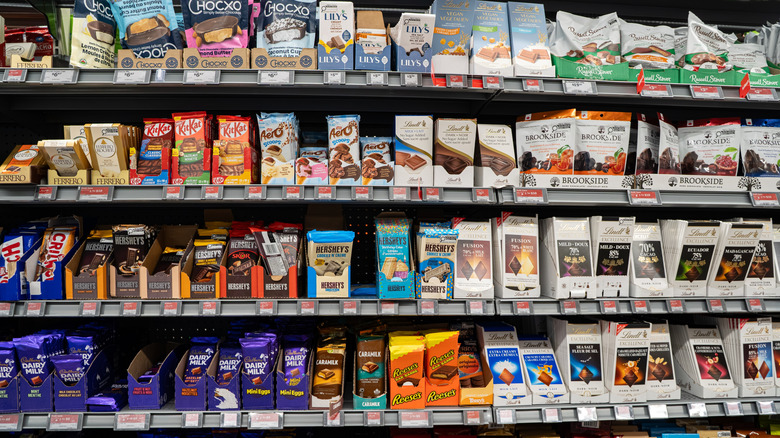
There's chocolate and then there's American chocolate. At least that seems to be the consensus from all the non-Americans living on the planet. According to these other people — especially Europeans — chocolate in the U.S. is mostly sugar masquerading as real chocolate. Hey, maybe they should just stop looking at fringe evidence like nutrition facts and science. After all, that's what many Americans do: We keep our heads down and eat our candy, no questions asked.
This dynamic has caused many household-name chocolate bars to be formulated differently when sold overseas, and vice versa. In fact, some of these brands are made by a different company altogether, even a competing conglomerate. Yes, things can get truly weird and complicated in the global candy economy.
Good thing The Takeout is here to sort it all out for you. These aren't the criminally underrated candies on store shelves. No, these are the big boys with big names and famous ingredients. But, where and how do those ingredients change from sovereign state to sovereign state? And, although ingredients might be exactly the same, why is the name and the labelling different? Let's find out with these dozen iconic chocolate candies that are completely different outside the U.S — for better and worse.
1. Cadbury Creme Egg
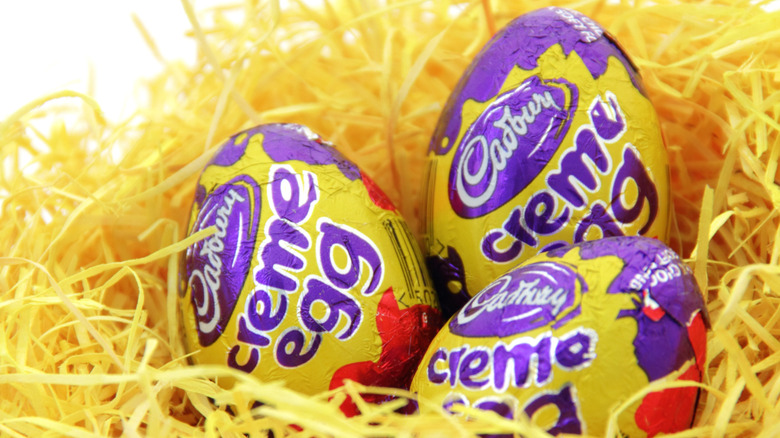
In all honesty, the Cadbury Creme Egg never really felt like a purely American treat. Probably because it absolutely isn't, and this is mainly due to the difference between retail chocolate in the U.S. versus the U.K. (the Creme Egg's home region). The famously ovoid snack has always been an English import, just as anything Cadbury would be — the company being founded back in 1824 in Birmingham, England. It wasn't until 1988 that Cadbury actually entered the American market, after the licensing was purchased by Hershey's. The chocolate changed in the process, exchanging some of the pure cocoa content for sugar, among other Americanizing things.
The Cadbury Creme Egg quickly became one of the most popular Easter candies on this side of the Atlantic, buoyed by now-legendary, long-running, animal-centric commercials. But, as mentioned, it is a different candy experience. First off, the cream in the middle is not synthetic at all in the U.K. version. It uses paprika for color, whereas the U.S. product uses synthetic yellow dye). Second — and this is a theme — the chocolate in the U.S. version is imbued with sugar and high fructose corn syrup. The U.K. version, because of regulatory standards for chocolate, is a much purer form of cocoa. Brits will consider theirs the more authentic version. Who can blame them?
2. KitKat
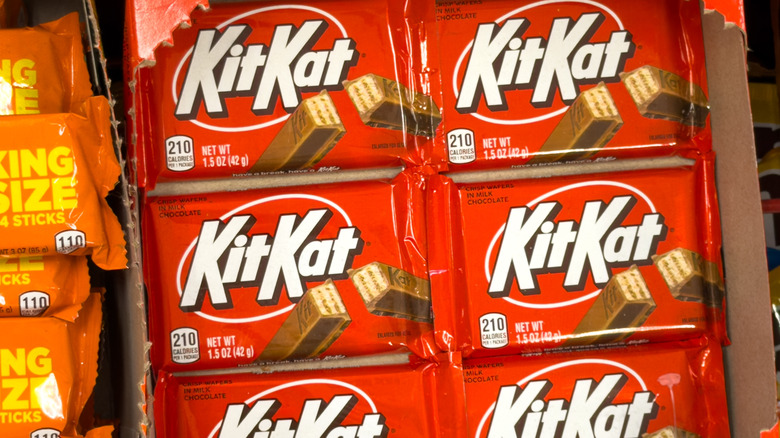
If you thought Cadbury was the last chocolate on this list originally hailing from the U.K., then apologies for the disappointment. (And if that truly is a disappointment for you, things probably aren't going that bad in life.) KitKat — yes, that KitKat — was actually created in 1935 in York, England. Hard to imagine this staple of American Halloween baskets being from anywhere else except your neighbor's repurposed salad bowl. However, it really isn't the same KitKat as merry old England's.
The trip over the pond changed KitKat forever, and there is now a distinctly American version that contrasts the original. This is because Nestlé took over the manufacturing of KitKat in Europe while Hershey's handled things in the States. And the difference between the two can even be seen upon sight, as soon as you open the packaging — the Nestlé version is much darker and markedly thinner than the Hershey version sold in the U.S.
Nothing compares to the KitKats that are on offer over in Japan though. Like with many imported brands, the Japanese are unafraid of adventurous adaptations. For KitKats, this includes matcha, whole wheat, hojicha (roasted green tea), strawberry milk, raspberry, pistachio, and sakura sake (which, yep, has a little bit of alcohol in it). How much is a flight to Tokyo?
3. Hershey's
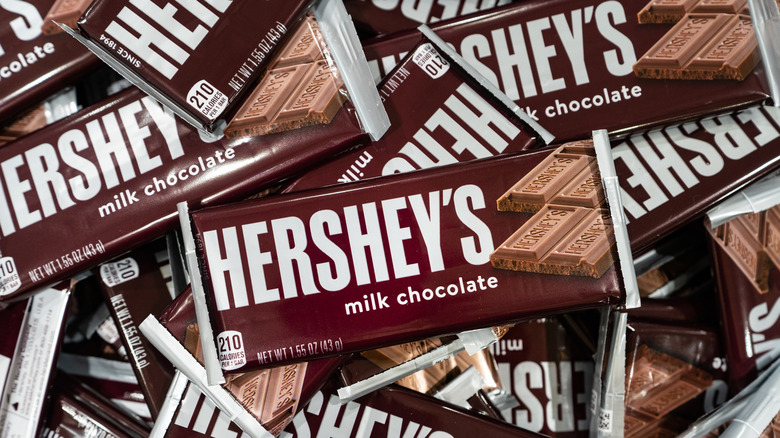
And here we finally have a true American original along the lines of Hulk Hogan, Harley-Davidson, and cow-tipping. Hershey's was founded in 1894 in what was then Derry Church, Pennsylvania. The brand became so famous that it eventually just renamed the municipality to Hershey, which is akin to renaming Anaheim to Disney, California. Another big change that involved this classic American sweetmeat was in the chocolate itself, at least north of the border.
In 1970, Hershey expanded beyond the U.S. into Canada and dozens of other countries. Yet, even next door, Hershey's has a different flavor. The formulation of the bar was changed for the Canadian market — the chocolate being milkier, creamier, and higher in fat. So, if you live on the border, your Hershey's chocolate experience will be vastly different after travelling just a few miles toward the pole.
Beyond that, Hershey's has never really caught on overseas as a premier treat. That's because founder Milton Hershey tried to imitate German chocolate but for an American palate — which included a process that wound up infusing an ingredient called butyric acid into the bar. Butyric acid is also in Parmesan cheese and baby vomit. So, if unaccustomed, foreign taste buds get a taste of infant regurgitation in their Hershey's experience, that's why. Guess Americans are just used to it?
4. Twix
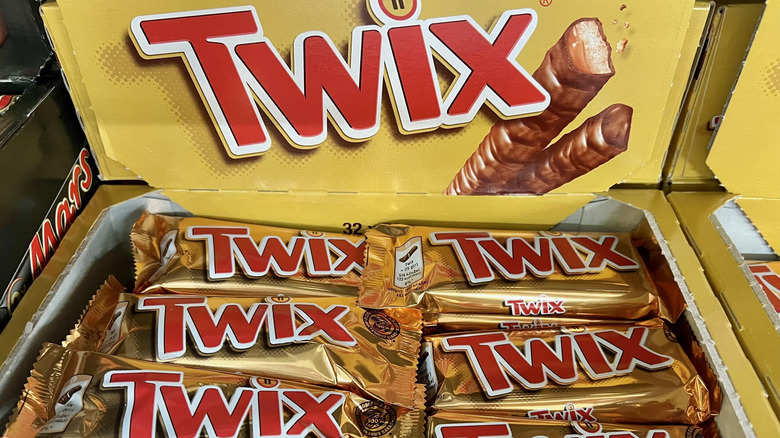
Twix first appeared on U.S. candy shelves in 1979, and so began the life of another great American chocolate bar — hey, wait, hold on, this came from England too? And it was actually called a Raider bar when it was first introduced in 1967, before changing its name upon arrival to the States? Wow. We may have thrown England's tea into the ocean but we happily accepted its chocolate candy imports — not without altering the chocolate to our palates, of course. Twix is no exception here.
For the pro-America crowd, it seems the U.S. version would eventually conquer all — at least regarding the name. The Raider branding started getting retired by Mars (the parent company) internationally in 1991, paving the way for the bar to be known everywhere on Earth as Twix (short for "twin sticks," by the way, in case you were wondering).
Regardless of the moniker, it seems — according to TikTokers — there are noticeable differences between the U.S. and U.K. Twix, starting with both the smell and color of the chocolate (darker for the Brits, which harkens back to their higher cocoa content). The biscuit and the caramel are apparently softer in the British one as well. All said, at least with a few social media taste tests, the U.K. Twix is seen as superior. Nice for them, having discerning chocolate standards or whatever.
5. Rolo
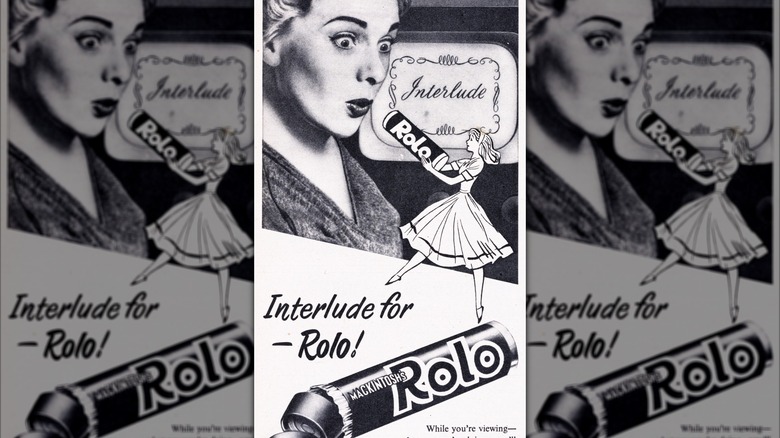
Yep, another U.K. import. Rolo was originally created in 1937 by an English company called Mackintosh's. Then, in 1956 the New England Confectionary Company acquired the manufacturing license for Rolo stateside, which was in turn acquired by The Hershey Company in 1969. This is another instance where a candy is made by two distinct companies in two distinct global regions. The European version is made by Nestlé (once again) and the American version is made by Hershey's. Inevitably, there are differences.
As is commensurate with how chocolate is made on each shore, the American-slash-Hershey's Rolo seems to be much more sugary (because, of course, there's a much higher sugar content in U.S. milk chocolate), while the caramel in the U.K.-slash-Nestlé version seems to be much silkier and more buttery (again, the U.S. one is very, very sweet).
The contrast also extends to the look of each individual Rolo. The famous shape — technically a conical frustum, if you're curious — is uniform of course, but there is a size and color difference. The U.S. take is taller and darker than the British cousin. No word as to whether jealousy is involved there.
6. Snickers
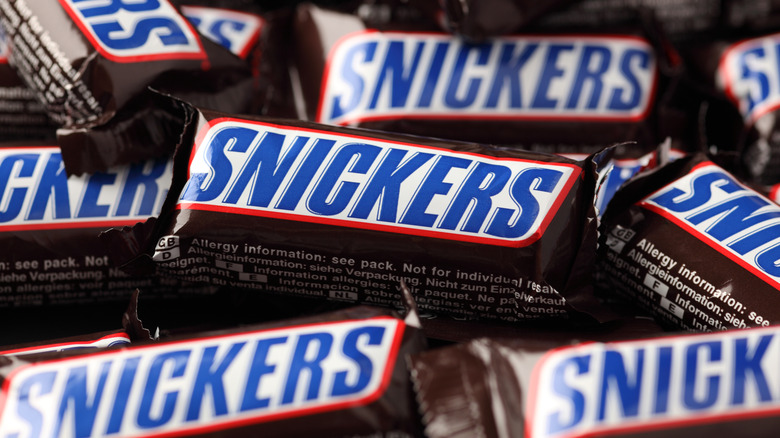
Legend has it that the Snickers bar was named after a horse. What can't be disputed is that the first Snickers was invented in Chicago by Mars (Mars Wrigley at the time) around 1930. It arrived in the U.K. in 1967, not as Snickers but as Marathon. Snickers and its offshoots Snickers Minis, Snickers Ice Cream Bar, and the unholy yet divine combination of the Snickers Ice Cream Minis have become standard American treats. However, it's not the only country that loves them, especially with some alterations involved.
And there truly are numerous iterations to be found around the world, especially in India: Snickers Kesar Pista (saffron and pistachios), Snickers Butterscotch (intriguing combo), and Snickers Berry Whip (strawberry-infused nougat). There is also a coffee-flavored Snickers in Australia and a Brazilian offering called Snickers Mousse de Limão, aka lime mousse. Far out.
As for the U.S.-U.K. comparison: There are some big ingredient differences in the straightforward Snickers bar, such as corn syrup in the U.S. instead of glucose syrup, keeping with the characteristic avoidance on the part of the U.K. (and many health-conscious people) of fructose corn syrup ... on account of its terrible-for-you-ness.
7. Milky Way
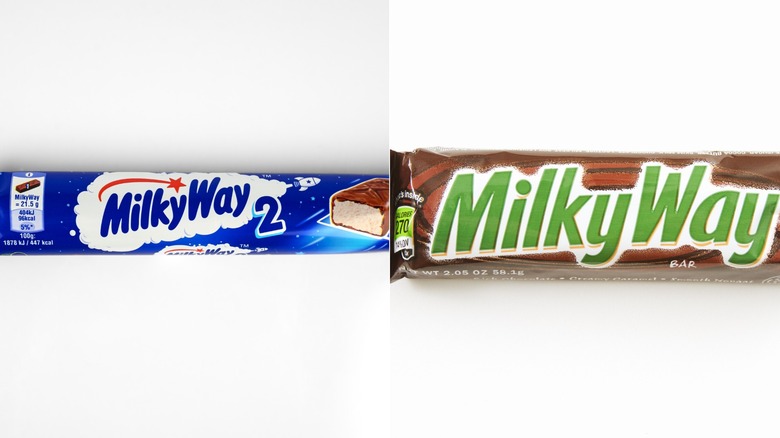
This is probably the most confusing and curious entry on the list. Okay, here it goes: What Americans call the Milky Way bar is called the Mars bar overseas, and what's referred to as Milky Way overseas is actually what Americans call the 3 Musketeers bar. So, 3 Musketeers is Milky Way, Milky Way is Mars, and a Mars bar in the U.S. did exist from 1932 until 2002, but it contained almonds, and, as mentioned, it's no longer around.
Yet, even the 3 Musketeers bar and the U.K. Milky Way bar have a fundamental difference, as the former contains chocolate nougat and the latter has plain white nougat. Otherwise, it's a nearly identical candy experience — except for the name and packaging and, as mentioned, the taste itself. Maybe "identical" isn't the word here.
How this befuddling branding swappery came about seems more of a product of transnational business operations rather than any deliberate attempt to confuse people in this very specific way (although it is fun to think that some nefarious executive in a high tower somewhere is cackling about all this).
8. M&M's
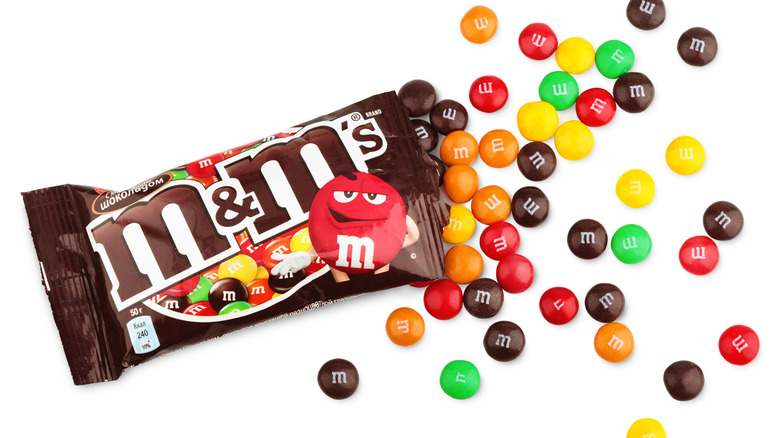
Nowadays, M&M's live a rather pedestrian life on shelves all over the world. Yet, the diminutive candy pebbles actually have quite the swashbuckling origin story. They were invented when Forrest Mars, scion of the Mars company, noticed English troops in the Spanish Civil War were eating hard candy-shelled chocolates that didn't melt in the trenches. Eventually his M&M's would be supplied to American soldiers fighting in World War II. Today, there are ingredient differences between the American and European versions, mostly when it comes to the coloring.
This is especially true regarding the red M&M. Back in 1976, a food coloring called Red No. 2, was linked to cancer by a Russian study, prompting Mars (who made and still makes the candy exclusively) to remove the red one from its packaging altogether — even though that wasn't the dye used. The company didn't want customers to assume otherwise and avoid buying M&M's to be on the safe side.
Once this other Red Scare died down, the ruddy M&M was brought back in 1987. But, to this day, the version sold in Europe has a different red M&M because the newest dye used stateside, Red No. 40, is banned on the continent. This is due to the EU's emphasis on a level of nutrition in ingredients that the U.S. just doesn't have. Thus, if you're eating an M&M overseas, just know that it's probably not quite as bad for you — in quantity as well, since European M&M's bags are noticeably smaller.
9. Crunch
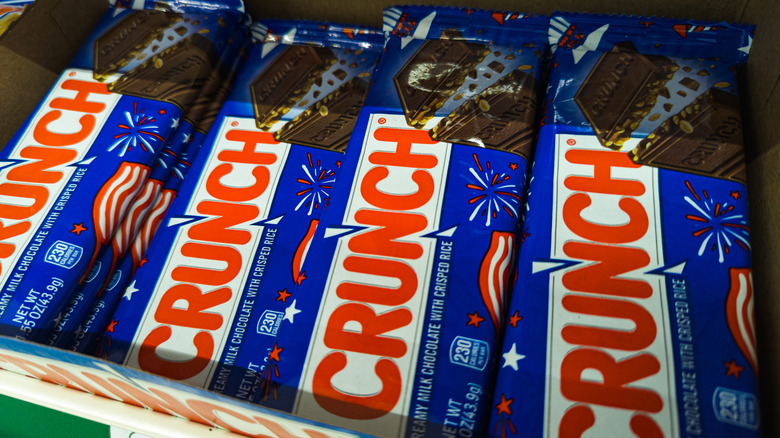
In 1938 in Fulton, New York, Nestlé, the international candy giant, decided to create a mass-produced chocolate bar the likes of which had never been seen before. Each bite would result in a crunch. Huzzah! Fair to say it blew people's minds and sent Depression-era taste buds into another stratosphere. By infusing the chocolate with crisped rice, a brand new treat was concocted. What to call it? Crunch bar. Why overthink things.
England overthought things, apparently. It was called Dairy Crunch in the U.K. for decades before being rebranded in 1992 as simply Crunch (you finally saw the light, lads). Brits will insist the chocolate tastes better in their version of the Crunch bar. And they're probably right, due to the mandated amount of cocoa that has to be present in British chocolate, as opposed to American. Same could be said for the Americans using more cocoa butter than the Brits, who allow other fats like palm oil to be used in tandem.
Even a TikTok food influencer from Manila swears that the Crunch bars she gets in Paris are superior to the ones in her home country (which shows that even the broadest-reaching products get localized). What she and others are missing out on in America, however, is the delicious white chocolate Crunch bar made for Halloween.
10. Reese's Peanut Butter Cup
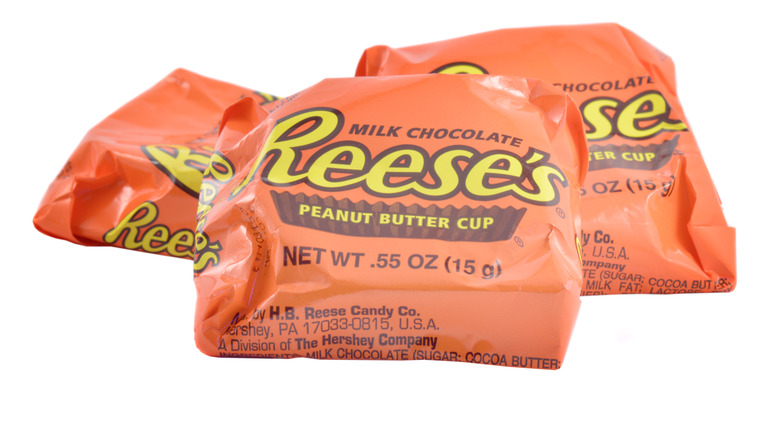
A former shipping room worker of the Hershey Company, H.B. Reese, was inspired by his employer's staggering sales to start his own candy-making enterprise. By 1928, Reese was out on his own, manufacturing an assortment of candies that included one in particular which would set his legacy in stone: the peanut butter cup.
Eventually, this was the only candy he sold after ditching the others. Hershey's supplied the chocolate to Reese for his popular cups and, years after he passed, his company was bought by Hershey's — though the name Reese's would live on in the brand. However, another aspect of Reese' legacy, namely his grandson, alleges that not all Reese's are made the same.
Brad Reese claims that, not only has Hershey's changed and cheapened the ingredients used in the peanut butter cups (he describes them as no longer being edible), but that the versions in the U.K., Ireland, and the rest of Europe are different. Hershey's disputes this, pointing to discrepancies with U.K. and EU labeling semantics — not a significant change in ingredients. Who to trust? Maybe just the taste buds of travelers.
11. Toblerone
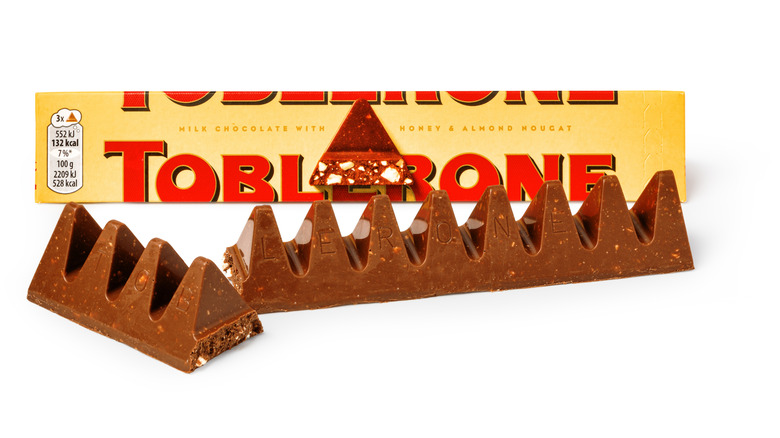
First created in Bern in 1908, Toblerone wasn't initially a standout chocolate bar, even within its own company. That would eventually change, and after being featured at the 1964 New York World's Fair, (the first time many Americans had a chance to taste Toblerone), the Swiss treat would gain popularity stateside, which has endured to this day.
It's a bit of a shame that Toblerone has lost so much of its inherent Swiss-ness that the candy has been forced to remove the Matterhorn from its logo. This is because Toblerone's parent company, the American multinational Mondelēz, has moved the manufacturing out of Switzerland and into Slovakia. This made the iconically Swiss candy bar no longer Swiss enough to incorporate the Alps' most famous mountain. It wasn't the first unwelcome change to the candy under Mondelēz's stewardship. There was a reshaping and resizing of the bar in 2016 at the hands of the American suits. This was not a popular move.
People that have tried both the American and the Swiss-slash-European version swear there's a difference in the chocolate. Now, there are no Toblerone factories in the U.S., so there's no obvious reason that this should be the case. Is it a collective psychosomatic phenomenon? Is it true that it's really the same on both sides of the Atlantic? Doubts persist.
12. Dove
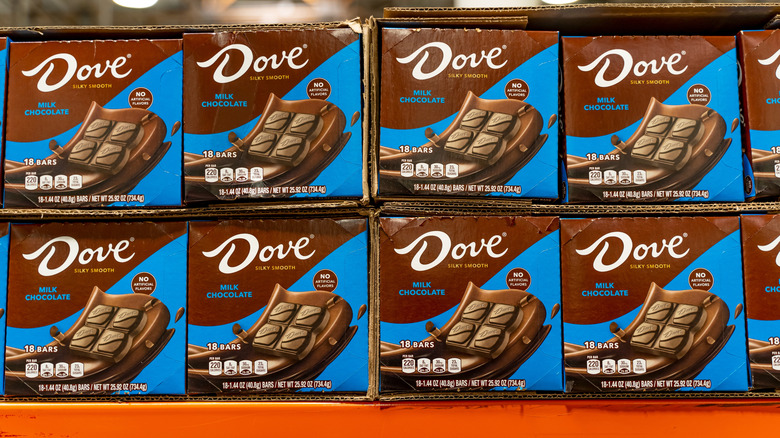
A Greek-American, Leo Stefanos, opened a shop called Dove Candies & Ice Cream in Chicago in 1939. For decades and through the expansion of the company beyond a single storefront, it was Dove's chocolate ice cream bar that became the flagship product. About five years after Mars bought Dove in 1986, Dove chocolate candies were introduced — though the more conventionally-sized Dove chocolate bar didn't come about 'til 2012.
Yet, the entire reason Dove chocolate bars exist is because of Mars buying the brand, and Mars already owning a chocolate brand called Galaxy. Galaxy was released in England in 1960 and was a very popular, finely milled chocolate bar. So, when Mars decided to expand the Dove line into straight-up chocolate candy, it just used the same chocolate from the Galaxy bar it had been manufacturing for decades. As the Brits say: Bob's your uncle.
Today, the bar is called Dove in the U.S., Canada, and Mexico, among other places, while Galaxy is the moniker in the U.K., India, and Egypt. Yet, even the physical formation of the chocolate in both the Galaxy and Dove bars are the same, although some astute candy eaters have noticed slight size and monogrammatic differences.