

The Fast Food Drive-Thru Practice That Hungry Customers Can't Stand
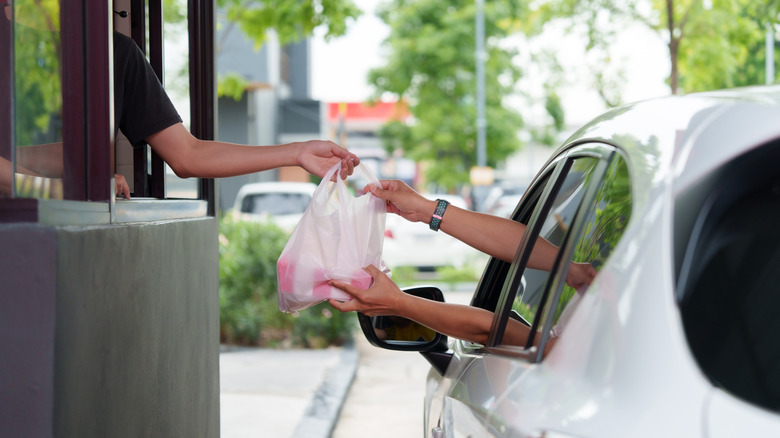
Fast food is built around convenience and speed, with low-priced items and drive-thru windows intended to make your trip as painless as possible. However, ordering from the drive-thru sometimes results in a painful experience for unlucky patrons. Being asked to pull up to a parking space or even a tangential window outside of the typical drive-thru area is a headache that many customers despise, especially when they're hungry or in a rush.
The drive-thru model (which first began in 1969) seems pretty straightforward, but sometimes it requires customers to go beyond the service window to wait for their food in an ill-defined third area that's oftentimes located away from the drive-thru entirely. Not only do people hate this because it means their food won't be as fast as they thought it would be, but also because their order can sometimes get completely forgotten if the restaurant is busy, leaving them in an awkward and frustrating situation.
This practice is so aggressively disliked by customers that some have even said it's impacted which restaurants they decide to visit. "I stop going to places that repeatedly make me pull over and wait for a normal order," one Redditor stated bluntly. "I'd get it if my order was large or unusual, but c'mon." Another Redditor expressed similar frustration, saying, "McDonald's does this when I go for a single iced coffee, I can't even justify using the drive-thru anymore."
Why do fast food restaurants make people pull forward at the drive-thru?
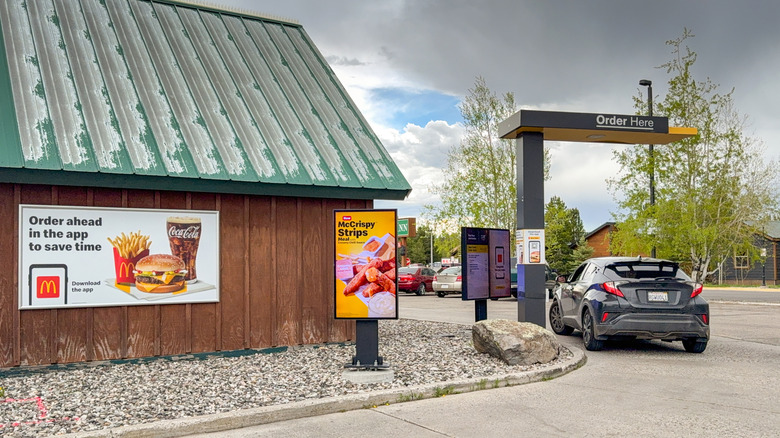
Many people bring up a peculiar point when talking about this topic: It doesn't only happen when you have a large order. Sure, you might expect a longer wait time if you choose to order multiple T-Rex Burgers off of Wendy's secret menu, but the size of an order doesn't seem to determine whether you'll be asked to pull forward.
Former and current McDonald's employees online have revealed that it comes down to restaurants wanting to make their speed numbers look better to corporate to avoid getting in trouble for slow production or delays. "I assume it's a situation where a top level manager can get in trouble if their area falls under a certain metric," one former McDonald's worker on Reddit speculated "Like all corporate metrics, they are faked to meet the unreasonable goal." This theory is supported by people who have noticed the receipt they receive notes the time they were told to pull forward rather than the time they actually received their food
As for why these restaurants are slow enough that this practice is required, there are two notable reasons one could point to. For starters, fast food restaurants are competing to have the fastest drive-thru, meaning it's difficult for workers to keep up with what corporate demands. Add on the fact that fast food restaurants are hiring fewer people to hit more ambitious targets, and it makes the theoretically painless fast food experience is becoming increasingly annoying for everyone involved.