

Why Your Homemade BBQ Ribs Are Falling Short Of Restaurant Quality
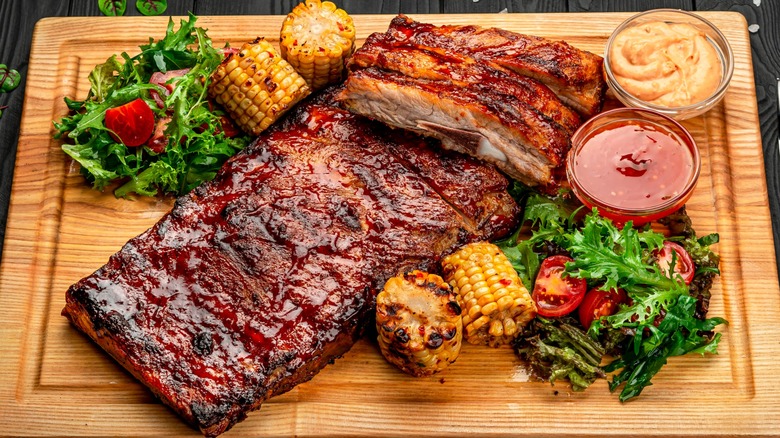
Creating homemade BBQ that rivals restaurant-quality cuisine is easier said than done, and cooking ribs that fall off the bone like at Texas Roadhouse can be particularly challenging. Matt Abdoo, the executive chef and co-founder of Pig Beach BBQ, recently revealed to The Takeout why that is. The bad news is that studiously following recipes for melt-in-your-mouth BBQ ribs might not be enough because restaurants typically have access to superior equipment.
"Many people can make great ribs at home, but true BBQ is cooked with live fire and smoke," Abdoo said. "Restaurants using large commercial smokers fueled by sticks or large chunks of wood will almost always create a deeper flavor than smaller smokers using chips or pellets." Unfortunately, even if you have the space for one, a commercial smoker can cost thousands more than a high-quality backyard unit. But expensive machinery isn't the only way the 10 best restaurants for BBQ ribs produce their signature dish.
"Restaurants have also typically spent years experimenting with different rubs, sauces, and cooking techniques to perfect their flavor profiles, which takes a lot of time and repetition," Abdoo said. "The average home BBQ cook may only fire up their smoker once a week, while restaurant pitmasters are cooking every single day and constantly refining their process." There's simply no chance a weekend warrior will ever out-rib a bona fide pitmaster with years of experience under their belt. However, there are some ways to close the gap between their skill and equipment and yours.
How to imitate a pitmaster's performance
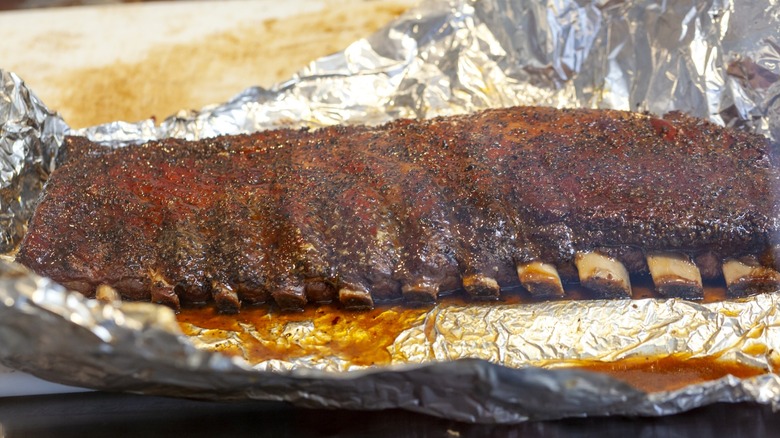
Although it might seem impossible to cook tender, flavorful ribs that mirror restaurant-quality BBQ without an expensive smoker and years of experience, Abdoo noted that there's something more important to consider which home cooks can achieve. "If you take the size and style of the smoker, and even the quality of the wood, out of the equation, it really comes down to technique," he said. "It's knowing exactly when the ribs are done, when the right time is to wrap them, and when to spritz without constantly opening the smoker and losing heat and smoke."
Still, it doesn't hurt to set yourself up for success as best you can. A commercial smoker might be financially out of reach, but you can imitate chefs who know how to wield a BBQ mop like an award-winning pitmaster by sourcing premium ingredients and fuel. "Use the best quality wood you can find. If your smoker can handle wood chunks instead of chips, that's usually an upgrade and will give you better flavor," he said. "Use the best quality meat you can afford, along with rubs and sauces that you genuinely love to eat."
There's one technique Abdoo mentioned that's still the most critical factor, and there's only one way to master it. "Most importantly, practice!" Abdoo said. "Over time, you'll start to recognize the feel and texture of a perfectly cooked rib." It may take years to perfect your method, but it will be worth the effort once folks start asking you to make BBQ ribs rather than going out to a restaurant.