

9 Complicated French Dishes Not Worth Making At Home
You might not associate the French with simple, easy, anyone-can-do-it cooking. After all, this is the country that gave birth to the Michelin star (and even today, France has more Michelin-starred restaurants than any other country in the world, by a large margin, with France boasting more than 650 and the runner-up, Italy, claiming fewer than 400). So much of the foundation of Western gastronomy and the culinary arts can be traced back to France.
Accordingly, you might feel a little intimidated cracking open a copy of "Mastering the Art of French Cooking," Julia Child's tome that introduced French culinary techniques to the American masses — because, while, yes, there are some accessible classic French recipes that home cooks can master (moules marinière, ratatouille, or even the basic croque monsieur are all simple enough), there are seemingly many more complicated French dishes that just aren't worth making at home due to the skill needed, time required, or even certain ingredients that can be tough to track down.
To learn which you should truly avoid altogether and instead save for your next fancy dinner out, we spoke to three experts: Chef Mauro Colagreco, founder of the acclaimed, Michelin-starred Mirazur in Menton, France; Chef Sezer Deniz, a Le Cordon Bleu and Michelin-trained chef now acting as culinary director of CBD Provisions in Dallas; and Auguste Escoffier School of Culinary Arts chef instructor, Chef Lionel Heydel, a third-generation, French-trained chef. Here's what they had to say.
Canard à l'orange
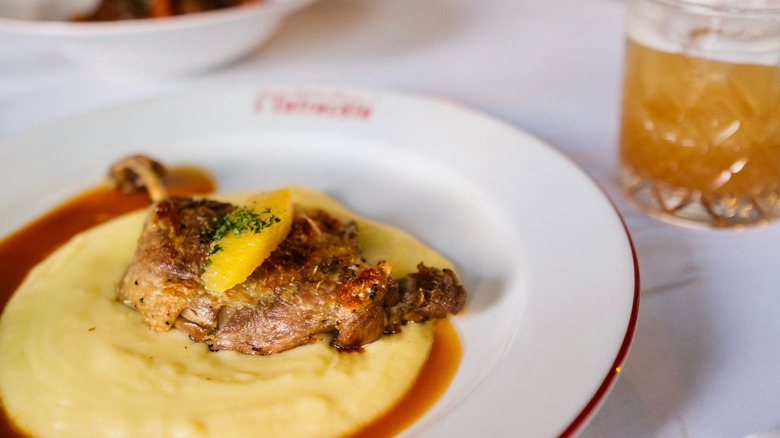
Canard à l'orange, also known as duck à l'orange, can be a difficult one for home cooks for a few reasons, according to Chef Lionel Heydel. From sourcing the ducks (an ingredient you might struggle to find at your local grocery store) to creating the traditional garnish, you're going to have your hands full.
Heydel said, "This roasted duck cookery refined the classical technique of using a gastrique to create a sweet and sour sauce while achieving the perfect temperature throughout the entire roasted duck. The breasts need to remain medium rare while the legs must be fully cooked to the bone. This is
difficult to master with only basic home cooking techniques." While you may get lucky in some locations and find high-quality duck, this will likely prove a challenge — as will the garnish. "The garnish involves orange supremes, which require advanced knife skills," he added.
Not familiar with some of these terms? A gastrique is a basic sweet and sour sauce made with sugar and vinegar. It's highly versatile and can be flavored in myriad ways. For example, a gastrique is actually one of the top ways to cook with whiskey that you probably haven't considered yet. As for the orange supremes, that's just a fancy term for a perfectly cleaned segment of orange with all the membrane and white removed, leaving behind an intact slice. As Heydel mentioned, they require precise, advanced knife skills — as well as a large degree of patience.
Sole meunière
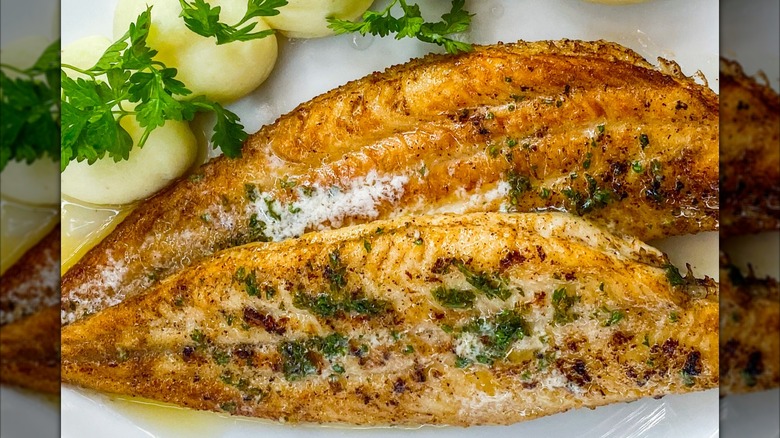
A Julia Child favorite, sole meunière is deceptively simple-looking. How hard could it truly be? It's just fish in a butter sauce, right? Wrong. As Chef Lionel Heydel explained, "Classical Dover sole is seasoned, drenched in flour, and cooked to perfect tenderness in a golden-brown butter, deglazed with fresh lemon juice and garnished with fresh chopped parsley. [It's] a true classic using a beautiful line-caught sole from the cliffs of Dover."
Traditionally, the dish is served with tournée potatoes cooked a l'anglaise. However, the issue with cooking it at home lies in the complexity of both sourcing and preparation. "The fish is expensive and difficult to source and requires knife skill[s] and [the] proper cooking method to avoid destroying this dish," Heydel added.
As such, you might be better off trying your hand at the tournée potatoes first. Also sometimes known as "turned potatoes," tournée potatoes are cut using a specific method that turns a vegetable, such as a potato, into basically a football shape. The cut ensures that each and every potato is the same size, and the rounded edges make for easier turning, resulting in potatoes that are more evenly, consistently cooked. As for the "a l'anglaise," that's the French term for cooking something in the English style — in this case, boiling.
Confit de canard
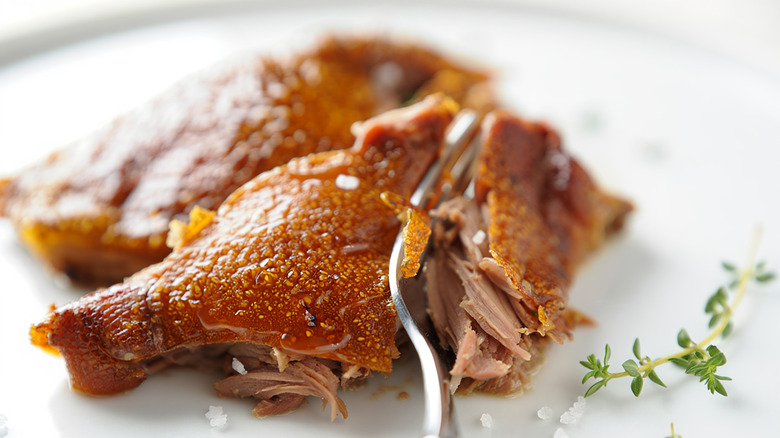
Confit de canard, or duck confit, is a dish that's savory, succulent, and traditional. It originally evolved into a staple of French cuisine as a method of preserving duck meat in its own fat for long-term storage. However, according to Chef Sezer Deniz, while this dish is often considered "rustic and simple," making duck confit can actually require days of work and, in general, is just better ordered at a restaurant.
"It requires curing or brining techniques, proper slow cooking in its own fat and proper serving and presentation," added Chef Lionel Heydel. "It's yet another pricey dish that requires consistency in texture and proper seasoning. It is also difficult to find meaty duck legs, as there are not too many duck farms producing foie gras in the United States." The reality is that people often end up failing to give the dish the care and attention it deserves. "With today's busy lifestyles, it is often better to purchase it from a reputable producer and serve it properly."
At least if you do make your own duck confit at home, those initial first days of work will (hopefully) pay off. Some say that you can keep your duck confit good in the fridge for weeks or even months, as the fat keeps the duck from spoiling (remember that this was an old-school preservation technique, after all), and that, in fact, the duck confit will only improve in flavor with time.
Coulibiac de saumon et son beurre blanc
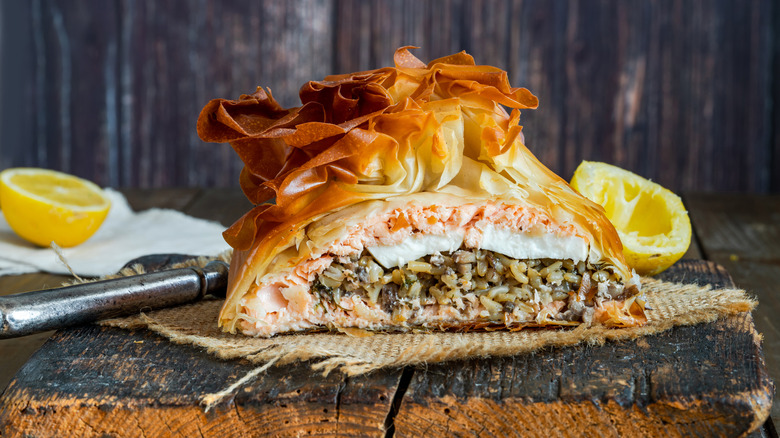
If you're even moderately aware of classic French cuisine, then you likely recognized confit de canard and canard à l'orange, but this next dish might be a little less familiar. Coulibiac de saumon — or salmon coulibiac, also sometimes spelled "koulibiac" — is almost a bit like a beef wellington. Think protein wrapped in a puff pastry coat (and, in this case, served with beurre blanc, or white butter sauce).
This dish is challenging on multiple fronts. You have the brioche dough, though Chef Lionel Heydel said that sometimes puff pastry trimmings are used instead. Then, there's the whole side of salmon, with the spinach, mushrooms, and shallots, all to be assembled and cooked to perfection.
"This highly technical preparation combines advanced pastry and culinary techniques into one dish," Heydel said. "The dish also includes rice, which helps enhance the crispiness of the bottom crust enclosing the salmon. The rice is added uncooked and must cook properly within the final baking time alongside all the other ingredients, including the salmon." As if that isn't complicated enough, you'll also need to get to grips with the beurre blanc. "[This] is another delicate component that requires advanced sauce-making skills," Heydel explained. "It is often served with leftover lobster bisque instead of beurre blanc, but don't get me started."
Beef bourguignon
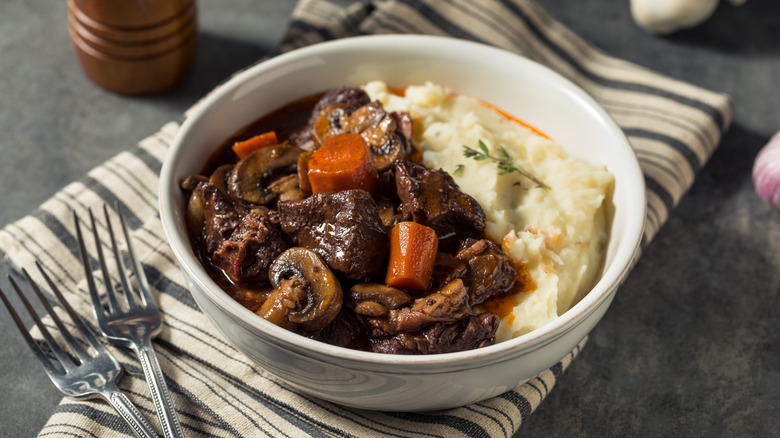
Beef bourguignon is another French dish that's a bit tricky. You may think that it looks simple and easy because it appears so similar to the beef stews you know and love. However, don't underestimate this classic comfort food — it's a French dish that you may only think you know about.
"Executing it well is surprisingly technical," Chef Sezer Deniz told us. "A great version takes hours of layered flavor, from proper caramelization and stock reduction to balancing the wine in the sauce. It's a dish where restaurant kitchens have a real advantage in time, preparation, and consistency." (At Deniz's CBD Provisions, the team serves an ancho beef bourguignon that incorporates slow-braised Texas beef, ancho chili, wild mushrooms, pearl onions, carrots, and horseradish spaetzle, for a Texan twist on the OG recipe.)
So, sure, if you're looking for a winter weekend project, wherein you can dedicate your time and stove to this dish all day, go ahead. But if you just want a weeknight bowl of comfort food, maybe stick to something that comes together a little faster.
Bouillabaisse
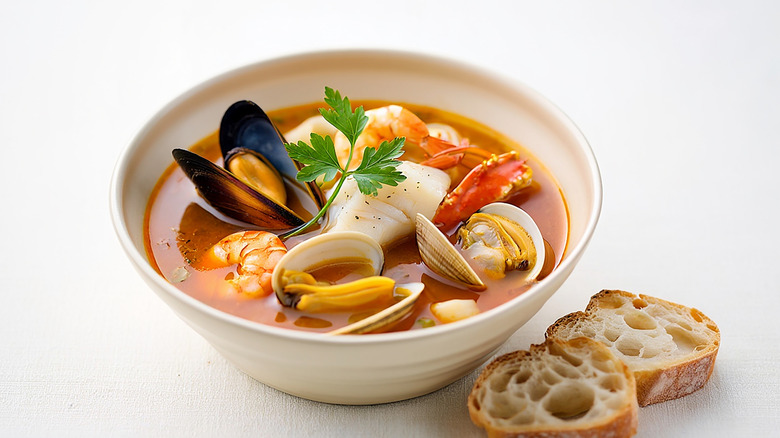
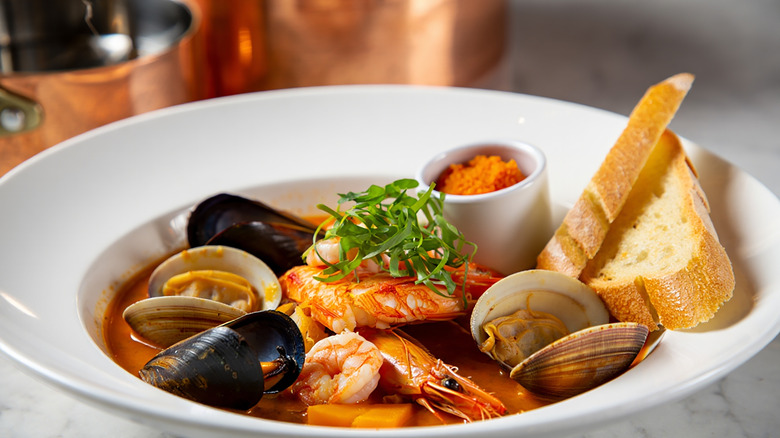
Blending several types of fish, saffron, and fennel, bouillabaisse is an iconic French dish — though the exact ingredients you use and how you make it might differ. For example, the closer you are to the stew's hometown of Marseille, the more likely it is that you'll have access to the traditional seafood that would have historically made its way into the dish; if you don't have such access, though, you'll have to make do with savvy swaps.
Whatever the case may be, you can expect a multi-step, sometimes complicated process. As Chef Sezer Deniz said, "Bouillabaisse is deceptively difficult, as every seafood component cooks differently. The broth alone can take hours to build, and ingredient quality makes all the difference."
If you need any further support as to why this dish makes the list of French foods you should leave to the pros, consider that bouillabaisse is the one dish Ina Garten won't make for her dinner parties. Even the Barefoot Contessa herself thinks it takes too much work and too much time to make it worth its while.
Soufflé
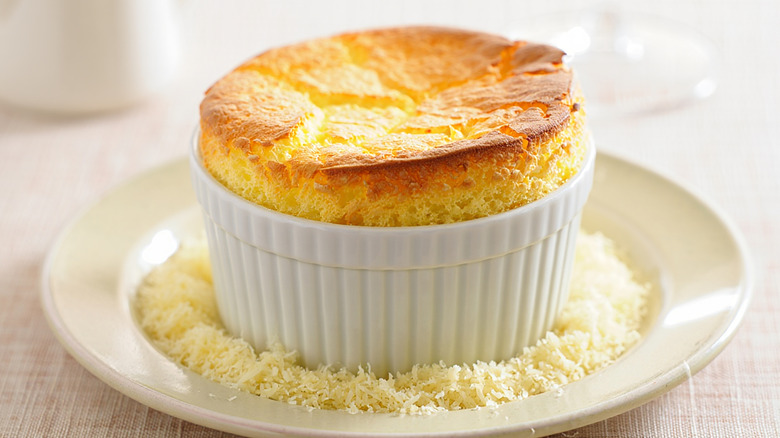
Light, airy, and oh-so-impressive, what ambitious home cook hasn't tried their hand at making a soufflé — only to be heavily disappointed with the results? Don't be too hard on yourself if you've yet to really conquer the art of the soufflé. "A soufflé leaves almost no margin for error," said Chef Sezer Deniz. "Timing, folding technique, and oven consistency all matter — and once it's ready, there are only a few minutes to serve it perfectly."
Of course, if you absolutely must try and try again, until you've perfected your at-home soufflé, take a few tips from the masters. For example, Jacques Pépin's cheese soufflé is an homage to his mother, and he has a few specific techniques for getting it right. The eggs need to be whisked by hand — quickly at first before switching to a slower, lifting motion. Then, be prepared to use your egg whites immediately, so as to better guard against the dreaded soufflé deflation.
As for how to ensure your soufflé rises evenly, Gordon Ramsay has a tip for that. When using a pastry brush to grease the individual baking dishes for each soufflé, spread a thin layer of the softened butter onto the sides of each dish in a vertical motion. Then put the dishes in the fridge so that the butter can harden in place before repeating the process a second time. The carefully applied stripes of butter help push the soufflé upward as it bakes.
Homard vanille
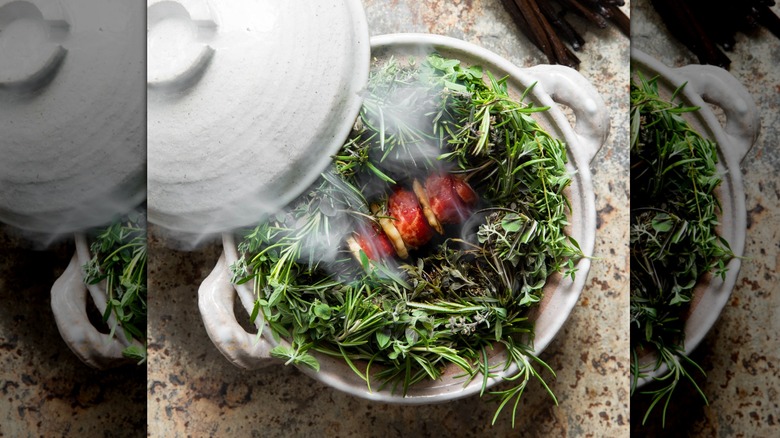
At Mirazur, Chef Mauro Colagreco's Michelin-starred restaurant on the French Riviera, you'll find something on the menu that, if you're the average American diner, you're probably not going to be expecting in the slightest: homard vanille, aka vanilla lobster. It may at first sound like an odd pairing, but seafood and vanilla are no strangers in the world of French Michelin-starred dining, and, in fact, lobster with vanilla sauce is the national dish of Comoros, a former French colony.
If you want to try this dish for yourself, you'll likely want to go to an actual restaurant to get it, Chef Colagreco warned. "Lobster is already a difficult product to cook properly because timing is everything," he said. "When paired with vanilla, it becomes even more complex: The vanilla should never dominate or become sweet. The challenge is creating harmony between marine intensity, natural sweetness and aromatic depth without losing the elegance of the lobster itself."
Tarte artichaut
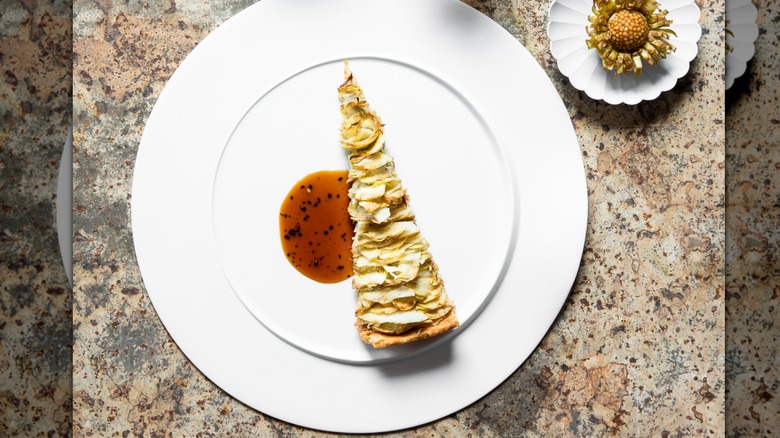
Literally an artichoke tart, you can find variations of tarte artichaut throughout the French culinary world. Some takes are more intricate than others, but if you want to make it in the style of Chef Colagreco, you'll be in for a bit of a process (and that's after you learn how to just clean and cook an artichoke to begin with, if that's something you've never tried before). Multiple hours of work go into the tart, but the result is a stunning display of artfully arranged veg.
"Artichoke is one of the most technically demanding vegetables because it oxidizes quickly and has a very delicate bitterness," explained Colagreco, before detailing the extent of work that goes into whipping up the dish. "The preparation alone takes a minimum of three hours, with each artichoke sliced extremely finely using precision tools such as a mandoline," he said. "Every component must then be assembled carefully to preserve freshness, texture, and balance." While it may seem relatively simple at first glance, a tarte artichaut "actually requires a great deal of work, patience, and attention."