

The BBQ Seasoning Mistake That's Holding Back Your Flavor
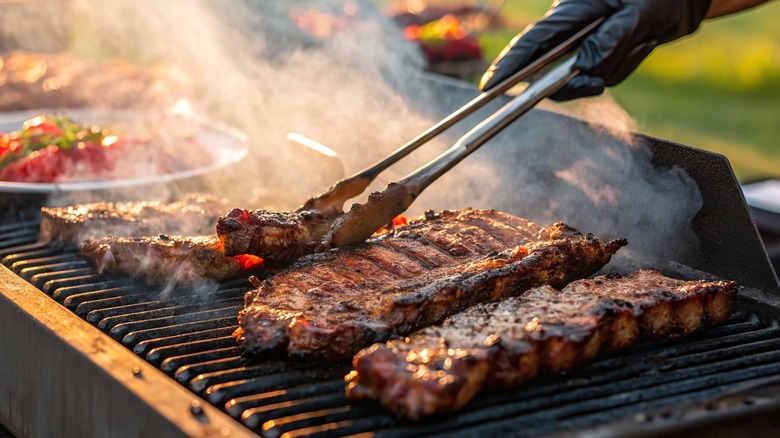
Enjoying ribs or smoked brisket at a cookout isn't just about grabbing a beer that pairs well with BBQ and chowing down on savory meat until you're about to burst. Good BBQ should be rich with flavor. But one mistake many people make with BBQ ribs and other proteins is failing to explore seasoning combinations that create a memorable rub. Instead, folks often reach for an all-purpose seasoning to enhance their meat, which Big Green Egg culinary partner and chef Taylor Carroll says can result in less flavorful BBQ and, in some cases, can even ruin it.
"There is not a 'one size fits all' approach because there are so many factors in choosing what kind of seasoning works best," Carroll says of all-purpose blends. One main attraction of BBQ is the meat's smoky char, but some all-in-one seasoning mixes can instead make the bark taste acrid. "For instance, a rub that contains a high amount of sugar may be delicious on low and slow ribs, but if you took that same rub and grilled over 300 degrees Fahrenheit, the sugars are going to be at risk of burning and leaving an unpleasant flavor," she explains.
Carroll also notes that a store-bought seasoning mix can work as long as it's not a complex blend. "An 'SPG' (aka salt, pepper, garlic) like the Classic Steakhouse is a great option to use in place of an all-purpose," she says. "The ingredients enhance the flavor of high-quality proteins without overpowering them and allow the smoke and cooking technique to be the star of the show." Simple blends allow smoky BBQ flavors to shine, and can also function as a solid foundation if you decide to augment the mix with other seasonings.
Tailor BBQ seasoning blends to the cut of meat
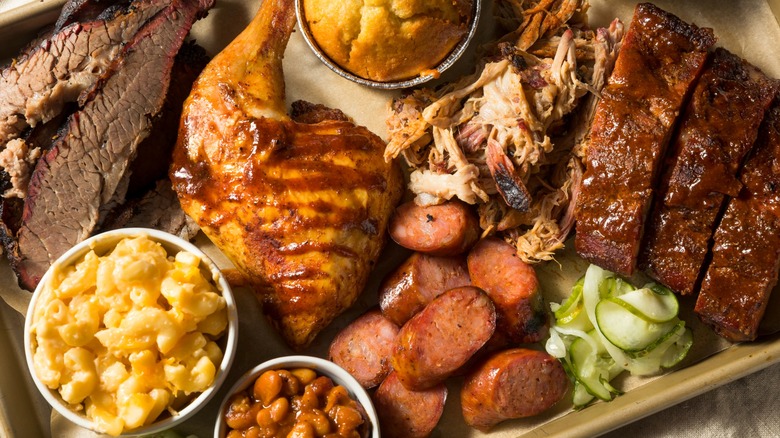
One major problem Taylor Carroll points out about all-purpose seasoning is that it doesn't account for the individual characteristics of various types of meat. "Good seasoning is less about having one 'best' rub for each protein and more about understanding how that protein cooks," she explains. Not only do various cuts cook differently, but they obviously have different tastes as well. A "one seasoning to rule them all" approach might work well for one type but not for another.
For example, beef's naturally meaty taste lends well to both robust and straightforward seasoning blends. "Beef can handle bigger, bolder flavors like coarse black pepper, garlic, and smoke-forward spices because the richness of the meat can stand up to them," shares Carroll. "At the same time, its bold flavor can stand alone with a simple seasoning like a Dalmatian rub (salt and pepper) and smoke."
Ribs and the cut of meat that novice BBQ enthusiasts should practice with — pork shoulder — are better choices for a more complex yet balanced rub. "Pork is where BBQ cooks often lean into a balance of savory, sweet, and heat; common seasonings include salt, pepper, garlic, paprika, chili powder, brown sugar, mustard powder, cayenne, and sometimes herbs or warm spices, especially for ribs and pork shoulder," says Carroll.
A similar approach can be taken with chicken. However, understanding how pork and poultry cook differently is crucial to achieving the proper flavor profile. As Carroll explains, "Since chicken cooks faster and has a milder flavor, the goal is to build flavor without overpowering the meat or letting sugar burn over direct heat."