

Why Watermelon Flavored Candy Tastes Nothing Like The Real Deal
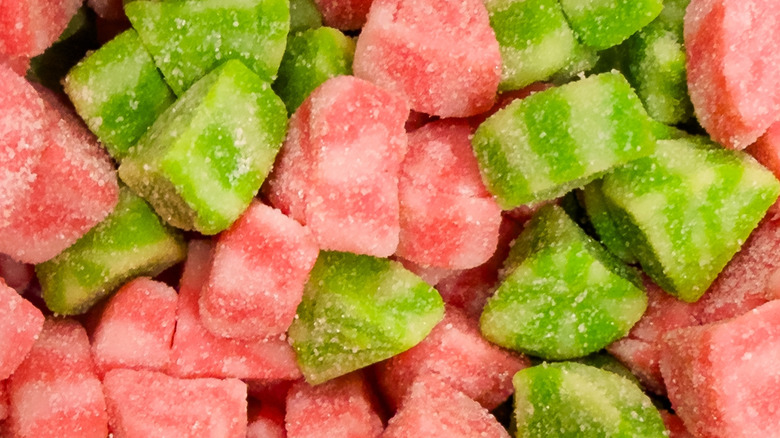
Watermelon candies are an odd duck. A slice of watermelon is sweet enough to almost taste like a candy already, and you can turn watermelon rinds into a summer candy by simmering them with syrup. Meanwhile, there's always something off about artificial watermelon candies, and it can be difficult to place exactly what it is. A watermelon flavored Jolly Rancher is pink like a watermelon, sweet like a watermelon, and it's one of America's favorite Halloween candies, but it doesn't taste like the real thing. The reason why, as with many things, involves chemistry.
In short, the chemicals which give watermelons their natural flavor don't really work when used in candy, so candy makers need to replicate it. The chemicals inside watermelons which help provide their flavor include carotenoids, especially one called lycopene, which gives lots of different fruits their distinctive, fruity red color. Then you have a couple of aldehyde compounds which provide the watermelon's natural scent. Since taste and smell are closely connected, these also impact the flavor. Unfortunately, because these chemical compounds aren't very stable, they break apart easily, which makes them challenging to add into candies. Candy makers have done their best to replicate these flavor compounds with other chemicals, but watermelon science is more complicated than you might expect. Nobody's gotten it right just yet.
Watermelon flavors don't fit inside watermelon candies
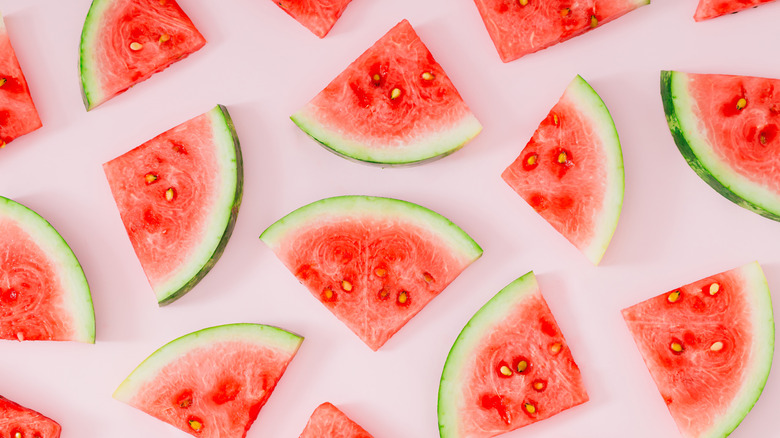
It's not easy to get a good sense of what chemicals actually go into artificial watermelon candies, as a bag of Jolly Ranchers will only mention natural and artificial flavors. The ingredient list goes much more into detail about the food colorings used than the food flavorings. If a watermelon candy isn't flavored with real watermelon juice, you might expect to see common artificial flavoring compounds like ethyl butyrate or high fructose corn syrup rather than natural sugars. Ethyl butyrate shows up in lots of fake fruit candies, watermelon candies among them.
Despite that, watermelon candies can feel more authentic than some other fake fruit flavors. There's a popular myth that banana candy tastes strange because it's flavored like the nearly extinct Gros Michel bananas rather than modern day Cavendish, but this isn't quite true. As absurd as it sounds nowadays, the reason artificial banana flavoring doesn't taste real is because it was created in the United States before bananas were widely introduced in the country, so they were basically just guessing based on the chemical compounds. Watermelons were present in the United States much earlier and the first watermelon candies likely appeared in the 20th century, with Jolly Rancher going into business around 1950. There was a bit less guessing involved with watermelon, even if it isn't perfect.