

Busch Vs Keystone: Apple Beer Showdown
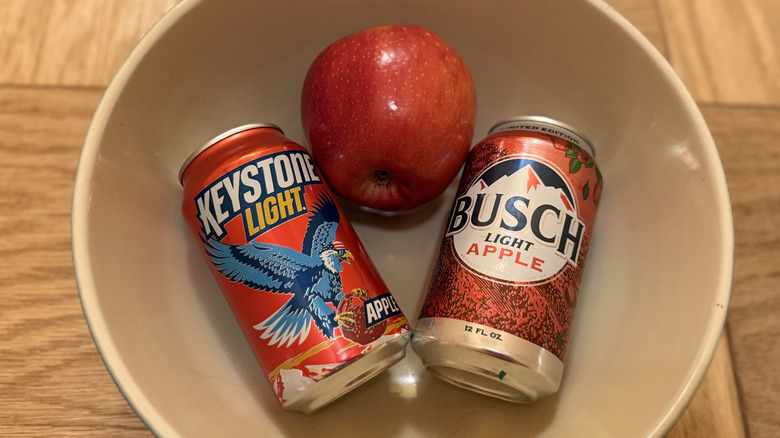
After years of Busch Light going dominating the fruity cheap beer market, the folks over at Molson Coors are trying to work a similar magic with their own brew. Welcome to the world, Keystone Light Apple.
Is there enough shelf space for these two rival apple beers to coexist? After a successful taste test of Busch Light Apple, opportunity knocked, as I was offered the chance to sample Keystone Light's new competitor for the apple beer throne. A pack of 15 of them arrived at my door. Now I'm ready to crack open some cans of Keystone Light Apple to see if this version of fruit-flavored beer falls far or close from the same apple tree.
As the summer grilling season is just about to heat up and we're about to celebrate America's 250th birthday, there's no better time to pit these two beers against the other — literally comparing apples to apples.
Methodology
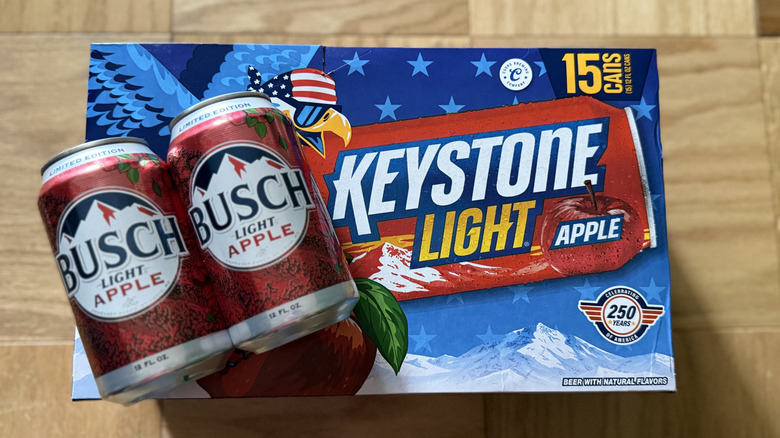
Before tasting, I refrigerated a few of the Keystone Light Apple cans, as well as some of the unused Busch Light Apple ones I had leftover from my previous taste test. I and another of-age family member first tasted Keystone Light Apple, and then Busch Light Apple. Then more sips were taken for comparing and contrasting to draw final conclusions.
While I noted the opinions of the other drinker, this review is a product of my own personal tastes and opinions. It also takes into account my previous experiences with Busch and Keystone-branded products, fruity beers, apples, and light lagers in general. The ultimate criteria considered for this review were flavor, fruitiness, aftertaste, originality, uniqueness, and overall, which apple beer was simply the best of the two.
Recommendations are based on firsthand impressions of promotional materials and products provided by the manufacturer.
Taste test: Keystone Light Apple
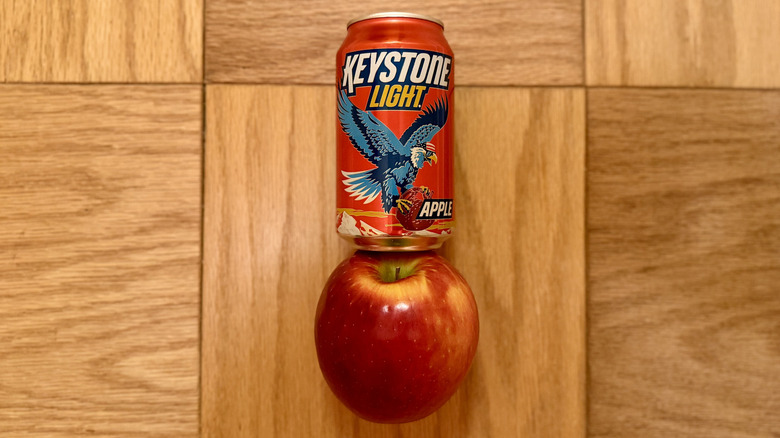
Keystone Light Apple's can was quite the eye-popping showstopper, with a beautiful background base hue of Macintosh red and the rest of the imagery being totally rock n' roll. With a can so fly, the beer had a lot to live up to. I cracked open the can and leaned in for a whiff. This first impression was not ideal. It had the odor of a bar at last call. Luckily, after it was poured into a glass and the bubbles settled, it had a much more attractive aroma. The body of the beer was light yellow and glistened in the light.
I leaned in for a sip, and the lager was certainly light, as promised. It tasted refreshing, with a clean aftertaste. What it seemed to be lacking was a strong sense of the other promised attribute — apple. There was certainly a hint of it in the brew, but the familiar taste of Keystone Light was fully in charge here.
Taste test: Busch Light Apple
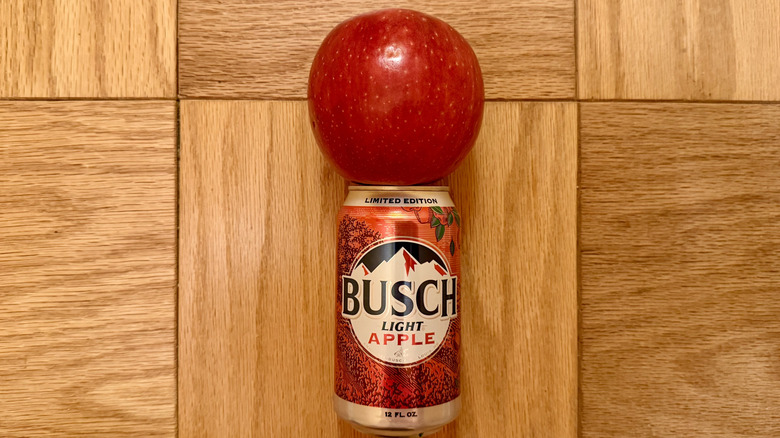
With well over a week elapsed since I first reviewed this beer, I tried to come into this new taste test with a fresh and clean palate. Where Keystone Light Apple's can was all about showy American pizzaz, Busch Light Apple took a more wholesome approach. I imagined it as the beer the old bespectacled Pepperidge Farm dude would reach for after a long day of driving his wagon and peddling Milano cookies all over the countryside.
Cracking open the can, Busch's aroma was more pleasant than Keystone's. It didn't smell like a fraternity floor at 4 a.m. Poured into a clear glass, its yellow body looked exactly like the Keystone. If I hadn't placed the appropriate can next to the glass, I could have easily confused them.
One sip and the positive memories came flooding back to my mouth and brain. This is just a great all around beer. The apple flavoring was powerful, but it didn't come off as an artificial additive. It combined with the standard light beer to deliver a fruity fresh drink perfect for a backyard barbecue.
Apples to apples — which apple beer is best?
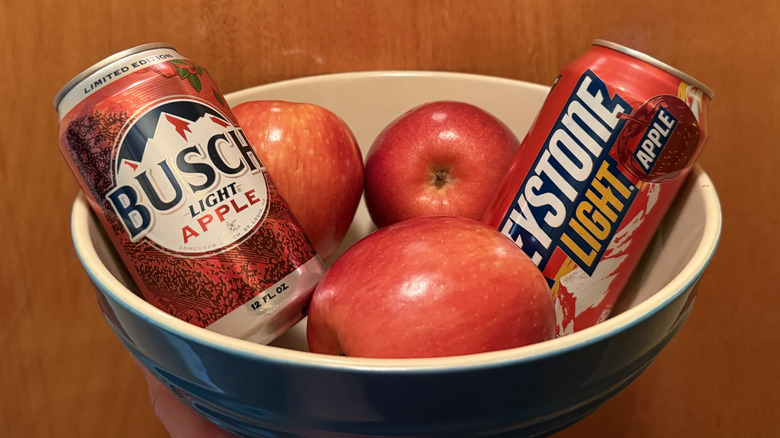
After a round of individual taste tests and analyses, it was time to just go back and forth, sip for sip, to see which one was truly the apple of my eye ... and mouth. I tried to not be biased from my previous positive experience polishing off Busch Light Apple, but it once again proved to be a big tasty winner. It contained all the aspects of apple flavor I wanted — it was sweet, a tad tart, totally juicy, and most importantly, played well with the light lager beer.
By no means is Keystone Light Apple a bad apple, it just probably needs to grow a bit more at the brewery before being plucked again. With more of an emphasis on the light beer than the apple flavoring, it comes off as a tad flat. A more apt product name would be Keystone: Apple Light. However, I must give mad props to its can. On design alone, it's 12 out of 10, and captures the perfect patriotic spirit leading into Independence Day.
Before calling it a day, I conducted another experiment with the Keystone: making a frozen hops-icle out of it. The Busch Light Apple one I made turned out to be an unexpectedly awesome adult dessert for summer. The Keystone Light hops-icle didn't achieve the same level of coolness, as it tasted like Chardonnay. Verdict — Busch Light Apple is the ripest apple beer between the two. Maybe after Pabst Blue Ribbon is done pickling its beer with Grillo's, it can be the next challenger to enter the apple-y orchard ring.
How to buy and try Busch Light and Keystone apple beers
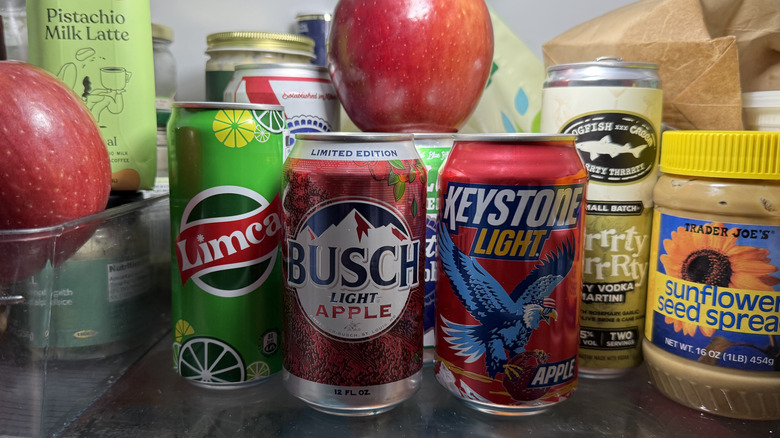
Busch Light Apple and Keystone Light Apple are both limited-time offerings, currently available nationwide while supplies last. Both Busch Light Apple and Keystone Light Apple are light lagers containing 4.1% ABV. Busch Light Apple is mainly available in 12-ounce cans, available as 12, 24, and 30 packs, but is also sold in 24-ounce tall boys. Keystone Light Apple is available for sale in cases that contain 15 12-ounce cans.
These products are available to purchase at beer stores, convenience stores, grocery stores, and in some cases, bars and restaurants. Prices will vary by retailer, but I've seen a 12-pack of Busch Light Apple online range from $12 to $17, and Keystone Light Apple 15-packs from $13 to $18.
Busch Light and Keystone apple beers nutritional information
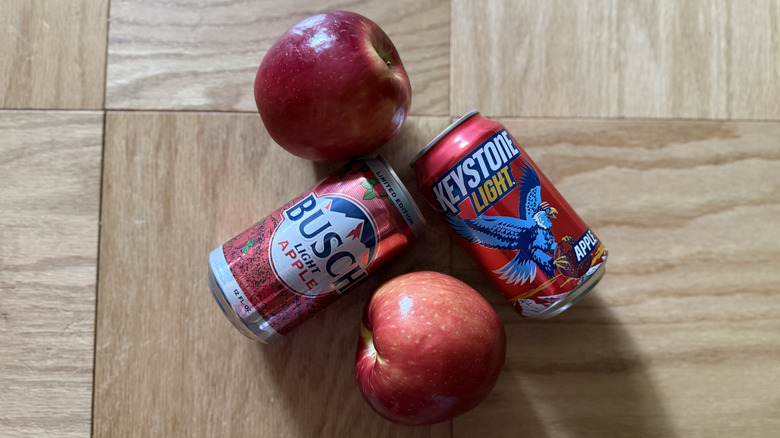
Keystone Light Apple is made with water, sucrose, barley malt, corn syrup, malic acid, natural flavor, yeast, hops, and hop extract. On the can it notes that while corn syrup was used in the brewing process, "Keystone never uses high fructose corn syrup." One 12-ounce can contains 131 calories, 12.1 grams of carbohydrates and less than 1 gram of protein.
A 12-ounce can of Busch Light Apple 95 nets a drinker 130 calories and around 12 grams of carbohydrates. Based on the expiration date printed on the bottom of the cans, both beers should remain good for four to five months, as long as the can remains unopened.