

11 Forgotten Things That Could Be Found In Every 1960s Kitchen

Close your eyes and take a deep breath, because we're heading back to the kitchens of the 1960s, where avocado and pastel hues reigned, casseroles bubbled in ovens, Jell-O jiggled and shimmied on fridge shelves, and gadgets that might quite befuddle young kids today (like, what is that thing?!) filled every drawer and inch of counter space.
This era was defined by all things convenience, and housewives across America were on the hunt for gadgets of the future, characterized by clever designs specifically engineered to save home chefs time (and essentially make life easier, faster, and a heck of a lot more fun in the process). These kitchen gadgets displayed the signature trends of the time. For instance, in the 1960s, housewives would proudly showcase the latest trending tool on their countertops with glee (and telltale flash, complete in all its usual pastel glory).
These were the days when commercials on TV were riddled with ads seeking to attract buyers with "the next big thing" (think everything from slicers to choppers, percolators, gelatin molds, the list goes on). Basically, if it could be sliced, diced, whipped, toasted, or minced, the kitchen tool inventors of the 1960s were homed in on having housewives covered. Let's revisit 11 forgotten things that could once be found in nearly every 1960s kitchen.
1. The Veg-O-Matic
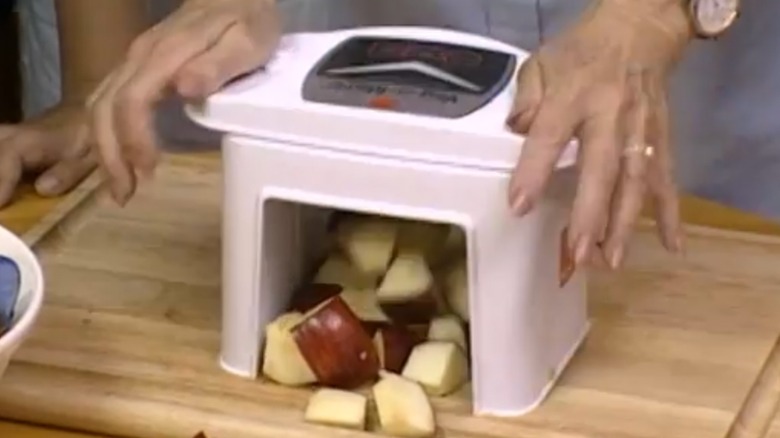
Past food writers have switched into research mode and cooked for an entire week using only food gadgets from "As Seen on TV" informercial specials. Among these trusty gadgets was the nostalgic 1960s sensation, the Veg-O-Matic. While they left less than 100% impressed (citing the amount of force required to slice and dice certain hearty veggies), in the 1960s and the years following, this gadget gained a large fan following. Much of this popularity was in thanks to the awareness of how important uniform chopping is when seeking optimum results for things like roasted vegetables. And this is one kitchen tool that promised to deliver exactly that kind of desired result.
Specifically, the Veg-O-Matic promised quick, consistent cuts, without requiring home chefs to have attended Le Cordon Bleu to acquire advanced knife skills. Its accessibility to the everyday housewife made this kitchen gadget especially attractive. In fact, during the postwar boom in the 1950s and 1960s, specialized kitchen gadgets exploded in popularity, with the Veg-O-Matic among the shiniest stars. The tool was simple (consisting largely of plastic and operated by hand), and used interchangeable steel blades that allowed users to slice or cube fruits and veggies into various selected sizes.
The real genius behind the product was the marketing (Ron Popeil, through Ronco, famously made the Veg-O-Matic a TV phenomenon, thanks to enthusiastic demos highlighting its speed, versatility, and convenience). The unforgettable slogan "It slices! It dices!" still rings in many ears today.
2. Electric carving knife
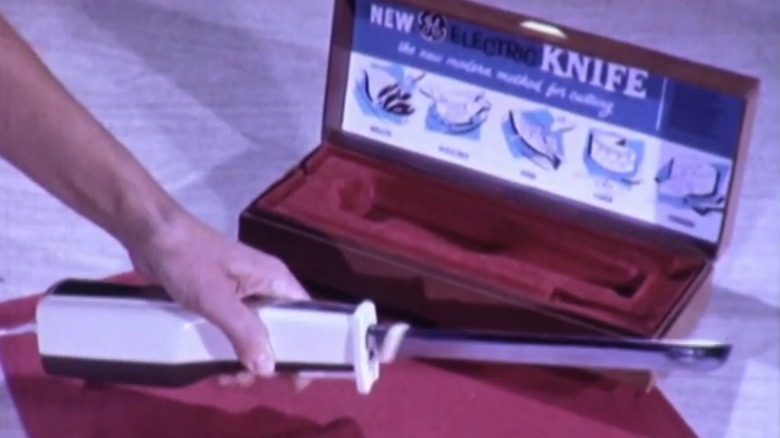
The electric carving knife has been listed among the kitchen tools not to waste money buying. For one thing, electric knives are not considered to be the easiest or best way to slice turkey breast (they're less than delicate and tend to rip meat to shreds). Apparently, the housewives of the 1960s did not get that memo, because this culinary gadget was one hot commodity back in the day. In fact, many swore by this tool as a secret hack (or slice?) of heaven.
Back then, this electric gadget created quite the buzz (literally). The marketing was marvelous, selling housewives the attractive dream of carving meats expertly, with just the simple press of a button. Featuring a pair of serrated blades (moving back and forth at a breakneck speed), the knife appeared a bit wild and science fictiony, yet families across America were instantly fascinated by (and fans of) it. Inventor Jerome L. Murray patented one of the earliest versions in 1964, and soon companies like General Electric, Black & Decker, and KitchenAid were all racing to get to market with their own money-making models. By the 1970s, millions of households owned one.
Today, many look back on this craze as a bit comedic, the vintage commercials showing smiling hosts slicing giant roasts with dramatic flair. In hindsight, some of the demos feel lowkey chaotic, even (unintentionally) hilarious. Still, nostalgia keeps these noisy blades alive, at least in hearts and memories.
3. Aluminum lever ice trays
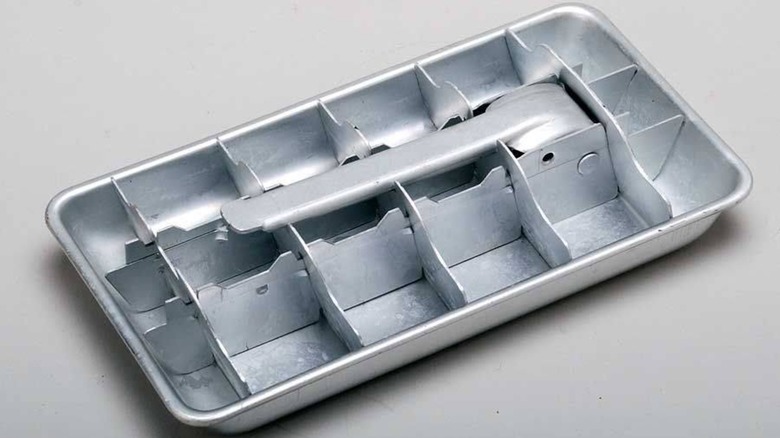
Before automatic ice makers became a standard expectation when cracking open the freezer door, folks making ice at home had to put in a little more effort. In the 1960s, for instance, home chefs turned to aluminum lever ice tray for ice cubes. These retro kitchen gadgets were shiny metal trays that sat perched inside freezers all across America.
Filled to the brim with water, once it froze folks would yank up the metal lever, hear a loud crack, and voilà! Suddenly, a scattering of little super chill cubes would bust free from their previous aluminium confines. For many people, that sound alone triggers instant nostalgia. Some remember the squeak of the handle. Others recall getting a little too enthusiastic, launching the cubes straight across the kitchen floor with a near-frantic flourish. And almost everyone remembers the universal rule: Never grab the tray with wet fingers ... unless you wanted your skin temporarily glued to freezing aluminum.
The origin story of these trays goes back to the rise of electric refrigerators in the early 20th century. Inventors spent decades perfecting methods for making neatly shaped cubes at home, eventually leading to these lever-operated iterations of the 1960s. Aluminum became the popular choice because it froze water quickly, was resistant to odors, and was long-lasting. Even after plastic trays and automatic icemakers became all the rage, people fondly remember their beloved metal trays, with some insisting they still make the best ice.
4. Rotary egg beater
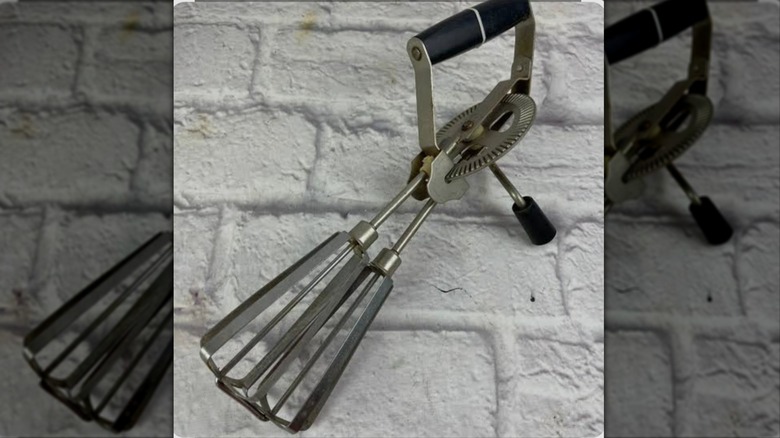
While stand mixers and electric hand blenders are common sightings today, in 1960s kitchens, home cooks looked to a much simpler tool. We're talking about the rotary egg beater. Showcasing a basic compilation of a manual hand crank, clicking gears, and spinning metal whisks, this was a popular retro gadget. Basically, if you were aiming to whip cream, mix cake batter, mash some taters, or ensure your egg recipe came out nice and fluffy, this was the tool you reached for.
The manual nature of the rotary egg beater tracks for this era, because not every home back then could afford the fancy pants appliances today's kitchens are known to boast. Maybe some lucky '60s housewives scored a food mixer (ooh la la), but the reality was more that many families still depended on the core "recipe" of elbow grease and trusty hand tools to create the treats brought to their tables.
What people seem to remember most about these basic beaters is the sound, where a gentle whirring of gears and rhythmic clicking can still instantly transport many back to the kitchens of their childhood. For some, spotting one of these tucked in an attic or on an antique shop shelf feels like uncovering a tiny time capsule. Vintage versions are still sold online today, often in cheerful retro colors that look straight out of a 1960s catalog.
5. Electric frying pan
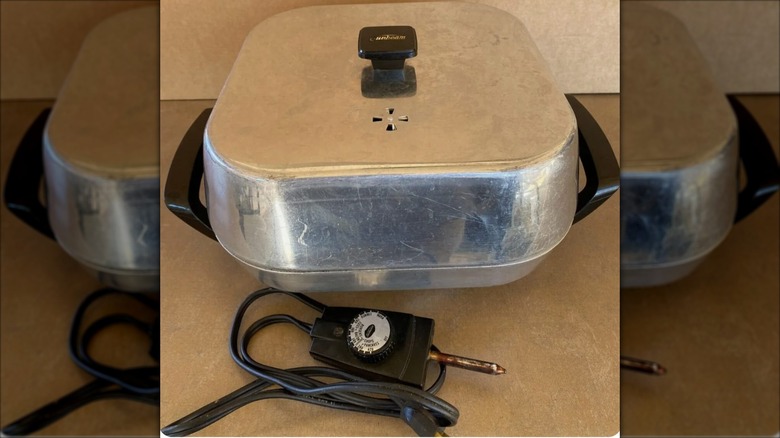
Among the appliances practically synonymous with every 1960s kitchen, the electric frying pan is a plug-in skillet that home chefs looked to for convenience. The '60s was a decade that was lowkey obsessed with making things as easy as possible in the kitchen, so households embracing this gadget makes perfect sense. Families would use these wonders to whip up everything from their morning meal of pancakes and eggs to a plethora of dinner delights. Some even went all out to stun company and family with complete Sunday roasts, all powered by this electric frying pan. Basically, it was the precursor to our modern day artillery of air fryers and multi-cookers.
What really made the electric frying pan successful was the practicality it brought to the table (or kitchen counter?). In the '60s, ovens weren't as efficient, so these electric options provided home chefs with a much easier, even cheaper, method of prepping meals, without bringing the heat to the kitchen (because those old ovens made it sweltering).
Some people still remember their mothers or grandmothers constantly cooking with one. In fact, these old-school kitchen devices seem near indestructible, as here we are, decades later, with plenty of vintage electric skillets still functioning perfectly. Go online, and you will certainly catch a glimpse of folks who have proudly held onto frypans from the 1960s, while often recalling family dinners and comforting homemade meals directly tied to the handy appliance.
6. Wall-mounted can opener
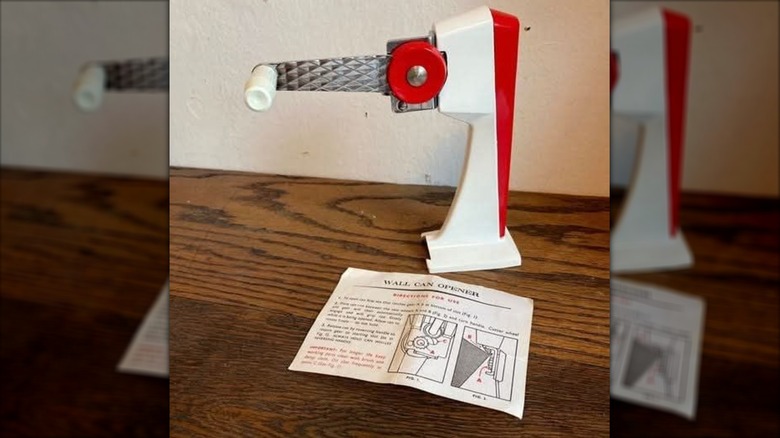
There was a time when a kitchen didn't seem complete unless it came equipped with a wall-mounted can opener bolted in place. These gadgets were nothing if not super sturdy, and their hand-cranked quality made them superheroes of the 1960s, which saw them permanently attached at the hip (corner? edge?) to cabinets or walls. A far cry from today's modern, mini-me sized versions that fit inside a drawer, these can openers were heavy-duty, and seeing one holding court in a kitchen suggested the chef really took meal prep seriously.
At first glance, these wall-mounted beasts of machines could look intimidating, but for chefs in the '60s, using one was a cinch. They'd hook the can securely in place, give that handle a good ole heave ho, and wait for that oh-so-satisfying sound that inevitably rang through the air as the lid slowly peeled away. As for what kind of jar? The better question might be what type of jar wasn't placed in this popular contraption? Families opened everything with them (canned vegetables, soups, you name it).
For many people, memories of wall-mounted can openers are tied directly to their parents' or grandparents' kitchens. Some recall watching their mother effortlessly operate one while preparing dinner. Others fondly reminisce over being fascinated by the gears and handles in their younger years. Even today, vintage models still pop up for sale, sparking waves of nostalgia.
7. Flour sifter
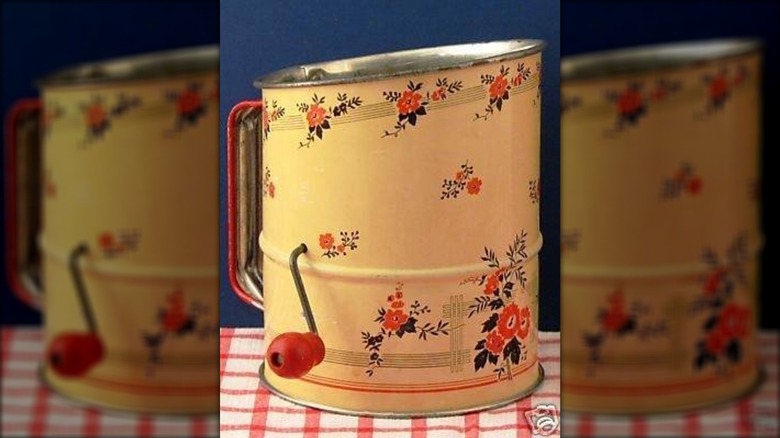
Believe it or not, there were actually days when electric gadgets of all kinds did not rule the kitchen. The 1960s would fall into this category, when home chefs still relied on doing many things sans electricity, including sifting flour. In fact, if you were a baker in the '60s, chances are you had a flour sifter sitting among your shelves.
In those days, moms, grandmas, even home economics teachers all came armed with these savage kitchen helpers, known for attacking and eradicating every lump, bump, and unseemly clump from flour (the fancy culinary term for this is "aerating," but you get the gist). Aeration was a crucial step to take before mixing doughs and batters, said to ensure a silky, smooth (read: no bumps allowed!) consistency.
In the 1960s, it seemed like every kitchen drawer held one of these metal canisters (with either a squeeze handle or tiny hand crank). Baking from scratch was still a regular part of family life, and the flour sifter was integral to the kitchen ritual. Kids would often help, cranking the handle while newly de-clumped puffs of flour drifted down into waiting mixing bowls below. Some folks still own sifters passed down from parents or grandparents, complete with faded price stickers from decades ago. They're kind of like family heirlooms, intrinsically tied to sweet memories of equally sweet baked treats and the time spent making them together.
8. Foley Food Mill
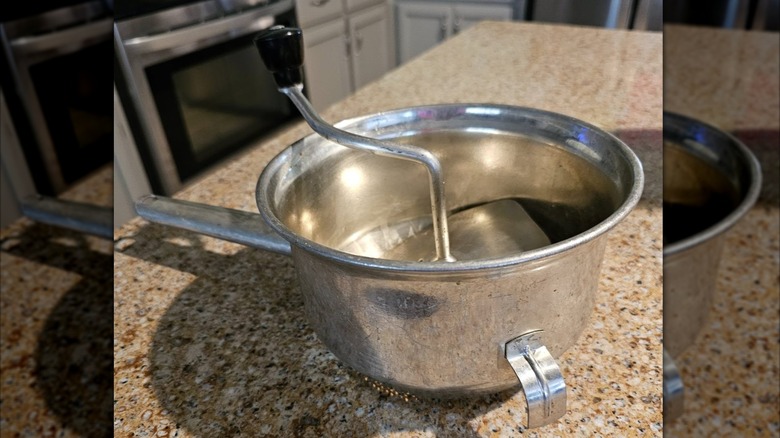
Let's talk about the Foley Food Mill. Back in the 1960s, before the convenience of food processors, super-powered blenders, and other highfalutin countertop tools invaded kitchens, this was the secret weapon home chefs relied upon. A simple gadget, it came with a hand-crank chefs used to tackle all types of tasks. Transforming whole fruits and veggies into velvety smooth purees was a top job the Foley Food Mill performed, well before pressing a simple button was a common option.
The model featured a single bowl with tiny holes in the bottom, plus a crank outfitted with a metal blade. As chefs cranked the handle, the food would be pressed through the holes, leaving skins, seeds, and all semblance of unsightly lumps behind. And ... ta da! That was the magic of the Foley Food Mill, which home cooks in the '60s used to create unified, silky-smooth concoctions ranging from applesauce to tomato sauce, and even baby food. And something really interesting? Although this old-school method definitely required more elbow grease than today's culinary ways, people still insist that the texture these vintage mills cranked out is superior to modern kitchen machines.
Although the Foley Food Mill was introduced back in the 1920s, it clearly stayed popular well into the '60s. Today, these vintage food mills still turn up at thrift stores, yard sales, antique shops, and beyond, some still fully functional.
9. Orange peelers
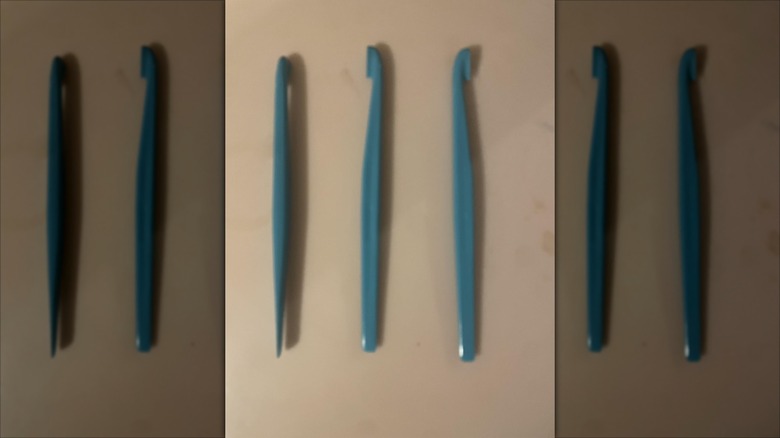
Among old-school kitchen tools that hardly anyone uses anymore is the orange peeler (Tupperware was among the most popular, well-known brands selling these in the '60s). Back then, the orange peeler was one of those little kitchen wonder gadgets that nearly every household seemed to have. It was bought, sold, even given away as parting gifts during the iconic Tupperware parties held throughout the 1960s. It was a simple device, specifically engineered to make peeling citrus fruits near seamless (especially for those worried about ruining their nails).
Simple yet actually quite clever, the peeler had a shockingly barebones design (there was a pointed hook on one end, used to score the fruit peel, and a flat side beneath that served to separate the rind). For such a basic-looking tool, the orange peeler was astoundingly effective, which explains its popularity.
For many people, rediscovering one of these peelers today brings instant nostalgia. Some stumble across them in grandparents' kitchen drawers and have absolutely no idea what they are at first. Others immediately remember using them as kids, carefully tracing lines around oranges, while citrus oils sprayed every which way through the air. Plenty of users still swear by them even now, buying and using them decades later, especially those with brittle nails, arthritis, or a strong dislike of discovering sticky orange residue under their fingernails.
10. Manual tabletop meat grinder
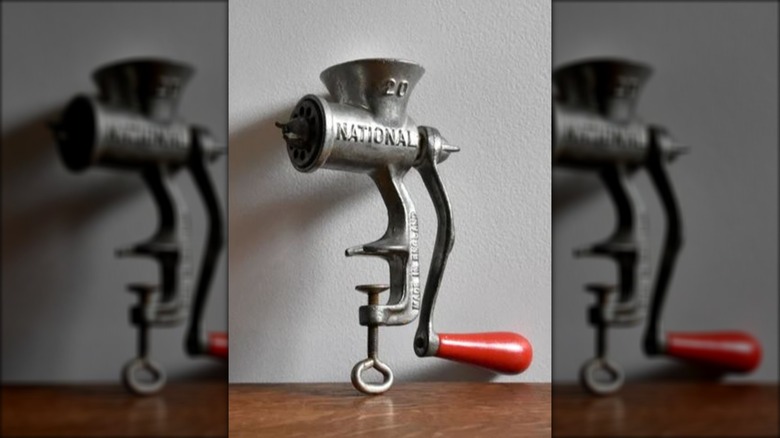
Today, modern kitchens are characterized by sleek appliances and devices, but back in the 1960s, it was items like manual tabletop meat grinders that ran the show. And while certainly not sleek, these gadgets were pretty darn hardcore, and definitely got the job done. Clamped firmly to the edges of kitchen counters, meat grinders had some girth (most were made from cast-iron, which is anything but dainty).
And if you thought they looked serious, just wait until you saw them work, that hand-crank launching into turbo mode, paired with a cutting plate zeroing in on meat hocks. This beast would transform hunks of meat into mere ribbons of finely ground matter, ready for chefs to create some magic. Thanks to these retro grinders, '60s housewives could become sorcerers of sorts, taking leftover roasts and abracadabra-ing them into sandwich fillings, meatloaf, or whatever the heck else they could dream up ... all with a few simple twists of a lever.
And while ads praised the varied options and convenience they afforded, anyone who actually used one would likely recall that the process required a bit of muscle to master. Chefs would feed the meat in, then proceed to crank the handle carefully, all while praying the grinder would stay put, and focusing the lion's share of their energy on just trying not to lose their patience. Yet despite the hard work that went into prepping food with these grinders, plenty of households still swore by them.
11. Copper gelatin molds
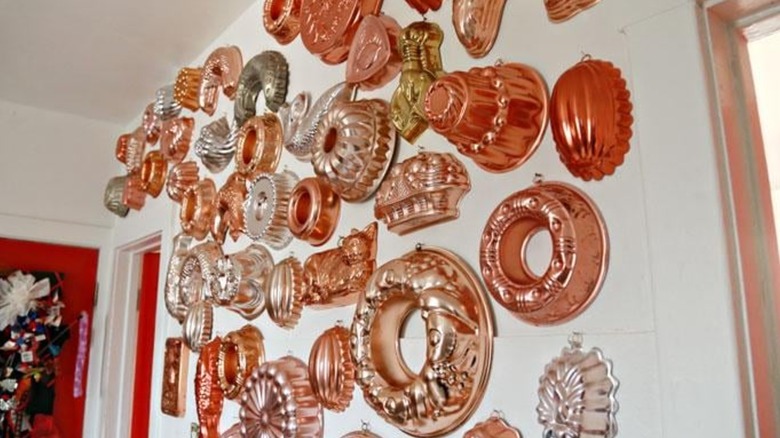
If there was anything synonymous with '60s chefs, it might be those retro Jell-O mold recipes (oh so many of them). For example, remember the cranberry walnut Jell-O mold dessert, that yummy vintage fall dish that is hardly seen anymore? Man, those were the days. Back then (looking at you, 1960s), copper gelatine molds were wildly popular. This was a golden era for Jell-O, when gelatin salads and molded desserts were known to appear at nearly every function, from family gatherings to church suppers, and even more at fancy holiday meals. As for those neighborhood potlucks? Jell-O was invited, of course!
In light of this popularity, it makes perfect sense that home cooks would require something to shape these wiggly masterpieces. And if that something could also be stylish? Home run. And that's where copper gelatin molds took center stage. They were not only functional, but also catered to the desire of '60s housewives to be decorative and even pretty.
Designed specifically to transform ordinary gelatin into dramatic centerpieces, the creations the copper molds cranked out would "take the cake" (or Jell-O?), not only with great taste, but also in the pizazz department. Many of these molds showcased intricate patterns, ring shapes, and ornate designs, and they often came with little hooks, allowing cooks to hang them proudly on kitchen walls when not using them. In some homes, those gleaming copper molds became part cookware, part decoration (or let's be honest ... all decor).