

11 Cereal Myths And Secrets That Will Change How You View Breakfast Forever

With the way things are going in the breakfast aisle nowadays, you could argue that the future is just a series of desserts being made into cereal. And, okay, valid. But that wasn't always the case. Once you start digging into that crunchy, marshmallow-sprinkled history of cereal, things get surprisingly strange.
Unlike some cereals, we won't sugar-coat anything here. From questionable health trends to marketing snafus that actually pulled the military into the mix, cereal has quite a track record. For more than a century, cereal has grown and evolved from the blandest of bran and corn flakes, to grocery aisles packed to the gills with all manner of sugar-laced glory (think chocolatey, cinnamony, French toasty, frosted — the list goes on and on).
Over the decades, society has perpetuated its fair share of myths about cereal. The truth is, the history of cereal is stranger, funnier, and way more dramatic than most people realize. So, pour yourself a bowl. Things are about to get a little nutty.
Cap'n Crunch was a fraud
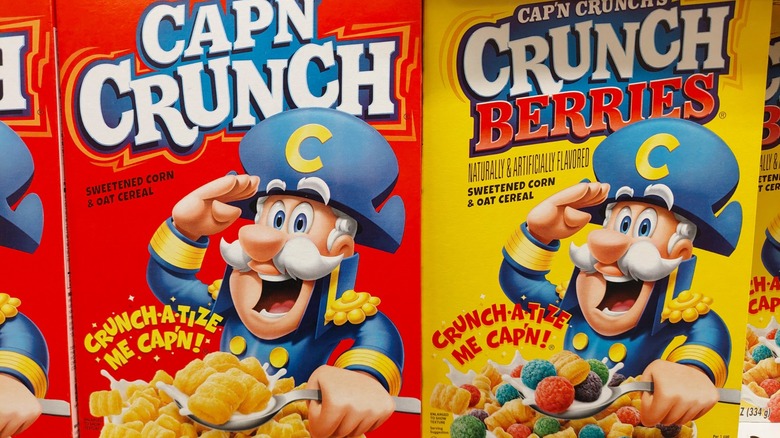
It may be the favorite breakfast cereal of beloved actor Pedro Pascal, but Cap'n Crunch has riled up some folks in the past. To be more specific, we're talking about its cartoon mascot rather than the cereal itself. Let's dig into it.
This 1960s junk food that's still around first started with a logo that wasn't quite legit. For years, happy kids dug into their daily bowl of Cap'n Crunch, never realizing that the military mascot plastered across every box was a total impostor. More observant cereal lovers spotted a big old red flag on his uniform (or a missing gold stripe, to be exact). With only three stripes on the famous mascot's uniform sleeve, Cap'n Crunch would technically be a commander, not a captain, in actual Navy ranking. Most people took the snafu in stride, jokingly calling out the now-exposed commander as an impostor. The Navy even chimed in, confirming that he "appears to be wearing the rank of a U.S. Navy commander" and that "oddly, our personnel records do not show a "Cap'n Crunch" who currently serves or has served in the Navy" (via Foreign Policy).
The most hilarious bit of this comedic skit? Cap'n Crunch "himself" stepped in and handled the accusations like an A-list celebrity caught in an unfortunate mess. The mascot held a press conference, pointing out that he also only had four fingers and eyebrows attached to his hat, so maybe realism wasn't something cereal fanatics should expect. Eventually, the cereal company fixed the mistake for Cap'n Crunch's 60th birthday, adding the proper fourth stripe to his sleeves.
Froot Loops are monoflavored
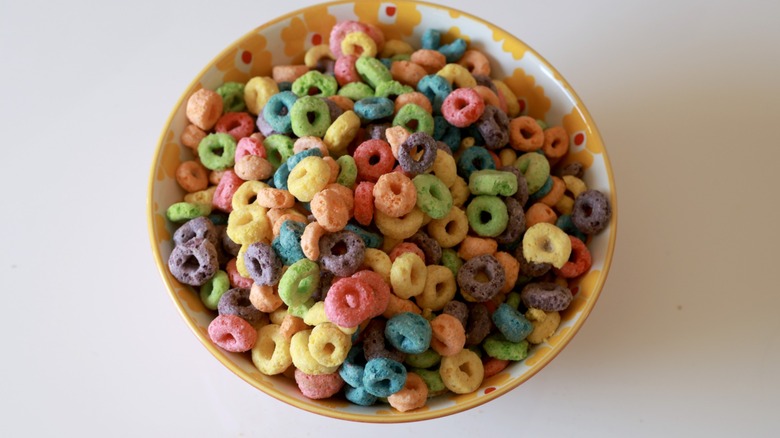
Most cereal fans attack their morning meal with gusto, digging in too quickly to overthink the contents of their bowl. But when it comes to Froot Loops, that morning scoop often involves an actual strategy. Maybe you are among those who save the red loops for last (because everyone knows they're the best). Or perhaps you avoid one color entirely (because yuck, those yellow ones have a weird aftertaste, right?)
But get ready, because here's a truth bomb. Those flavor preferences? They're all in your head. Despite the colors cluttering your bowl (seemingly cherry, grape, lemon, and more), every single Froot Loop actually tastes exactly the same. Those green loops? Not lime. The orange circlets? "Orange" you sad to hear that they're not actually citrus-centric at all? And red? Well, now you're probably seeing red (not tasting cherry) upon learning this hard truth.
Froot Loops uses one fruity flavor — said to be a blend of orange, lemon, lime, apple, cherry, raspberry, and blueberry — across every color. Your brain simply tricks you into imagining different flavors because that's what the colors make you expect. Sneaky, right? The cereal combines natural flavors with sugar and a variety of artificial colors (although these will apparently be removed by the end of 2027), making the non-official flavor a fruit salad of sorts.
The invention of Corn Flakes has been linked to chaste intentions
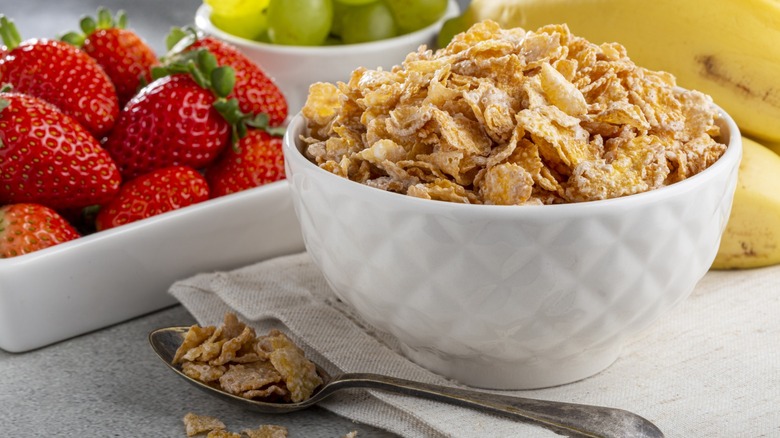
Corn Flakes may be the most snooze-inducing cereal one can imagine, but buckle up, because its history is one eyebrow-raising masterclass in accidental breakfast billions. The cereal originated in the brain of Dr. John Harvey Kellogg, a health reformer who believed people's diets directly affected their behavior, thoughts, and urges. According to Kellogg, exciting foods were just too risky because they stirred up way too much physical excitement. He concluded that flavorful foods were, ironically enough, not in good taste.
That thinking inspired the creation of Corn Flakes, which were specifically designed to be easy to digest. Over the years, this idea snowballed into the famous rumor that Corn Flakes were invented specifically to stop people from having impure thoughts or engaging in "self-pollution" — an extremely over-the-top, pearl-clutching contemporary term to describe masturbation (via Mental Floss). While historians say the cereal was mainly created as a health food for patients with digestive issues, Kellogg absolutely did hold very strict views about sexuality and believed diet could help control urges. So, the rumor stretches the truth, but the real history remains a bizarre mix of medicine, morals, and marketing.
Grape-Nuts don't contain grapes or nuts
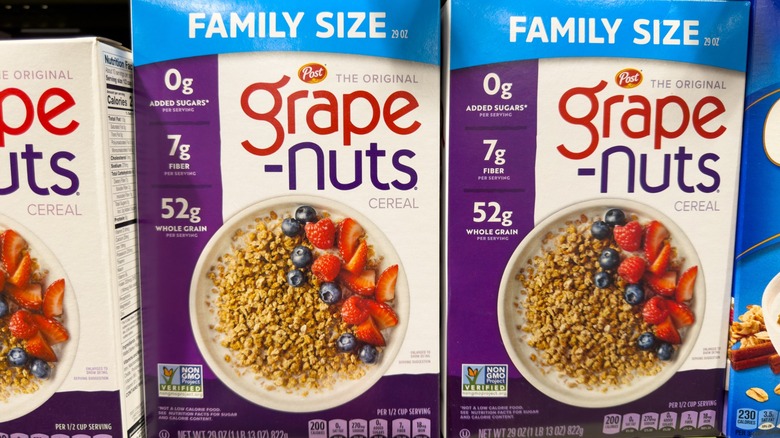
Let's talk about Grape-Nuts, which is a real head-scratcher of a cereal. Its branding has left plenty of eaters befuddled as they stare into their morning cereal bowls and ask similar questions to those famously posed by comedian Jerry Seinfeld: Where are the grapes? And where are the nuts?
Well, folks, the answer is surprisingly simple. They were never there to begin with. Number of grapes? Zilch. And nuts? Nada. In fact, Grape-Nuts are actually made from wheat and barley, so no fruit or nuts of any kind. But let's go back to the beginning, when this cereal first launched in 1897. C.W. Post created the crunchy little nuggets using baked sheets of batter that were broken apart, then ground into teeny pieces. The exact origin of the name "Grape-Nuts," though, has always remained a mystery.
One explanation from Grape-Nuts points to the fact that Post called glucose "grape sugar." Combined with the cereal's somewhat nutty flavor, this may have inspired the product's name. Yet another theory points to the shape of the pieces (said to resemble grape seeds, sometimes called grape nuts). Basically, nobody really knows for sure how the cereal got its name. But despite the confusion, the cereal has established itself as a staple of American breakfast bowls.
Blueberry cereals didn't always contain blueberries
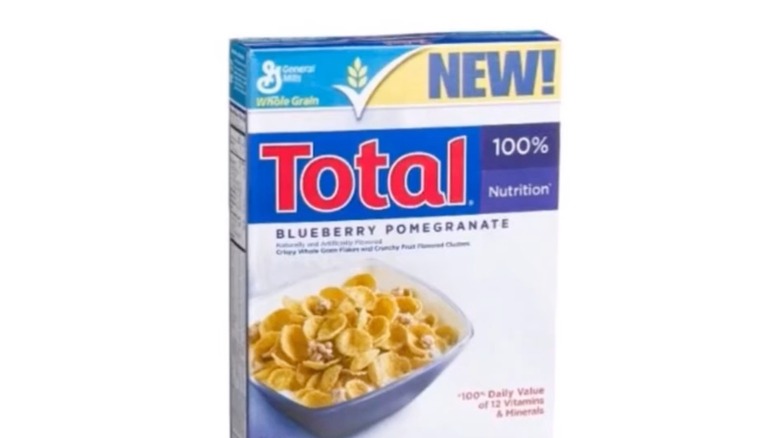
Historically, blueberry snacks (cereal included) have ranked among the grocery store items that aren't what they say on the label. While you may reach for blueberry cereals thinking you're starting your day strong with a heaping helping of fruit, there was a time when some of these "blueberries" were anything but. While some say imitation is the sincerest form of flattery, when you're talking imitation blueberries, some people felt bamboozled rather than buttered up.
So, what are imitation blueberries? Well, some cereal products have used something called "blueberry crunchlets" or simulated blueberry bits in the past. These tiny pieces are often made from ingredients such as sugar, corn syrup, cornstarch, oils, flavoring, and bright dyes designed to imitate fruit. The packaging might feature a near fantasia of fruit imagery, but the fine print? That tells a much different story (you just have to look really closely).
Today, the vast majority of companies really do use freeze-dried blueberries or legitimate fruit ingredients, such as Kellogg's Special K Blueberry, Mom's Best Blueberry Wheatfuls, and Kellogg's Blueberry Bran Crunch. This isn't totally surprising, considering a wave of lawsuits in the 2010s and early 2020s that accused some brands using imitation blueberries of misleading marketing. Before then, some manufacturers opted for simulated versions, such as in the now-discontinued Total Blueberry and Pomegranate. Regardless, the whole thing is a lesson in reading ingredient labels carefully to reveal what's really happening inside that bag.
Trix are shape-shifters
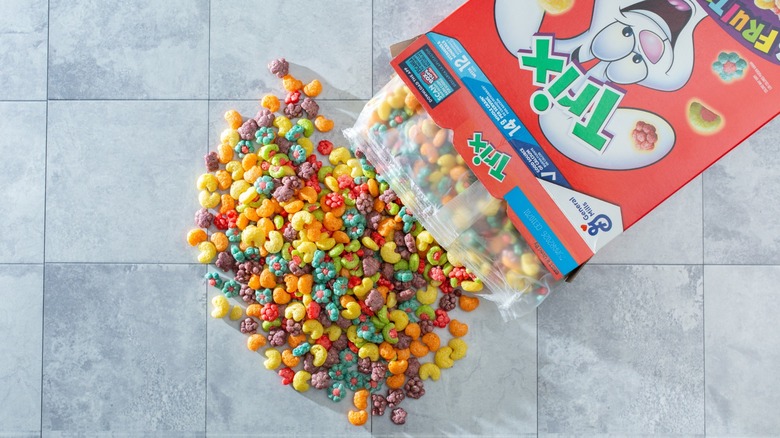
While we are on the confusion train, let's talk about Trix. They honestly might better be spelled as T-R-I-C-K-S, because they've definitely played some tricks on our eyes over the years. Depending on when exactly you grew up, you probably remember completely different versions, as these morsels morphed into different shapes over the years. Originally, the cereal started out as simple, colorful spheres. Then, sometime during the 1990s, General Mills transformed them into fruit shapes, such as raspberries, lemons, grapes, and watermelons.
For many, these fruity shapes became the definitive version of Trix in their minds. Then, in 2006, the cereal switched it up again, throwing it back to the old-school, original plain round puffs and leaving an entire generation wondering whether the fruit shapes had been some kind of collective hallucination. Some fans weren't just surprised and confused, but actually got genuinely upset about the switch-up. In fact, the company received over 20,000 requests to reinstate the classic fruit shapes in just two years. Eventually, these passionately nostalgic fruit-shaped fans won, and General Mills announced the shapes would make a comeback.
The reasoning behind the shape changes may just come down to dollars and cents versus aesthetics. Round cereal pieces are generally cheaper and easier to produce, coat evenly with sugary flavoring, and package efficiently (translation: spheres are more practical). That essentially means Trix spent years literally shape-shifting, depending on what made the most financial (now nostalgic) sense at the time.
Lucky Charms were inspired by a classic candy
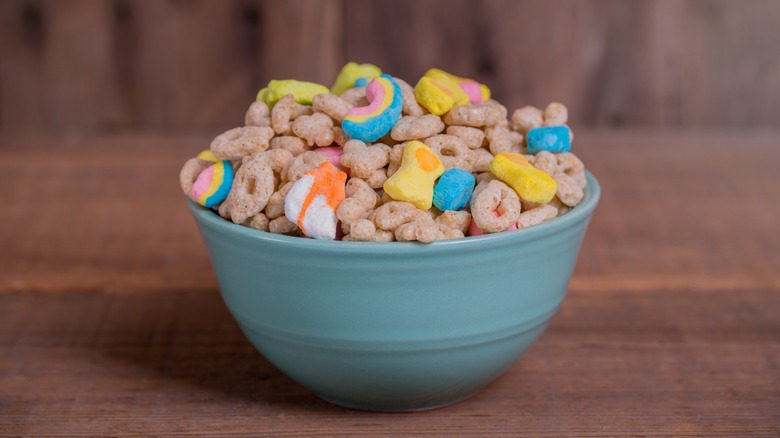
Our next deep dive into history unravels the fascinating tale of how Circus Peanuts inspired Lucky Charms. You remember Circus Peanuts, right? Those bright orange, banana-flavored confections that low-key look like packing peanuts? They're the legendary, chewy anomalies that you may not realize actually paved the way for marshmallow history (at least where the kid-favorite cereal Lucky Charms is involved).
Back in the early 1960s, General Mills developer John Holahan was challenged to invent a fun new cereal for kids. Luckily, inspiration struck — and while Holahan was noshing on Circus Peanuts of all things. The story goes that Holahan put pieces of the candy into a bowl of Cheerios, only to realize that the sugary orange marshmallow bits had transformed an ordinary cereal into something "magically delicious," as the classic 1980s Lucky Charms ad would say.
The rest is history, with that initial experiment eventually becoming Lucky Charms in 1964. The cereal's original mix consisted of toasted oat pieces alongside an array of rainbow-colored marshmallows, shaped like hearts, clovers, stars, and more. Those marshmallows later earned the nickname "marbits." Unlike regular soft marshmallows, marbits are designed to stay crisp in milk, delivering that telltale oh-so-sweet crunch. Their unique texture helped Lucky Charms stand apart from every other cereal on the shelf, which it still does today. Ironically, while the Circus Peanuts that inspired Lucky Charms have faded in popularity, the cereal is still going strong.
Nintendo made cereal history with the Cereal System
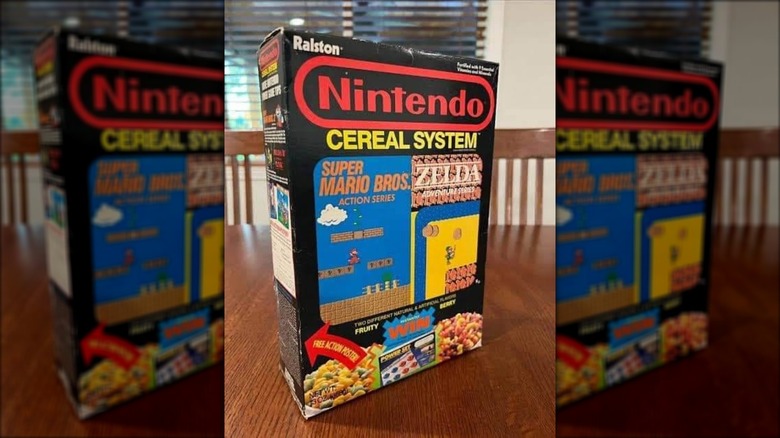
You may have heard of diptychs (a work of art characterized by two distinct panels). In the cereal world, that's pretty much what happened with the Nintendo Cereal System. Released in 1988 by Ralston, the cereal basically looked at normal boxes and said, "Forget one, we'll take two!" And boy, was it a work of art.
What was the dynamic duo? One side of the box featured a fruity "Super Mario Bros." cereal, while the other side showcased a berry-flavored "Legend of Zelda" cereal. Two separate bags. Two distinct designs and flavors. Together, they "lived" in one cardboard box that was born to both confuse and earn a near cult following. Some fans mixed both sides together, marrying Mario and Zelda to form one blissful sugar-infused union. Others were more into respecting the dichotomy, keeping Mario and Zelda strictly separate. Either way you slice (or spoon?) it, the cereal became a favorite for Nintendo-lovers everywhere.
This split design was unusual at the time. While most brands barely changed mascots, this cereal was having a full-on identity crisis. Fast forward to today, and unopened Nintendo Cereal System boxes have become serious collector items, with price tags soaring thanks to a hefty amount of dollar-raising nostalgia. Even empty boxes sell for surprising amounts, simply because retro gaming fans desperately want even a tiny, tangible bit of their childhood back. For many, it remains the ultimate breakfast cereal pop culture crossover.
Sugar Smacks experienced an identity crisis
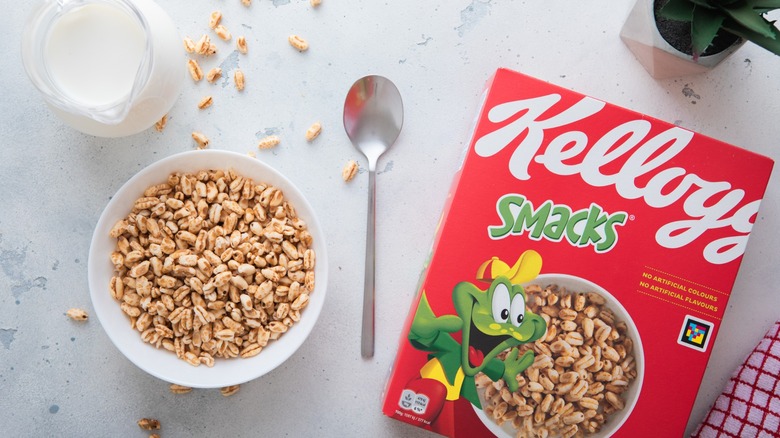
While we're on the subject of identity crises, Sugar Smacks is one cereal that many could say is a classic case. This is one brand that has gone through it (and by "it" we mean many name changes). In fact, some could say Sugar Smacks has gone through more rebrands than a B-list celebrity trying to bob, weave, and schmooze their way into the upper echelon of the Hollywood elite.
When the cereal first hit the scene in the early 1950s, Kellogg's labeled it Sugar Smacks. This name absolutely tracked, as the little puffed wheat pieces were loaded with a high amount of cavity-inducing sweetness. The only problem was that the name basically told shoppers exactly what they were getting (more like screamed it from the rooftops). As the word "sugar" started to sound less appealing to the health-conscious, the cereal began what would end up being an extensive rebranding saga.
In the 1980s, Sugar Smacks became Honey Smacks, even though the recipe was still packed with plenty of sugar. Then, during the 1990s, the cereal slimmed its name down even further in some markets, calling itself simply "Smacks" (as if removing words could somehow remove all that sugar). Eventually, the version sold in the U.S. readopted the name Honey Smacks in 2004, while several countries, such as the U.K., still stick with the Smacks branding today. Through every rebirth, though, the cereal itself stayed mostly the same sugary puff people remembered warmly from childhood.
The Wheaties curse
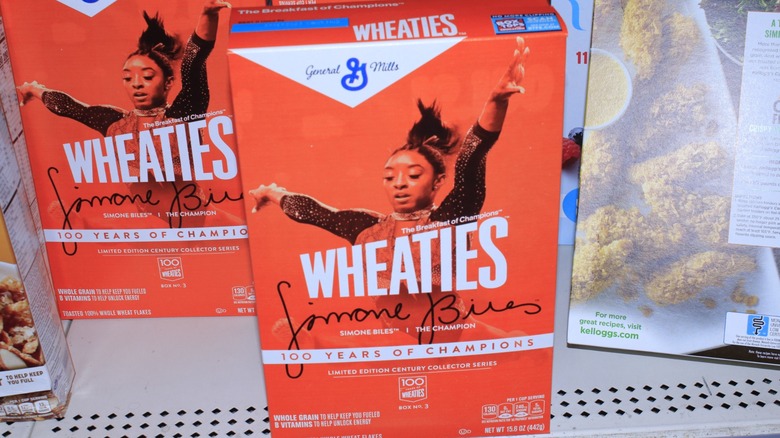
For decades now, nabbing the chance to feature on a Wheaties box has been considered among the hugest wins in the sports world. After all, the cereal doesn't call itself the "Breakfast of Champions" for nothing. That being said, some fans have convinced themselves into believing the iconic orange box holds some dark, jinx-adjacent spell — a paranoia so prevalent it's even been dubbed the Wheaties Curse.
Basically, the theory is that once an athlete nabs a coveted Wheaties cover, things proceed to go steeply downhill. The exact woes vary, from injuries rearing their ugly heads to performances drastically declining, even eyebrow-raising scandals cropping up to run amok in the bright lights of the media. The list goes on, and it ain't pretty. And those paranoid fans buying into all these Wheaties black cloud theories?
They will point you to specific examples, such as gymnast Carly Patterson (who had to retire due to back injuries) and MMA fighter Anthony Pettis (whose career flailed after becoming the first UFC athlete featured on a Wheaties box). Some sports fans have also made the connection to the infamous Madden Curse, which theorizes that athletes experience disastrous seasons after appearing on the cover of "Madden NFL" games. Of course, not all sports legends have fallen victim to this supposed cereal jinx. But once fans noticed a perceived pattern of predicaments post-Wheaties fame, superstitions stuck around.
Rice Krispies briefly had a fourth mascot
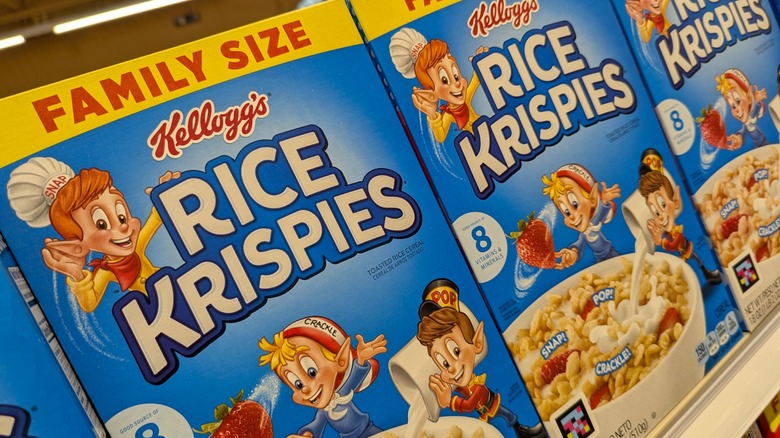
Our last entry on this list takes us to the saga of Rice Krispies. Talk about family drama! It all started with Snap, who was then joined by two other fictional brothers who became the brand's iconic mascots. Their very names (Snap, Crackle, and Pop) mimicked the sounds exploding from the bowl the moment the milk met cereal. Kids everywhere instantly recognized these three tiny elf siblings, taking great joy in sounding along as their spoonfuls practically shouted out to them each morning, heralding each bros' calling card, like cereal's version of Batman's "Pow! Zowie! Wow!" (but at the breakfast table instead of Gotham City streets).
But during the 1950s, Kellogg's briefly decided the trio might need one more, so it "adopted" a new member, Pow, now known as the forgotten fourth Rice Krispies character. More like a cousin or friend than a blood brother, Pow debuted in the early days of the Space Race, dressed like a tiny space traveler. He represented the cereal's "explosive nutritional value" (via Oxo Packaging). Unlike the other mascots, Pow wasn't named after a sound but instead had a symbolic moniker (for "power," specifically).
Sadly, after appearing in only two television commercials (which, judging by the storyboards, were slightly odd and not particularly on brand), Pow disappeared. Much like the original three brothers, the message here was loud and clear: A crisp sound will always trump a silent symbol.