

You're Probably Using The Wrong Type Of Water In Your Keurig
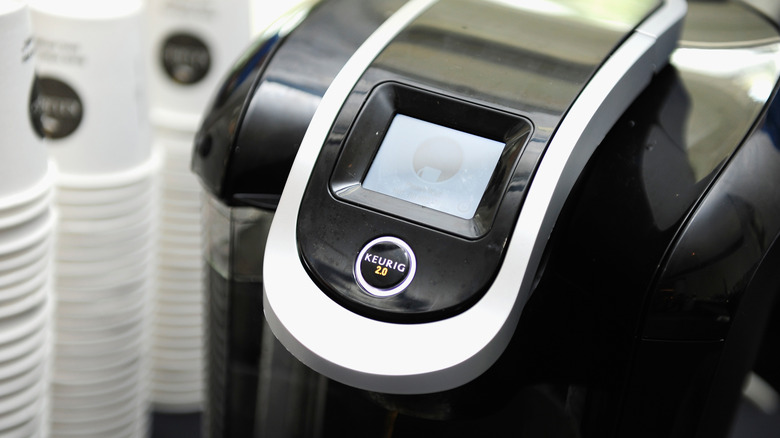
Keurig sells one of the easier-to-use coffee makers out there (thankfully, Keurig is finally beginning to use compostable pods), but simply placing a coffee pod and water into the machine isn't enough for a great cup of morning coffee. Water can affect the taste of coffee in any coffee maker, and many baristas would tell you that unfiltered water will ruin even the best coffee beans. Should you be putting fancy water in there? Hold your carafe: Whether you're using unfiltered or super fancy water, it may not be a good fit for being quickly blasted through those punctured Keurig pods.
Keurig's parent company, Keurig Dr Pepper (that is, until the two companies soon separate), officially claims you can use any water with a Keurig coffee maker, but distilled water and high-alkaline water won't let the coffee maker "perform at its best." For reference, alkaline water is a less acidic water which is sometimes suggested to be healthier. Distilled water is made by heating it into steam and then cooling it back into liquid (which is also how most liquor is made), removing its minerals and making it extremely pure. You can drink distilled water, but it's more often used for medical equipment or as ingredients in things like moisturizers. In any case, Keurig recommends you pour in bottled or spring water when you're brewing.
Avoid distilled and alkaline water in your Keurig
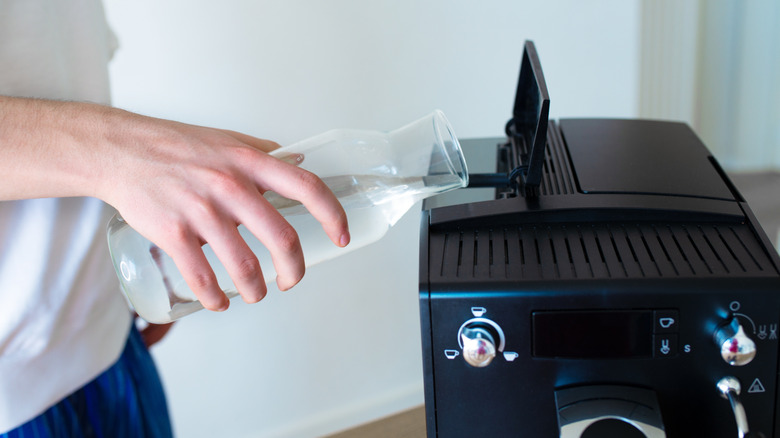
Keurig's beef with distilled water and alkaline water involves different aspects of how water and coffee interact while brewing. It might sound great that distilled water is pure and free of minerals, but the natural minerals in water actually help with the process of extracting flavor compounds from the heated coffee beans. Water that's too hard makes for bitter coffee, but completely pure water makes for bland coffee. Coffee water should have a slight punch to it.
Meanwhile, high-alkaline water typically has a pH level of 8 or 9 compared to normal water's neutral pH level of 7. Again, this may sound good, but even though water which is too acidic makes for poor-tasting coffee, mild acidity is an important part of coffee's flavor. High-alkaline water erases that mild acidity and similarly makes it taste bland. On top of that, water labeled as alkaline can often be hard enough that you run a higher risk of limescale buildup; that natural buildup of calcium and other minerals which forms inside your coffee maker's insides when you aren't cleaning your Keurig as often as you should. You want a type of water that lies more in the middle of the pH scale, and most brands of bottled water are somewhere between 7 and 8 on the pH scale, making them perfect for coffee brewing.