

If You Order This Drink Last, Your Bartender Might Be Annoyed
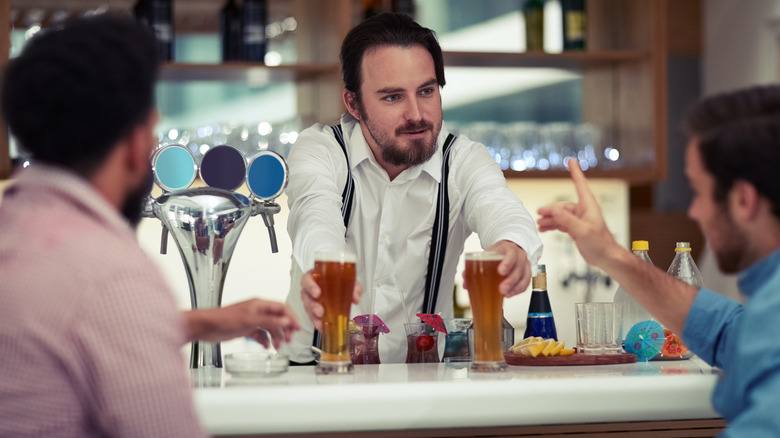
When you're enjoying drinks at a bar, there are many things that can rub a bartender the wrong way. While there are incredibly obvious things you should avoid doing, like snapping or whistling at your bartender, sometimes even the sequence in which you order your drinks can prove to be a nuisance. More specifically, ordering a round of drinks and listing Guinness at the very end is annoying to many bartenders, as timing is key for the classic brew.
Bartenders and frequent Guinness drinkers often express the importance of ordering Guinness first when buying a round of drinks due to its long wait time in between pours. The Irish beer famously needs two pours to achieve the foamy head it's known for, with the ideal settling period between each pour being 119.53 seconds.
This nearly two-minute window allows the bartender to focus on the other drinks in your order before returning to finish and serve your pint of beer. However, if you ask for a Guinness after the bartender has already started making the rest of the drinks, it can throw off the bartender's timing, since the Guinness pour needs to begin right away for the order to come together efficiently. Thus, while adding a pint of Guinness at the end of your order might sound like a fitting conclusion, mentioning it earlier in the sequence allows the bartender to plan ahead and get your entire order to you as quickly as possible.
Why pouring Guinness properly is so crucial
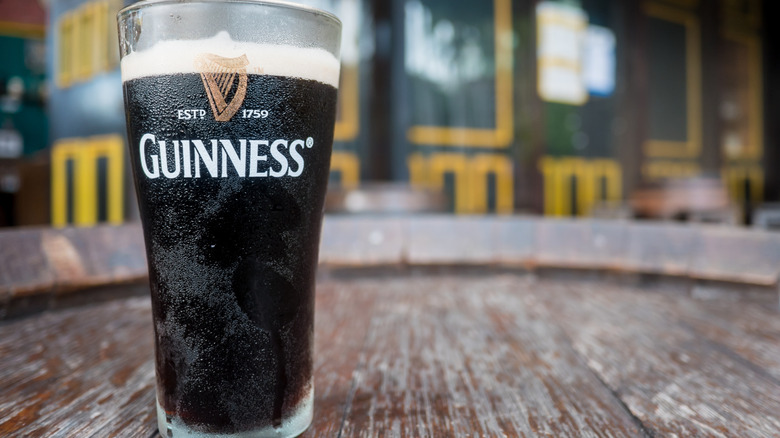
It's no surprise that bartenders may get upset over a drink order that throws off the efficiency of their process. However, many question why Guinness requires the two-step pour in the first place. Well, it's mainly due to how Guinness beers are carbonated using nitrogen, a technique that began in 1959. As the drink is poured, tiny nitrogen bubbles amass to create the foamy head of the beer that Guinness fans know and love. However, if the drink is poured all at once, the head is bigger, and the foamy bubbles aren't as tightly packed together, leading to a noticeably imperfect texture overall.
This isn't the only aspect of making a Guinness that is unique, either. The beer needs to be poured into a glass held at a 45-degree angle during the initial pour, and after the settling time has elapsed, the drink needs to be topped off directly under the spout at low pressure to be made correctly. Plus, even after you've received the beer as a customer, you're still supposed to wait a few seconds before drinking it. Ensuring that the drink has settled fully to the point that the head and the body of the beer are completely separate is also considered a must among Guinness purists. These factors all come together to make a perfect pint, although it'll likely never compare to the taste of a Guinness you could have in Ireland.