

11 Fast Food Chains That Actually Serve Fresh Food (Never Frozen)
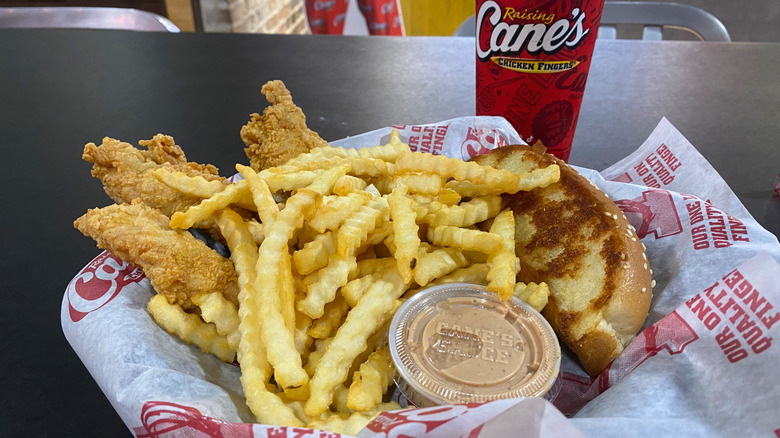
If you don't have firsthand knowledge, and you're trying to imagine the inner workings of a fast-food restaurant, you might envision a stainless steel-covered, assembly-line-like setting in which industrious workers put together your meal in a manner that doesn't even begin to resemble home cooking from scratch. Preformed patties and molded chicken go from freezer to fryer to bag to drive-thru window (but it tastes great, so do you mind?). Or perhaps you envision the opposite: employees hand-cutting fries from piles of potatoes, carefully forming patties from ground beef with their own two hands, stirring vats of chili or chicken noodle soup crafted from individual ingredients.
Turns out, the actual reality is a little bit of both. Some fast-food chains rely on frozen foods for their convenience. Others actually serve fresh food. Many work with a combination, so that customers like you can enjoy a mix of high-quality, fast service, and a reasonable price.
So, where can you go for the best chance of getting an actually fresh meal, made with never-frozen ingredients? No, you don't have to forgo the burgers, chicken, and similar items you might suspect are frequently frozen. Here are the fast food chains serving up fresh meals (some of them don't even own a freezer).
In-N-Out
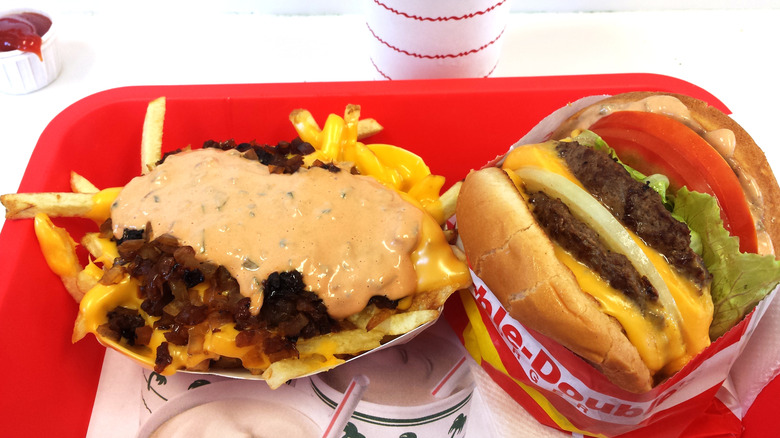
Many of the restaurants that serve up some of the freshest food have earned themselves a bit of a cult following thanks to their attention to care and quality — and that's definitely the case for In-N-Out. You'll never see a freezer or microwave at an In-N-Out location. Additionally, none of the food the chain uses is pre-packaged, either (aside from the condiments). There's not even a heat lamp to keep food warm as it lingers, because it simply doesn't linger.
The famous burgers come from cattle specifically picked for In-N-Out's usage. Rather than buying random ground beef from a supplier, the chain inspects each chuck itself and takes on the task of removing the bones, grinding the meat, and making the patties. The patties are admittedly not made on-site, in each individual location; instead, they're made — using no preservatives or fillers — at one of three facilities, with In-N-Out operating two in California and one in Texas, before being shipped to restaurants. Still, they're never frozen.
The chain takes a similar approach to its fries. The potatoes go from farm to store, where they're turned into french fries. Similarly, the buns are made fresh, locally, and toppings arrive fresh at the store on a regular basis, too. Now, it is worth noting that it's easier for In-N-Out to go to the lengths it does because its menu is so straightforward and simple. It just proves that, sometimes, quality is better than quantity.
Raising Cane's
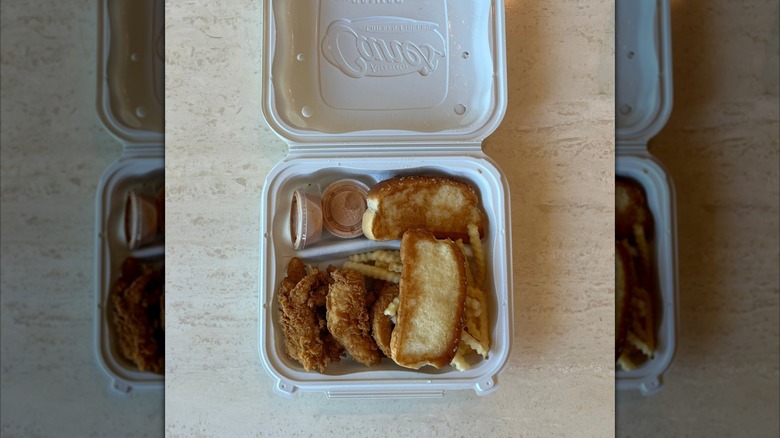
Another chain restaurant with a loyal following, an incredibly simple menu, and no heat lamps or microwaves in sight, Raising Cane's famed chicken strips are never frozen. Instead, they're hand-battered and then fried right on location. The specific cut of meat that Raising Cane's uses for its chicken fingers is the chicken breast tenderloin, for single, long, whole cuts of white meat for every individual strip.
This attention to quality carries over to the other items on the menu, too. For example, restaurant employees make the Cane's Sauce fresh, in big batches, every single day. Likewise, they make the slaw fresh, too, daily, using real ingredients like diced cabbage and carrots. Iced tea is brewed fresh daily; lemonade is freshly squeezed as well.
Once this food is made fresh, it doesn't stick around long. According to Cane's employees, chicken fingers are considered no longer good to sell after six minutes out of the fryer, and fries are considered no longer good to sell after three minutes out of the fryer. While this is good for customers, practices like this do mean that some employees think Raising Cane's has a food waste problem, with others pointing to similar waste issues like trainee meals being thrown out rather than eaten. Some estimate that a single Cane's location can waste a minimum of 20 pounds of food per day.
Whataburger
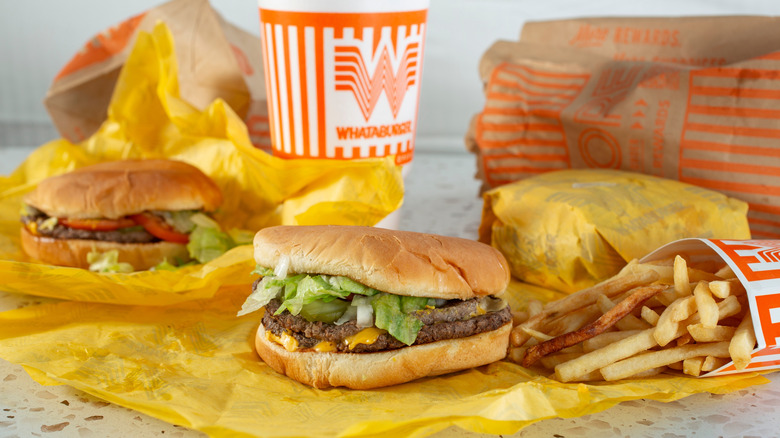
Southern chain Whataburger is another popular fast-food chain that never uses frozen beef. The fresh patties aren't even cooked until you place your order. Whataburger continues its commitment to freshness and high quality by likewise only using 100% white meat chicken and fresh vegetables that are chopped in-house every day. The brand also says that it sources its tomatoes, potatoes, lettuce, eggs, poultry, and bacon from North American farms, with cheese made with American dairy farm milk.
All of this, though, doesn't mean that Whataburger hasn't received its share of freshness-related and beef-centric criticisms, though. One customer on Facebook claimed that they witnessed the chain using warmers for its burgers. Employees, though, refuted this claim, with one saying that, while the restaurant has warmers, they're not used for burger patties, just chicken, bacon, eggs, sausage, and biscuits. Additionally, in 2018, a report produced by numerous organizations, including Consumer Reports and the Center for Food Safety, gave Whataburger an "F" grade for its beef sourcing, noting that the chain did not have a publicly announced policy to source antibiotic-free beef; Whataburger was not alone in this ranking, though, with In-N-Out and 20 other fast-food chains joining it.
Culver's
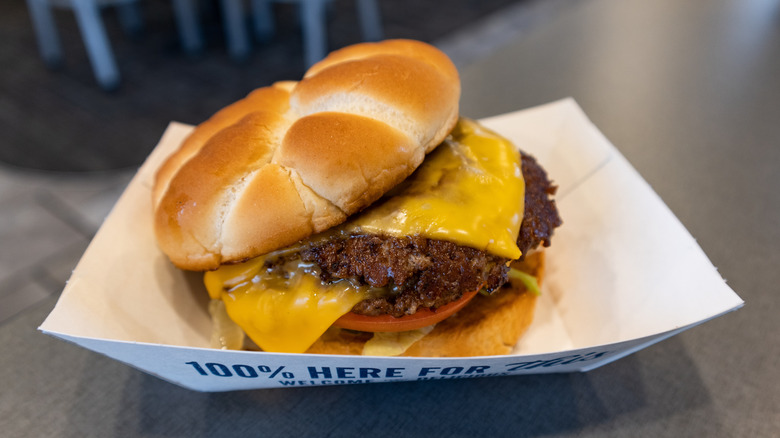
Culver's burgers are fresh, not frozen. The burgers are made with a combination of sirloin, chuck, and beef plate, which, if you aren't familiar with it, is a fatty cut from the cow's lower belly that can be further broken down into cuts like skirt steak or hanger steak. A Culver's grill master takes this fresh mixture and places it onto the flat-top, pressing and searing it into that perfectly formed and flattened patty. The Culver's employees who man the grill boast a special title — this is not a role that's taken lightly, with employees having to work their way up to the task, over months of one-on-one training, and then each approved grill master gets a special uniform with a chef's coat. Patties are seasoned simply with salt and pepper, only flipped once, and then adorned with the toppings of your choosing. Each burger is made to order, too, which allows for even greater freshness and all sorts of options in the way of customizing your meal.
It's not just the burgers that are fresh here, though. The frozen custard is made fresh throughout the day, too, in small batches, utilizing fresh dairy sourced from family farms. Some of those farms, Culver's has been working with for more than three decades. Chicken is likewise sourced from family farms, and those cheese curds? Specifically, from a Wisconsin dairy farm.
Five Guys
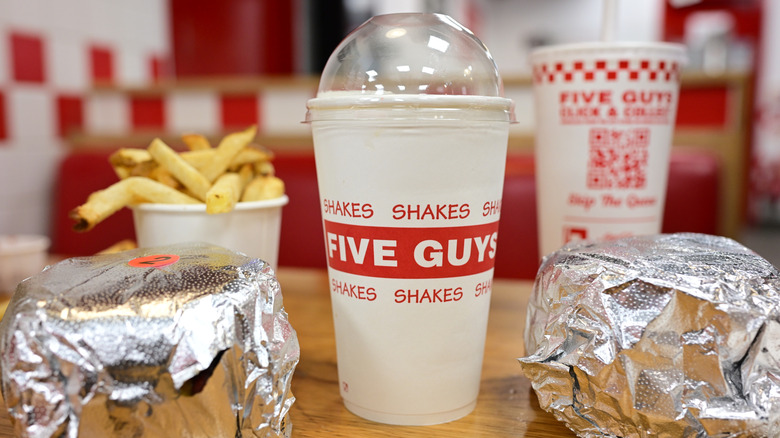
It's not difficult to catch on pretty quickly that Five Guys' food is fresh. Thanks to the fast-food restaurant's open kitchen concept, you can watch your food being made to order right there in front of you. You can watch the crew members forming fresh beef into patties or cutting up the burger toppings. You can witness the bags of potatoes for yourself, destined to be cut into fries. All these business choices are made possible in part thanks to, again, a more limited menu.
Five Guys takes a lot of pride in its fresh-cut fries in particular, but those fries have been catching some heat (and not the good, fryer kind). For instance, one Reddit thread popped up discussing that, yes, Five Guys uses real potatoes, cut in-store, but "fresh" is up for debate; the potato harvest season is short, so Five Guys keeps potatoes stored for potentially months. Your French fries may not have seen a field in quite some time.
Then, in December 2025, the chain announced it would be switching from serving its fries in the characteristic cup to a fry bag. The change, it said, would increase fry quality while also cutting down on waste. The complaints since have been numerous. Customers cite less generous portions of fries and say that grease soaks through the bags and onto whatever they're touching. The chain has assured customers that the portions are still the same — but customers aren't having it.
Chipotle
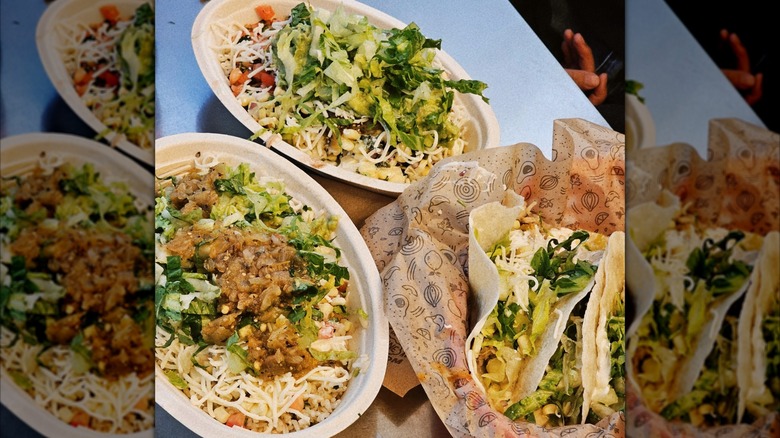
While some fast-food restaurants may claim certain menu items are never frozen, they may still have freezers on-site for select other items. Meanwhile, there are a handful that don't even own a freezer. That's the case when it comes to Chipotle and its "no freezers, no can openers, no shortcuts" mantra — though the whole shortcuts thing could be debated.
According to past employees, some items do come pre-cooked and in bags, though, again, never frozen. Some salsa is delivered pre-made, while some items are chopped or prepped by employees daily, like lettuce, onion, jalapeño, cilantro, and guacamole. Chicken is cooked from raw, but barbacoa is not. So, no freezers, but perhaps there are some liberties being taken with the definition of "fresh."
To the restaurant's credit, though, not only does it believe that ingredients should be fresh, but they should also be as real as possible, made without artificial flavors, dyes, and preservatives. To even further embrace a real food approach, Chipotle uses only 53 ingredients total across its restaurants, and it claims you should be able to pronounce all of them. Along these lines, Chipotle was one of the first national restaurant brands to commit to local and organic produce initiatives, as well as the first to commit to responsibly raised meat with high animal welfare standards.
Wendy's
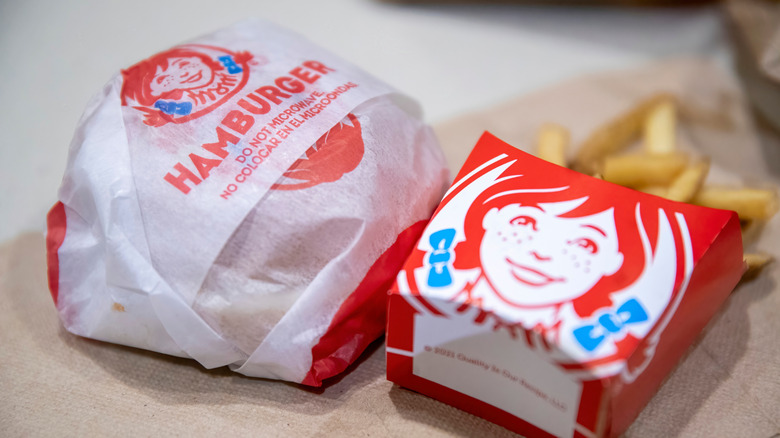
Probably the fast-food chain that's most broadly publicized a commitment to fresh, never frozen food, Wendy's is all about those never-frozen burgers. In fact, past employees claim that, if beef ever did arrive at a location and it had accidentally frozen due to cases of beef being too close to a refrigerated truck's cooling unit, they had to reject the shipment.
Furthermore, the chain has committed to a variety of initiatives that ensure higher-quality, and more responsibly sourced beef. For example, it's the first chain restaurant to partner with Progressive Beef, which uses third-party verifications to ensure cattle receive humane care and living conditions. As of 2016, Wendy's was aiming to eliminate its use of beef exposed to the routine use of medically important antibiotics by 2030. As of 2020, the chain reported that approximately a third of its beef comes from producers who've committed to reducing these antibiotics by at least 20%. It also sources the entirety of its beef from producers that are Beef Quality Assurance certified.
And as for Wendy's other menu items? The chain is less verbose there, but it does say that its bacon and seasonal produce for salads are all fresh, as is the chili.
Smashburger
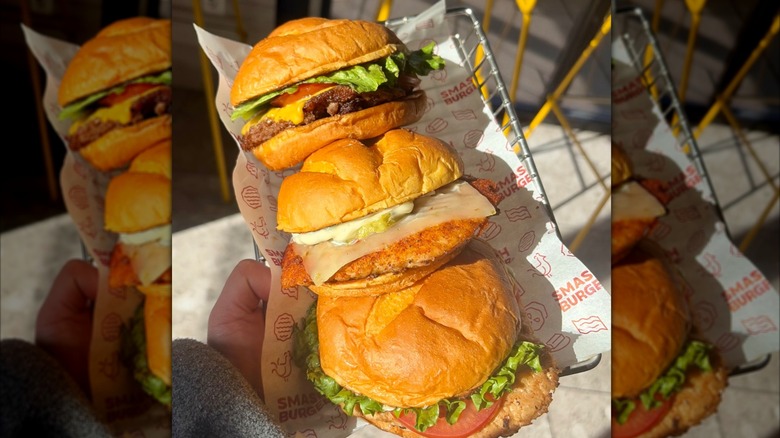
Smashburger may be a lesser-known chain compared to some of the other restaurants on this list, but you probably know what a smash burger is. The chain's namesake menu item is characterized by its thin burger patties that somehow remain moist on the inside while getting all crispy on the outside. Turns out, one of the keys to a good smash burger (no matter where you buy it) is fresh meat. You're going to struggle to get the texture you want if you're working with a frozen patty. As such, when eating at Smashburger, you can expect your burger to be fresh, never frozen.
Smashburger's process is simple. Fresh, Certified Angus Beef is loosely packed into a ball, not a patty. The griddle is heated to a scorching hot temperature, and then that ball of fresh beef lands on the surface with a sizzle. The team member takes a burger press and smashes the beef into patty form, before letting it cook, undisturbed except for one flip.
Convinced you need to try this chain's fresh bites? If you've never been to one of the 190 locations, or even seen one, there's good news. In early 2026, Smashburger announced a rebrand and plans to expand, noting the potential for up to 2,500 new locations.
Moe's Southwest Grill
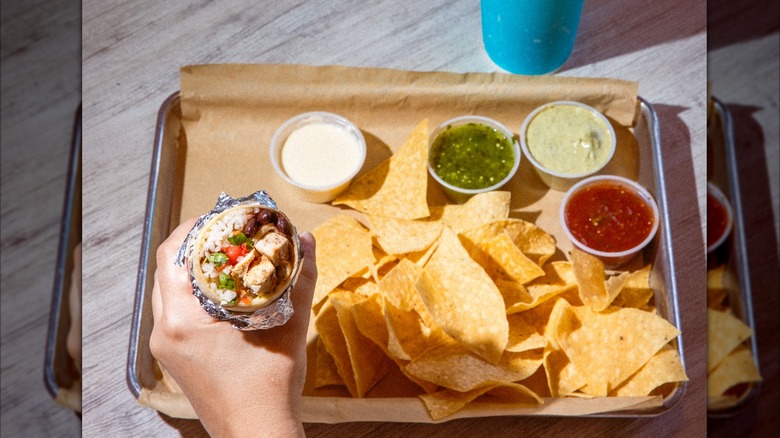
"Welcome to Moe's!" The restaurant is definitely more well-known for its employees' mandatory greeting than perhaps its freshness, but just like several other Mexican-inspired fast-food chains on this list, Moe's is serving up never-frozen ingredients. You'll see nary a freezer nor microwave at Moe's. In fact, the brand is so passionate about not using freezers or microwaves that, in 2017, it created an entire ad wherein microwaves were dropped from helicopters and freezers were blown to smithereens.
Moe's, though, is very much like fast-casual Mexican chain Chipotle in that it does get some items precooked, if not frozen, while others are made in-house on a daily basis. Items that are made daily, on-site, include the seasonal salsas, guacamole, pico, grilled vegetables, and black beans. In contrast, some employees report that the ground beef comes pre-cooked, though all other meats arrive raw and pre-seasoned, ready for cutting and grilling at each individual store. The same goes for the chain's organic tofu.
Qdoba
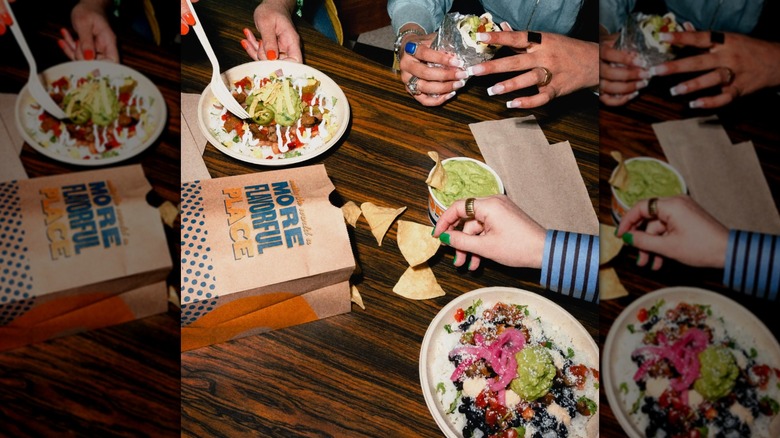
Continuing the trend of fast-casual Mexican chains prioritizing fresh food, Qdoba is another restaurant that claims its locations contain no microwaves, no freezers, and no can openers. The brand says it flame-grills its chicken and steak, chops its produce, and handcrafts its guacamole, fresh in-house. Plus, the chain uses U.S.-grown produce and rice and 100% cage-free eggs. It's also pledged to avoid a long list of ingredients as part of a clean-label initiative, including artificial colors and flavors and MSG (though, admittedly, we do know that MSG isn't dangerous).
However, again, "fresh" isn't always defined the same way. Past employees say that, while chicken, pork, and steak are cooked in-house, as are rice and beans, other items come delivered in bags, like certain salsas or sauces. Many customers may overlook this small fact, though, when you take into consideration that Qdoba doesn't charge extra for guacamole or queso and, when comparing Chipotle vs. Qdoba, Qdoba's burritos are both cheaper and potentially tastier, depending on who you ask. Perhaps for reasons like these, Qdoba has been planning significant expansions over the last few years. As of 2023, it had 750 restaurants in 45 states, and, through 2033, it anticipates doubling that number.
Baja Fresh
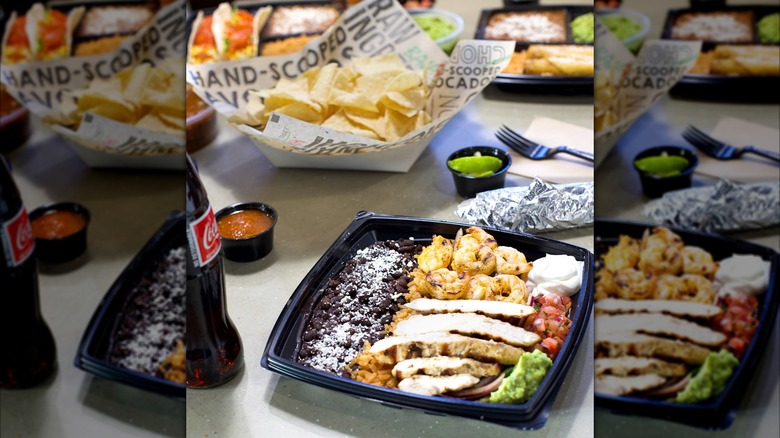
With "fresh" right in the name, you should expect this restaurant to prioritize all things freshness — and it's definitely the case that Baja Fresh Mexican Grill typically has no microwaves or freezers on site, nor any can openers. Furthermore, one of the company's most utilized ingredients is its fresh chicken tenders, and they are actually almost surprisingly fresh — going from slaughterhouse to restaurant within days. Salsa is also prepared fresh daily, rather than coming from a bag.
However, some claims come with asterisks, including the claim that there are "typically" no microwaves or freezers, as per usual with these restaurants. Still, that doesn't mean you can't find an actual fresh, never-frozen meal here. It just means that not every single food on the menu is never-processed, handmade, or farm-fresh. Additionally, some ingredients do arrive at restaurant locations frozen.
Maybe these few asterisks are why Baja Fresh doesn't quite have the same current-day popularity as Qdoba or Chipotle? While the brand was the top burrito chain in the country in the early 2000s, today, there are fewer than 100 restaurants left nationwide.