

The Biggest Differences Between Frozen Grocery Store Lobster And Fresh Caught
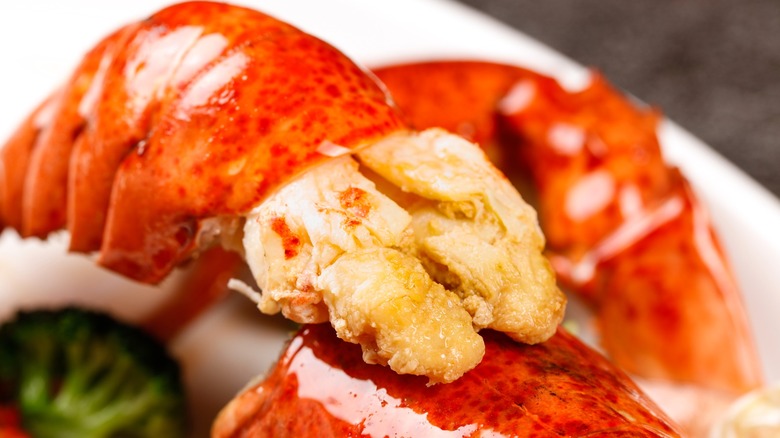
Once deemed a food only fit for prisoners in the United States, lobster is now considered a delicacy in many culinary circles — but only when it's fresh. Most home cooks know that frozen lobster from the grocery store can't hold a candle to crustaceans that have been recently plucked from the sea, even if they aren't sure why.
Seafood expert Robert DiGregorio, the director of seafood quality at Fulton Fish Market, filled us in on the differences between fresh and frozen and why there is a major contrast in quality. "Fresh lobster will have a natural, sweet succulence," he said. "The meat will be firm and juicy, with a natural snap when you bite it. Frozen lobster, especially if not frozen correctly, can be stringy, soft, and/or watery."
One mistake people make when buying lobster from the freezer section is failing to look for ice crystals on the meat. DiGregorio explained that those are typically the culprits behind subpar shellfish. "As the lobster is being frozen, ice crystals form inside the meat and rupture the cell structures," he said. "The slower the freezing process, the larger the crystals become and the greater the damage to the cells. When the lobster is thawed, the moisture leaks out as purge, and the meat becomes soft, even mushy."
DiGregorio did note that one freezing technique has less impact on the protein. "The best way to freeze lobster tails or meat is in a super-freezer, meaning a freezer that can get below -60 degrees Fahrenheit," he said. "This method can freeze a lobster solid within minutes, maintaining cell structure and meat integrity, which means a better lobster-eating experience."
How to salvage frozen lobster
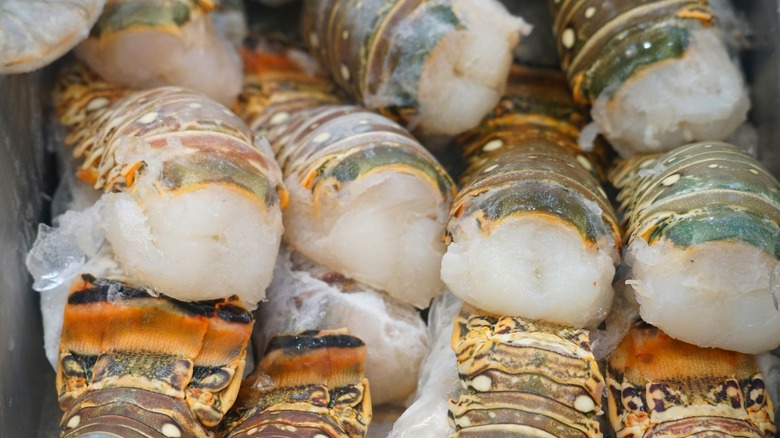
While coastal Mainers enjoy restaurants offering some of the best lobster rolls money can buy, featuring fresh crustaceans, folks living in landlocked states often have no choice but to buy it frozen at the grocery store. But that doesn't inherently guarantee lackluster seafood. Robert DiGregorio contended it is possible to make frozen shellfish taste great –- it just requires some extra effort.
DiGregorio recommended introducing some fat in the form of butter or oil. Butter and lobster go together like ketchup and fries, so no surprises there. He added, "Some chefs place the lobster tail or meat in a cold brine for a few minutes before cooking to help replace lost moisture."
Still, those techniques for improving the quality aren't your only options. "If you're concerned that your lobster may be a little tough or dry, consider using it in preparations that enhance it, such as in a sauce with pasta or in a salad dressed with mayonnaise," DiGregorio said. A lobster mac and cheese would also do the trick. Rich, fatty flavors effectively mask chewy imperfections.
In that vein, that classic Maine staple might be your best bet. "Lobster rolls are always popular, and cutting the lobster into smaller, easier-to-eat pieces can help. The butter or mayonnaise in a lobster roll will also help alleviate any possible dryness." When preparing something fancy like Christmas lobster tails with Pernod cream sauce, shelling out big bucks to get fresh crustaceans is the way to go. But frozen lobster from the grocery store can have a place on the dinner table if you know how to elevate it.