

13 Pizza Chains That Prioritize High Quality Ingredients
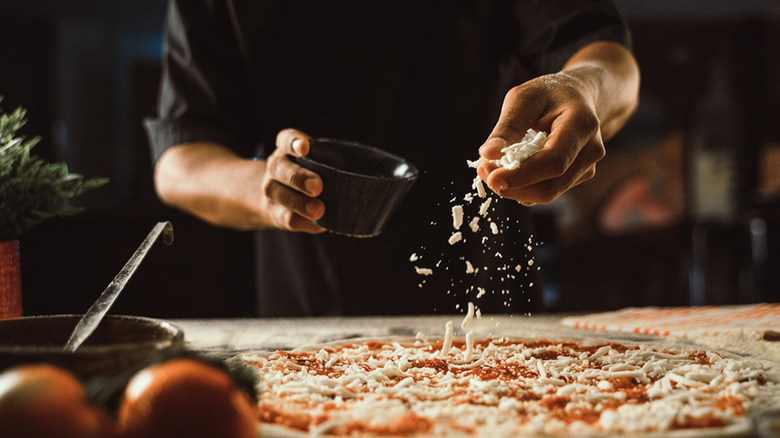
You can't really hide what's in a pizza. That's kind of the beautiful thing about it — along with, you know, everything else. Pizza is an open flatbread that has every component on full display in front of you. Pizzas are very much sums of their parts, and it's easy to notice when those parts are a bit subpar.
Thus, in an age where even frozen pizzas are expected to have high-quality ingredients, there seems to be little tolerance for even the biggest pizza chains to go wanting in this department. And though franchises may tout the greatness of their ingredients (see: Papa John's), the reality doesn't always match the marketing.
So, out of the country's many pizzeria companies, which ones actually use the best ingredients and why? Considering that better ingredients also cost more, is it just that these companies care more about the end product? It's hard to say the exact reasons, but one thing is for sure: Using quality ingredients doesn't happen by accident. Take a look at these companies who seem to put that extra touch of attention into constructing their pizzas.
Papa Murphy's
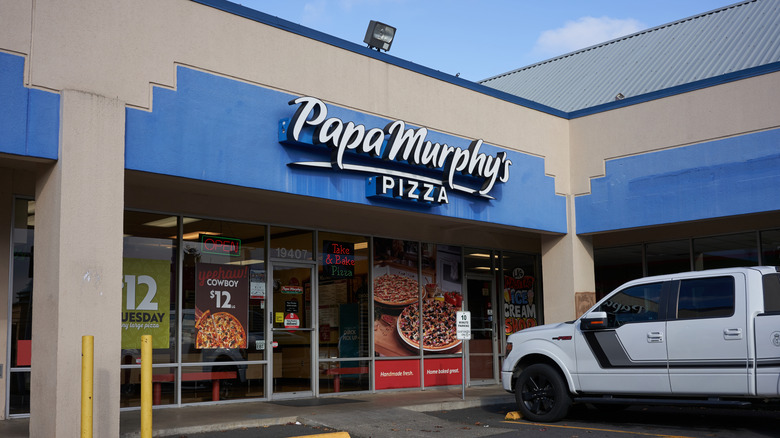
It's admittedly an odd name combination. It's kind of like seeing a place called Nonna McSorley's or something. But there's a reason for this, as Papa Murphy's came about from a merger of two pizzerias: Papa Aldo's and Murphy's Pizza. Mystery solved. But, regardless of the eponymous provenance, it seems this chain with over 1,000 locations across 35 U.S. states maintains a high-quality pizza.
Papa Murphy's is a take-and-bake place, so it offers pre-made pizza that one buys to take home and bake — hence the term. It's apparently the world's biggest chain in this category, and was named the top pizza chain for customer service in America by Newsweek. So, they're really nice there. But Papa Murphy's also focuses on the quality of the ingredients in its pies.
According to Papa Murphy's itself, they make their dough by scratch every day, hand-slice the veggies, freshly grate the mozzarella in-store, and use filler-free, butcher-level meat. They do this while offering a substantial degree of customization — meaning to maintain a favorable rep with customers, every ingredient has to be top-notch at all times. And, aside from the pizza, Papa Murphy's offers some delicious, pull-apart monkey bread instead of boring, old breadsticks.
Marco's Pizza
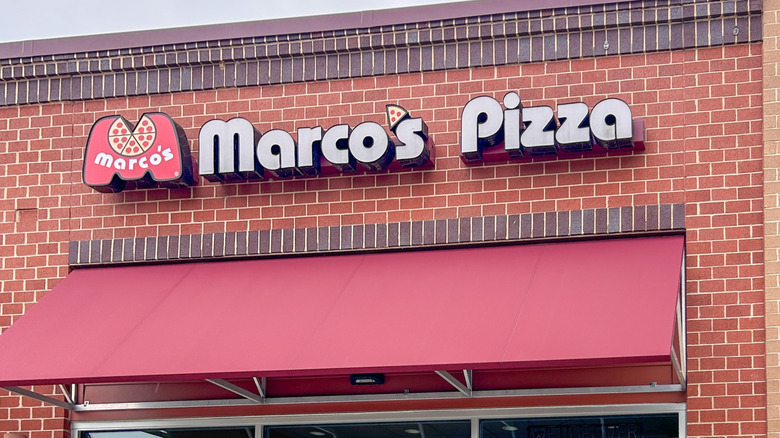
Founded in the city of Oregon, Ohio in 1978 by an Italian immigrant named Pasquale "Pat" Giammarco, authenticity is practically baked (if you'll excuse the pun) into the DNA of Marco's Pizza. Marco's has expanded to over 1,200 outposts in more than half the country, at least according to a 2019 Harris Poll that saw Marco's Pizza named the best pizza chain the U.S. (via Business Insider). Oh, it was also ranked No. 2 on Newsweek's recent 2025 list as well. In both cases, it's the high-caliber ingredients that make the brand stand out.
It seems that the Buckeye State-based chain has tried to maintain that level of consumer satisfaction by sticking to its focus on quality ingredients. According to the company website, the pizzeria boasts of using premium flour with a "perfect water-to-air temperature ratio," a secret-recipe sauce via the founder that's made fresh in the stores each day, and a delicious three-cheese combo on all of its pies.
These factors make pizzas here the more impressive, considering the sheer, growing number of Marco's locations. Size can often eat away at standards. Granted, there are customers who feel like Marco's is one of the most overpriced pizza chains in the U.S., but you often have to pay a little more for quality — which is justifiable as long as the quality is consistently there.
Godfather's Pizza
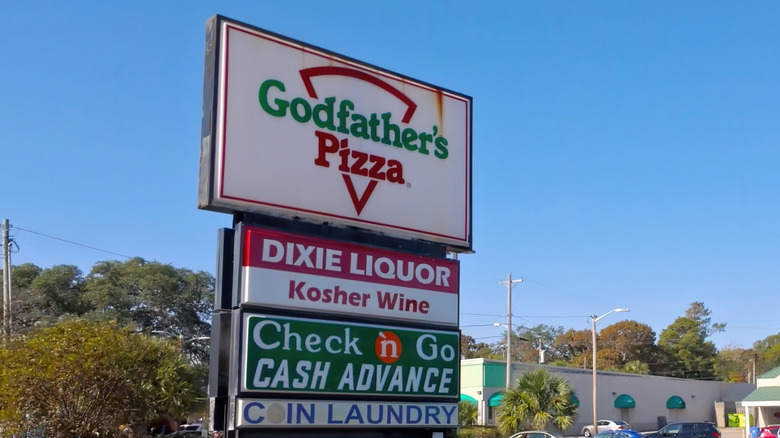
As mentioned, Marco's Pizza was ranked the second best pizza chain by Newsweek in 2025, but Godfather's Pizza was right behind it, ranking third. Leaning into an implied-yet-ultimately-harmless mafia trope — with both the name of the company and the tagline, "a pizza you can't refuse" — the chain has more than 400 locations as of 2021 (via SharpSheets). This is admittedly down from the 800-plus count the company boasted during its peak years in the mid-1980s. Still, there's a lot of them about.
Founded in 1973 in Omaha, Nebraska, pies at Godfather's range in style from the traditional to the offbeat (taco pie, bacon cheeseburger, something called a Poppin' Pickle Pizza). The chain also offers a truly customizable, make-your-own pizza menu, which includes a choice of crust.
Pizza iconoclast it may be, but Godfather's does seem to maintain a commitment to high-quality ingredients. Whether they made this promise on the day of their daughter's wedding is uncertain. But, what is certain, is that Godfather's has no problem bragging about the excellence of its pizza components. And the reason it once reached the dizzying competitive heights of Pizza Hut, Domino's, and Little Caesar's, was due to its refusal to cut corners.
Pieology
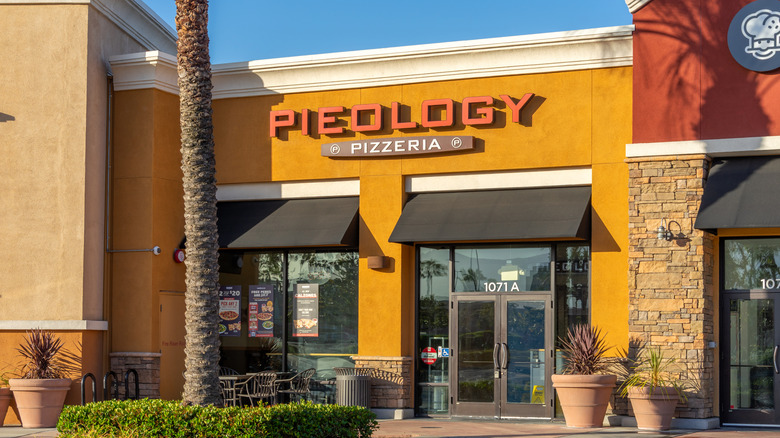
At one time considered the fastest-growing pizza chain in the U.S. (via Business Insider), Pieology has taken a bit of a hit in recent years due to some franchise-purchase overreach. Yet, it's still going strong and offering quality pizza throughout its 45 remaining locations as of 2026, per Restaurant Business.
Founded in California by Carl Chang (brother of the famous tennis player Michael Chang), Pieology was meant to be the customizable, fast-casual pizza answer to the likes of Chipotle. Pieology even attracted ground-level celeb investors like NBA player Kevin Durant. It became the first pizza chain to offer plant-based protein toppings, according to PMQ Pizza. This followed up the company's vanguard menu options of vegan mozzarella cheese and cauliflower crusts. Even PETA ranked it as one of the top pizzerias for vegans.
The dough for Pieology's crusts are always made in-house, and the produce on its pizza is locally sourced whenever possible (like its garlic from the garlic capital of Gilroy, California). Quality and taste are two pillars of Pieology's overall company message, and you can see that in the slice.
Blaze Pizza
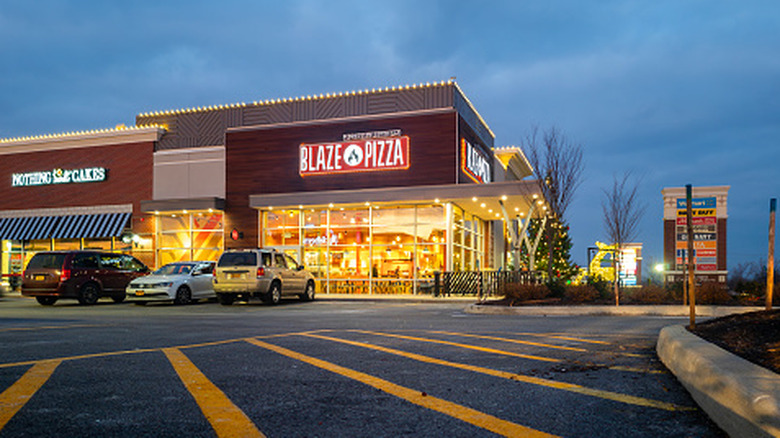
Lebron James has invested in a number of companies and business entities over the years — from Beats by Dre to Liverpool FC. Blaze Pizza is on that list as well, starting with an infusion of a million of his own dollars not long after the chain was founded in 2011 (by the same dude who started Wetzel's Pretzels, by the way). Within six years, Blaze went from two locations in California to 300 throughout the country –- prompting it to be called the fastest growing chain of all time by Forbes. Growth hasn't quite met the lofty expectations set forth as a result, with Blaze regressing about 300 locations as of 2024 (via East Bay Times).
Still, Blaze is a formidable presence on the build-your-own-pizza scene, and that can be credited to its company-wide focus on top-notch, all-natural ingredients from fresh dough for every pizza to nitrate-free meat toppings and vegan options aplenty. According to the company's executive chef, Brad Kent, they serve "nothing artificial, preserved, synthetic or pre-carcinogenic," via Orange Review. And if the chain can't get its hands on a non-processed component, they don't serve it at all. Even the extra virgin olive-oil they use is cold-pressed only, which allows it to maintain antioxidants.
Mellow Mushroom
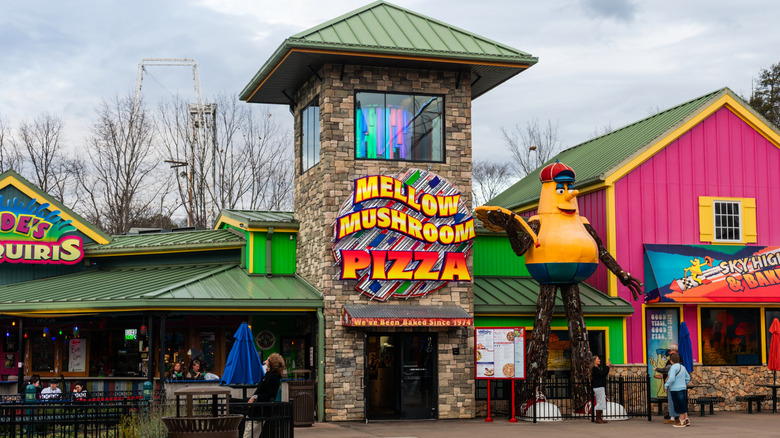
With a 50-plus year run as a company and over 150 locations throughout the southeastern U.S. (via Atlanta Magazine), Mellow Mushroom's current status belies modest, hippy-tinged roots. The first Mellow Mushroom was opened in the '70s by three college friends in Atlanta. The equipment was used, the decor was a hodgepodge, and 20 people couldn't fit inside the store comfortably. But there was a focus on solid, simple ingredients that defines the chain to this day.
The foundations for Mellow Mushroom's pizza is a stone-baked crust made of just a handful of ingredients: vitamin-enriched flour, salt, yeast, molasses, and vegetable oil. The meat toppings on offer contain zero additives, hormones, or preservatives. The cheese options include aged, preservative-free mozzarella, sheep's milk feta, and a dairy-free version, among others. The last one fits right in with the brand's numerous plant-based choices for any customizable pizza.
Yet, even the specialty pies have plenty of quality-infused elements, like the beloved Holy Shiitake Pie: olive oil, garlic, shiitake mushrooms, button mushrooms, portobello mushrooms, caramelized onions, mozzarella, and aged white cheddar cheese from Wisconsin (a state that's well known for producing more cheese than most countries).
Jet's Pizza
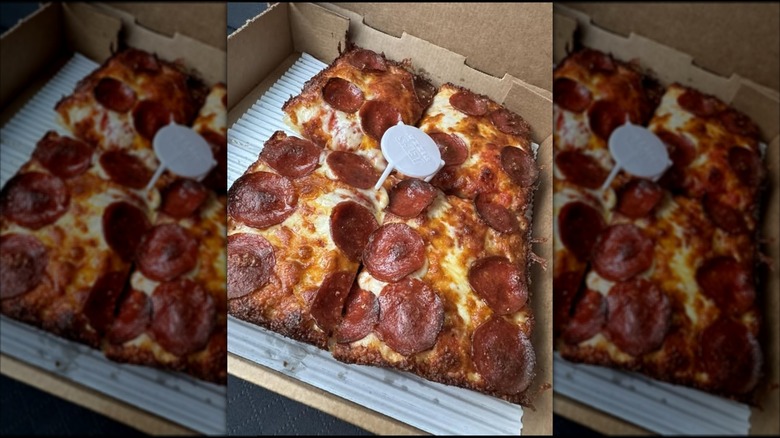
Detroit-style pizza is in the middle of an extended moment. Long overshadowed by the likes of Chicago and New York City, the frilled, deep-dish version from the Motor City has caught on with folks well beyond the borders of Michigan. One of the style's ambassadors has been Jet's Pizza. Founded by Eugene Jetts in 1978 as Jetts Party Shoppe & Pizzeria, the extra "t" was eventually dropped, and an apostrophe was added. As it grew into a chain, Jet's began offering other styles of pizza, like New York style and a hand-tossed round, without straying from its Detroit roots.
As a manager of a Jet's explained on the brand's YouTube channel, the pizzeria puts a premium on quality ingredients. The dough and sauce are made every day, on-site, and the fresh vegetables are brought in and cut up in the kitchen. Even with over 400 locations in the U.S., according to the chain's website, the brand still claims to prioritize vine-ripened tomatoes, Italian herbs and spices, and high-quality mozzarella cheese that's hand-grated.
It has amassed quite a following, with at least one driver-seat social media food critic on YouTube Shorts claiming it's so good that it doesn't even taste like a chain — especially for its cupped pepperoni slices combined with the shredded pepperoni. That kind of touch sounds like pizza from a place that actually cares.
Pizza Studio
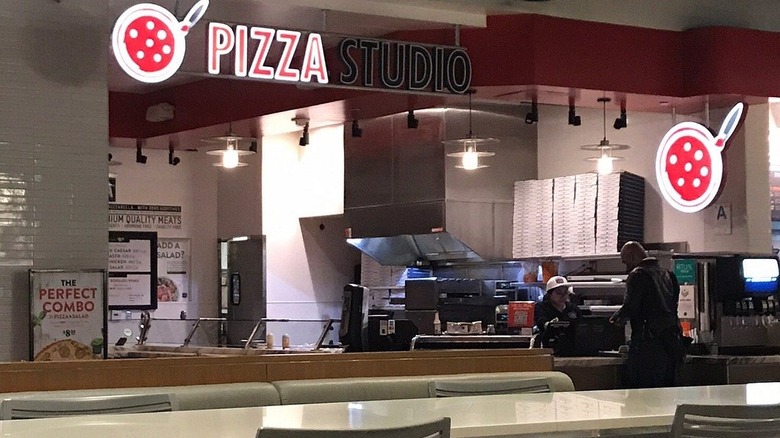
As evident by several entries on this list, the fast-casual, build-your-own-pizza realm has a growing number of players involved. This one, Pizza Studio, was founded in Los Angeles in 2012 by an industry vet named Ron Biskin and an entepreneur named Samit Varma. Like the other pizzerias in this category, they wanted to offer a better quality experience than the big, standard chains. From the get-go, they went with a thoughtful, artisanal approach that still allowed for customer-friendly choice and convenience.
Starting, as is common, with a high-quality crust, Pizza Studio offers the traditional kind made with wholesome, unbleached flour, as well as a flavored crusts like signature rosemary and herb or a spicy version tinged with cayenne pepper. In addition, customers can choose a crust made with whole grain oat and flax seed, a gluten-free tapioca-based crust, or a crust made with cauliflower and brown rice.
And you're not going to find hormones, antibiotics, nitrates, or preservatives in any of Pizza Studio's ingredients. The tomato sauce is also created with vine-ripened tomatoes from Northern California. Judging by the level of care in the ingredients, it's tough to argue that Pizza Studio is truly conscious of the consumer.
California Pizza Kitchen
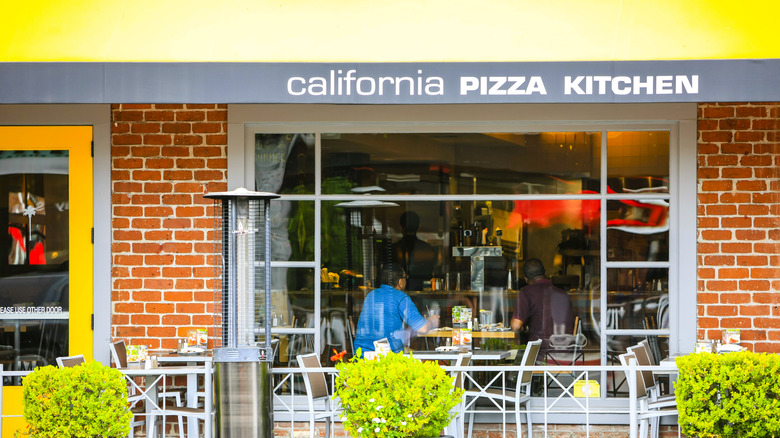
A very familiar name on this list, California Pizza Kitchen has made moves in recent years to regain its stature as a major pizza chain offering high-quality ingredients. The chain broke onto the scene back in 1985 in Beverly Hills, boasting fresh, innovative toppings — eventually being among the first chains to have gluten-free and cauliflower crusts on offer.
In 2026, CPK teamed up with Denise and Katie Austin, the famous mother-daughter fitness duo, to launch what it's calling a Smart Swaps menu. This is where the customer can take standard CPK dishes and transform them into healthier versions. It includes its tostada pizza (with black beans, lettuce, scallions, roasted tomato salsa, and, now, fresh avocado instead of cheese) and California veggie pizza with a cauliflower crust.
The approach goes beyond CPK's pizza to the menu as a whole, broken down into three categories labeled Protein-Packed, Plant-Forward, and Lower-Calories. Thus, what was already a pizza chain that zeroed-in on ingredient quality is taking the next step in that same direction (alongside petty feuding with local L.A. pizzeria Anna's over a perceived trademark infringement, of course).
Lou Malnati's
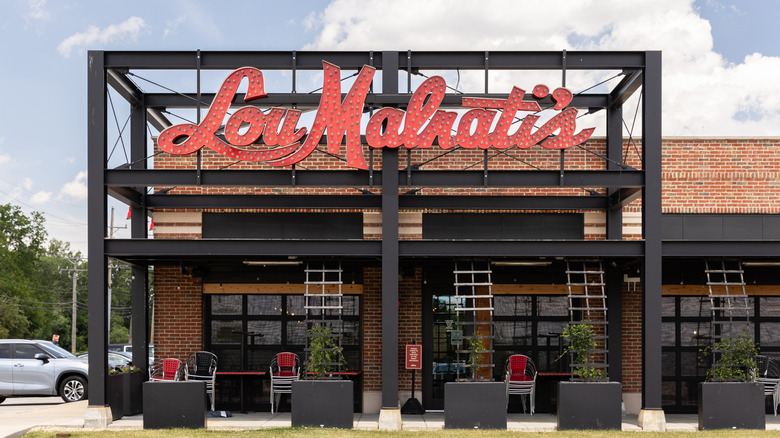
A true Chicago original, Lou Malnati's was able to get past what most restaurants would consider an inauspicious opening day back in 1971. What happened during the pizzeria's debut dinner service? A car crashed into the restaurant's dining room. Despite all this, Lou Malnati's not only became one of the most famous pizza names in the Windy City, but now boasts over 70 locations in both the Chicagoland area and beyond.
Even though the pizzeria has been expanded into a chain, Lou Malnati's still remains centered on high-quality ingredients the way a local joint would. The vine-ripened tomatoes for its sauce are sourced from California, the mozzarella cheese has come from the same Wisconsin farm for decades, and the dough is patted out by hand within a classic deep-dish pan — keeping the crust surprisingly thin (for Chicago pizza, anyway) yet sturdy.
Even if you're getting a Lou Malnati's pizza shipped to you across the country, the pie is made from scratch, then flash frozen and shipped on dry ice. The idea is that it should taste like it came right out of a Lou Malnati's kitchen and onto your table.
Round Table
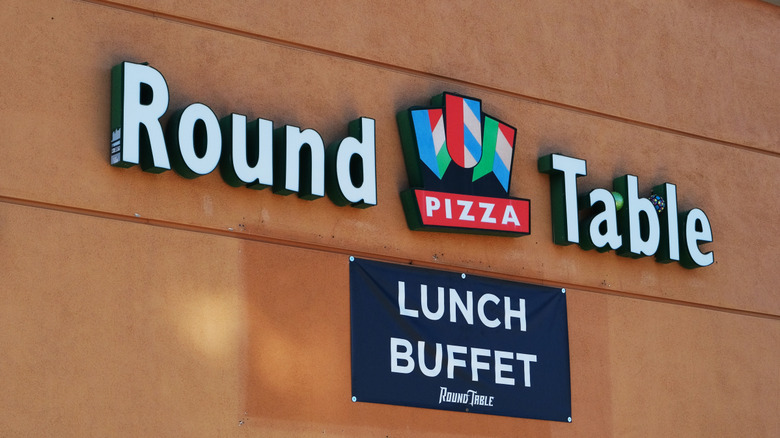
Out of all the West Coast pizza chains, there are a number of people online who feel like Round Table is the best. And the chain has a deeper history than many of the other California pizza mainstays. The first Round Table opened way back in 1959 in Menlo Park. As the brand grew over the decades, it maintained its commitment to using only high-quality elements in its hand-crafted pizza.
It seems that Round Table remains steadfast on using fresh ingredients, despite the brand's struggles to grow its profit margin (via Restaurant Business). Even one former worker on Reddit said that everything was made fresh every single day — just as the company claims. Their pizza has dough made from scratch every morning, veggies sliced by hand, and a legitimate three-cheese blend that consists of whole milk mozzarella, smoked provolone, and aged cheddar.
Round Table is so proud of its quality toppings that they're placed on the pizza to the very edge of the crust — a signature move that's unique to the chain. One downside to Round Table's ingredient-forward approach is that it was called the most overpriced pizza chain in 2026, as reported by TimeOut. Still, Pizza Forno ranked Round Table Pizza the 10th most profitable pizza chain.
Frank Pepe
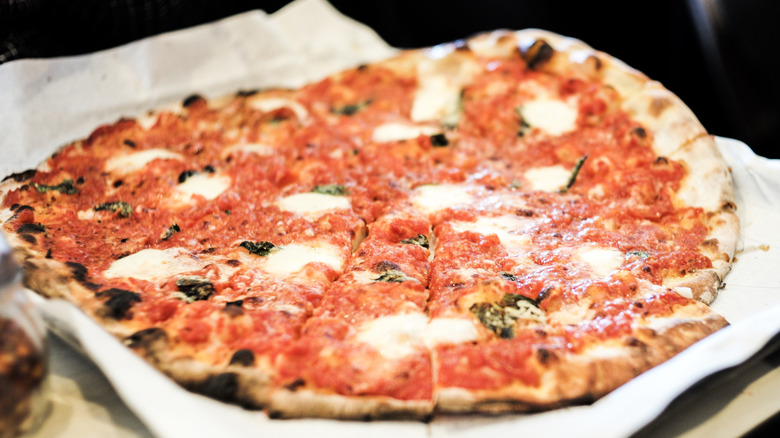
One of the OGs of the celebrated New Haven-style pizza, the original Frank Pepe Pizzeria Napoletana opened more than a century ago, in 1925. Part of the select Connecticut purveyors of "apizza" that slice nerds have long sought out, Frank Pepe has expanded to 17 locations across six states from Massachusetts down to Florida. Even with the growth, being an iconic, forefather pizza name in this country means making sure you still deliver the goods no matter where you set up shop.
That's where the ingredient integrity comes into play, and Frank Pepe has it. Its whole milk mozzarella is, naturally, sliced in-house on a daily basis. But that's the least of it. The tomatoes are handpicked from the base of Mount Vesuvius. The clams for its famous white clam pizza (a favorite topping of Gordon Ramsey, by the way) come right out of the Long Island Sound, and its pecorino is sourced from the birthplace of such cheese: Sardinia. Even the olive oil is manufactured just for Frank Pepe. One doesn't last this long at this level without an obsession with details. The rest of us get to enjoy the fruits of that obsession.
Two Boots
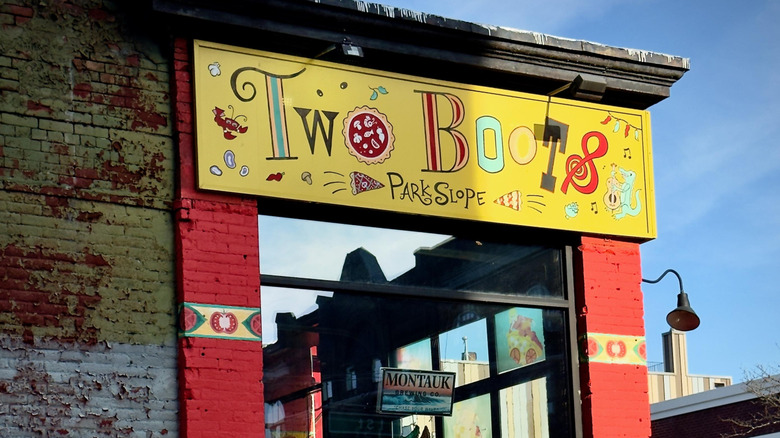
Known for the fun, funky, eccentric names of its different pizzas — as well as its cornmeal crust — Two Boots is a NYC-born pizza chain infused with a culinary spirit combo of New Orleans and New Haven. Along with their signature, amusingly monikered pies, you can create your own pizza, getting the best of both the specialty and customization worlds.
Whether its vegetarian pies like The Buckminster or Tony Clifton, meat pizzas like Cleopatra Jones or The CBGB, or vegan offerings like V for Vegan or Earth Mother, you can expect artisanal craftsmanship and top-of-the-line ingredients in each one. These gourmet components include handcrafted, slow-risen dough, along with toppings like truffle oil, goat cheese, and prosciutto, to name just a few.
Although it closed Los Angeles outposts in the early 2020s, Two Boots still has six locations throughout New York City and Jersey, as well as one down in Nashville. The relatively few locations has helped the chain maintain not only its quality pizza, but its artsy, East Village ethos.