

What 'Tipped Employee' Actually Means — And Just How Little Money They Can Make

When you think of tipped workers, you probably imagine waiters, bartenders, and delivery drivers. Sure, you might also tip a barista at a cafe or a valet who parks your car, but tipped employee jobs go well beyond this, spanning many American industries. The legal definition of a tipped employee is extremely broad, which makes it applicable in surprising situations if an employee wished to invoke it. According to the Department of Labor, a tipped employee is anyone "engaged in an occupation in which they customarily and regularly receive more than $30 a month in tips." This includes (but is by no means limited to) bartenders, wait staff, taxi drivers, pet groomers, aestheticians, hotel staff, makeup artists, casino workers, and more. As pooled tips are counted toward that $30, back-of-house employees such as kitchen workers and even cleaners could be considered tipped employees.
In most of the country, employers only have to pay tipped employees a portion of minimum wage, with the idea being they are relying on tips to make up the rest. This "subminimum wage" is just $2.13 per hour in states that adhere to the $7.25 federal minimum wage. In cases where tips don't add up to $7.25 an hour (or whatever that state's minimum wage happens to be), employers are legally required to top up their workers' wages to minimum wage with a payment called a tip credit. There is a FICA tax credit employers can claim on tip credits, which is an attempt to encourage accurate reporting in an industry where it can often go ignored.
Problems with tipped employee pay and unexpected exceptions to the rules
As may be obvious from the tax incentives offered, tips aren't always properly recorded, and employers don't always top up wages when they should. Additionally, they're allowed to average tips out over the whole week, so a slow shift might get made up for by a busy weekend shift; essentially making the work of the busy shift less well compensated for the worker and potentially creating a situation where two people doing the same job get different pay packets.
On top of this, the definition of a tipped employee is related to the job as a whole. In 2021, the government tried to differentiate non-tipped tasks from tipped ones, but in 2024 a court struck this down. Although the category of tipped employees, the existence of tip credits, and the FICA tax credit for food and beverage businesses is supposed to ensure that small businesses survive while employees get a reliable wage, but the tipping system does seem easy for employers to exploit.
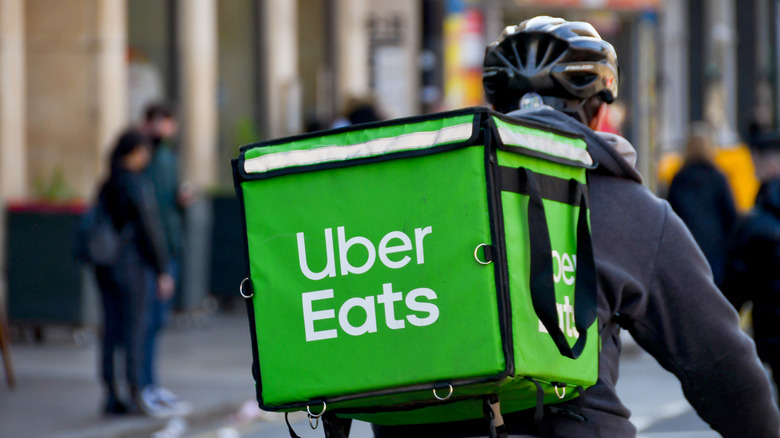
Meanwhile, app delivery drivers are not considered employees, so they cannot legally be counted as tipped employees. Although a large percentage of their pay is made up of tips, they're classified as independent contractors. This confused the rollout of President Trump's No Tax on Tips policy last year when there was some debate over whether it would apply to independent contractors. Thankfully, they are in fact considered tipped workers for the purposes of that tax credit, but it's worth noting they aren't actually tipped employees and companies like Uber and DoorDash don't have to offer tip credits.
State-to-state regulations for tipped workers

If you live in a state with a decent minimum wage, service employees are far more likely to be getting a livable paycheck. It's notable, however, that only eight states (Alaska, California, Massachusetts, Minnesota, Montana, Nevada, Oregon, and Washington) have banned tip credits, with several cities also proposing plans to phase them out (historically, these have met with little success over the long-term). This is quite a bit fewer than the 30 states (and D.C.) which have a higher-than-$7.50 minimum wage. Most of these states have their own subminimum wage which overrides the federal floor of $2.13, with employers liable to make up pay to reach state minimum wage when and where applicable.
This is all pretty complicated (of course it is, it's tax and employment law). Just remember, when you're deciding how much to tip your bartender or trying to work out whether you need to tip when you pick up a takeout order, there's a good chance you're topping up a subminimum base wage. Additionally, if you don't already know the laws in your state and city, they're worth looking up. At present, two in five Americans are currently keen to ban tips entirely. With real-term stagnation in wages and soaring prices across the board, understanding our obligations and fighting to improve worker pay for those around us might be the only route to turning tipping into a choice rather than an obligation. Tipping (and underpaying tipped workers) has a long history in the United States. It's as American as diner apple pie, but that doesn't mean things can't change.