

Caffeine Won't Give You All-Day Energy — But This Eating Habit Will

We know the energy boost from those few cups of coffee, tea, energy drinks, or other caffeinated foods and beverages unfortunately won't stay with us for very long. And if you've ever pounded caffeine throughout the day, you know it can have the opposite effect of providing sustained energy. If you're needing a better alternative for long-lasting energy, maintaining stable blood sugar levels can have a profound impact.
Registered dietician Alexander LeRitz of JM Nutrition explains that glucose (sugar) is one of the body's primary fuels, especially for the brain. When carbohydrates are consumed — whether from candy, pasta, or vegetables — the body breaks them down into glucose, causing blood sugar levels to rise. This also triggers the release of the hormone insulin, which helps move glucose out of the bloodstream and into the cells for energy. When blood sugar levels drop sharply following a spike and subsequent insulin response, it can lead to fatigue and other symptoms. However, when carbohydrates are paired with fiber, fat, or protein, these nutrients act as a buffer; helping to slow the rise in blood sugar and prevent the sharp crashes that follow.
LeRitz explains that by balancing nutrients in this way at regular intervals across the entire day, especially during the best time to eat your biggest meal, it can help provide the brain and body with a stable source of energy.
The plate method for long-lasting energy
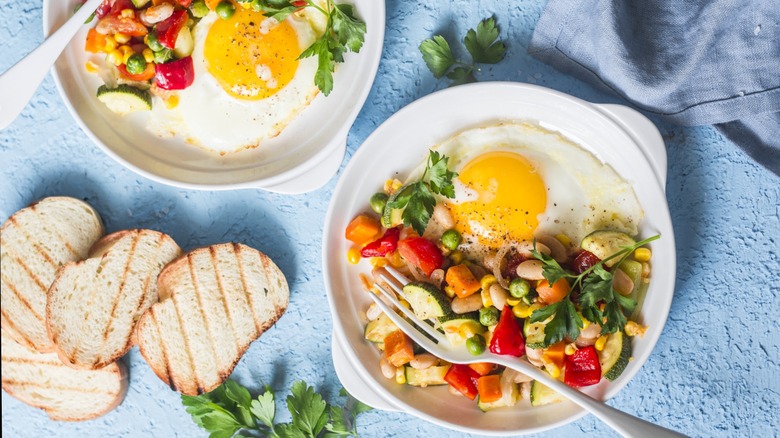
Some foods help maintain more stable blood sugar levels than others. "Foods that slow glucose absorption are practical choices," says LeRitz. He recommends whole foods such as legumes, non-starchy veggies, nuts and seeds, whole grains, and high-quality protein sources; all of which contain fiber, fat, and/or protein to help with blood sugar stability after eating.
While these foods are beneficial on their own, combining them supports longer-lasting blood sugar stability and greater satiety; helping you stay energized and full until your next meal. When building your plate, LeRitz says, "Aim to make about half of your plate a variety of colorful vegetables, a quarter of high-quality protein, and a quarter of the plate starchy carbs." Non-starchy colorful veggies provide fiber (many of these vegetables become more nutritious when cooked) while protein typically also supplies fat, depending on the source. If your protein is lean (such as chicken breast, tuna, or egg whites), adding healthy fat like olive oil when cooking or avocado as a topping can further support steady energy. Together, these nutrients help balance starchy carbohydrates such as potatoes, whole-wheat pasta, and rice.
"When you follow this model, it is more useful than trying to track the glycemic impact from every food that you consume," says LeRitz. He also recommends checking in with yourself 60 to 90 minutes after a meal: "If you are feeling consistently drowsy or experience brain fog, this can be a sign that your portions may be too large or that your balance of nutrients are not where they should be."