

Gas Vs Induction: Here's Which Stove Has The Best Value Overall
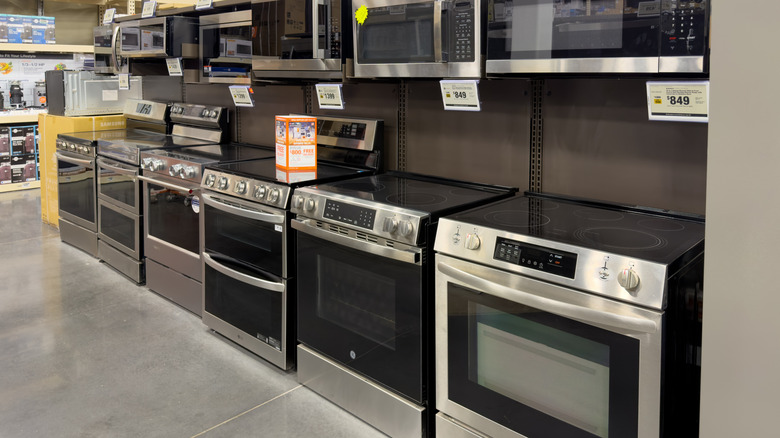
Choosing between a gas and induction stove is a heated decision for any home chef. While some professional chefs prefer gas stoves, other cooks swear by the efficiency, speed, and health benefits of induction stovetops. However, if your priority is getting the best bang for your buck, which stove style offers a better value? "An induction range is electric and requires a 220 outlet, requires magnetic cookware to operate, and has a higher upfront cost," Matthew Morrison, JustAnswer appliance repair expert, told The Takeout. "A gas range has a grate cooktop surface, has a lower upfront cost, and can use any type of cookware."
While the induction range operates more efficiently, Morrison noted that gas may be cheaper than electricity as a fuel source in your area. "As far as which is the better value, that would be completely dependent on the user," he advised. "If you cook frequently and seek greater energy efficiency, then the induction range is the one for you. If you prefer the cooktop flame control, as most cooks do, and already have the gas line connection in place, then the gas range is your better option."
In terms of upfront costs, gas stoves typically set you back about $1,000 for a mid-range model, according to Morrison. The installation costs vary widely: $250 if you have a pre-existing gas connection, or $2,000 if you need to run a gas line for the hookup. A mid-range induction stove will run about $1,800, plus roughly $350 for an electrician to install a 240 outlet if you don't already have one, Morrison said.
Which stove costs more long term?
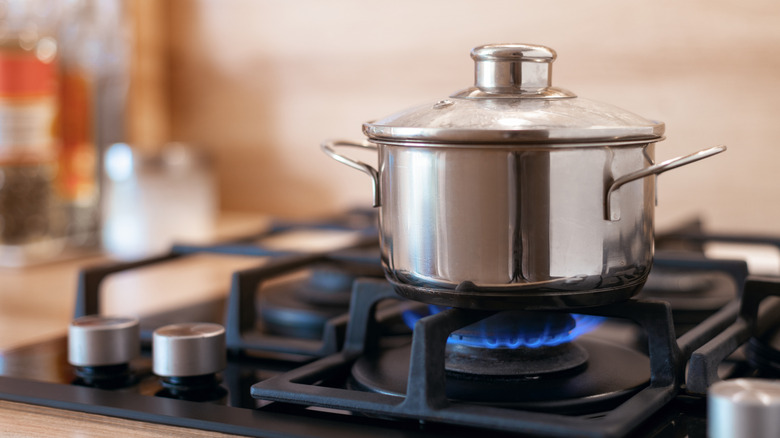
The upfront costs of a gas stove may be less than induction (if you don't have to install a gas line), but what about the long-term? Induction has some lasting benefits, Matthew Morrison advised. "You will have a lower energy bill, and there is less heat created in the kitchen, resulting in lower cooling costs." However, you may need to purchase new cookware to use an induction range, he said. "It must be magnetic, and it must be perfectly clean on the base, or it may transfer to the cooktop surface." Additionally, you'll likely have to shell out some dough to repair the glass stovetop, he noted, as accidental damages are extremely expensive to fix — on the high end, as much as $1,000 (by the way, here's 12 things you're probably doing wrong on your induction cooktop).
When it comes to the long-term costs of gas stoves, indoor quality and air ventilation can be a concern, Morrison noted. "Ventilation is certainly a priority, so that may require an upgrade to meet codes and may involve gas leak inspections," he explained. Additionally, you'll need to replace the igniter every five years, which typically costs a couple hundred bucks. At the end of the day, whether a gas or induction stove offers a better value will depend on your home and cooking style, but with this info in mind, you're ready to make the best choice to fit your needs. No matter which kind of stove you're shopping for, make sure to avoid the most overpriced kitchen appliance brands.