

11 Pork Myths People Actually Still Believe
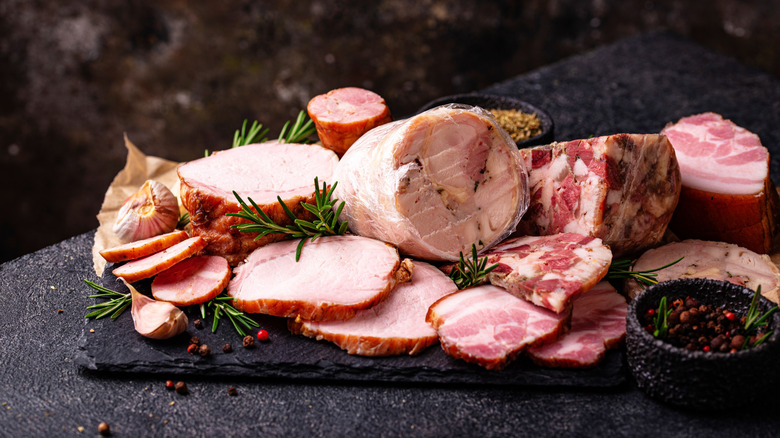
Meat has formed part of the human diet for millennia, ever since our hunter-gatherer beginnings. It provides high amounts of protein and several micronutrients essential for maintaining good health. Pork, often considered the most consumed meat in the world, is an important part of the modern diet in many different cultures, yet it remains one of the most myth-laden foods on the table.
Some of the concerns regarding pork are rooted in religious dietary rules. Others are rooted in a belief that pork is unclean or that its consumption is associated with the increased risk of diseases, including non-communicable ones such as cardiovascular disease and cancer. However, some of pork's negative connotations are just myths that have been repeated so often that they are assumed to be true.
A closer examination of the facts helps tell a different story. After all, the quality of pork available today is a far cry from what was on offer in biblical times. Modern day farming techniques and advances in feedstock technology have addressed many of the issues historically associated with the meat. This is supported by the fact that today, roughly 30% of meat consumed globally is pork (via National Library of Medicine). From its nutritional value to its impact on the environment, here are some of the most persistent myths surrounding pork and why they don't hold up.
Pork is bad for your health
There are plenty of well-meaning folk who will tell you that pork meat is bad for your health. This mainly stems from the nutritional categorization of pork as red meat — and, by extension, the assumption that it is bad for heart health.
What is indisputable is the fact that pork meat is a genuinely good source of nutrients, including protein. In fact, pork tenderloin is nearly as lean as chicken breast, which seems to receive significantly less criticism for its nutritional value. The numbers back this up: 100 grams of cooked, ground pork contains roughly 297 calories along with 25.7 grams of protein and 20.8 grams of fat. It is a good source of vitamins like niacin, B6, and B12, and minerals such as iron, zinc, phosphorus, selenium, and thiamine.
Minimally processed cooked pork, when eaten in moderation, can provide your body with many benefits. The high-quality protein in pork helps with muscle maintenance. That said, as with most things, the dietary advantages of pork only apply when it is consumed in moderation. Higher levels of sodium and saturated fats found in processed pork products make them less nutritionally sound if eaten too often. But the idea that pork is inherently bad for you is a myth and not one worth letting stand between you and a good meal.
Pigs are dirty and therefore pork is not safe to eat
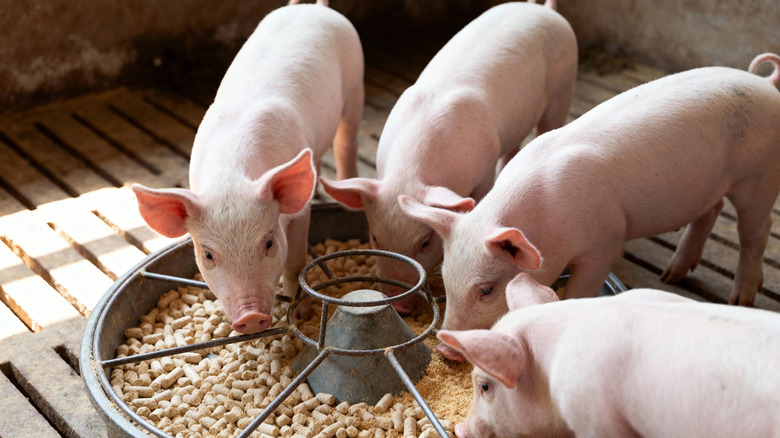
The perception that pigs are unclean animals is one reason that pork has such a bad reputation. It is also a major factor in certain religions, including Islam and Judaism, prohibiting its consumption. However, when prepared and cooked properly, modern-day pork available in the United States is considered safe and fit for human consumption thanks to modern farming practices and strict regulations.
In the past, pork had a reputation for causing trichinosis, an infection caused by the parasitic roundworm Trichinella spiralis. Today, this has been virtually eliminated from the commercial supply. Strict enforcement of regulations coupled with rigorous inspections has ensured that commercial pork is consistently safe to eat once cooked to the proper internal temperature (between 145 and 160 degrees Fahrenheit). So, if it's a concern over parasitic infection that holds you back from eating pork, you'll be pleased to know that the risk is now considered negligible.
Pork is a white meat
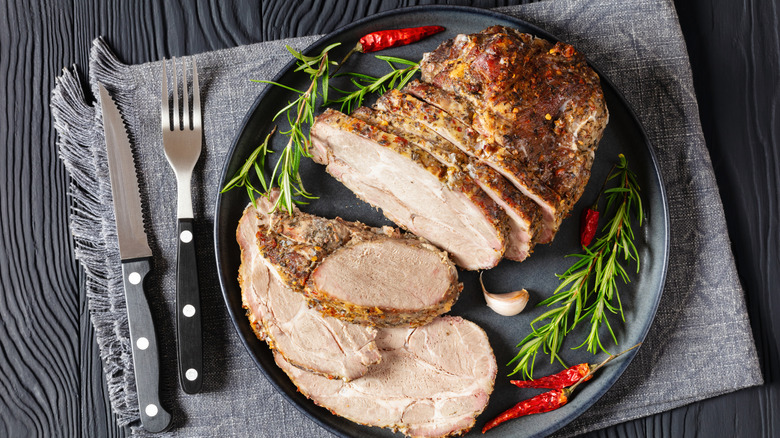
There seems to be a lot of confusion as to whether pork is red or white meat. Before the 1980s, pork was universally considered a red meat. But sometime during that decade, a systematic marketing campaign began to recategorize pork as a white meat. Since well-cooked pork has a lighter appearance and is leaner than more traditional red meats like beef, the campaign succeeded to quite an extent. Some people began to consider pork as a white meat.
So, which classification is correct? Today, the USDA still categorizes it as a red meat, and dietitians agree. To understand why this is the case, one needs to consider the basis for this categorization. Meat classification primarily depends on the amount of myoglobin found in an animal's muscle tissue. Red meats such as beef, lamb, and veal all have higher levels of myoglobin. This protein turns red on exposure to oxygen. Poultry and fish have significantly lower levels of myoglobin and are therefore considered white meats.
Pork, with its higher levels of this protein, is definitely a red meat, savvy marketing campaigns notwithstanding. That said, certain cuts of pork have considerably less myoglobin than regular red meats, which gives some credence to the white meat argument. For many people, that is enough to settle it.
Pork is factory-farmed
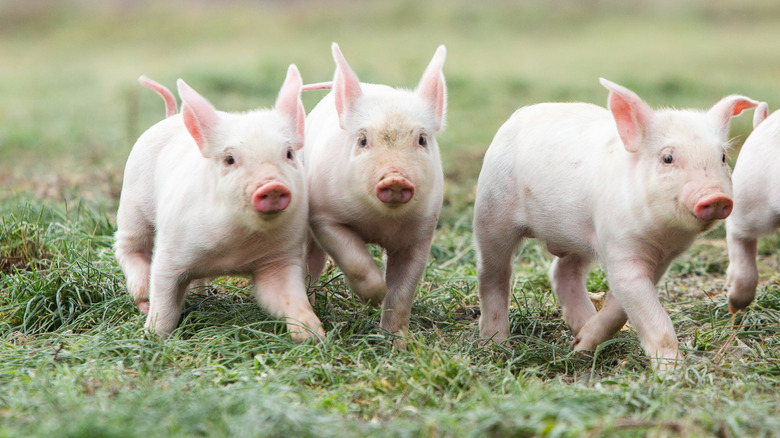
Pork production in modern-day America is an oft misunderstood subject, largely due to outdated and inaccurate information. To begin with, 81% of hog inventories and 96% of all hog farms in the U.S. are family farms, not factory farms. While the sizes of individual farms may vary, any owner of a family hog farm would likely take great offense at having their operation labeled a factory farm. The distinction is simple: If it is family-run, it is a family farm, regardless of scale.
This is an important distinction, since a growing number of people are concerned about animal welfare. Calling the meat "factory-farmed" reflects negatively on how the animals are cared for and raised. In fact, some pork farmers claim that they take better care of their hogs than almost anything else in their lives. For them, the well-being of their animals is both a moral responsibility and a daily priority, not just a talking point to appease animal welfare. The factory farm label, when applied indiscriminately, does a disservice to the many family farmers who take that responsibility seriously.
Pork is forbidden in most cultures

Two major religions prohibit the eating of pork, and the roots of this prohibition can be traced back to biblical times. The Book of Leviticus in the Bible's Old Testament declares that pork is unclean, and that designation has followed the meat ever since. The Quran followed suit in the 7th century, further contributing to the negative perception of pork in certain parts of the world today.
But to claim that pork is forbidden in most cultures is simply not true. Pork also happens to be one of the most loved meats on the planet, and its story is far more nuanced than its detractors suggest. In medieval European countries, boars and pigs lived in forests and foraged freely. Their meat became the preferred choice of the nobility. In more arid countries, pigs survived by scavenging, sealing their reputation as "unclean" animals.
Most denominations of Christianity eat pork today. In China and most of East Asia, pork also remains central to the cuisine. Globally, Croatia, Spain, Montenegro, Hong Kong, and Poland were the top five consumers of pork as of 2022 (via World Population Review).
Pork is hard to cook
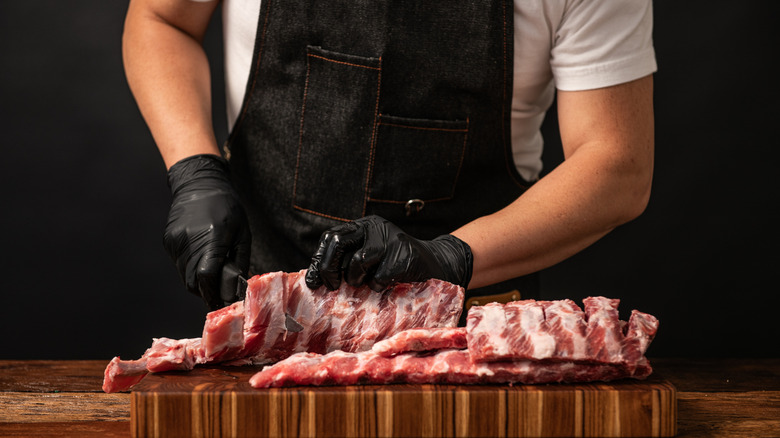
The phrase "pork is hard to cook" gets repeated so often that it is easy to assume that it must be true. This idea likely stems from longstanding misconceptions about pork harboring parasites. The belief that cooking meat for longer provides better protection has only solidified its reputation for being hard to cook. But cooking the meat for longer just leads to overcooked meat that is both dry and tough. According to the USDA, pork should be cooked to an internal temperature of at least 145 degrees Fahrenheit and allowed to rest if you want it to retain that slightly pink center. That is hardly a tough standard to meet.
Certain cuts of pork require different types of cooking techniques. Pork chops, for instance, are lean cuts, so they tend to cook quickly. That means they are prone to being overcooked, which leads to a tough chop that is no fun to eat. Remember, pork chops, like most meats, retain heat and continue to cook even after being taken off the grill. The difference between cooking them just right and overcooking them is a thin line, and requires a certain degree of attentiveness to get it just right. A meat thermometer takes the guesswork out of the equation entirely, and the reward is a juicy, tender chop every time.
Uncured pork is healthier
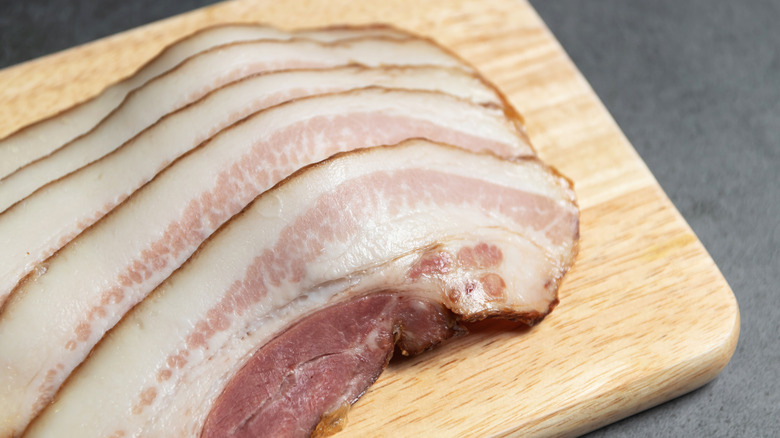
In European culinary tradition, a significant proportion of pork meat is cured, meaning it is preserved using a mix of salt and spices. The end results are delicious hams, bacons, and a variety of savory sausages that have a habit of elevating breakfast to something worth getting out of bed for.
Here's where it gets confusing. Labeling laws in the United States have blurred the terminology and, by doing so, the very definition of "cured". Traditionally cured pork products are now labeled as "uncured" pork in retail markets if they don't use synthetic nitrates or nitrites. The "cured" label, meanwhile, is being used to categorize products treated with sodium nitrite, which has become the industry-standard preservative. The problem is that both types of curing can still contain compounds that can form into nitrosamines, which are known carcinogens and have been linked to potential DNA damage.
It pays to question where your bacon is coming from and how it has been treated. However, it also pays to remember that traditionally cured pork cuts are not inherently "healthier" than commercially cured products.
You need to overcook pork
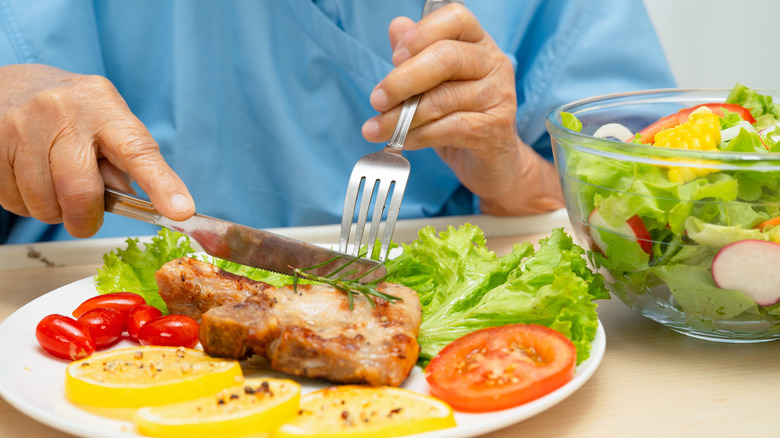
As we now know, historically, pork meat has sometimes contained parasites such as Trichinella spiralis, a worm parasite that can cause an infection known as Trichinosis. In the past, the fear of this infection led to the belief that overcooking the meat would kill off any parasitical infestation in the meat, making it safe for consumption.
Despite the number of cases in the United States dwindling significantly, the overcooking habit has stuck around. Overcooking pork can rob it of key moisture and shrink the meat fibers, leaving us with dry, tough, or flavorless pork dishes.
That said, this doesn't mean it is safe to eat rare pork meat. The USDA recommends cooking whole cuts of pork to 145 degrees Fahrenheit and letting them rest for 3 minutes. The safe temperature for ground pork is 160 degrees Fahrenheit. This will ensure that your meat retains that light pink color and its juicy flavor, while killing any potential parasites and bacteria. In short, overcooked pork is not safer pork — it's just unpleasant to eat. Hit the right temperature, and the meat looks after itself.
Pork dishes are old-fashioned and boring
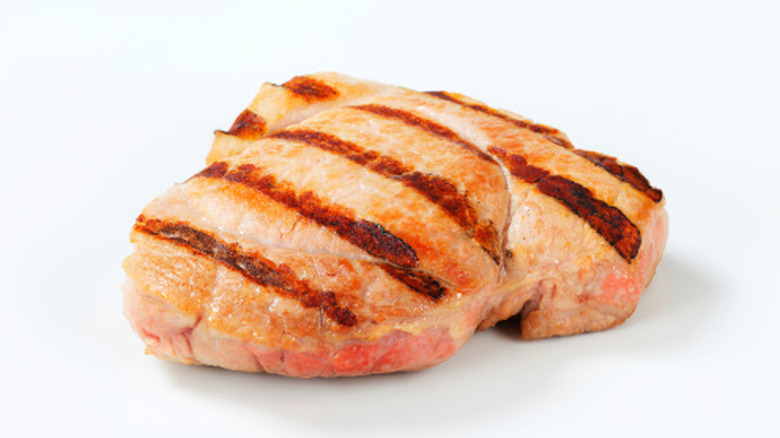
To refer to a food that accounts for more than 30% of all meat consumed globally as old-fashioned and boring is outright offensive if you're a pork lover. After all, the flavors of pork vary widely depending on the cut, preparation, and sourcing. Seasonings and marinades, plus different cooking methods, give you a range of flavors and textures that can be truly outstanding.
Consider the variety alone: There's Cantonese-style sweet-and-sour pork, smoky BBQ pork, delicately wrapped pork dumplings, a perfect seared tenderloin, a boldly spiced vindaloo, and even pork schnitzel. Beloved across the globe, pork dishes have long since satisfied even the most jaded palate. Calling it boring seems a stretch, to put it mildly.
If the complaint is simply that a particular dish has grown repetitive, the solution is straightforward as it gets — simply try a new pork recipe from a cuisine you haven't explored yet. And if novelty is what you are after, pork is more than accommodating. It lends itself effortlessly to contemporary food trends and modern culinary experimentation, and there is no shortage of directions to take it.
Pork is too fatty
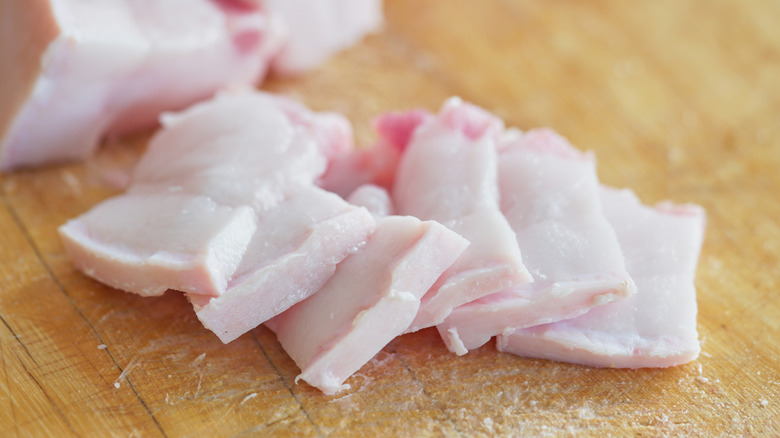
Calling pork a fatty meat is an overgeneralization that puts all the various cuts under one umbrella. Additionally, it does the meat a real disservice. Therefore, to lay a blanket statement like "pork is fatty" needs closer inspection.
When you think of the various cuts of meat, naturally, the fat content and composition will differ. Certain cuts have relatively low levels of fat. Pork belly typically has the highest fat content among the different cuts, while some pork chops can also be high in fat. Pork loin has the least, comparable in fat content to a skinless chicken breast. For anyone mindful of fat intake, the choice of cut makes all the difference.
Preparation matters too. How you cook the meat will determine the nutritional outcome. For example, grilling or roasting, then resting on a rack, can help much of the excess fat drain away, leaving you with a "healthier" cut. Braising and slow-cooking also help render fat, to end up with a softer, fork-tender result. The point is that pork gives you options, and it pays to make informed choices over rumors and generalizations, any day.
Pork is bad for the environment

Few would argue that pork farming doesn't have some impact on the environment. How significant that impact is, and whether it is comparable to that of cattle farming, has been the subject of considerable research. An understanding of the environmental impact of pork production begins with an understanding of greenhouse gases, the chemicals responsible for global warming. These gases trap heat in the atmosphere and play a huge role in climate change. Methane is one such greenhouse gas and is much more efficient at trapping heat than carbon dioxide, the other main culprit.
Livestock are a significant source of methane, but not all animals contribute equally. It should be noted here that pigs are not ruminants, unlike cattle. They have only one stomach and, as a result, do not belch methane as part of their digestive process. As a result, their methane emissions are substantially lower. Placing pigs and cattle in the same environmental bracket, then, does not reflect an accurate picture.
Modern swine farming has also made meaningful progress in reducing its overall footprint. These include advancements in feed technology and manure management that have helped to reduce the carbon footprint. According to We Care's 2021 Sustainability Report, total carbon emissions per pound of pork are 7.7% lower than they were 50 years ago, and the industry continues to improve on this figure. While the environmental case against livestock farming definitely requires closer scrutiny, it is also considerably more nuanced than it is often presented.