

13 Best Mashed Potato Toppings Beyond Gravy
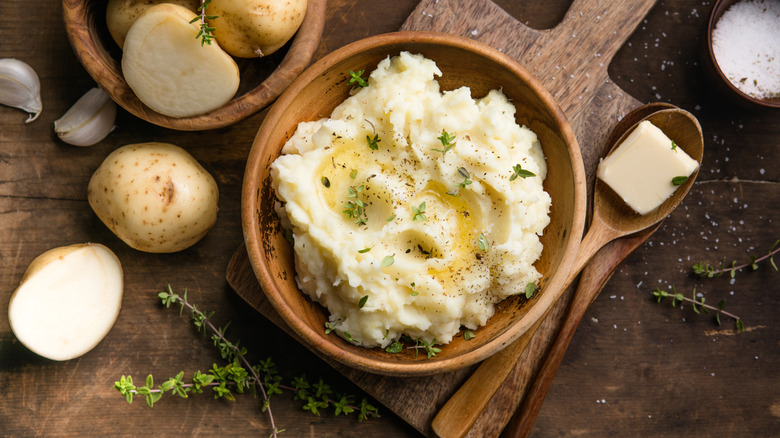
In the right hands, mashed potatoes is possibly one of the most comforting and (dare we say) luxurious dishes. The creamy mouthfeel, the warm heft of each buttery spoonful — it's no wonder that even the world's most renowned chefs have strong opinions about the dish, and their own hacks for making the best mashed potatoes.
No matter which way you choose how to make the best mashed potatoes, a pressing question remains: What goes with it? Gravy is fine. It's always been fine. But fine is also a very low bar for something that is worthy of so much more attention. Mashed potatoes is, at its core, a blank canvas — one that is practically begging for something with personality to come along and give it a reason to be remembered. All of the different toppings on this list do exactly that. They will each take your bowl of mashed potatoes and transform it from something you eat because it's there to something you think about making again before you've finished the last bite.
1. Mushrooms
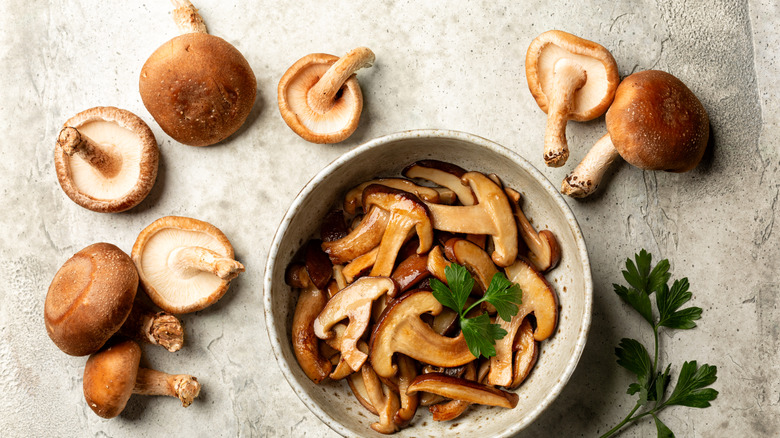
Are you looking for a mashed potato topping that adds texture as well as flavor? If so, mushrooms should be your first choice. Mushrooms are a many splendored thing, and the variety you choose matters more than you might think. If you want to play it safe, button mushrooms are always the best bet. However, opt for cremini, shiitake, or a mix of wild mushrooms to immediately up the flavor stakes. We are talking about earthy, intense, almost meaty flavors that can take mashed potatoes to the next level. If you can get your hands on oyster mushrooms, grab those for a crispy, unusual twist.
When learning how to properly sauté mushrooms, the technique is non-negotiable. You need high heat, a dry pan, and no overcrowding. Mushrooms release a significant amount of moisture, so if you're not giving them space and heat, you'll end up with a steaming, soggy mess instead of perfectly seared bites. Putting soggy mushrooms atop mashed potatoes is a missed opportunity, for sure. What you are aiming for are caramelized edges, a little color, and enough concentrated flavor to keep your attention with every bite.
2. Broccoli and cheese
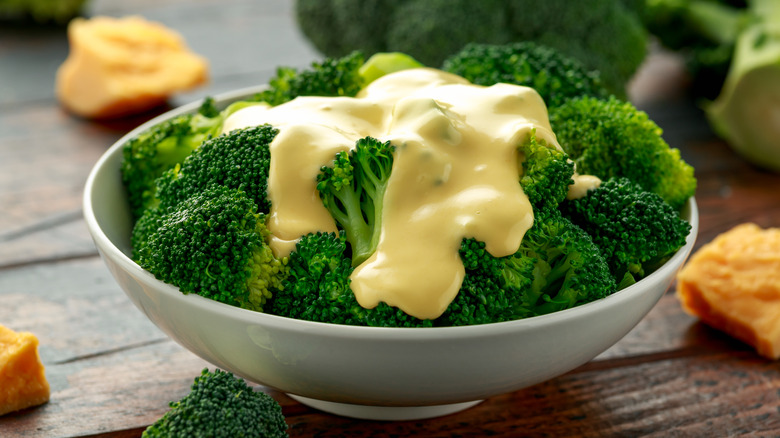
Some toppings don't require reinventing the wheel. What they do need, however, is to be treated with a little more intention. Broccoli and cheese on mashed potatoes is the kind of combination that sounds boring until you actually do it properly.
Always start with the broccoli. You want it roasted, not boiled. We are going for nostalgia, yes, but without ever veering into nursery food. Instead, roast your broccoli at high heat until the florets get a little char on the edges and the stems start to caramelize. You will need to walk that thin line between a little bit of bitterness and bite, and over-the-top overcooked. The savoriness you're after will balance the richness of the potato and the fat of the cheese. Also, don't forget to cut the florets small enough to give you a piece in every bite, instead of having one dramatic tree balanced on top.
Don't play it safe with the cheese, either. Cheddar is the classic; it works, but a sharp aged cheddar is going to do considerably more work than a mild one. If you want to go further, a mix of cheddar and gruyère will bring a nuttiness that makes the whole thing feel more grown-up. Finish it with a pinch of smoked paprika scattered over the top for color and a gentle smokiness. Add chili flakes if you want to bring the heat.
3. Ranch dressing
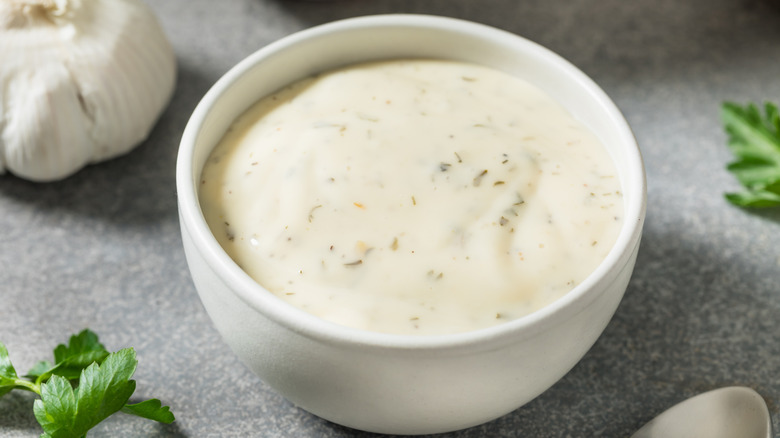
The idea of ranch dressing atop mashed potatoes sounds like something that happened by a happy accident. The appeal is understandable. Ranch is creamy and tangy, and herbaceous enough to feel lighter than regular mayonnaise. There's also just enough garlic and onion to add a savory note to what could otherwise be bland potatoes. Where gravy can add richness, ranch cuts through it. The buttermilk base brings an acidity that lifts the whole dish and stops it from sitting too heavy, which is no small feat when it comes to creamy comfort food.
Needless to say, the way you use your ranch dressing matters. Too much can turn your mash into a gloopy dip. What you want is a generous drizzle — enough to ensure a spot in every forkful but not so much that the potato is submerged. Warming the ranch slightly before serving also helps it work more like a sauce over your hot mash. You could buy one of the best bottled ranch dressings from the wide range available or make it from scratch using a base of sour cream and mayonnaise. Add fresh dill, chives, garlic, lemon juice, and a splash of buttermilk. Top it all with extra chives, some black pepper, and a sprinkle of crispy bacon bits for the full effect.
4. Crispy chili oil
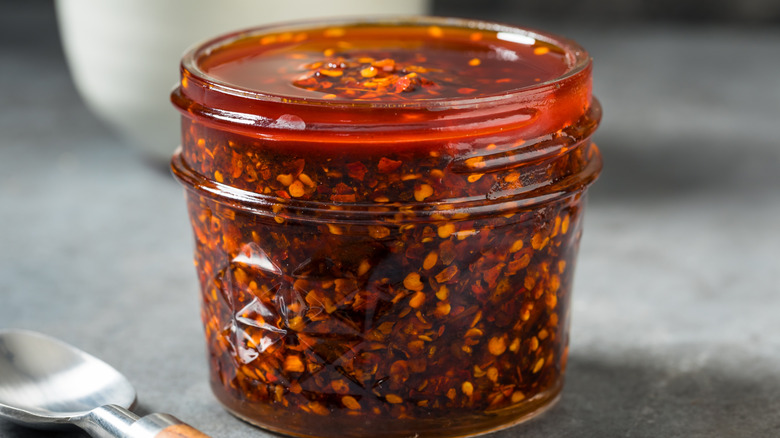
If there's one condiment that's captured hearts everywhere over the last few years, it's crispy chili oil. And mashed potatoes — with its creamy, undemanding personality — appears to be just the right vehicle for this savory, textured addition.
The combination works because of the contrast: Mash is soft, rich, and mild. Crispy chili oil, on the other hand, is spicy and deeply savory but with a complexity that goes beyond basic heat. The crispy bits — the fried garlic, shallots, and sometimes dried shrimp or fermented black beans — are lifting as much weight in each spoonful as the spicy oil itself.
Heat levels vary significantly between brands, so it's worth knowing what you're working with before you pour. The best chili crisp brand, Lao Gan Ma — which has been attributed to starting the mainstream obsession — has the perfect levels of savory funk and moderate heat. On the other hand, if you're making your own (and hat's off to you if you are), you control everything: the variety of peppers, how much garlic you fry, and how long you let it all steep — thus turning everything the oil touches into your personal masterpiece. Spoon it over your mashed potatoes just before serving but don't stir it in. You want those crispy bits sitting on the surface, staying crunchy for as long as possible.
5. Onions
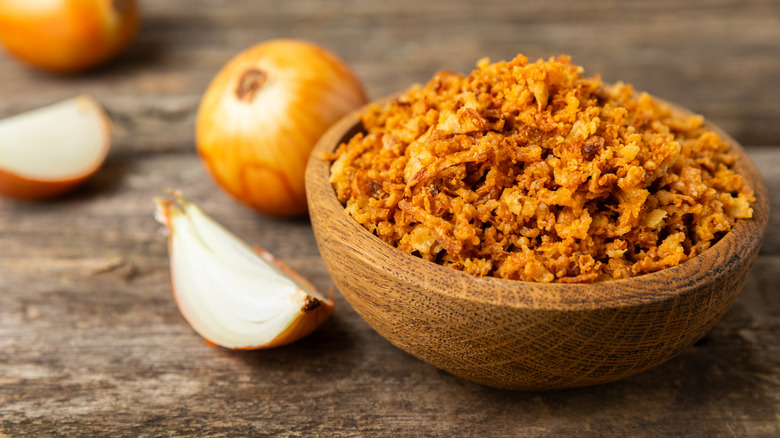
Combining onions with mashed potatoes is not a trend. There are several European countries that like to pile sautéed or crispy fried onions over every variety of potato dish. However, we must point out that a distinction needs to be made between caramelized onions and crispy fried onions. The two deliver entirely different flavor and texture profiles to the dish they are added to.
The way to cook caramelized onions is to slowly cook them down in butter. The longer and slower, the more jammy and sweet they get. The almost sauce-like result adds an intense hit of sweetness that melts into the potato. Adding a splash of balsamic vinegar in the last few minutes of cooking and letting that reduce as well will add an acidity that stops the sweetness from becoming cloying. Throwing a few sprigs of fresh thyme into the pan doesn't hurt, either.
Crispy fried onions, on the other hand, will add a savory crunch and bite. You can make them at home — by thinly slicing onions and coating them lightly in flour before frying them in hot oil — or simply pull some from a bag of store-bought fried shallots; there are no wrong choices here. It just depends on what you're in the mood for. If you're going for crispy, pile those onions high and eat them quickly. They start to lose their crunch within minutes of hitting the warm mash, and that window is exactly where you want to be.
6. Crumbled blue cheese
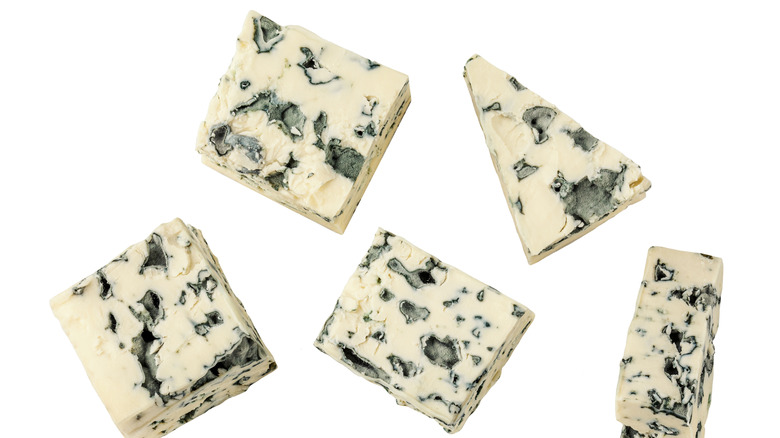
When faced with a cheeseboard, do you head straight for the funkiest block on the plate? If yes, then consider blue cheese the mashed potato topping of your dreams. Blue cheese on mash is not for the weak. It is unapologetically bold, almost aggressive — but also the perfect foil for the straightforward starchiness of potatoes. The pungency of blue cheese cuts through the fat and creaminess to change the entire character of the bowl. No longer is this plain, comfort food. Instead, with the help of blue cheese (whether as a crumble or as a blue cheese dressing on potatoes), indulgence becomes a whole lot more interesting.
The variety of the blue cheese you use also matters. If you want a milder entry point, gorgonzola dolce provides the tang without the strong flavor. Roquefort is sharper and saltier, while Stilton sits somewhere in the middle. Just don't melt the blue cheese into the mash! Crumble it over the top of hot mash just before serving so it softens slightly at the edges while keeping its texture at the centre. That contrast is exactly the point.
7. Romesco sauce
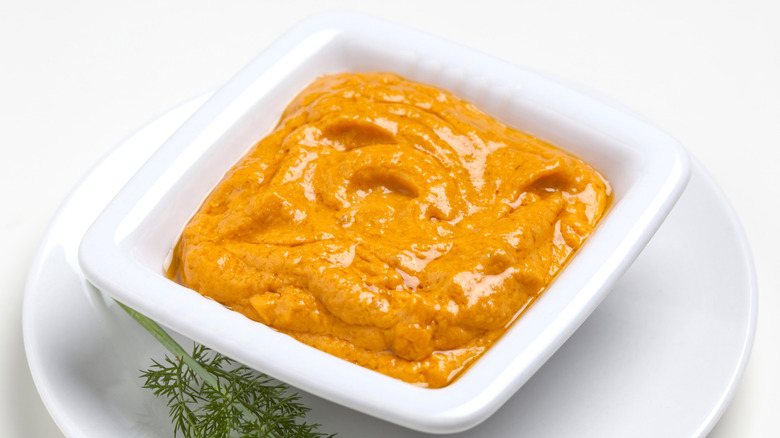
Romesco is one of those sauces that makes everything it touches feel extra special. Originating from the Catalonia region of Spain, the almost gravy-like condiment has a base of roasted red peppers and tomatoes, along with toasted almonds or hazelnuts, garlic, olive oil, and smoked paprika. As you can imagine, the result is something simultaneously rich, smoky, sweet, and nutty — and on mashed potatoes, it elevates the dish entirely.
You can make your own romesco from scratch. At most, it will take under twenty minutes of effortless whizzing of a food processor, especially if you use jarred roasted peppers. But we are also quick to point out that while homemade has an edge over store-bought, the difference is minimal, and it wouldn't be a bad idea to stock up on jars of romesco for a quick and easy weeknight dinner.
What makes romesco such a good topping, rather than just a good sauce, is its texture. It's not pourable; instead, it sits in a pool of smoky, tangy flavors. It has body. When spooned generously over the top of warm mash, it creates a layer that you have to dig through to get to the potato underneath, which means that every mouthful is a party of taste and texture. That structural quality is what separates it from sauces that simply disappear into the surface.
8. Chimichurri
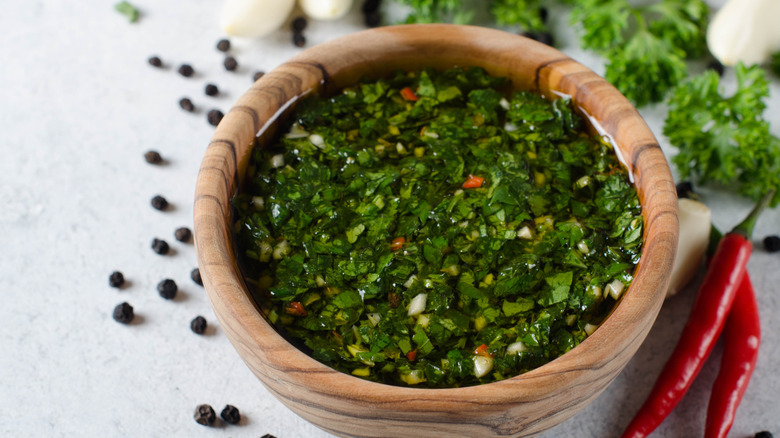
If you are using chimichurri exclusively for grilled meats, we have to intervene. This is a waste of a very good sauce that needs a larger playing field for sure. In fact, this herby, garlicky sauce is exactly what a rich bowl of mashed potatoes needs.
The sauce originates from Argentina and Uruguay. At its core, it contains fresh flat leaf parsley, garlic, red wine vinegar, olive oil, and chili flakes. It can also include oregano, shallots, and lemon juice depending on who you ask. It is less like salsa verde and more like pesto — and unlike either, it stands out on any dish it is paired with.
We suggest you make fresh chimichurri instead of reaching for a jarred version. In under ten minutes, and with the least amount of effort, you have a zesty condiment that stores well in the refrigerator and brightens up any recipe it is used with. On mashed potatoes, the assertive flavor is the entire point. The vinegar cuts through the butter and cream, and stops the bowl from feeling overwhelmingly rich. Meanwhile, the raw garlic and fresh parsley work almost like a palate cleanser. Spoon it over generously and don't be stingy about it.
9. Slow roasted tomatoes and burrata
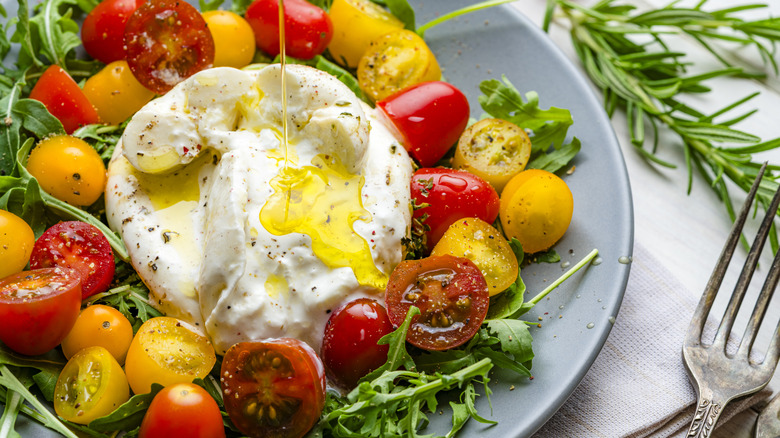
Mashed potatoes don't always have to be relegated to a side dish. When you consider toppings like slow roasted tomatoes and burrata, you realize that with a few simple add-ons, you can make it an indulgent snack or a light lunch ideal for sharing.
The "slow" in slow roasted tomatoes is non-negotiable; this cannot be rushed. Now is not the time for a quick blast in the oven. You want to cook them low and slow. Make sure they are halved and drizzled with olive oil before they roast in an oven for one to two hours. The consistency you are aiming for is jammy with caramelized edges. And once the water has evaporated, what you are left with is pure tomato flavor.
Now pair this with cool and creamy burrata, torn open so the smooth interior can spill out and start to melt slightly. The contrast between cold burrata and warm potato is deliberate and important. Finish it with good olive oil, flaky sea salt, fresh basil, and a crack of black pepper. Sit back to enjoy a truly wonderful meal.
10. Guacamole
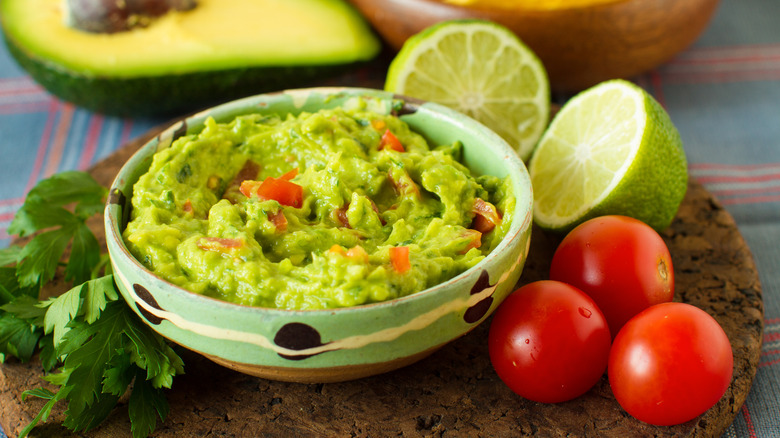
Alright, hear us out before making any hasty judgements: You should try guacamole on mashed potatoes. We are backing this one because, while it may raise eyebrows, after that first bite, you will be too busy eating to care. Now, avocado is buttery and rich by itself, and you may think that it would be too much when paired with a creamy mash. But guacamole is lighter and fresher in a way that dairy can't be. The acidity of the added lime juice and chili stops the whole bowl from collapsing under the weight of its own richness.
The quality of your guacamole matters here, though. In a regular chip and dip combo, seasoning and texture can hide behind the crunch of the chip. With a mash, you need properly made guacamole. The avocados need to be ripe and mashed roughly so there's still some texture, and the lime juice should be fresh to combat the crunch of chopped onions and jalapeño. Spoon it over warm mash while the guacamole is still cool. That temperature contrast works in your favor. To add further interest to an already flavor-packed dish, add a scattering of cotija cheese and serve a few tortilla chips on the side for crunch.
11. Compound butters
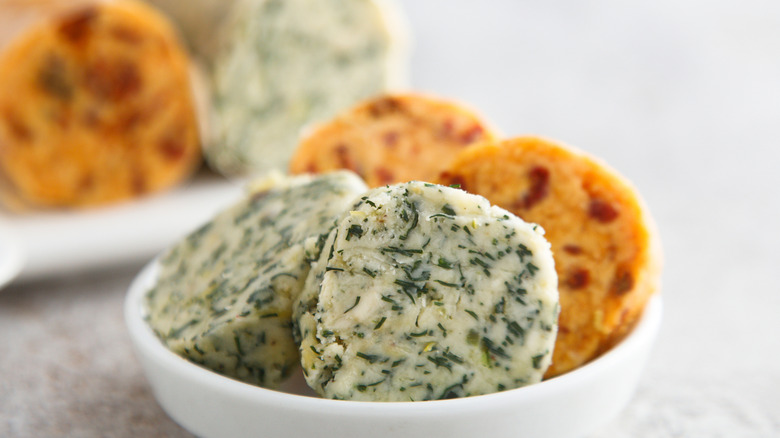
Compound butter sounds impressive. But at its most basic, it is simply softened butter with things mixed into it. Herbs, spices, aromatics like citrus zest — these all work like a charm. Once you've mixed your chosen flavors into softened butter, simply roll it into a log, wrap in cling film, and chill it until firm. It's now ready to be added to mashed potatoes.
The real appeal is in the customization. The variations are limited only by what ingredients you have access too. For a delicious mash, all you need to do is slice a round of your compound butter (directly from the freezer will do) and let the heat of the potatoes work their magic. As the butter melts and the flavors seep in, sit back and enjoy this delicious treat.
One unusual combination that deserves a special mention is soft butter with miso paste. The ratio is flexible but aim for one part miso to three parts butter. There should be just enough miso to be purposeful without turning the entire dish into an over-salted mess. White miso is the right call as it's the mildest and sweetest of the miso varieties. But irrespective of what compound butter flavoring you are going for, make sure the butter is more aggressively seasoned than you think you need.
12. Za'atar
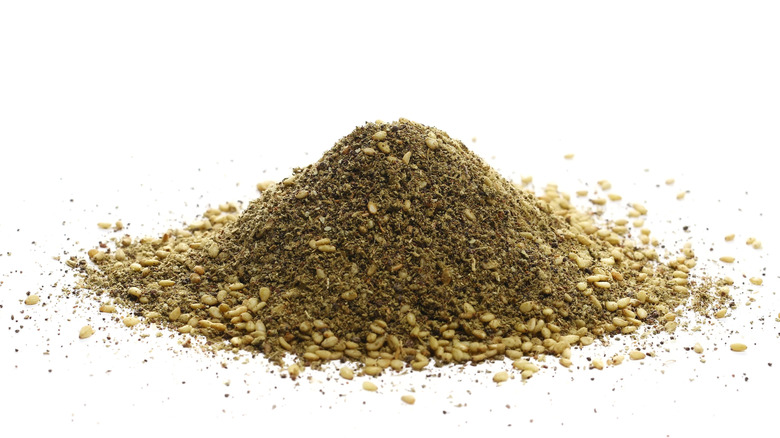
Za'atar is a pantry ingredient that is just starting to gain some popularity in Western kitchens. But in Middle Eastern cooking, it has been punching above its weight for a while now. It's refreshing to see more and more cooks reach for this nutty, earthy seasoning to use in a range of recipes. When utilized properly, za'atar has the power to completely reframe a dish. And on mashed potatoes, it does exactly that.
It is important to understand that there is no single definitive za'atar recipe. The blend itself varies by region and by household. At its core, it is a blend of dried thyme, sumac, toasted sesame seeds, and salt. It's the sumac — with its citrusy, tangy quality that is a bit lemony but also aromatic — that really sets it apart from other dried herb blends. But oregano, marjoram, and dried hyssop may appear in different versions.
The best way to add za'atar to mashed potatoes is to generously mix it with a good olive oil first to make a loose paste. Spoon that over the top of the warm mash so it seeps into the surface rather than sitting drily on top. Finish it with a few fresh mint leaves and a wedge of lemon on the side for a Middle Eastern take on a comfort food classic.
13. Eggs
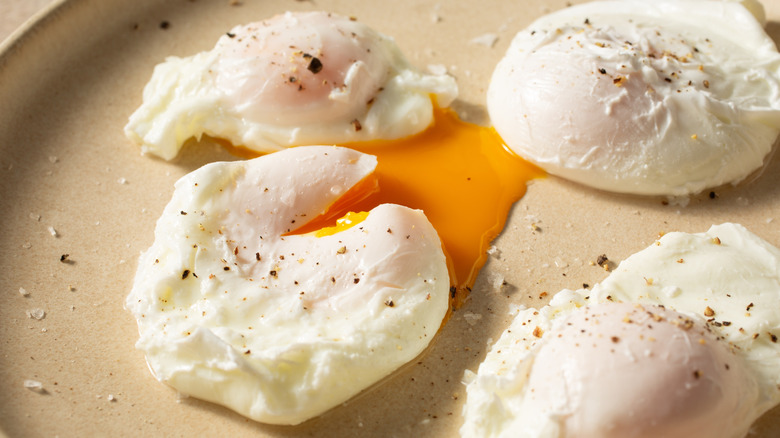
There's a reason why eggs and potatoes appear together in almost all cuisines. While the reasoning behind this perfect pairing might be vague, once you eat them together, it all becomes crystal clear. When mixed with creamy mashed potatoes, the yolk does something no other topping can replicate. This possibly has something to do with the yolk breaking and running into the mash to become its own sauce.
You could hard-boil and peel an egg to top your mashed potatoes with slices, seasoning it well with chives or chili flakes for more visual appeal. This offers a nice contrast of textures. But a poached or soft-boiled egg does several things at once to elevate the dish. With a soft-boiled egg, you have a set white and a jammy yolk that holds its shape (somewhat) when you halve it over the mash. If you are going for a more intentional look on your plate, this is the approach to take. A poached egg, on the other hand, is less structured and more dramatic; it's got wispy, delicate egg whites and a wobbly, almost liquid yolk. When broken over a warm mash, the effect is immediate and indulgent. For sure, this option is messier — but it's arguably also more satisfying to eat.