

Science Explains Why Store-Bought Bread Has A Long Shelf Life
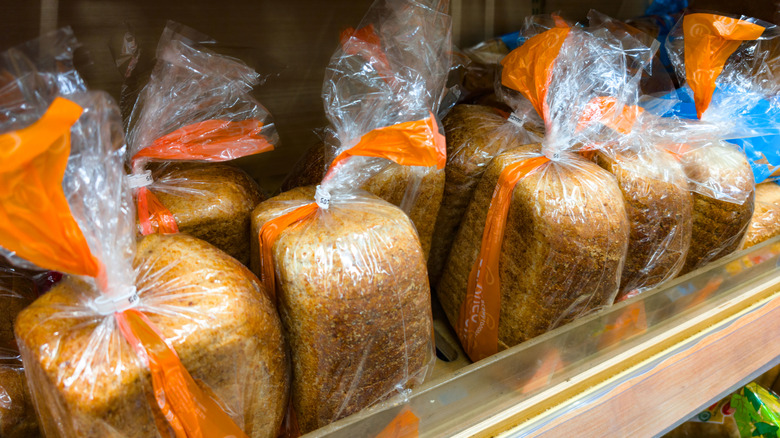
Good things never seem to last, and I'm complaining about fresh bread when I say this since a loaf of bread baked at home only lasts a few days. You can freeze bread so it will last up to three months, but it's sealed away in the freezer and you can't make sandwiches easily. Instead, if you need bread fast, you're likely to go buy a loaf from the supermarket, where (at least in my experience at local grocery stores) the best-buy date will be at least a week away and it'll often last longer before it goes stale and stiffens up. What makes homemade bread different from store-bought bread?
The answer is in the ingredients list; namely, the preservatives. Most preservatives are added to stop microbes from forming (or more accurately, to delay microbes from forming). These microbes will rot your food and cause fuzzy mold to spread on your bread.
Preservatives are everywhere in the baking world. For example, bread sold by Pepperidge Farm lists calcium propionate (a sometimes naturally occurring, sometimes synthetic salt) and sorbic acid as ingredients; the ingredients list in Arnold sliced bread mentions sea salt and citric acid; and in Wonder bread you can again find calcium propionate in the ingredients list alongside many other chemical compounds with various purposes.
Store-bought bread has preservatives
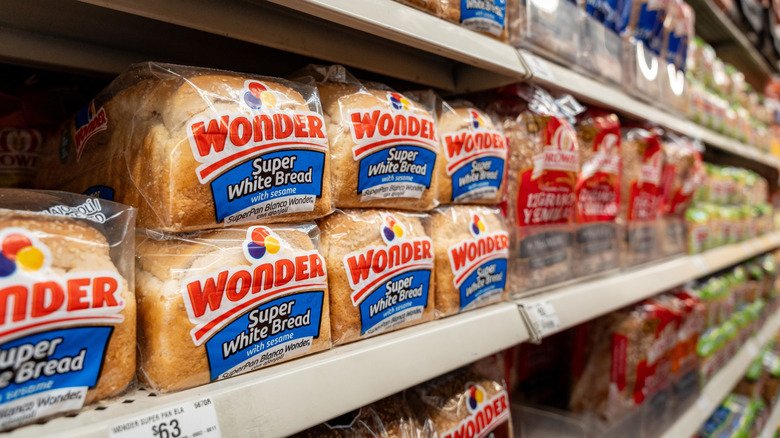
Usually, these preservatives work by mixing in with the bread ingredients to create conditions which are inhospitable for bacteria (so that it doesn't spread and reproduce on the food), although some acidic compounds also prevent oxidation. For bread, exposure to moisture is a major threat because it causes mold to grow. Preservatives inhibit that growth until they break down or lose effectiveness. Preservatives don't last forever, though. Estimates for how long they'll remain effective are how companies decide on a food's expiration date.
Some bread brands like to brag about how their bread lacks any artificial preservatives, but that doesn't mean there are no preservatives at all. Instead, it means that these companies have switched to simpler preservatives that aren't synthetic, usually salt or some other compound like sorbic acid. In food terms, "artificial" usually refers to man-made chemicals like sodium nitrate and sodium benzoate which are considered harmless on their own but remain a subject of studies examining possible side effects.
What can you do to prevent your own homemade bread from spoiling so quickly? You likely have access to some natural preservatives too, such as the ubiquitous salt, honey, or cinnamon. You can also store your bread with foods which contain natural preservatives, like celery. Placing celery sticks into bread bags is an unconventional vegetable hack for keeping bread fresh, but they're more useful for providing moisture to keep bread from going stale rather than keeping microbes away.