

Your Ticket To Crispier French Toast Is Already In Your Pantry
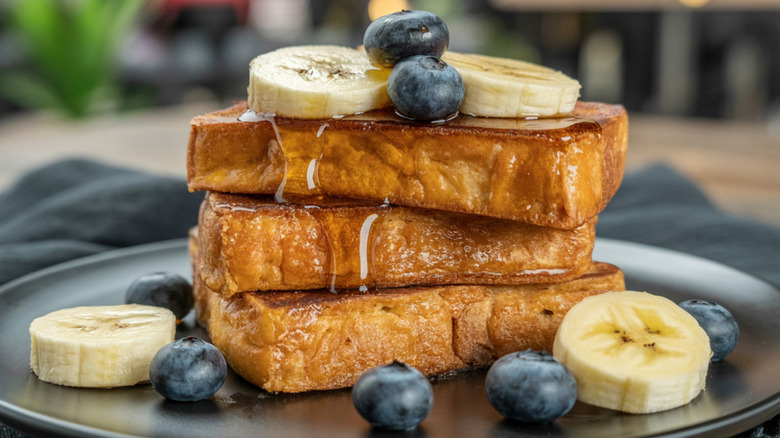
French toast isn't the hardest breakfast food to make, but it still requires more finesse than scrambling eggs. Amateur French toast can often be soggy and droopy, which could indicate you made the mistake of soaking French toast in the custard batter for too long, but it could also be an issue with the ingredients. Are you using flour, for example? It shows up in some recipes, but not others. Flour can help your French toast from looking like it's melting. Just to be sure, we asked two experts in the field of breakfast foods: Tim Bechtle, culinary training manager at The Broken Yolk Cafe, and Jeremy Lett, senior director of culinary at Cracker Barrel.
Bechtle called flour a famous "secret ingredient" in French toast, which can majorly change its texture. Flour "acts as a binding agent with the egg and other ingredients to create a 'shell' around the bread as it cooks," Bechtle says. "This improves structural stability and creates a more crisp outside, while keeping the inside more tender and almost creamy."
Lett adds, "Traditionally, French toast is made with a custard — eggs, dairy, sugar, and flavoring — without flour. The bread absorbs that mixture, and when cooked, the eggs set and create that soft, custardy interior. When you add flour, you're introducing starch, which changes the texture." He does warn that this can make your French toast denser, even as it adds some thickness to the French toast's structure.
More flour makes French toast crispier
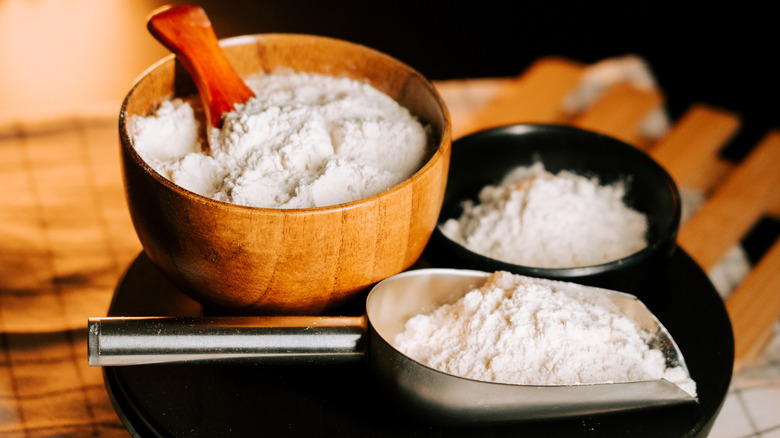
Adding flour will thicken the whole mixture, which means you have to tweak the French toast recipe. "Because flour adds structure, it behaves more like a light batter and benefits from a slightly lower cooking temperature and a bit more time to fully set without over-browning," Lett said. It's often a good idea to cook French toast at medium to low temperatures anyway, as high temperatures can burn the exterior before its insides are done cooking.
Bechtle recommends dissolving the flour in milk or some other water-based liquid (as in, don't use an oil) and forming a slurry before you mix it into the eggs to create the batter. "Because the batter is thicker, you can soak the bread longer before adding to the pan," Bechtle said, suggesting 30 seconds to a minute depending on the thickness of the bread slices.
Speaking of bread, are there specific kinds of bread that are well suited for crispy, non-soggy French toast? The absolute best bread for elevated French toast is considered by some to be King's Hawaiian bread, but according to Bechtle, "Using thick brioche bread is another trick to avoid sogginess that doesn't need the protection of a thick flour batter." It's a richer, slightly sweeter bread variety with a high egg content. It's often used in bostock, which is similar to the more popular French toast, so flavor-wise it blends well.