

Here's How To Actually Build A Tolerance For Spicy Food
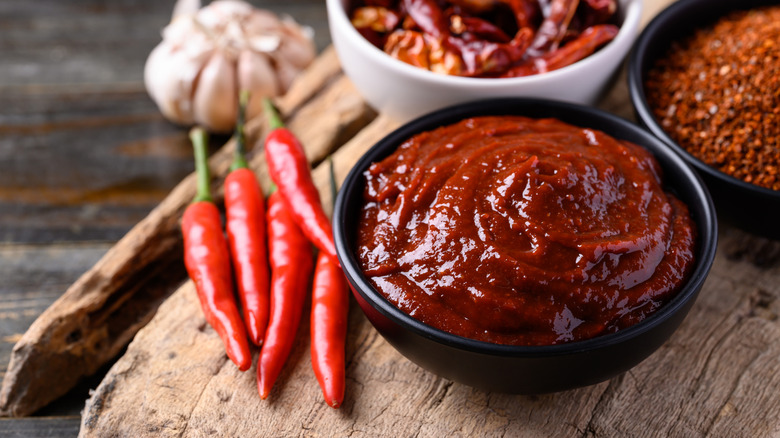
It's common knowledge that eating foods with a high spice level is not an endeavor for everyone. Some people loathe the feeling of their mouths being burned to a crisp, while others seem completely unbothered by the effect of the spice. This vast difference in experiences certainly causes one to wonder what exactly happens when spicy food collides with taste buds, and why.
The culprit of that feeling of smoldering heat that hits your mouth, and even travels down your throat at times is something called capsaicin. Capsaicin is a chemical that attaches to a part of your taste buds, called TRPV1. This essentially acts like a temperature gauge. When the capsaicin meets with the TRPV1 receptor, it causes the gauge to go a bit wacky and start flagging much lower temperatures as high heat. This is what then sends up the red flags to your brain, alerting it that your mouth might be on fire.
As unpleasant as this sensation is, you can actually dull this chemical reaction (and the pain it causes) through using certain methods, which in turn builds your tolerance for spicy foods. To find the best ways to do this, we turned to expert chef Latoya Flagon, who is the owner of Twist Catering. She has provided us with valuable insights into the methods that will actually work and the secrets behind building up a spice tolerance. With a little perseverance and dedication, you'll be downing hot sauces in the blink of an eye.
1. Consistently eat spicy foods
One of the keys to building spice tolerance is to maintain consistency. In fact, chef Latoya Flagon mentions that "consistency matters more than intensity," spice tolerance-wise. This means if you truly want to reach high spice level nirvana, you're going to need to keep your eyes on the prize and continuously make an effort to incorporate spice into your meals.
This insight shouldn't really be a surprise to you. If you think about it, trying to build anything in a measured fashion generally requires some level of consistency. When building muscles at the gym, for example, you normally wouldn't miss a couple of weeks and expect to see any sort of gains in your performance. In fact, in this scenario, you might even expect to see some sort of loss of your proficiency, such as becoming more winded or not being able to lift the same amount of weight.
Building your spice tolerance is no different from this in many ways. When you consume spice on a consistent basis, this causes the receptor reaction to capsaicin to dull, leaving you with a pleasant tingle instead of a searing firestorm of spice. Just think of it as flexing your taste buds, with the benefit of eating delicious food in the process. Eventually, if you keep at it, results will begin to shine through. Even Flagon mentions that she "personally could only handle black pepper when I was younger, and now I can eat scotch bonnet pepper sauce."
2. Try different levels of spicy foods
Now, just because you shouldn't only eat the spiciest foods you can find, doesn't mean you can't try out a new spice level now and then. It's actually recommended that you spice up your dishes with different levels when building a spice tolerance. "I suggest trying different levels of heat a couple times a week," chef Latoya says, combining the need for different spice levels and consistency into one, "will help increase the tolerance."
There is actually a handy tool for this that may help to guide you in your spice journey called the Scoville scale. This scale is meant to measure the level of spice in peppers in Scoville Heat Units. The scale can range from 0 units for bell peppers, which lack spice, to over 2.2 million for the Carolina reaper pepper (believed to be the spiciest chili variety). Generally, the rule is the higher the number on the scale, the greater the spice level. Some hot sauces will even have this number listed on the bottle.
Checking the number on the Scoville scale will help you to integrate higher and lower scale spice levels into your diet. Researching the number before purchasing a new hot sauce will also ensure you don't pick something far out of your comfort zone. In this way, if you are set on raising your spice tolerance, the Scoville scale will be your friend.
3. Build slowly
Going from zero to 10 can be a bad idea in many cases, and spice levels are one of them. Just like you wouldn't want to proclaim your everlasting love on a first date, immediately reaching for the hottest of all Taco Bell sauces is likely just going to end badly for everyone involved. Not only is consistency key, so is taking it slow.
Taking time to determine the level of spice that is comfortable for you to eat will benefit you. Once you have a baseline spice level, you can take small steps to add this spice to meals. A squirt of hot sauce here, or a sprinkle of Cajun seasoning there, is a great start. There is no need to begin by dousing your meal in the 17 best hot sauces on Amazon, even if they are picked by hot sauce fanatics.
As you become comfortable with levels of spice, this is when you can increase it a notch. Remember, we don't want to crank up the dial to 100 here right away; this is a gradual journey. If you are beginning the trek with a low spice tolerance, chef Latoya Flagon suggests that she "would start with Mexican food that has heat, light chili sauce, Thai curries, and Sriracha sauce." A bonus is that this is a great opportunity to try foods that originate in parts of the world known for their spice, like China or India. You may even find a new favorite dish.
4. Try pairing the spice with sweetness
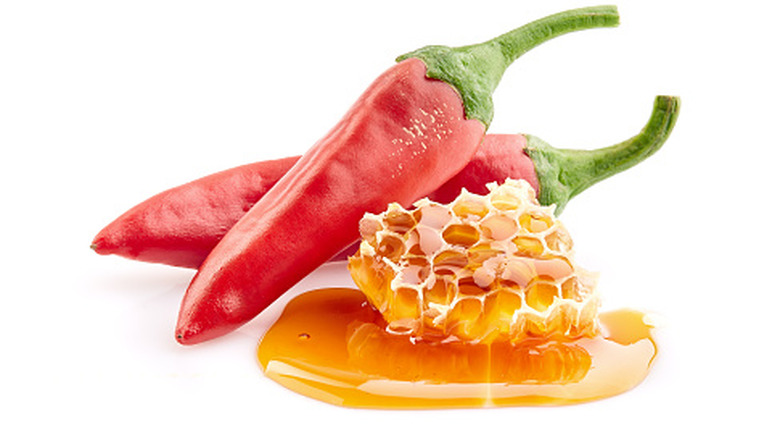
This experience should be one that is enjoyed; no one should be going into this venture with the goal of dreading the burn of every meal. That said, if during your spice tolerance adventure, you start to notice that the burn is so unpleasant it's nearly downright intolerable, don't just accept that this is your life now. There are many food pairings that can help adjust the spice to be manageable, leading you to have a more enjoyable meal. One of those pairings is adding some sweetness to a dish with spice.
Chef Latoya Flagon agrees that "sweetness softens the heat and burn and makes spicy food more enjoyable." The sweetness effectively soothes the sting of the heat, making it a bit more manageable. This can be especially helpful for those who might have accidentally made a dish spicier than planned, or who have a lower spice tolerance in general. If you're trying to think of dishes that would fit into the sweet and spicy category and are drawing a blank, "chili sauce or hot sauce with honey, twist pepper sauce, mango or pineapple, and Canadian maple syrup with pepper sauce," are some suggestions from Flagon. Or, if you're feeling adventurous, you could even try adding a spicy condiment to your next bowl of vanilla ice cream.
5. Ensure you have dairy on hand
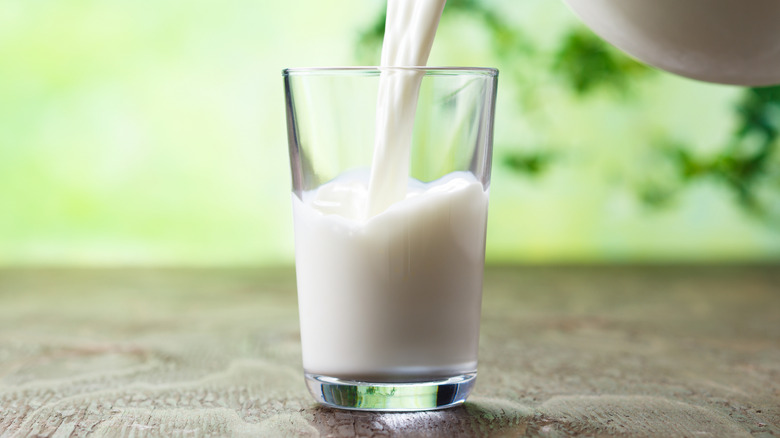
With all this work you're doing, trying different spice levels, remaining consistent, and even checking the Scoville level, you're bound to take a bite out of something too hot for your tolerance at some point. It's just a hazard of the trade, a true inevitability of working with spice. But, what can be useful during these instances is being prepared with both the knowledge of what might help and having it on hand. Usually, when something is burning, an immediate impulse is to grab water. But chef Latoya Flagon counsels against this, "First thing I will say is [do] not drink water, it only makes it hotter," she says.
In general, milk products are the best way to cool down your mouth after eating something too spicy, it seems. The reason for this is that milk products have an protein called casein within them, which is able to counteract the effects of the capsaicin in spicy foods. This essentially blocks the receptors from getting the memo that they should be on fire, keeping your taste buds none the wiser. This is why, if you're ever in need of relief, Flagon says to grab "some sort of dairy, like ice cream or milk." If the worst has happened and dairy is not on hand, she suggests "grab some bread, starch," as this will block the taste buds from connecting with the capsaicin.
6. Focus on the health benefits
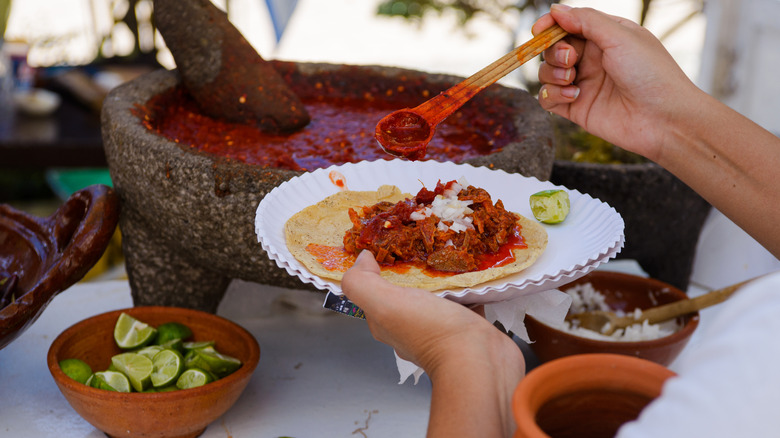
You might at this point be starting to wonder why you ever thought to set out on this venture of raising your spice level. If your tolerance isn't rising as quickly as you might like, or you are struggling to find spicy dishes that you enjoy enough to deal with the burn, it might cause you to question what the meaning of all this is. Well, for one thing, there are several benefits health-wise to incorporating spicy food into your diet. "For me, the biggest thing is when you eat hot and spicy food, endorphins and dopamine are released into your body and endorphins make you happy!," chef Latoya says.
That's right, the sting from those red-hot chicken wings you're munching on is actually doing more than tricking your brain into believing you are in pain. Its signaling your brain to release elevated levels of endorphins, the feel-good, happy-go-lucky hormone that makes you want to dance in the rain. If you prefer eating over running, this can be nothing but a win for you. In some articles, this phenomenon is even compared to a runner's high.
There are also other known health benefits to spicy food, including lowering inflammation and being "a great metabolism booster." As if that's not enough, spicy food can also clear out your sinuses, an extra useful side effect during cold or allergy seasons. So, the next time your mouth feels like a fireball, just try to remember the benefits.
7. Keep in mind the role that genetics plays in spice tolerance
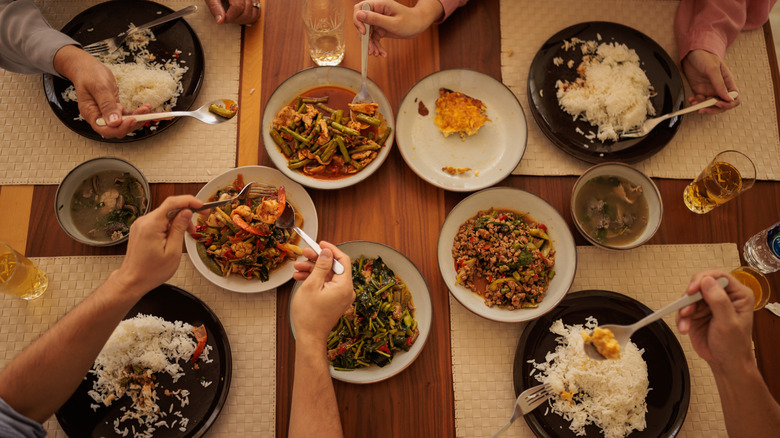
You might know that everyone has a different spice level baseline, but what you may not have realized is that genetics can play a significant role in spice tolerance level. That's correct, you can now blame your parents for your inability to withstand spice, right along with male-patterned baldness and the urge to sneeze when looking into light. In fact, one study reported that genetics can determine up to 58% of the differences in how people handle spice levels.
Though scientists aren't entirely sure of why this is, one of the current theories bouncing around is that different genetics may pass on different amounts of receptors. In this theory, more receptors would mean more places for the capsaicin to attach to and wreak havoc, causing the higher sensitivity. However, it's not only genetics that contributes to natural spice tolerance. If individuals are exposed to spicy food during their formative years, this can also build a tolerance level that enters with them into adulthood. With this in mind, if someone is naturally more tolerant to spice than you, don't let this discourage you on your journey.
8. Set a realistic goal
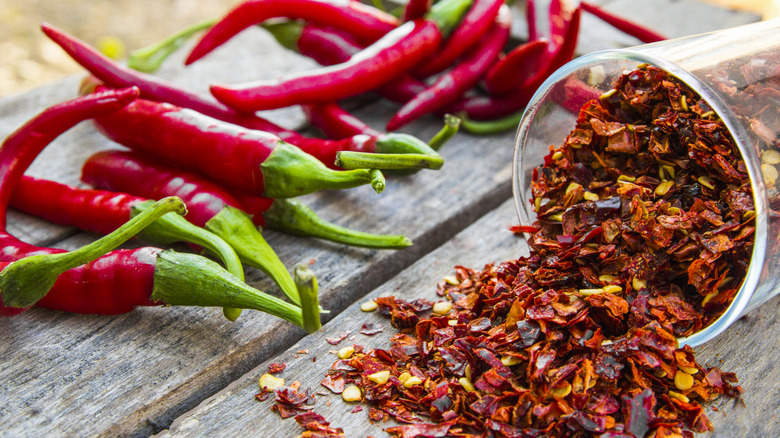
It's likely that you started on this journey with some type of goal. For example, you may have wanted to be able to eat hot peppers without cringing. Or, perhaps you didn't want the spice level of a food to cause you to shy away from what could have been a tasty experience. But, whatever your personal goals are, it's important to make them realistic. It's unlikely for you to ever become completely unaffected by spice (even if your goal is to be able to eat the peppers at the very top level of the Scoville scale). Its okay to find your limit, and stay within it.
If you keep pushing your limits, you may eventually reach a point where the spice has completely overcome the flavor of the dish. At this point, the spice level is just far too high to garner enjoyment, unless you happen to be participating in some sort of dare. "100% that happens," chef Latoya Flagon comments, "that is why there is a difference between something being spicy and something just being hot with no flavor." The whole point of why people love spicy food, she continues, is because "they just love the added flavor to their dishes." With these wise words in mind, try to align your goals more with enjoying the food and enhancing your dining experiences with the added tang of a spicy dish. The goal is to find a level that, for you, is pleasurable.
9. There is no evidence that the taste buds are harmed by eating spicy food

When you bite into a big piece of spicy Nashville hot chicken and your entire mouth feels as though it has ignited into flames, you might start to wonder if you could be potentially harming your taste buds by continuing to expose them to spicy food. Rest assured, the answer is: No. You are not actually harming your mouth by continuing to eat spicy food, even if it does feel like you might be, and the pain and burning sensation you feel when eating spicy food is all too real.
Now that your concerns have been alleviated, let's rehash what actually happens to your body (and brain) when you eat spicy food. When the TRPV1 receptors in your mouth are activated by the capsaicin in hot peppers, this tricks your brain into believing the burning feeling is happening. The keyword here is "tricks." There is no real fire going on in your mouth, and there is no real steam flying out of your ears, as they might depict in cartoons.
However uncomfortable the sensation might be, the taste buds themselves are not being harmed by the spice. They are simply reacting in a way that emulates pain and burning. This is good news for those who were on edge about tossing out their beloved hot sauces or peppers. Eat on without worry, spice lovers.
10. Building spice tolerance is a journey, not a sprint
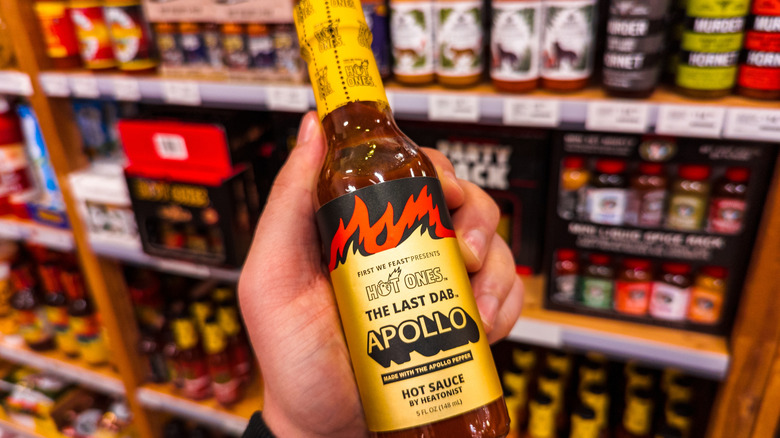
No matter how badly you want to impress your friends by devouring a Carolina reaper, at the end of the day, there is no magical quick fix to building a spice tolerance. No matter if you have trouble eating Tabasco sauce, or if the restaurant can't make your curry spicy enough for your tastes. It's going to take some time for your taste buds to adapt to all that spice, and for your tolerance to grow naturally. Taking the steps laid out here will certainly help you on your way, but it's a process that is going to take some patience overall.
The length of time it could take for you to see improvements will vary. It could be weeks or months before you start noticing results. And, some days your tolerance might be lower than others, and that's okay. Try to remember it's not a race. It might soothe any antsy energy to focus on some of your favorite dishes you've discovered since starting on your spice journey. Chef Latoya Flagon lists her go-to spicy dishes as "chili chicken, curry goat with Twist pepper sauce, or ramen noodles with chili oil." Regardless of where your spice journey takes you or how fast, it's the love for spicy foods that seems to guide the way. As Flagon mentions, people often "like the way it makes them feel."
11. Balance out the spice with acidity or citrus
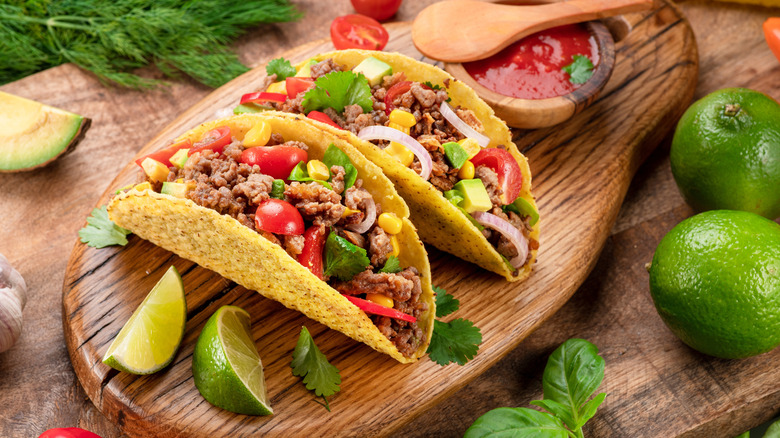
Let's say the worst has happened. You've made a horribly miscalculated decision and taken a bite of your friend's overly spicy kimchi. If your mouth then starts to ignite into a raging fire, your location limits you from waltzing over to your fridge and pouring a glass of milk. You also might not have a hunk of bread in front of you during this time to rip into. It could instead leave you to uncomfortably wave down the waitress as your face turns a shade of bright red. However, if in this scenario, you previously ordered a drink that came with a lemon or lime wedge on the side, then you might be closer to a solution than you think.
Sucking on that lemon or lime can help to alleviate the discomfort of an overly spicy bite. The citrus works to diminish the spice level because it has a low pH level. When combined with the high pH level of the capsaicin, these two even each other out, leaving you free to vow never to eat someone else's kimchi again. If your mouth is still burning, and the restaurant happens to have key lime pie on the dessert menu, this will also help your endeavor. Key lime pie combines both the casein from the dairy and the low pH level to create the ultimate spice sting-be-gone serum in the form of an aesthetically pleasing dessert.