

12 Delicious Ways To Use Lemon Curd
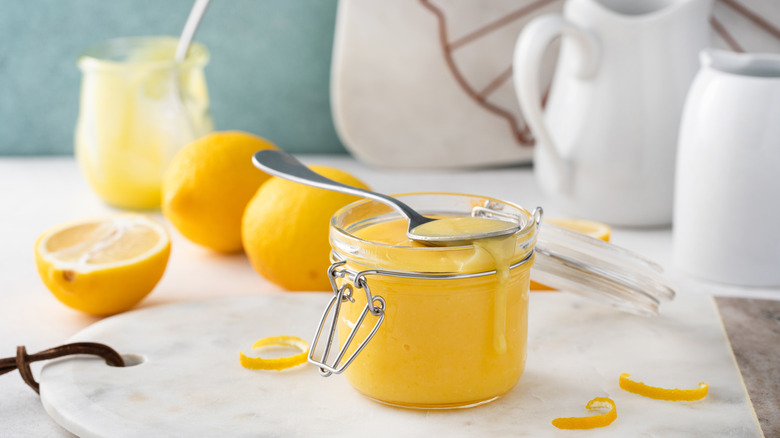
You either love lemon curd or you can't stand it. If you are part of the latter group, scroll on. We are going to be fangirling for a bit. Lemon curd is one of those ingredients that rewards you every time you reach for it. Yet, so many home chefs relegate it to the occasional swipe on a pound cake or as a topping for a pastry crust. But, there is so much more to do with homemade lemon curd, and our experts are here to prove it.
We approached three chefs who work with lemon curd across a range of different culinary applications. Chef Trung Vu is a Pastry and Baking Arts Chef-Instructor at the Institute of Culinary Education, bringing the kind of technical precision that comes from teaching the next generation of pastry professionals. Chef Odette D'Aniello is the founder and CEO of Celebrity Cake Studio and Dragonfly Cakes, a company built on beautifully designed desserts, and the host of the Celebrity Gourmet Podcast. Chef Kristina Lavallee is the founder of The Cake Girl, a nationally recognized custom cake brand with a celebrity clientele and a reputation for edible art that stops people mid-scroll. The three of them have come together to bring us eleven different ways to up-level one brilliant and multitasking ingredient.
1. Make French toast with it
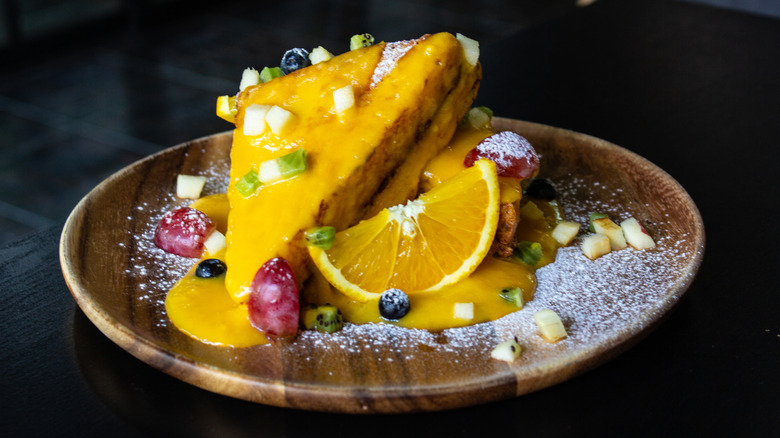
French toast for breakfast seems like a no-brainer. But, have you ever tried spreading lemon curd onto said French toast? If not, our experts are here to tell you that you are missing out on one of the simplest upgrades to your breakfast basics. Aside from the fact that it makes for one pretty plate, this combination works because of the contrasting flavors. As chef Trung Vu explains, lemon's acidity provides a natural balance to any overly sweet dish. French toast, even on its own, is an indulgent recipe that uses rich, egg-soaked brioche and milk or cream. Chef Trung Vu elaborates, "The two work well to balance each other so that you're not just eating something cloyingly sweet, nor overly sour."
Keep in mind that technique does matter here. Whether you make it in the traditional way in a pan, bake it as an overnight casserole, or go the lazy route and whip French toast up in a slow cooker, lemon curd is a fickle ingredient when heated. Direct, prolonged heat causes it to bubble and lose its structure. So, for French toast, it's best to use it as a filling or topping rather than something you cook or bake with. By filling, we mean thick slices of brioche sandwiched with a layer of lemon curd before cooking low and slow in butter. Pro tip: Lay off the maple syrup or honey here. The balance of sweet and citrusy is all you need.
2. Bake it into a cake
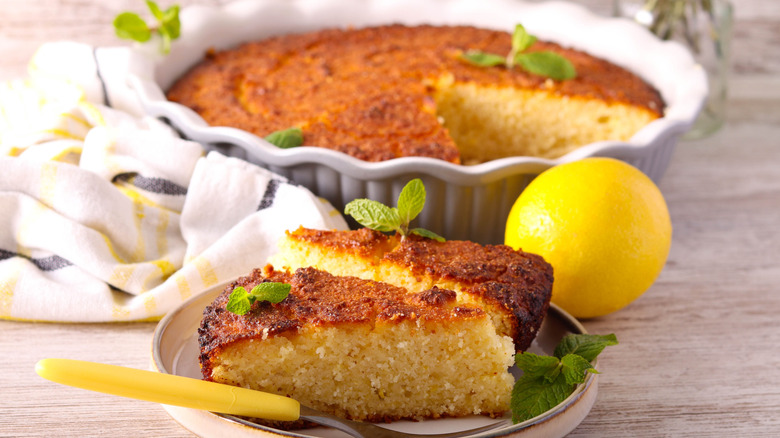
Now you might think lemon curd in a cake is nothing new. But, we are not talking about spreading it as a filling in between or atop a cake. Baking lemon curd directly into the batter will result in a sweet goodie that's altogether different. This crosses into entirely new flavor territory. It's stronger than any lemon extract or lemon juice, with a citrus presence built into the crumb itself.
Chef Kristina Lavallee, who grew up cooking around the bold, vibrant flavors of Puerto Rico, is a fan of this approach. As she puts it, "it cuts through sweetness and balances richness," and when incorporated correctly, "adds a level of freshness that keeps desserts from feeling heavy." Using lemon curd as part of the baking ingredients is more a swap than an addition. Our experts recommend replacing a portion of the liquid in your ingredient list (be it milk or buttermilk) with lemon curd.
There is one thing worth knowing before you try it. Chef Trung Vu points out that because lemon curd is made with egg yolks, adding it to your batter changes the egg ratio in the recipe. The result can be slightly soufflé-like. Expect a little more lift to your sponge and slightly more delicacy in the crumb. This is not a flaw, but something to account for. Worth noting, especially if you're baking a layer cake that needs to hold structure under the weight of frosting.
3. Fill your pastry with it
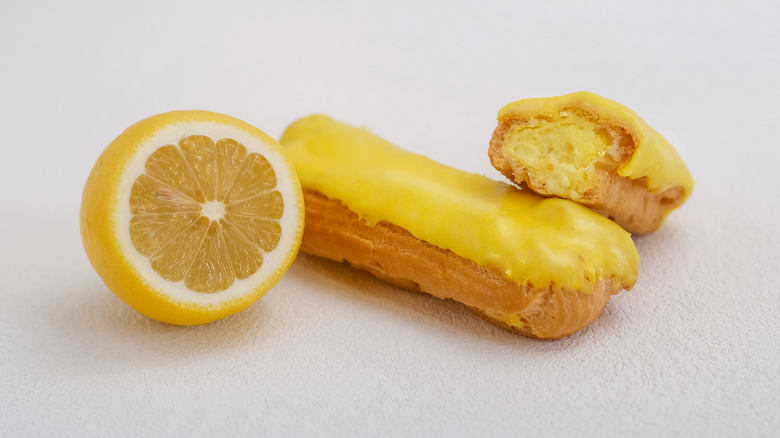
Lemon curd and pastry is one of those inevitable combinations thanks to the balance of the curd's jammy brightness and the pastry's buttery crispness. But, most home bakers underestimate what they are dealing with.
Chef Kristina Lavallee gets straight to the point. Lemon curd has moisture and acidity, and if you don't build structure around it, it will take over. "I always think about control," she says, "where it goes, how much you add, and ... when you add it. By controlling those aspects you will keep your pastry crisp and your flavors balanced." The enemy here is sogginess. The water content in lemon curd can break down the flaky pastry from the moment it makes contact.
Chef Trung Vu's solution will take you swiftly into professional chef territory. He recommends painting a thin layer of melted cocoa butter or white chocolate onto the pastry before adding any filling. This layer acts as a moisture barrier, buying you time and keeping the base crisp. Chef Odette D'Aniello reinforces the ratio: One part curd to three parts pastry. She urges us to never overfill. It will be a mess and the structure will collapse.
4. Fold it into whipped cream
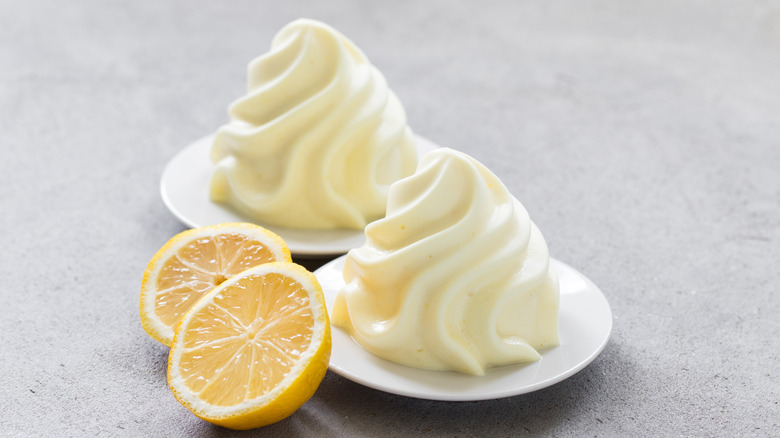
Incorporating lemon curd into whipped cream works like a dream thanks to chemistry. Chef Trung Vu explains: "It is already a stable fat-based emulsion, it can be combined with other icings or frostings without breaking it as adding lemon juice directly to whipped cream or buttercream would separate it." Lemon curd, because of its egg yolk and butter base integrates, rather than disrupts.
While there may be several hacks for the perfect homemade whipped cream, chef Odette D'Aniello knows what works and encourages home bakers to keep things straightforward. A 1:3 ratio of curd to whipped cream is the magic formula. Fold in slowly with a flat spatula and never a whisk. Her recommendation for a spatula is important, as a whisk will knock the air out of the cream before the curd even has a chance to distribute. This will leave you with a flat and dense topping rather than the light and voluminous fluff you were hoping for. Low and slow, remembering to turn the bowl as you go, until the curd is just incorporated and the cream still holds its shape is the only way that works.
5. Swirl it into yogurt
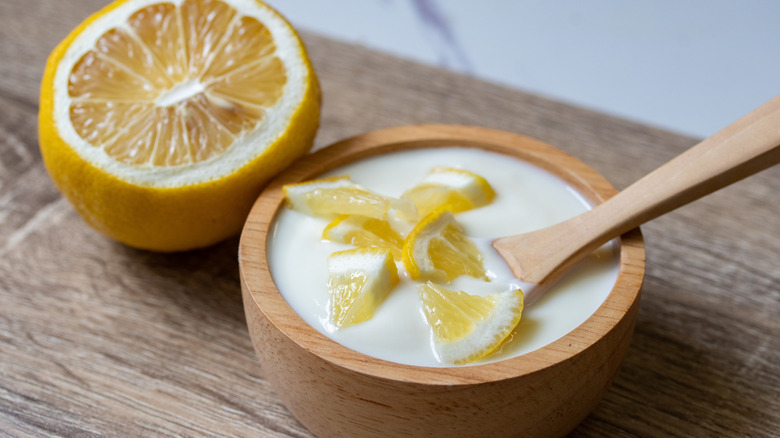
For mornings that require a little more effort without actually doing very much, our chefs have you covered. Chef Kristina Lavallee sets the scene for us. She treats yogurt as the base i.e. your blank canvas. Adding lemon curd to this neutral bowl is what brings it to life. But, this comes with a caveat "You want just a swirl, not a scoop," she says. Too much and the curd takes over, and suddenly, your breakfast bowl has turned into a dessert. However, just enough and it runs through the yogurt in bright, jammy ribbons that hit differently with every spoonful.
Chef Trung Vu asks us to pay attention to the build as well. He recommends elements of texture and warmth as counterpoints to all that citrusy tang. For example, a maple oat granola for crunch and warm spices, like cinnamon and allspice, stand up against the citrus rather than compete with it. Chef Odette D'Aniello keeps things slightly simpler, but no less considered. Start with unflavored yogurt so you're working with a clean base rather than fighting added sweetness from the start. Add your spoonful of curd, a drizzle of honey, a little fresh lemon zest, and granola for texture. The perfect breakfast parfait awaits.
This combination also translates wonderfully as a mezze-style spread. Think of little bowls of thick Greek yogurt with lemon curd swirled through, set out alongside flatbread, fresh fruit, and nuts for an impressive and easy breakfast spread.
6. Layer it into a trifle
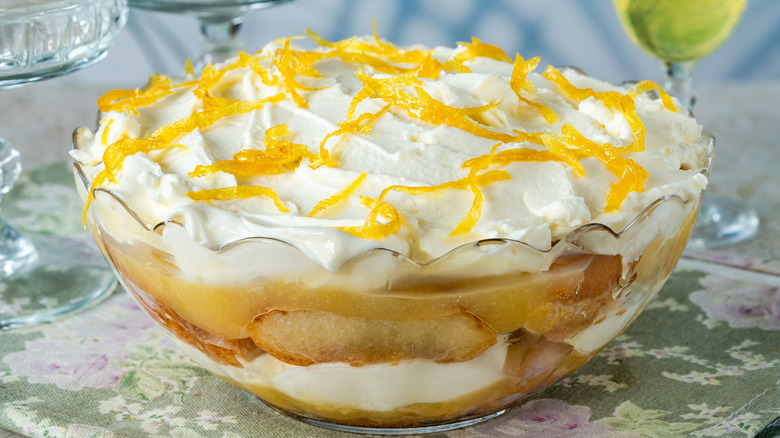
The whole point of a trifle is the view. Building careful layers in a glass bowl or individual cups, looks as generous as it tastes. Here the architecture matters almost as much as the ingredients. And, even if you're using custard powder as an effortless hack to get your cream layer to the right consistency, how you add the fruit and jam matters.
Lemon curd is one of the best things you can add to a trifle. "Light fluffy cake, light cream, and fresh fruit," says chef Kristina Lavallee. "When adding the lemon curd, it should brighten it, not weigh it down. When each of your layers has a purpose, your whole dessert feels more elevated." The curd itself needs to be applied with a light hand. Chef Odette D'Aniello recommends no short cuts on this front. It is important to layer it thinly and directly above the cake pieces, then follow with whipped cream and fruit. If spread too thickly, it will make the cake beneath it soggy and tip the whole dessert into cloying and overwhelm territory.
For the fruit, think acidic and bright, rather than just sweet. Chef Trung Vu suggests raspberries as a natural companion to lemon curd, as their tartness amplifies rather than dulls the citrus. Pomegranate seeds work beautifully in winter, as do fresh, tart, little cranberries, when they're in season. Basically, look for ingredients that add tiny zings of sharpness and color to the layers.
7. Turn it into a glaze
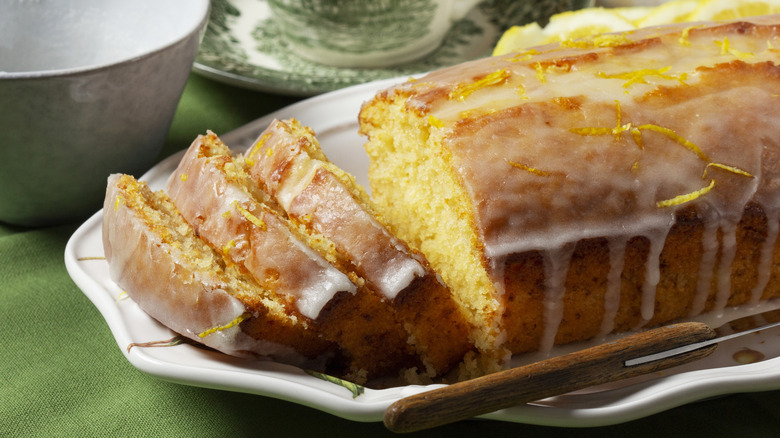
A lemon curd glaze is not thought about as much as it should be. Which is exactly why it's worth trying. When the curd is loosened just enough to pour, it becomes something intensely citrusy that works beautifully over a warm pound cake. Drizzled across a warm tart or pooled around a plated dessert, you get a flavor that is more complex than a standard icing glaze and more interesting than a simple lemon drizzle. The key, as Chef Kristina Lavallee puts it, is to loosen the curd, not water it down. "You never want to dilute your glaze, you are just looking to enhance it." The goal is to adjust the consistency while keeping the citrus front and center — bold and unapologetic.
Chef Odette D'Aniello takes a slightly more bold approach. She swaps the water in your simple syrup for lemon juice entirely, so what you're adding back into the curd is essentially a super-concentrated lemonade. For those who want to go further, chef Trung Vu has a professional kitchen trick worth knowing about. Adding a drop or two of natural lemon oil stirred through the thinned curd will amplify the citrus intensity without adding any additional liquid. "But be careful," he warns, "this stuff is strong — too much of it can lead to household cleaner like aromas and perhaps flavors too."
8. Beat into a buttercream
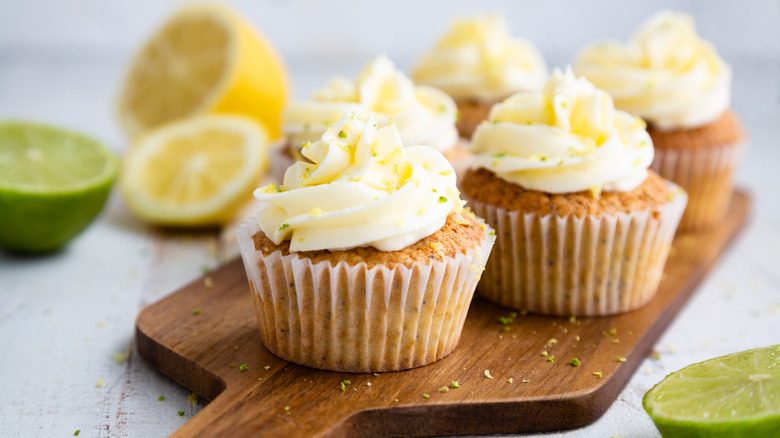
The best buttercream for your cakes should be silky and easy to spread. If it looks glossy and holds a peak, you know you've got it right. Broken down into its elements, buttercream is essentially butter and sugar mixed together until light and fluffy. Flavorings such as vanilla, chocolate, or lemon (in the form of lemon zest or juice) are usually added, according to the recipe. Swapping the lemon element for lemon curd creates a smoother, more rounded frosting.
That said, the technique requires patience more than skill. Chef Kristina Lavallee recommends starting at 20 to 30 percent curd to buttercream and builds slowly from there. "You can always add more but, as you know, you can't take it out once you add it." For those who want more precise numbers, chef Trung Vu works with a 1:2 ratio of curd to buttercream for a strong, pronounced lemon flavor, and a 1:4 ratio for something more subtle in the background. If you want to push it further, he recommends introducing a stabilizer, like gelatin, to compensate.
The mixing method matters too. Chef Odette D'Aniello notes that stable butter-based icings, like buttercream and Swiss meringue, can handle being lightly whipped with a whisk to fully incorporate the curd.
9. Pair with with cheese
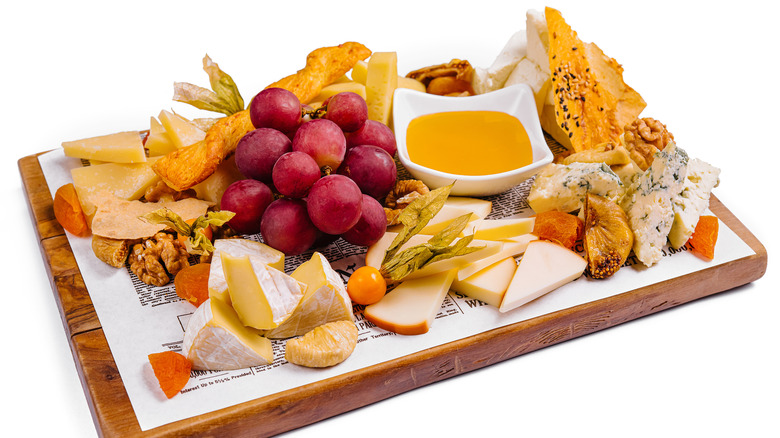
Before we veer into the realm of savory and sweet, chef Kristina Lavallee has one thing to add. Lemon curd works with heavier, full-flavored foods when one is intentional about it. "In small amounts, it can work great with cheeses or alongside something very rich where you need contrast. It is not always traditional, but great cooking requires going outside the box and understanding balance in your ingredients." Pairing your favorite cheese board selection with the usual suspects of nuts, fruits, crackers, and bread (ideally at room temperature for the most flavorful cheese), and then adding a surprise puddle of zesty lemon curd can lift what can sometimes be a one-dimensional lineup of flavors and gives guests something unexpected to discover.
Another compelling argument for this pairing comes from chef Odette D'Aniello. For her, this realization that lemon curd could flirt with cheese arrived not in a professional kitchen but at a table in Portugal. She was served a broiled log of goat cheese and honey topped with lemon curd, accompanied with sourdough bread. Devoured warm, it was a delicious revelation to her, and a taste inspiration that she has kept close since then. Beyond goat cheese, consider lemon curd alongside a sharp aged cheddar, a creamy brie, or a wedge of pecorino. A little goes a long way and opens taste buds to the promise of something new and exciting.
10. Churn into a frozen custard or ice cream
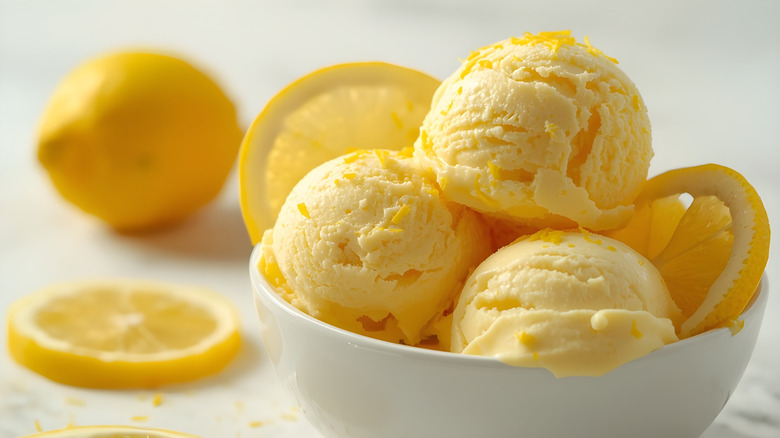
"I once worked in a restaurant where we would make a lemon curd frozen custard," reminisces chef Trung Vu. We are hanging on every word, already understanding where this particular deliciousness is heading. A good lemon dessert can only get better when cold, and lemon curd frozen into a custard is where this idea gets fully realized. Chef Vu elaborates: "If you think about the ingredients of a curd, it is very similar to making other ice cream bases where you're relying on eggs or egg yolks to thicken the base. We would run the lemon curd through the ice cream and instantly have the best lemon frozen custard hands down." Basically, with this genius move, you're already working with the fats and proteins that give ice cream its structure and creaminess. The hard work is essentially done before you even reach the machine.
At home, you can explore making this cold creamy dessert in a couple of ways. There is the option of churning it straight for an unapologetically icy treat. Or, swirl the curd through a vanilla base for something more subtle and layered. Beginning with softened, homemade or store-bought vanilla ice cream, simple fold spoonfuls of lemon curd, refreeze, and serve in scoops with a little shortbread or butter cookie on the side.
11. Pair with warm spices
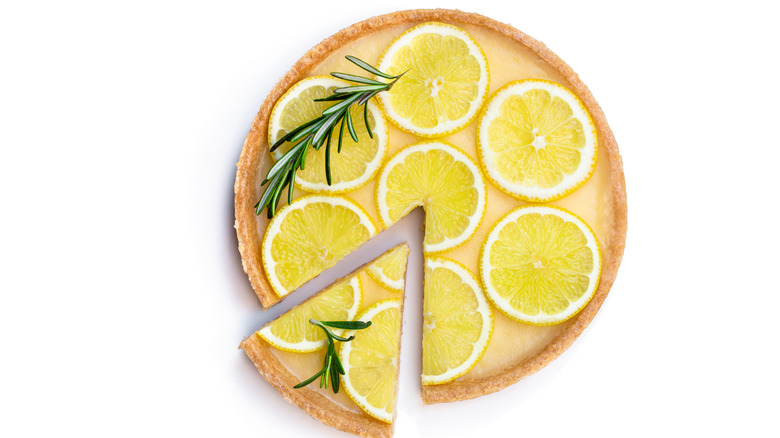
Lemon curd and spices may sound like a flavor clash, but our experts are willing to fight in that corner. On paper you are pitting bright and sharp flavors against deep and earthy ones. Sounds at odds? In practice, it's one of those combinations that makes sense the moment it hits your palate. For chef Kristina Lavallee, this is a combination that once you've tried it, you wonder why you hadn't thought of sooner. As a chef who loves bold flavors and contrasts, she puts it simply, "One thing I love to pair lemon curd with is something warm and spiced like a cinnamon-forward cake. It sounds very unexpected, but the brightness against the deep warm flavors work well."
The possibilities here are easy to imagine. A lightly spiced and slightly dense cake filled or frosted with lemon curd or a softer version with lemon curd buttercream. A chai-spiced loaf cake with a light lemon curd glaze or a swirl of curd baked through the center. Cardamom cookies sandwiched with lemon curd. None of these combinations are obvious, but we can now see how all of them would work beautifully.
The warm spice and herb angle extends beyond baking too. Chef Trung Vu jazzes up store-bought curd with some fresh thyme or rosemary or even an added hit of freshly zested lemon peel. Pairing these complementary flavors opens up the palate and creates an entirely new platform for lemon curd to shine.
12. Fill a donut with it

A yeasty, buttery, rich dough is possibly the pairing lemon curd has been dreaming of. Lemon curd and donuts are a successful combination in the same way lemon meringue pie is a classic dessert. Rich, fatty ingredients need the brightness of acidity to work. To chef Trung Vu, the logic is simple and obvious. On one hand, you have soft, pillowy dough, and on the other, the intensity and brightness of a good lemon curd. To keep this from straying into overdone, the lemon curd must provide just the right amount of acidity and sweetness. Your donuts need to be pretty stellar too. And, if the thought of deep frying is too much of a commitment, take heart. There are oven-baked and air-fryer hacks that can make the job even quicker and easier.
Chef Odette D'Aniello is an unabashed purist when it comes to lemon curd. As someone, who processes lemons by the 50-pound crate at her commercial test kitchen in Tucson each winter, she tells us that fresh lemon curd has a creaminess and tang that adds a sparkle to everything it touches, in a way that commercial, store-bought varieties never could. When added to recipes, like donuts, what you need is a curd that is both smooth enough to pipe cleanly and set enough to stay steady once it's filled inside.