

The Fastest Way To Ruin Fried Eggs Is This Major Temperature Mistake
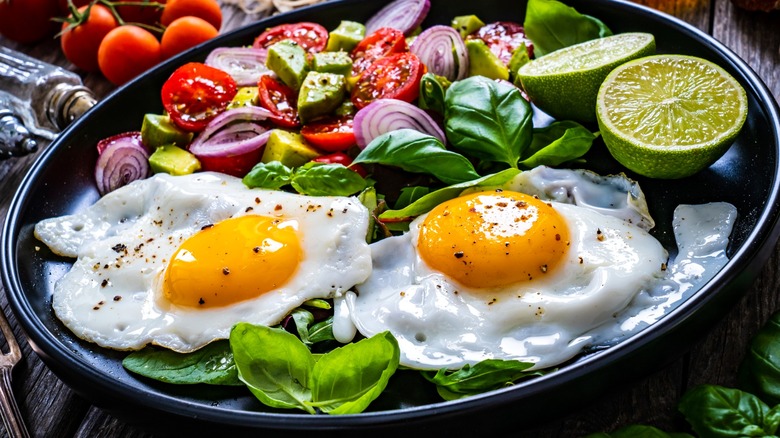
Making a fried egg with a luxurious golden yolk and perfectly set whites sounds easier than it is. There are plenty of simple mistakes that can ruin your breakfast and leave you wondering where things went wrong. Nelson Serrano-Bahri, chef and director of innovation at the American Egg Board, argues that one blunder in particular is generally the culprit behind people's fried egg woes — temperature. Even if you follow Bobby Flay's advice to keep your yolks from breaking and add just the right amount of fat to the pan, if the heat isn't set just so, you're setting yourself up for failure.
A medium-low to low temperature is ideal, but that's pretty subjective. Serrano-Bahri described what you will see in the pan if you aren't hitting that sweet spot. "If the heat is too high, the bottom of the white can brown or blister before the upper white has fully set, and the yolk can go from luscious to chalky very quickly," Serrano-Bahri said. "Lower, gentler heat gives you more control and helps the white cook through without overcooking the yolk."
However, if you're skittish about cranking up the temperature too high, you'll likely run into another problem. "On the other hand, if the egg just sits there, spreads too much, or takes forever to set, the heat may be too low," Serrano-Bahri said. "In that case, the whites can become loose and uneven rather than tender and neatly set."
Temperature is crucial, along with other factors
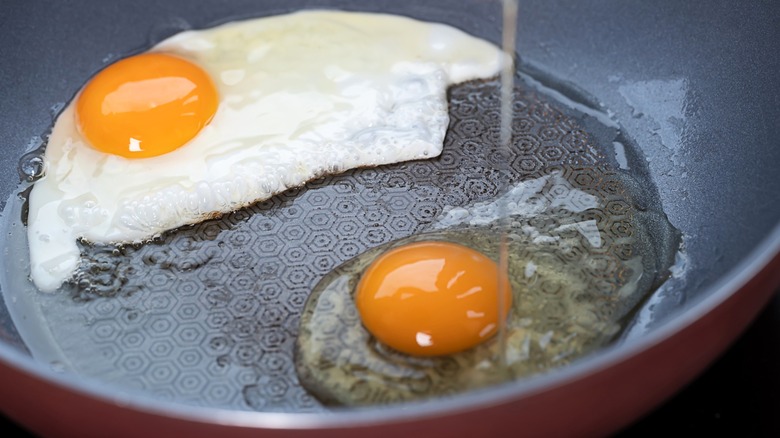
You don't have to use a pan to cook fried eggs, but let's be real — only out of pure desperation is anyone resorting to using a ladle over a flame to make breakfast. But not any pan will do for perfectly fried eggs. Nelson Serrano-Bahri suggested that folks use a newer pan to avoid the pitfalls that come with using a beat-up piece of cookware. "A poor-quality or worn pan, especially one that has lost its nonstick performance, can cause sticking and tearing," he said.
The amount of fat you incorporate into a pan is also important, as is the size of the pan itself. "Too little fat can also create problems, while too much can cause uneven frying," Serrano-Bahri said. Fat, like butter, helps stabilize heat in the pan while preventing eggs from becoming overly firm. "The size of the pan matters, too. If the pan is too large for the burner, heat distribution may be uneven."
Of course, with so many mistakes that can happen, it might be challenging to determine what exactly went wrong if things take a turn for the worse. Too much fat, too much heat, not enough of either? Serrano-Bahri said it's a good idea to take a breath when problems arise and address each potential issue individually to figure it out.
"The best way to identify the issue is to change one variable at a time. Keep the same pan and heat, then adjust only the fat," Serrano-Bahri said. "Or keep the same fat and heat, then try a different pan. That approach helps you pinpoint what is actually causing the problem instead of guessing."