

For The Best Homemade Pizza, Grab Dough Right From A Pizzeria
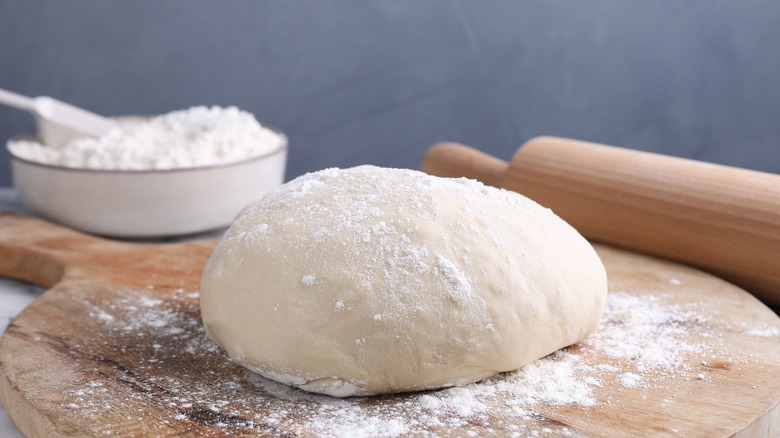
Some home cooks are dough nerds; willing to break out the digital scale, specialty flours, proofing bags, and must-have kitchen tools for making homemade pizza. Others are all about the sauces, cheeses, and toppings. If you're in the latter camp, skip the stress of putting together a from-scratch dough and head to your local pizzeria instead.
Perfecting pizza dough is tough, especially if you're not a professional pizzaiolo, so why not leave the heavy lifting to the experts? When you buy a ball of raw dough from your favorite pizza restaurant, it costs a fraction of the price of a whole pie and saves you a lot of time and effort. For example, at Home Slice Pizza in Austin, Texas — an iconic New York-style joint — a 16-inch and 18-inch cheese pizza costs $19.50 and $23, respectively, but you can get a medium dough ball for $5 and a large one for $6. Since the dough is fresh, the taste and texture will be much better than those shelf-stable crusts in the supermarket. And if you're purchasing from a quality restaurant, it will also have fewer ingredients than many of the ultra-processed, refrigerated doughs.
Lots of pizzerias sell kits that include sauce, cheese, and toppings for you to make at home, but naturally these are pricier. They may be convenient, but you're better off just heading to the grocery store for all the accoutrements. The only three ingredients you ever actually need for a perfect pizza sauce are canned tomatoes, olive oil, and salt; which you might already have on hand. Any ingredients you purchase will likely yield leftovers you can use in other dishes, anyway.
Tips for working with fresh pizza dough
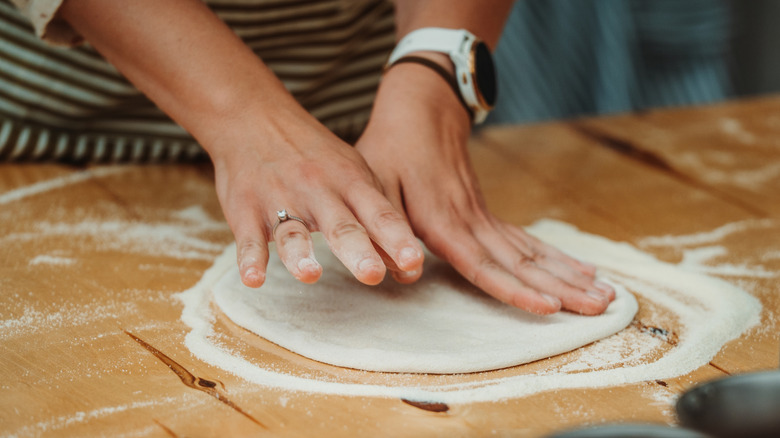
Finagling a ball of dough into a shape that resembles an actual pizza can be challenging, especially if you don't possess the skills to toss pizza dough around. Stretching it is even more difficult if the dough is still cold from the fridge. The simple pizza dough technique for the best pie possible involves letting it sit at room temperature for about 30 minutes, after which it should be malleable enough to work with.
If you're a pizza-making beginner, dividing the dough ball into smaller sections will make it much more manageable — for kids and impatient adults alike! A drizzle of olive oil on your work surface helps prevent sticking, but your hands are your best tools. Use the base of your palm to create a thick round, then stretch it outward with your fingers. For a thinner crust, carefully lift the whole round into the air, holding it like a steering wheel, and gently turn it; gravity will pull the dough downward. Go light on the sauce and toppings so the pie cooks evenly without getting soggy and make sure you get your oven nice and hot before popping it in.