

The Unhygienic Kitchen Red Flag You'll See On MasterChef
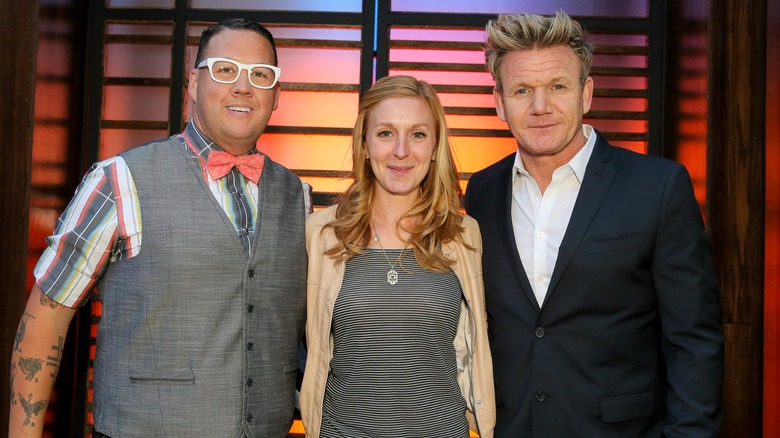
At most dining establishments, it's a safe bet that the cooks behind the scenes are wearing proper gear, like hairnets or hats that keep stray hairs from landing on a dish. It doesn't matter if you're visiting a restaurant in the Michelin Guide or grabbing a fresh burger from McDonald's – customers expect good hygiene to be a top priority at any culinary establishment. Yet, some eagle-eyed netizens have noticed contestants on cooking shows, MasterChef in particular, don't generally wear headgear, and that doesn't sit well with some folks.
Understandably, unhygienic standards might raise red flags about food safety. Yet, the reasons why aren't all that surprising. First of all, it's television, and hairnets aren't exactly camera-friendly. Contestants and producers alike want everyone to look their best, and the cafeteria worker look isn't all that flattering.
Then there's the fact that only the judges are tasting contenders' dishes. Because they aren't working in a commercial kitchen, the food safety rules in whichever state they're filming in likely don't apply. It's also fair to assume the production staff is checking those dishes before the judges start tasting, ensuring they are hair-free before anyone takes a bite.
MasterChef often produces an episode during the season where the contestants take over a professional kitchen and prepare its signature dishes for guests. Notice that in all those challenges, the chefs are wearing hats or hairnets, which makes them compliant with any laws requiring hair coverings while preparing food for the public. It might be a bit disturbing to watch on television, but think about it this way: How often do you don a hairnet when cooking for a few people at home?
Another kitchen red flag on MasterChef
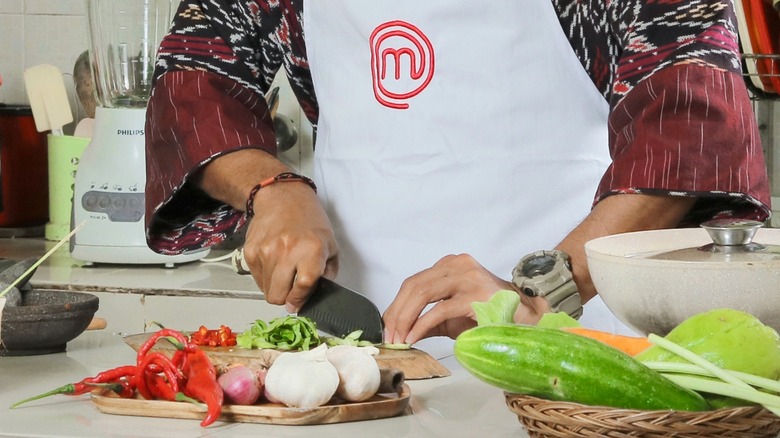
The absence of hair nets isn't the only food safety red flag viewers of MasterChef have noticed. Barring the aftermath of the occasional knife slip ("Medic!"), folks don't often see contestants wearing food handling gloves or washing their hands. It's naturally unsettling — after all, you have no idea where their hands have been. But do you think a Michelin-starred chef like Gordon Ramsay is going to eat something he thinks is unsafe?
While many jurisdictions across the country require food service workers to wear gloves, doing so isn't a guaranteed safeguard against cross-contamination. There is no antibacterial sanitizer on food service gloves — they are just plastic hand coverings. Whether they're vinyl or nitrile, neither is doing anything to prevent germs from spreading.
Gloves are handy because you can quickly change them after handling food that could cross-contaminate another item, such as working with raw meat before cutting up some veggies. If soiled gloves aren't swapped out for fresh ones in that scenario, food is being cross-contaminated just as if one were simply using their bare hands.
Although you don't see it happen on camera, those contestants are most certainly washing their hands. But watching someone practice basic culinary hygiene doesn't qualify as engaging television, so footage of handwashing gets left on the cutting room floor. With so much focus on lackadaisical kitchen safety standards on MasterChef, I think it's interesting that people fail to ask the one pressing question that has rattled my brain for years: Why was MasterChef season 5 winner Courtney Lapresi allowed to wear open-toed heels while working in a bustling kitchen?