

What To Do With That Frozen Meat You Forgot In Your Freezer
We may receive a commission on purchases made from links.
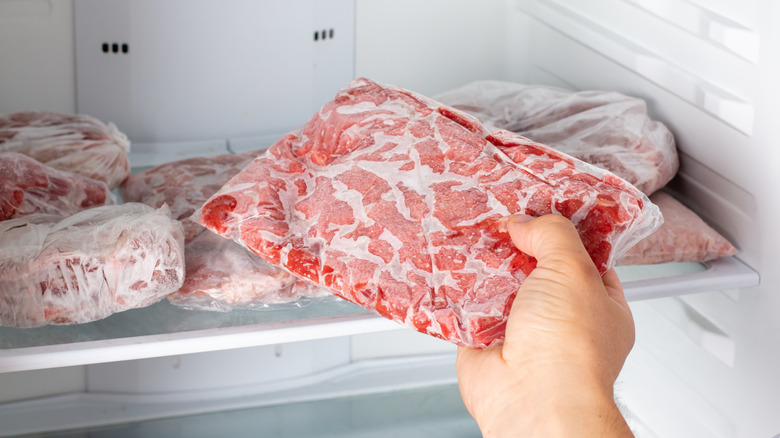
In these inflationary times, whenever I see a good deal on a pricey product like meat, I grab it. As a result, both of my freezers (yes, I have two) are always full. Some of these bargain buys can get lost in the shuffle for a long, long time. Some well-meaning kitchen advice suggests tossing meat out after a few months in the freezer, but I regard such food waste as sacrilege. You're throwing away money, and for no good reason — no lesser authority than the USDA has decreed frozen foods will keep forever. In fact, there are accounts of 20th-century scientists and explorers consuming meat that was 50,000 years old.
I, too, have my own antique meat story involving a very old freezer badly in need of defrosting. After it thawed out, it was found to contain a package of ground beef with a label pronouncing it to be about a decade old. I cooked it, I ate it, and I lived to tell the tale. While I don't recall that long-frozen beef tasting too different from a fresher product, this may not always be the case with meat that's had a lengthy sojourn at icy temperatures. For one thing, it's possible for meat to go bad if the freezer temp rises above 0 degrees Fahrenheit, in which case there's no salvaging it. Even if it's frozen as solid as a mammoth in a glacier, however, meat can become dry and lose some of its flavor over time. In that case, there are several different cooking techniques that will compensate for the decline in taste and texture which will let you repurpose old, frozen meat into something delicious.
Make it into something more liquidy
Food that's overstayed its time in the freezer may have a texture that's tough and dry. There's a time-honored way to remedy this problem, though, and that's to cook the meat in something liquidy. Got frozen chicken breasts, thighs, or even a whole chicken? Toss it in the stock pot, boil it up, then remove the bones and shred the meat. Toss some vegetables into the pot (Emeril Lagasse elevates his chicken soup with mushrooms), stir in some noodles toward the end of the cooking time, and enjoy your chicken noodle soup (the tastiest cure for the common cold).
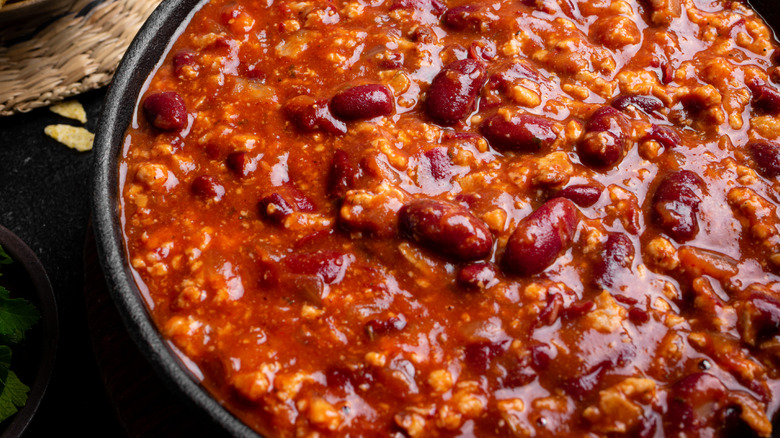
For a too-tough steak or roast, chop it into chunks and make it into a stew. Several hours of simmering will soften the meat right up, while the vegetables and seasonings will help camouflage any loss of flavor. If you're dealing with ground meat that's been frozen too long to make a juicy burger, it will still be perfect for chili. Again, not only the liquid but the spices will counteract any damage done by the freezer, so keep both in mind.
Use it in a casserole or pie
There are also ways to rehydrate freezer-dried meat that don't involve turning it into something that needs to be served in a bowl. Casseroles often involve liquids, such as canned soup or tomato sauce. These can be made with either ground meat or cooked, shredded chicken — with the latter, you can bake it, boil it, or microwave it first since it will take on the texture of the casserole itself. Mix the meat with some type of binder (cream of anything soup is a favorite of many home cooks), add vegetables if desired, and layer the mixture over a starchy base like potatoes or noodles. A cheesy or crunchy topping is highly recommended, although hardly necessary to cover up any freezer flaws. Once the meat is combined with the other ingredients, it makes no difference how long it's been in the freezer.
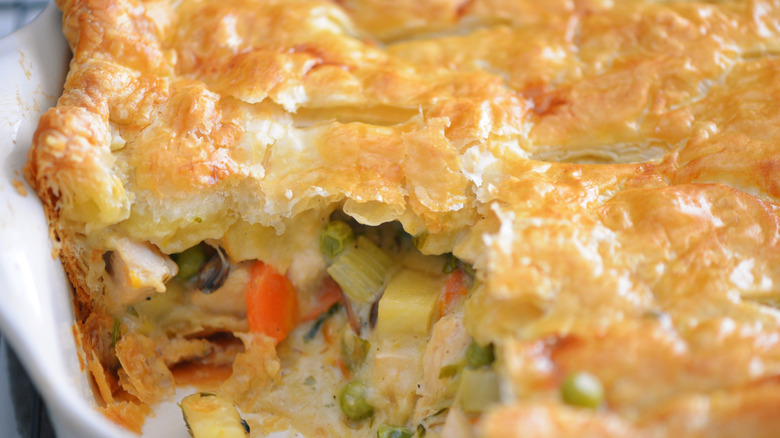
Meat pies are another great way to repurpose over-frozen meat into a dish that can be served on a plate. While these tend not to be as liquidy, the meat filling is usually combined with vegetables, cheese, or eggs; and the pie crust brings everything together. There are meat pies from just about every culture you can name, including hand pies like Latin American empanadas, Michigan-style (or Cornish) pasties, and Jamaican patties. Other examples include knife-and-fork items such as chicken pot pie, tourtiere (which is a popular dish in Canada), and medieval mincemeat pie. A meat pie's got so much going on (flavor and texture-wise) that no-one would ever guess the star ingredient might not be of the highest quality.
Dry it out for jerky
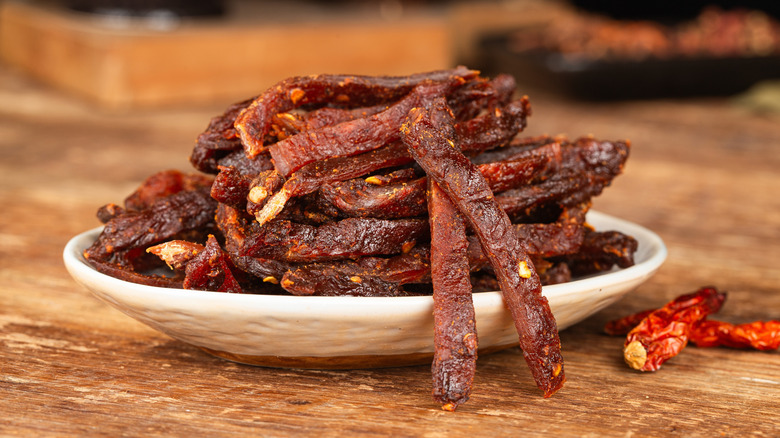
If meat has dried out in the freezer, put that dryness to work for you by cutting it into thin strips to make jerky. (The thinner the strip, the quicker it'll dry.) Marinate it in spices and condiments like honey, liquid smoke, soy sauce, or Worcestershire sauce for flavoring, then dry it out in a dehydrator or an oven set to 170 or 175 degrees. The process can take three to eight hours, but the jerky will be ready when you're able to bend it and the surface starts cracking. If it breaks, it's a bit overdone, but you can always crumble it into bits to make something similar to Jack Links Jerky Chew. (My son and I used to love these jerky shreds which are packaged to look like chewing tobacco, but I remember them being fairly dry.)
Over-frozen ground meat can also be used to make jerky. There's no need to marinate it since you can mix flavorings directly in with the meat. Once its seasoned, roll it between two sheets of wax paper to a thickness of about ¼-inch. Cut it into strips, but don't separate them; the cuts make it easier to break them apart once they're cooked. Put the meat in a dehydrator or the oven until they're dry and bendy in the same way as the jerky made from non-ground meat. If you have a lot of ground meat in the freezer, you might even invest in a jerky gun. With a jerky gun, you stuff ground meat into the tube and press the plunger so it extrudes perfect, jerky-shaped strips.
Velvet it for use in a stir-fry
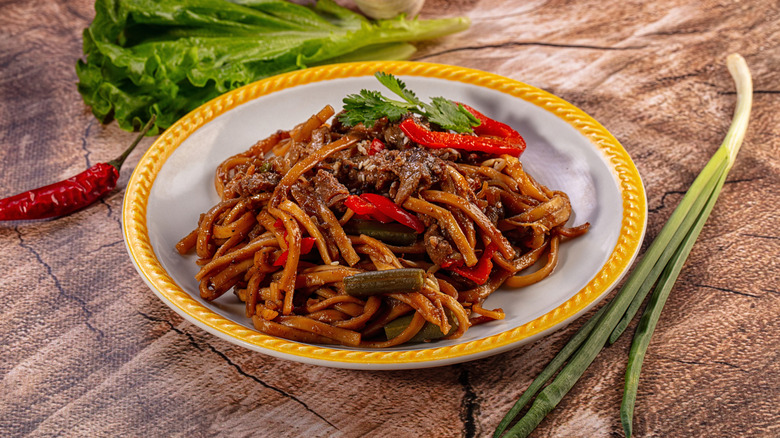
I recently unearthed a package of well-aged beef from the depths of my downstairs freezer and decided to use it in a stir-fry. A stir-fry has certain elements that can help to mitigate the damage caused by meat that's been toughened up in the freezer; liquid in the form of soy sauce to rehydrate, and both vegetables and noodles to provide cover for any textural flaws. I wanted to give the beef an even better chance to shine, though, so I tried out a meat prep technique called velveting.
Velveting meat is something Chinese restaurants often do to tenderize cheaper cuts. It really couldn't be much easier, and it works great for chicken, pork, and beef. All I did was sprinkle the meat lightly with baking soda then stuck it in the fridge for about 20 minutes. Once the time was up, I rinsed it off, sliced it up, and tossed it into some hot oil to fry. With the addition of mushrooms, bell peppers, soy sauce, crushed red pepper, a pinch of sugar, and a package of pre-cooked udon noodles, my stir-fry was pretty amazing even though the beef had to have been over a year old.
What to do with freezer-burned meat
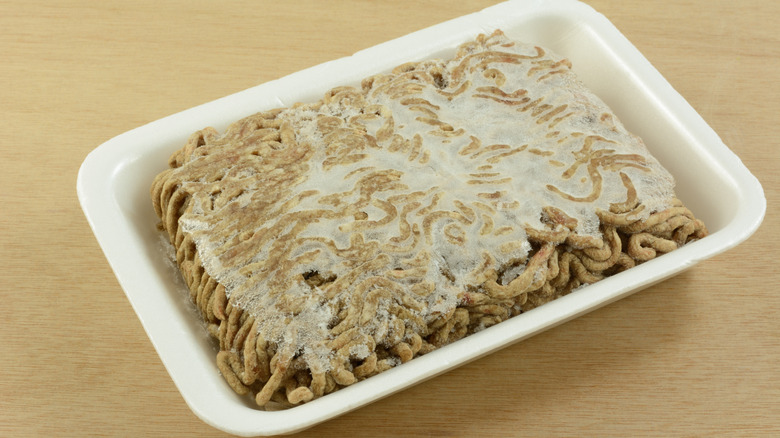
One hazard of leaving meat in the freezer too long is that it can develop freezer burn. Freezer burn may appear as dark brown, grey, or white patches; or the entire piece of meat might darken in color. Freezer burned meat can be salvaged, you'll just need to take some extra prep steps to compensate for the dryness and loss of flavor that freezer burn brings. If it's taken the form of leathery patches, these can be cut away before cooking. (I give these trimmings to my dogs since they're not particularly picky.) The taste and texture issues can also be compensated for to some extent with a nice long soak in a marinade, such as our three-ingredient combo of lime juice, oil, and soy sauce.
If you, too, are in the habit of overloading your freezer with meat products, you might want to go ahead and adopt a few freezer-burn prevention practices. First, don't just stick the meat in the freezer in its original package. Add a few extra layers of plastic wrap, wax paper, aluminum foil, or any combination thereof. (Plastic storage tubs also work, but are less likely to fit if space is at a premium.) Next, make sure your freezer is operating at zero or subzero temperatures since food that freezes more quickly is less likely to develop the large ice crystals that form on the surface as dehydration takes place. Finally, try not to open the freezer any more than necessary. Every time you do, the temperature will rise — the repeated thaw-freeze-thaw cycle is a major culprit in causing freezer burn.