

11 Mistakes Everyone Makes When Ordering Pizza
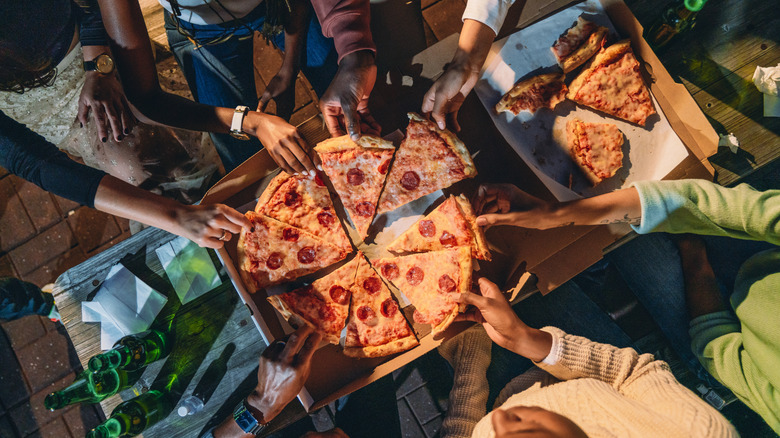
Pizza is one of those comfort foods that's hard not to love. When the combination of the ingredients, the gooey cheese, and the zing of the sauce hits just right, the experience is hard to beat. With countless ingredients that can be swapped out and interchangeable base sauces, the dish truly has something for everybody. It's no surprise when you consider what a crowd pleaser this dish is that, in a study conducted from 2017 to 2020, it was found that 11% of the U.S. population eats pizza daily.
With this many people indulging in the dish, you might think that the majority have gotten the ordering process down pat. But you might be surprised when you learn that, in reality, there are several mistakes that people make when placing an order for pizza. To get some insight into the common mistakes people make when placing an order, we needed some expert opinions.
Luckily, we had three experts step forward to give us the lowdown on the problems to avoid in this area. Chef Mark Bello, co-owner of Pizza School NYC, chef Michele Di Bari, co-owner of Sale Pepe Pizzeria e Cucina, and chef Cedric Toullec, owner and resident pizzaiolo at Lou Pecou Artisanal Pizza, have provided us with invaluable insights. By highlighting some of the most common mistakes that people make when ordering pizza, this trio aims to enhance your culinary experience on your next pizza run.
1. Not ordering pizza uncut
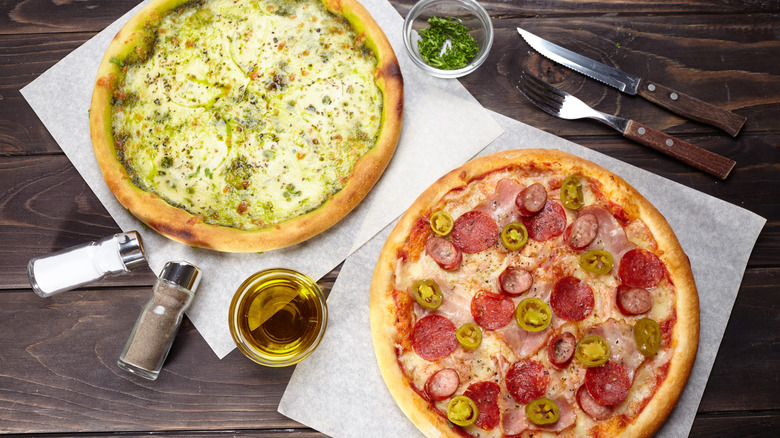
This trick might be known for making every delivery pizza taste better, but it can also be used when ordering takeout or even at a sit-down pizza restaurant. There are multiple benefits when ordering your pizza uncut, some of them being that less steam is released, helping your pizza remain warm and crispy. Another is that uncut pizza protects both the box and the crust from liquids like grease or fat. "I highly recommend ordering your pizza uncut so that the quality remains," says Michele Di Bari. He also points out that, in Italy, traditionally, pizza is not served cut like it is in America. He also gives a lovely reminder that "cutting the pizza yourself is part of what makes the experience enjoyable."
Cedric Toullec agrees with this sentiment, mentioning that leaving the pizza uncut affects the quality "big time." He even says that "if it were up to me, we wouldn't cut them at all." His feelings about this are so strong that when he first opened his pizza restaurant, he tried serving all pizzas uncut. Unfortunately, because of how much less common it is for a pizza to be served uncut outside of Italy, he says, "guests [gave] ... negative comments. Today, everything is sacrificed for convenience, whether it makes culinary sense or not."
2. Ordering too many toppings
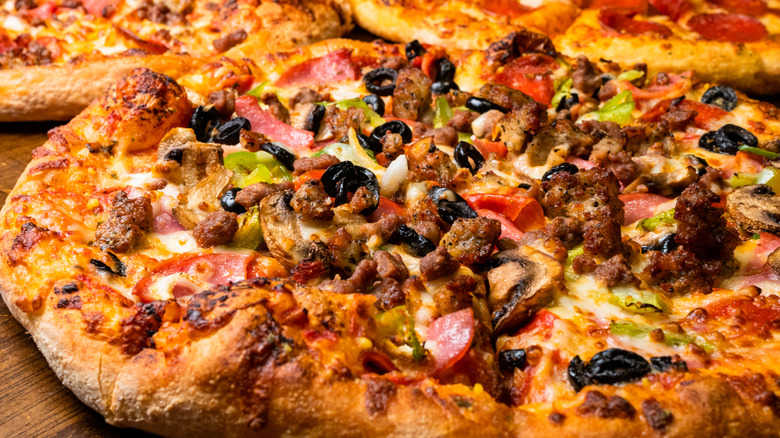
One thing that became clear when reading the answers from our experts is that there is a maximum amount of pizza toppings per pizza. Of course, if you feel strongly compelled to throw everything but the kitchen sink onto your pie, there's no law against that (even if there really should be). In fact, putting too many toppings on a pizza is one of the signs that you are in a shady pizza shop, according to experts.
But putting too many ingredients on a pizza is one of the biggest mistakes that Mark Bello sees people make. "Too many toppings can be noise to your taste buds," he mentions. "It's like music: jazz, blues, disco, heavy metal, ... can all be 'delicious' but played at the same time it's noise." In other words, you're going to miss out on enjoying the individual flavors because you've got way too much going on.
As for the amount of toppings that you should have, our experts don't quite agree on a specific number. They do, however, agree that it should be less than four. "One, maybe two max," is the perfect amount, says Bello. Meanwhile, Cedric Toullec adds, "Three tastes maximum for me (not counting seasonings). Any more and you start to lose the identity of the ingredients." Finally, Michele De Bari believes that "simplicity and balance are essential to a true traditional pizza experience, not quantity," noting that two toppings are the perfect amount.
3. Ordering extra cheese or sauce
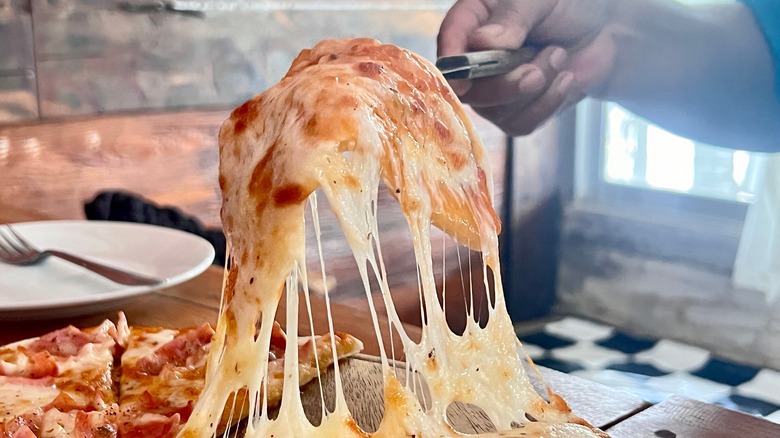
It stands to reason that more of something you love, like cheese, can only be a good thing. But when pizza is involved, it doesn't quite seem like this is the case. The reason for this is that extra cheese or sauce completely throws off the balance of the ingredients on your pizza. One of the biggest mistakes that Michele Di Bari says people make when ordering pizza is "when they ask for extra ingredients or more cheese. Even asking for extra sauce will make the pizza too soggy."
Cedric Toullec mentions that ordering extra cheese, "depends on your taste, but you will likely unbalance the signature of the dish. The amount of cheese in a serious pizzeria is a deliberate choice by the chef." In other words, the chef has intentionally chosen the amount of cheese they normally put on their pizzas, and adding more will not create the vision the chef has in mind for you. He goes on to say that he respects the choice of his customers and wants them to do what brings them joy: "Just don't complain if the final result isn't to your taste because the balance was shifted." At the end of the day, it's up to you, the customer, what you would like on your pizza. Just keep in mind that the amounts of these ingredients are chosen to provide a taste experience, which you may miss out on.
4. Not asking how long the order will take during peak times
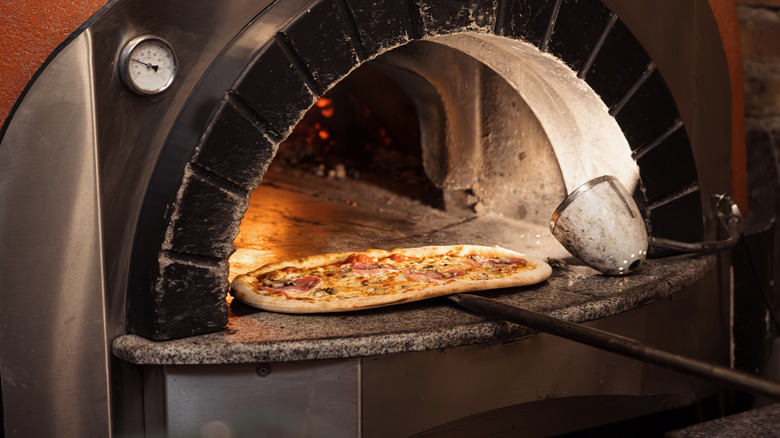
If you walk into a pizza joint at rush hour with the expectation that you will either be seated immediately or have a short wait time for a pizza, you're going to need to change your plans. Pizza joints work hard to ensure their customers enjoy their meals and the experience, but they do have a capacity. This means you should be mindful of wait times during peak meal windows, or if you're ordering on Halloween, New Year's Eve, or Super Bowl Sunday, for example, as these are the times that everyone seems to want a pizza for dinner.
One way which you can avoid this wait time is to preorder your pizza ahead of when you need it. By doing this, you not only sidestep any unpleasant wait times, but you also ensure you will be able to satisfy your pizza craving. Cedric Toullec also explains, "Many great pizzerias sell out quickly, so preordering is always smarter." If you do decide to order during a busy time period, Toullec says, "please don't leave a one-star review because it took 45 minutes. Ask for the wait time first, then decide if it's fair for you."
5. Storing leftover pizza in the box in the fridge
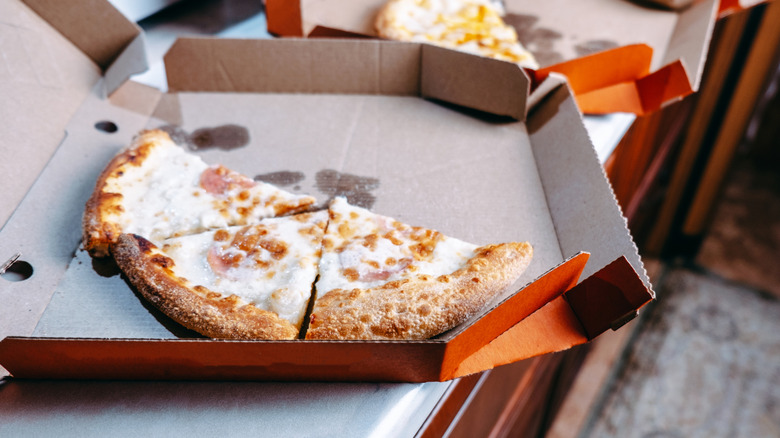
Every full pizza comes in a cardboard box that is not only convenient to travel with, but, for many, eventually becomes an easy way to store the leftovers in the fridge. But even if that cardboard box is convenient, it seems that if you're hoping to preserve that delicious pizza flavor, you should consider other options. "Storing your leftover pizza in a pizza box would be a mistake and affect the flavor," says Michele Di Bari. Meanwhile, Cedric Toullec agrees with this sentiment, saying customers should "avoid the box at all costs" when it comes to placing leftover pizza in the fridge.
If the box is out of the question, then the question of what people should be using to store those leftover slices springs to mind. Never fear, our experts have you covered for what does preserve the flavor until you want to come back to it. Toullec advises that people should "use tinfoil or Tupperware to keep the moisture and cardboard smell away from the slice." Di Bari takes a slightly different approach, suggesting that if individuals "plastic wrap each slice and store it in the refrigerator, it won't get dry." Either way, you're going to want to stay away from storing in the box, unless you enjoy a hint of cardboard flavoring in your pizza.
6. Using the microwave to reheat pizza
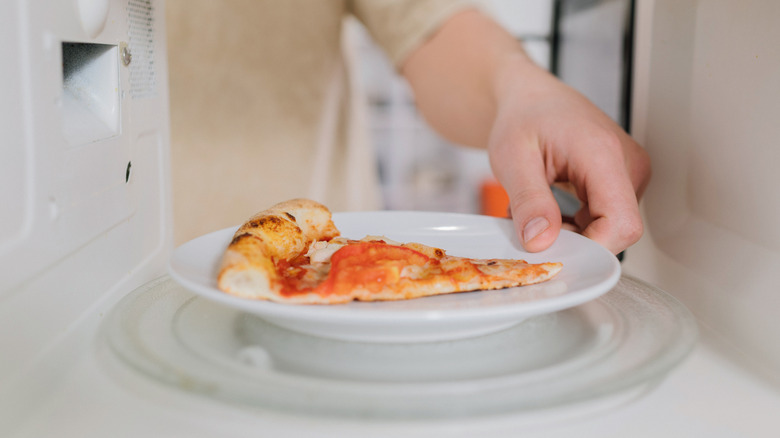
When considering convenience, the microwave is often associated with an easy method of reheating your food. But, while it's great for many different foods, such as soup or even a casserole, it might not be the best choice for your pizza. If you've ever reheated your pizza the next day in the microwave, you'll know the problems that come along with it. What was once a lovely piece of crispy pizza turns into a soggy mess when it's taken out.
The reason for this comes down to how the microwaves heat food. They emit electromagnetic waves which interact with water molecules and turn them into steam. When the water molecules in the crust of pizza are heated too quickly in the microwave, they end up trapped within the dough instead of evaporating. This is why when you take your lovely slice out, it has degraded into a chewy, soggy shadow of its former self.
Luckily, our experts were able to chime in about the absolute best ways to reheat days old pizza, forever saving our readers from a soggy pizza travesty. Mark Bello advises that the best way to warm up leftover pizza while maintaining crispiness and flavor is the skillet method, even offering a video on how to employ the method from his pizza school. Michele Di Bari mentions that warming in an oven offers the best results in his opinion. Cedric Toullec agrees, but prefers reheating in a pan at low heat.
7. Ordering delivery instead of takeout
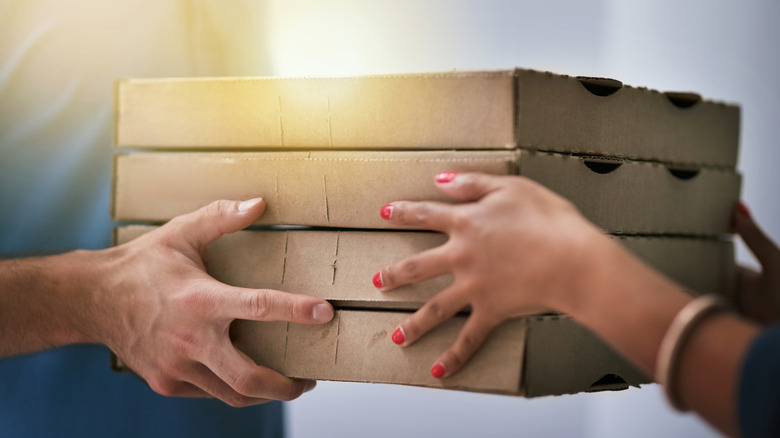
If you've had a long day or feel like just kicking back on your couch instead of heading out into the busy outside world, delivery can seem like a lifesaver. It's hard to argue with the convenience of whatever your food craving may be, delivered fresh to your door. But when we're talking about pizza, this can be a bit of a no-no based on the feedback of our experts. By placing an order for delivery, you're leaving the quality of your pizza in the hands of whatever delivery driver happens to be working that day. This is, frankly, an unsettling thought for pizza lovers everywhere.
When considering delivery or pickup, both Cedric Toullec and Michele Di Bari agree that takeout is the better option for a higher-quality product. Toullec points out that the priorities of the delivery apps you're using may not always align with your expectations, saying "many delivery drivers today don't respect the product or the priority settings on the apps." Di Bari says that "takeout for sure" is the better option. He also mentions that an added bonus is, "you can start eating the hot pizza on your way home."
8. Ordering the wrong amount of pizza
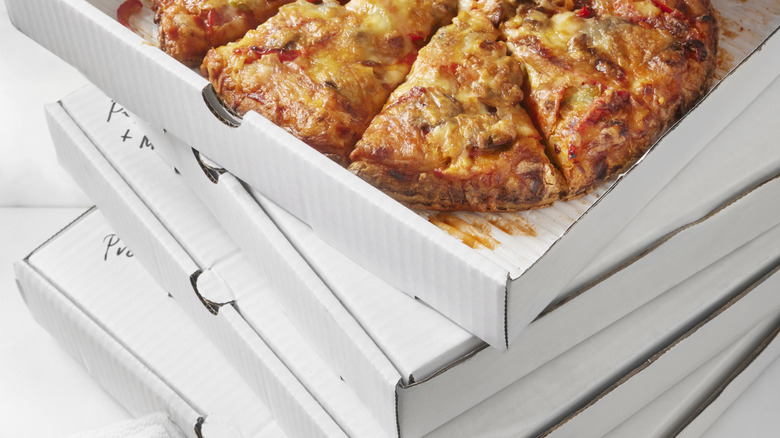
Ordering the right amount of pizza when it's only you eating, or perhaps you and your family, might not be too complicated. You know from previous meals how much pizza you and your siblings or parents are going to mow down on. However, when it comes to ordering pizza for parties or gatherings, this gets a little more complicated. You may then start to wonder, how many pizzas do you need for 20 people? Even if pizza may not be the most ideal food to serve at meetings, the question of how to calculate the amount needed remains.
When turning to our experts, Mark Bello quotes a famous professional American baseball player. "Yogi Berra's famous pizza quote, showcasing his signature wit, is: 'You better cut the pizza in four pieces because I'm not hungry enough to eat six,'" he advises. Cedric Toullec seconds this sentiment by saying, "Eat what you want. Most pizzerias design for one, typically ranging from 9 to 13 inches with 180 to 350 grams of dough. To put that in perspective, that's roughly the equivalent of a whole baguette with garnish." Michele Di Bari is aligned with these numbers, suggesting "a 12-inch pizza. Anything bigger is too large a serving."
9. Adding ingredients that throw off the balance
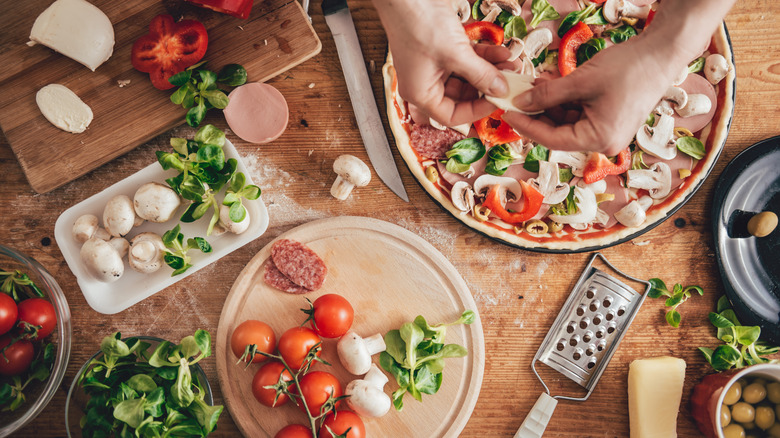
One thing that has become clear when looking at our experts' answers is that pizza is a carefully balanced meal. Adding an excess of cheese or sauce, or too many ingredients in general, is more obvious in how they throw off the balance. But when it comes to adding specific ingredients, sometimes these ingredients can lead to a soggy pizza or a flavor that was not ideal or expected.
In relation to this, Cedric Toullec mentions that one of the biggest mistakes he sees made is when customers swap out "ingredients until the balance is lost." This can cause problems for both the restaurant and the customer themselves. He goes on to explain that, "often, guests create a pizza they don't actually like and then leave a low-ranking review because it didn't taste 'good,' even though they changed the chef's vision."
One example of an ingredient that could throw off the balance, especially when paired with something not as strong as ham, is pineapple. Forget about the debate behind the topping in general, though even Gordon Ramsay has referenced it as the sweet pizza topping that he can't stand. "Pizza is all about balance," Mark Bello advises. "Pineapple is a big flavor. If I'm gonna do pineapple it's with pepperoni and pickled jalapeños — a balanced trifecta of sweet, salty, and spicy."
10. Forgetting a side dish that complements the pizza
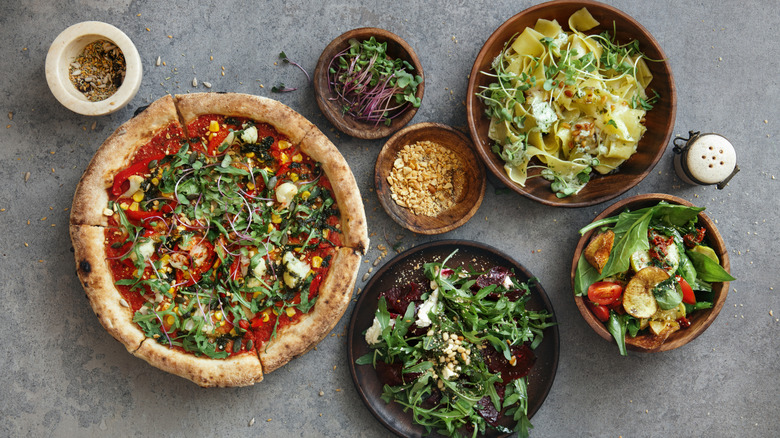
Sure, the pizza might be the main course for your dinner. But ordering a side dish can often complement the pizza, kicking up your meal a notch. It can also provide more choice for those who may not want to only eat pizza, or who may not be a big fan of pizza (it turns out those people really are out there). It can also bring some contrast to the flavors and textures of your pizza, such as having a bite of a fresh and crisp salad in between the hearty bites of your pie.
Now you could go ahead and order mozzarella sticks, but let's be real here. The mozzarella stick, though lovely, really has the same basic parts as a pizza itself, just in a different shape. If you're looking to branch out with your side dishes, Cedric Toullec suggests pickles as a perfect side dish, saying he loves "the acidity they bring to the meal." Michele Di Bari brings up a more common option, stating that "a salad is the perfect complement." Whatever your preference, as long as you keep in mind flavors and textures that will work well with your pizza and toppings selected, a side dish will help your meal feel whole.
11. Blaming the chefs for factors out of their control
Cedric Toullec mentions he had a customer who ordered at an entirely different restaurant, and then tried to pick this order up mistakenly at his pizza shop. To add insult to injury, when the employees said they didn't have that order, the customer started "making a scene at the counter because we 'lost' the order. A total classic," he adds. This is the perfect example of a situation where the customer might then give the restaurant a low rating (if they can remember which one it happens to be at that point, of course). Meanwhile, the restaurant truly had nothing to do with the customer's error, yet its reputation could be tarnished if a negative review is left.
It's situations like these where it's important to remember to have patience with the staff and servers, because, well, first of all, the error might actually be yours. Even if the error isn't your fault for certain, there may be other factors contributing to the negative experience that the restaurant can't control. Toullec points out another example of this happening when customers take the chance of ordering delivery. If the pizza they receive is stone cold, they might "then leave a bad review for the restaurant instead of the driver." This phenomenon, he continues, is "awful for the industry."