

15 Nostalgic Vintage Chips That Vanished From Store Shelves
We may receive a commission on purchases made from links.
The legend goes that potato chips were born in 1853 when a disgusted customer at the Saratoga Springs restaurant Moon's Lake House demanded that his order of fried potatoes be thinner and less soggy. Cook George "Speck" Crum made the patron's wishes come true, creating Saratoga Chips. Although this potato chip invention is likely a myth, the city of Saratoga Springs certainly popularized the snack, giving rise to the potato chip and other varieties to follow, all available in a wide range of flavors.
In the early 20th century, chip brands found their footing with local customers happy to munch on handfuls of these burgeoning snacks. Yet for every old-school brand that is still delivering the goods — like Frito-Lay, Utz, Wise, and Mikesell's — many lost their way, for one reason or another, and today have vanished from store shelves. The Takeout is revving up the old snack food time machine and heading to the past to give some much-needed love and respect to some of these once-beloved chip brands. They may be bygone, but they shall never be forgotten.
Bell Brand
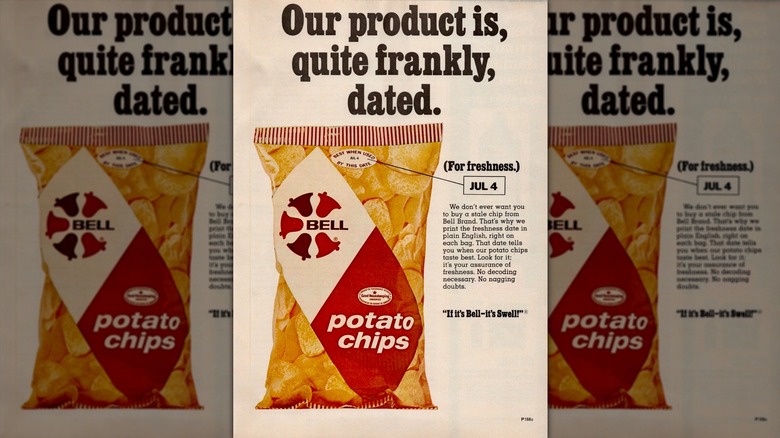
Ukrainian immigrant Max Ginsberg and his brothers made and sold pretzels on the street and expanded into potato chips when they founded the Los Angeles Saratoga Chip and Pretzel Co. and Bell Potato Chip & Pretzel Co. in 1921. Bell Brand potato chips featured a signature mission bell as its logo. The chips went on to co-star opposite Marilyn Monroe, who paired them with champagne in the 1955 film, "The Seven Year Itch," and were seen in the hands of Liz Taylor, Jane Powell, and Roddy McDowall.
Cyril Nigg co-purchased the company from Ginsberg in 1945, and recalled in an interview with the University of California's Oral History Program, "We liked the bell, so we called our [new] company Bell Brand Foods, Limited." In addition to flavored potato chips, the company also produced corn chips, tortilla chips, cheese puffs, onion rings, and nut snacks. It also served the restaurant industry with french fries and hash browns.
Bell Brand eventually became part of G.F. Industries, along with other popular California snack brands Granny Goose and Laura Scudder's. Unable to keep up with the larger chip makers, G.F. Industries silenced Bell Brands in 1995. While the chips and other snacks no longer exist, the Bell Brand lives on in a series of dip mixes, thanks to MPK Foods, whose founder grew up loving the brand and acquired the trademark.
Chipos
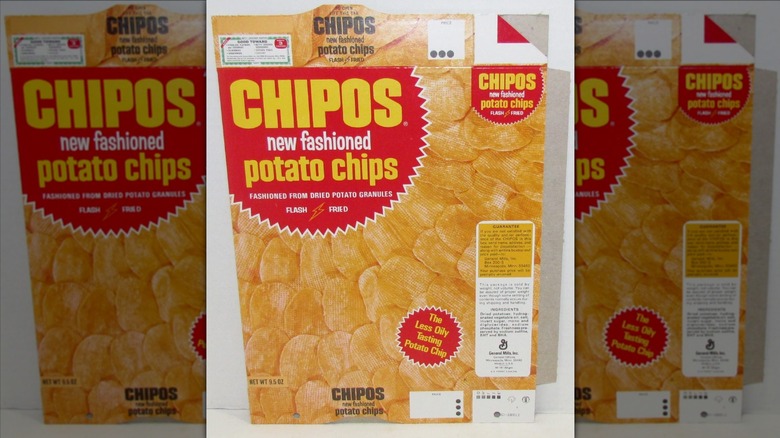
General Mills is mostly known as a cereal company, but found a hit snack with Bugels. Hoping to repeat success, it introduced a slew of new snack products in the 1960s, such as Joey Chips, Pizza Spins, and Tater Twists. In 1967, General Mills introduced Chipos, which were flash-fried and advertised as tasting lighter and less oily than regular potato chips. They were cleverly marketed as "new-fashioned potato chips." The potato chip industry took umbrage with this process and the claim that Chipos could be called actual potato chips. General Mills was sued in 1969, with the lawsuit contending that Chipos were "distinctly different in taste, texture, and appearance from potato chips but are advertised through the advertising media as potato chips" (via Newspapers.com).
Eaters apparently weren't fully on board with Chipos, as taste testers told the Detroit Free Press in 1977 that they were the "worst chip I've ever tasted" and an insult to one's intelligence. Another noted, "I hate gimmicky, Madison Avenue-idea chips." Chipos disappeared from shelves sometime after. While Chipos have yet to return, a brand called Chippos, featuring a cartoon hippopotamus on the bag, has made some appearances on "The Simpsons."
Delta Gold
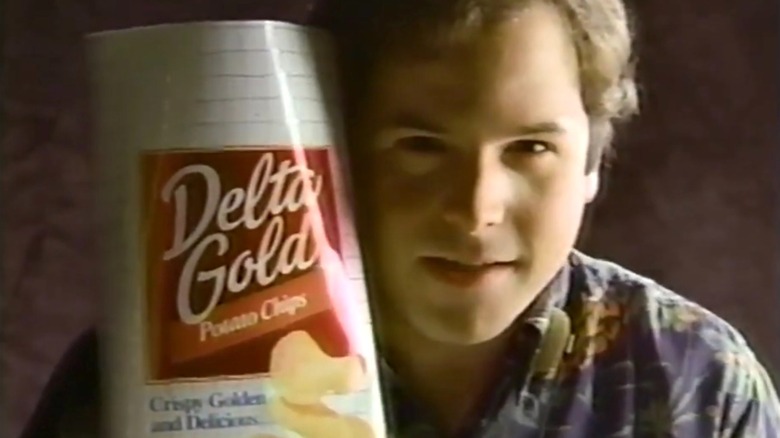
In the '80s, Frito-Lay wanted to flood the market with hundreds of new snack products. In 1985 alone, products like McCracken's Apple Chips, Rumbles granola nuggets, Stuffers filled snacks, and Lay's Jalapeño & Cheddar potato chips were sent to test markets to see what stuck. Another on that list was premium potato chips called Delta Gold, which went from an idea to shelves in just five months.
The TV ad starred a then-unknown Jason Alexander, who, with his usual talky fervor, extolled Delta Gold's virtues. He excitedly sold the chips as, "You see how golden and light colored these Delta Gold chips are? Well, that's exactly how they taste. Delta Gold chips absolutely sparkle with flavor." Apparently, all that glitters wasn't exactly gold, and the chips faded away and were last seen advertised sometime in the early '90s. Say "Delta Gold" today, and most people will think you're talking about a branded Amex credit card.
Eagle Snacks
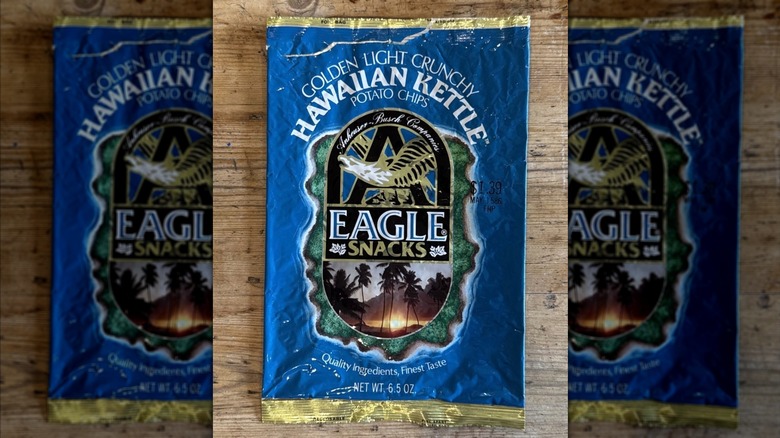
Anheuser-Busch was founded 174 years ago, in 1852. In 1979, the brand tried its hand at perhaps the perfect complement — salty snacks like pretzels, chips, and nuts under the name Eagle Snacks. Testing began in four markets before expanding and taking advantage of the beer's existing distribution chain. They were initially sold in bars and restaurants before eventually hitting supermarket shelves. In addition to its own branded snacks, in 1985, Cape Cod chips joined the roster.
In 1988, Eagle Snacks began selling its products nationwide and employed TV's "Odd Couple" actors Tony Randall and Jack Klugman in ads to help inform the masses. Within five years, it had landed as one of the top-selling salty snack makers in the U.S., but sadly, not at a profit. In 1995, Anheuser-Busch got out of the snack business, as well as parted ways with its hometown baseball club, the St. Louis Cardinals. A year later, Procter & Gamble bought the trademark and brand name. Although P&G relaunched the snacks in test markets, it grounded its version of the Eagle in 1999. Reserve Brands licensed Eagle Snacks from P&G in 2005, and had product on shelves within two years. This comeback also proved to be short-lived, as its website went dormant by 2010. The trademark is currently owned by NYC Delights, Inc., so there is hope the Eagle may soar once again.
Eggo
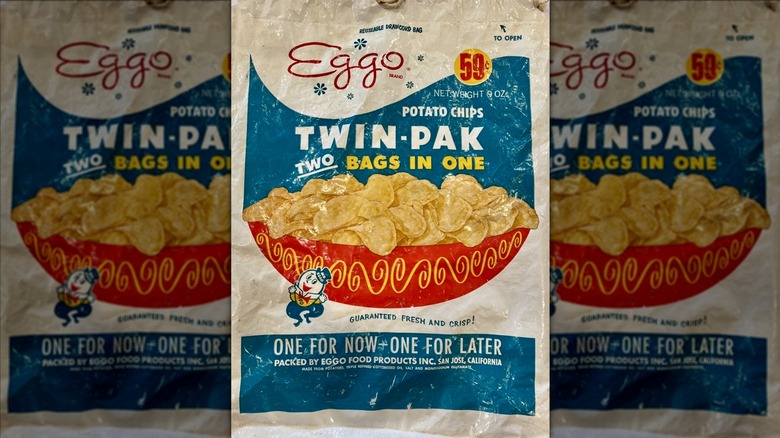
The name Eggo is now synonymous with the frozen waffle, but its humble beginnings revolved around hawking mayonnaise. San Jose machinist Frank Dorsa started his company in 1932 and by 1936 had introduced a waffle flour mix that sped up breakfast. Two years later, Dorsa added The Garden City Potato Chip brand — which had been around since at least the early 1920s — to his portfolio. To speed up chip production, Dorsa invented the continuous potato peeler, and by the 1950s, placed ads in newspapers seeking 10,000 sacks of commercial-grade potatoes from farmers. In the early part of that decade, Eggo Food Products had introduced the frozen waffle, which greatly increased its fortunes.
In late 1966, Eggo handed over the reins of its food products to Fearn Foods Inc. In 1970, a merger turned Fearn International into a subsidiary of Kellogg's. Under the tutelage of Kellogg's, the waffles' wider reach helped them become a breakfast staple no one could L'eggo. The Eggo potato chips hung on for a few more years, as seen in newspaper ads, before fading into obscurity sometime in the middle of the 1970s, now among these discontinued Eggo waffle flavors.
Granny Goose
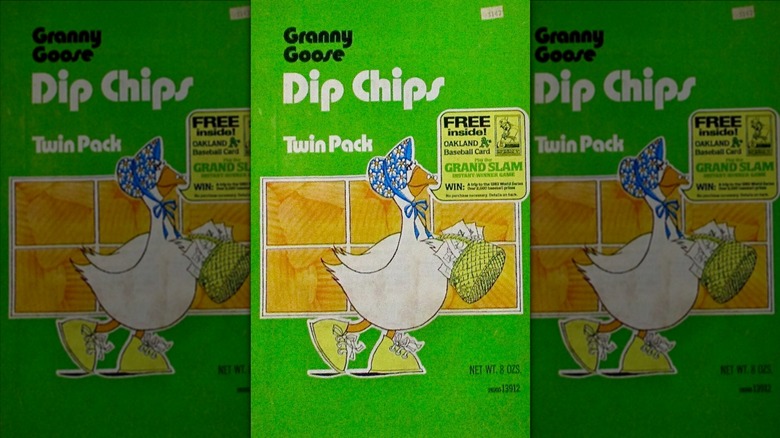
When the name Mother Goose was unavailable for its new chip company, the Wangenheim family chose Granny Goose instead. The snackmakers of Oakland, California, started selling potato and corn chips around 1946, featuring a bespectacled cartoon bird adorning bags. The brand made a name for itself in the 1960s with a series of comical commercials (a must-watch). They featured a Marlboro Man-like cowboy whose name was surprisingly Granny Goose, peddling his "unusually good potato chips ... for grown-ups," and tearing open a bag with his teeth.
In 1966, the company was sold to Del Monte, which helped expand the brand nationwide. Decades later, expansion expedited the company's demise, and Granny Goose closed its doors in 2000. The trademark and brand were quickly resurrected by Snak-King Corp that same year, which kept Granny Goose chips, cheese puffs, and popcorn on shelves for a couple of decades. While there has been no official word of discontinuation, Granny Goose was removed from Snak-King's branded products by 2025.
Granite State
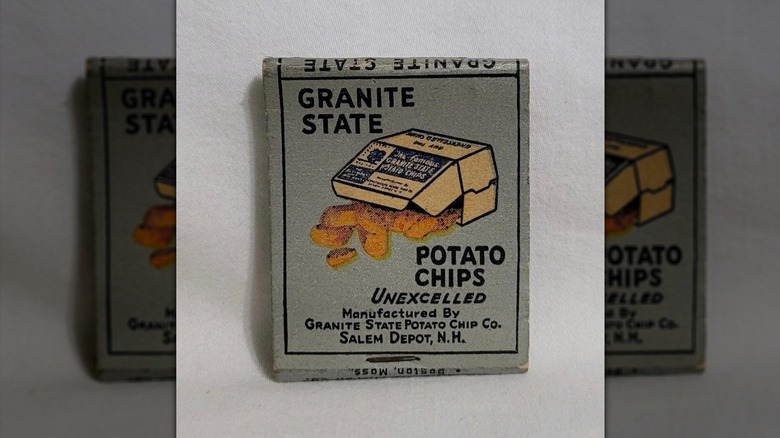
New Hampshire's nickname, the Granite State, has been etched in stone since 1825, and the rock formation resembling a face, the Old Man of the Mountain, long acted as a symbol of the state. That nickname was poached by William Croft and Thomas Divine in 1905 for their potato chip company, and they were one of the first known businesses to use the "Old Man" in branding and advertising.
Headquartered in Salem, New Hampshire, the chips became favorites among locals, and even those headed to the beach, who grabbed some and a pickle for just a nickel. When President Dwight D. Eisenhower visited New Hampshire in 1955, then Governor Lane Dwinell was sure to hand him a bag, which, as evident in this photo, he was quite excited to open.
The chips came in bags, cartons, and buckets, the latter of which were often reused by customers for other purposes, like picking berries. By 1987, Croft's great-grandson William "Buddy" Croft Jr. continued the family's chip tradition, churning out 600,000 pounds of chips per year. Buddy didn't want to pass the business to his son and instead sold the land and used the money to send him to college. Granite State closed up shop in 2007, and the factory was torn down and replaced by an even more ubiquitous name in New England — Dunkin'.
Husman's
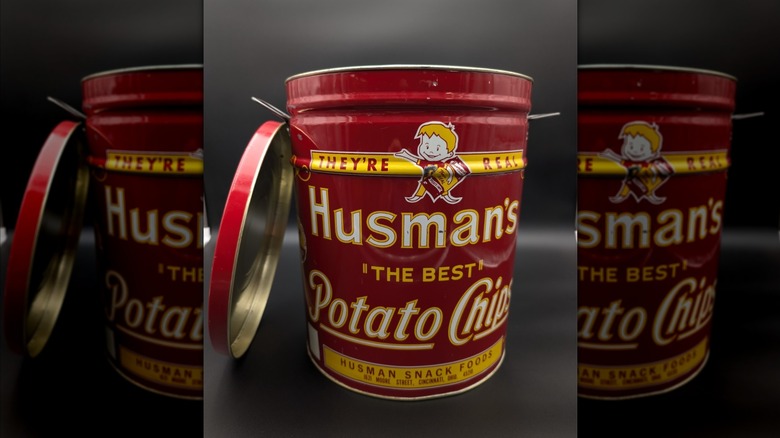
In 1919, paper product salesman Harry Husman got lucky at the horse track and poured some of his winnings into a namesake potato chip company. The Cincinnati-based company made all the chips by hand until demand warranted the purchase of an automatic chip fryer in 1937. Husman used some of his earnings to invest in a horse farm, once telling Cincinnati Post writer Pat Harmon, "I got the chips out of the horses, so I decided to put some of the chips back into horses."
By 2014, Husman's was still going strong, using 43 million potatoes a year to make the chips, as well as producing popcorn, pretzels, cheese, corn, and nut snacks. In 2019, Utz Quality Foods acquired many ConAgra brands, including Husman's, Tim's Cascade Snacks, Hawaiian Snacks, Erin's, and Snyder of Berlin. Within two years, Utz pulled the plug on Husman's, with a company spokesperson releasing the statement, "After considering retailer feedback and consumer demand, we recently made the difficult decision to discontinue the Husman's brand" (via Just Food).
Jane Parker
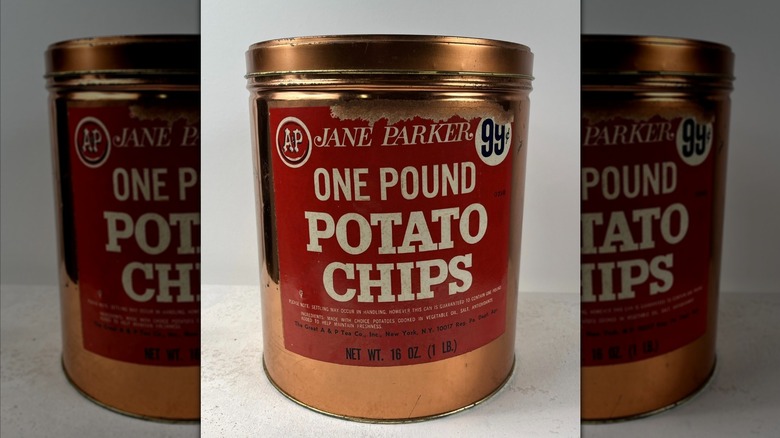
The Great Atlantic and Pacific Tea Company, aka A&P, was once one of the largest grocery store chains in the U.S. It had a whole line of baked goods, originally under the name Grandmother's, but took on a more formal name by at least 1937 — Jane Parker. With a name strikingly similar to Tarzan's girlfriend, Jane Parker was the faceless force that helped sell A&P-branded products. Jane made everything from bread and donuts to a popular holiday fruitcake and, yes, potato chips.
In an ad, A&P boasted, "There's more crisp crunchiness and more fresh flavor in these light, melt-in-your-mouth, golden chips." The potato chips were sold in a variety of containers over the years — bags, boxes, and for larger appetites, tins. They were sold in the U.S. until at least the early '80s, and mid-'90s in Canada.
A&P called it quits in 2015 and sold off its intellectual properties, including Jane Parker, in 2018. The name lives on today thanks to brothers Chris and Alex Ronacher, who even produce the beloved fruit cake using the original recipe.
Laura Scudder's
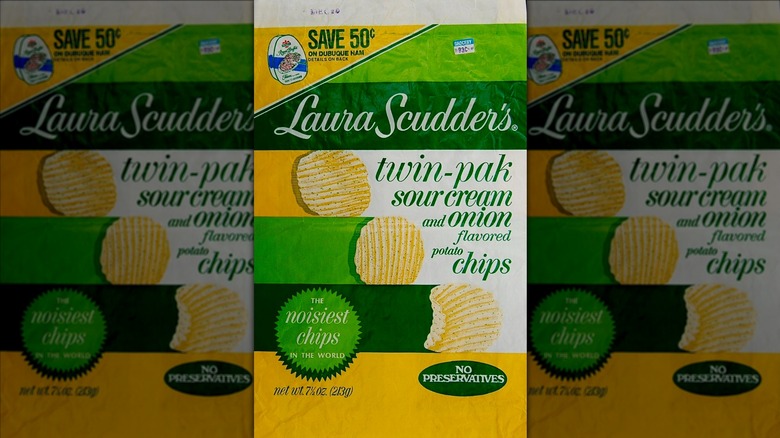
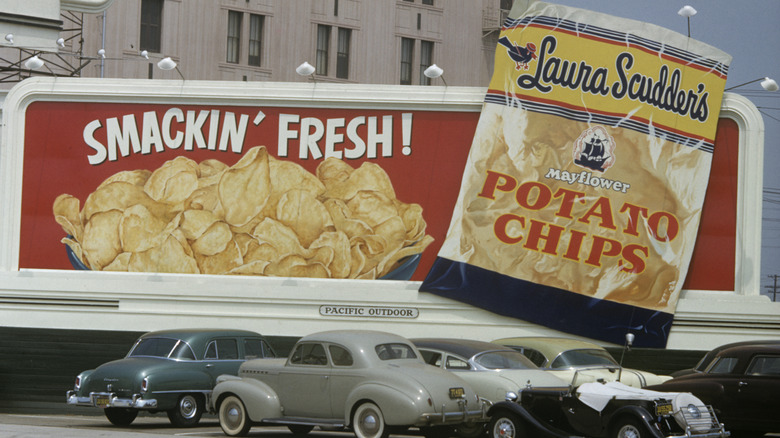
Laura Scudder was a true Renaissance woman — lawyer, nurse, restaurateur, wife, mother, and titan of potato chips, mayonnaise, and peanut butter. Her grandson, John Scudder, told the Los Angeles Times in 2007, "A lot of women were conjured up by marketing divisions to lend credibility to products, but she was a real woman." He added, "She was her product, and she stood by her product, and she was always there for you."
After her husband was injured at his workplace in 1926, Laura got to peeling potatoes and making chips, which turned into a major business. She was a pioneer, putting chips in wax paper to preserve their freshness. Laura Scudder was also one of the first companies to add dates to the bags. The snack brand went on to produce pretzels, caramel corn, and salad dressings, and was sold across California, Nevada, Arizona, and Oregon.
Laura and the Scudders sold the business in 1957, and it changed hands many times over, including an acquisition by Borden Inc. and later by the J.M. Smucker peanut butter brand. The modern iteration of Laura Scudder's continued to sell potato chips, but scrubbed the product's existence from its website by 2024. Today, all that remains under her good name is a series of dry dip and seasoning mixes.
O'Boisies
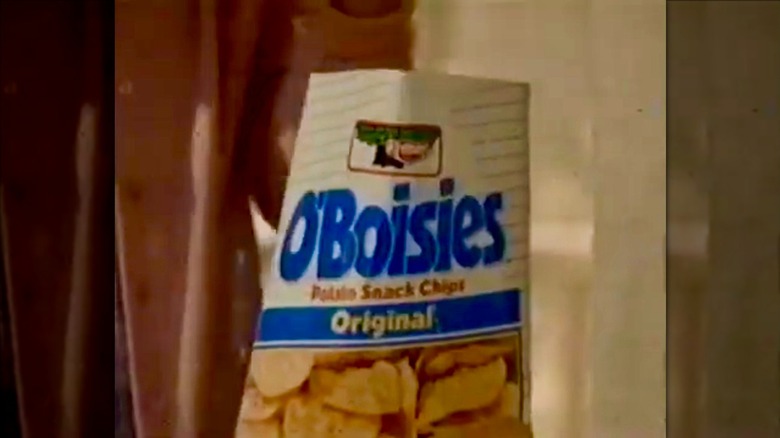
The elves of Keebler earned their keep making a lot of cookies, but in the '80s, branched out into saltier territories. Keebler's first potato-based chip, Tato Skins, dropped in 1985, and its second, O'Boisies, hit stores three years later. The name was a nod to Idaho's capital, the state where all its potatoes hailed from. These boisterous chips came in original, reduced-fat, sour cream and onion, and cheddar flavors.
Keebler sold off its salty-snack division in the mid-'90s to Wabash Foods LLC, which was then acquired by Poore Brothers Inc. in 1999. It's unclear whether O'Boisies disappeared from shelves, but bags of the chips tagged with "back by popular demand," sold by Terry's Classics, resurfaced and were advertised for sale around 2009.
Pop culture enthusiast Dinosaur Dracula loved them so much that he bought three 38-year-old bags of the originals. He noted in an Instagram post, "I don't know what kind of magic those elves did — they just hit a lot better than all other chips at that time," adding that eating them was "a religious experience."
Planters Potato Chips
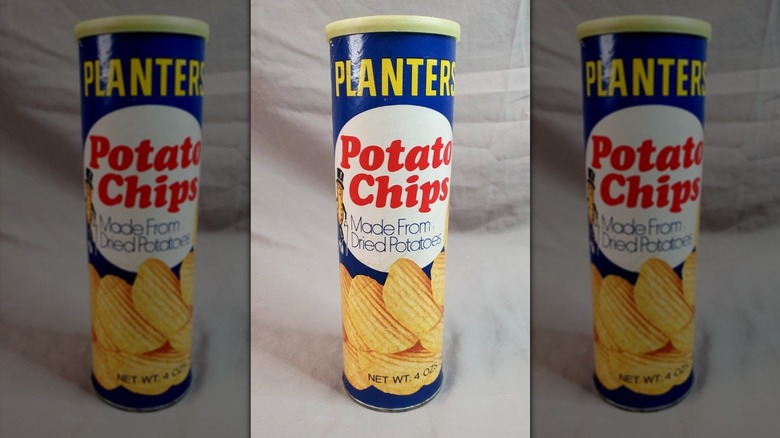
Since 1906, Planters has primarily been known as a seller of peanuts, cashews, and mixed nuts. At one point, the company even had retail spots called The Peanut Store, and in the late 1940s and into the mid-1950s sold potato chips.
When Pringles crisps went nationwide in 1971 and became quite a hit with snackers, Planters answered four years later with its own stacked potato chips in a canister. In an early TV ad, a reporter interviewed a nun who said 13 of 14 sisters preferred Planters over Pringles. How is one to disagree with such a holy blessing? Apparently, customers did, and they were last seen on shelves sometime in the 1980s.
Today, Planters even dedicates space on its website's FAQ section to inform curious seekers that yes, the brand once made potato chips, but they have since been discontinued. Well, Planters' Cheez Balls pop-top canisters made a surprise comeback this century, so perhaps we can hold hope that its potato chips will get an encore, too.
Red Dot
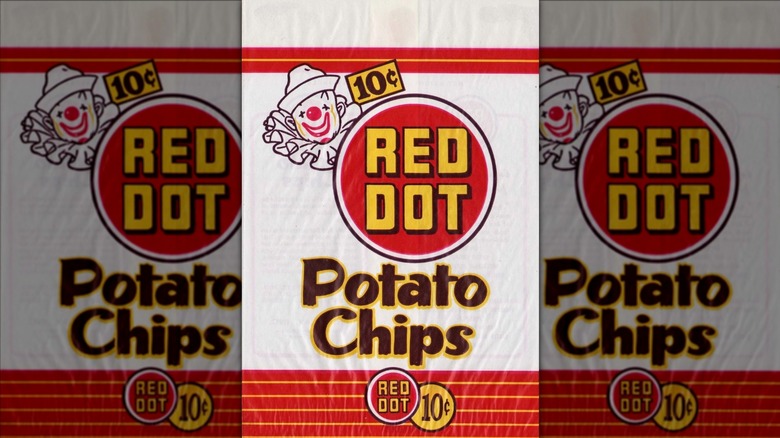
While Fred J. Meyer was busy studying at the University of Wisconsin-Madison in 1931, he made time to make potato chips and sell them to his fellow Badgers. By 1938, Meyer officially got going with his famously fresh Red Dot Potato Chips, and within a year, was selling them in six additional states. Red Dot went on to sell an array of snacks like pretzels, popcorn, cookies, pork rinds, and nuts.
By 1959, Red Dot had seven plants across the Midwest, a 13,000-acre potato research farm, and at its height, was sold in 15 states. In 1961, Red Dot merged with Frito-Lay, and Meyer shot himself to death four days after the merger. After changing hands a few more times, Red Dot chips disappeared from shelves. In 1990, using Meyer's original recipe, the snack was brought back to life by Brodhead Potato Co. The comeback was short-lived, as the Red Dot equipment was placed up for sale just four years later.
If you or someone you know is struggling or in crisis, help is available. Call or text 988 or chat 988lifeline.org
So Good
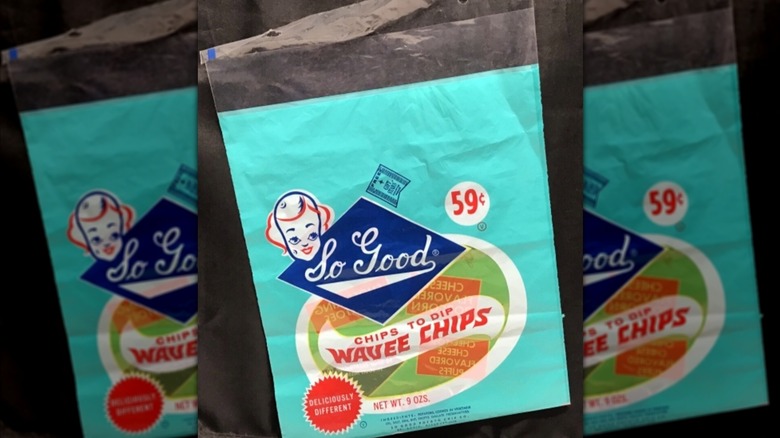
The So Good Potato Chip Co. dates back to 1928. According to a story recently shared by a family friend on Facebook, founders William and Vera Peche started making small batches of potato chips in their own St. Louis home. The snacks proved to be "so good" that the couple opened a factory to meet demand. Like many chips of the time, they were called Saratoga Chips until the brand eventually dropped the place name. By the mid-'40s, the snacks adopted a mascot — Sally So Good, whose face appeared on the bags and ads, and fans could even write to her to receive a recipe book.
The company produced over 100 snack items with help from an additional plant in Georgia, and from 1945 to 1973, on behalf of Frito-Lay, manufactured, packaged, and sold its Fritos corn chips. Things eventually weren't going "so good" anymore, and the company declared bankruptcy in 1988. While there were attempts to keep the brand going, the chips fell for good sometime in the early '90s.
Wonder Potato Chips
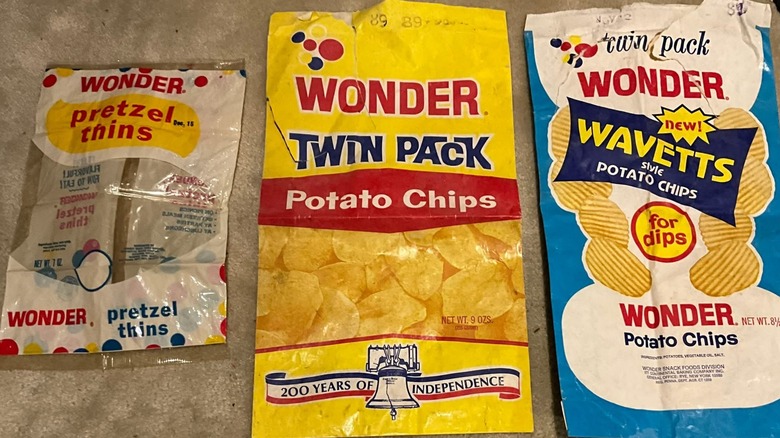
Stewart's Potato Chips were born in Tennessee sometime in or around 1940 and became a popular favorite across the region. In 1954, Stewart's was acquired by Continental Baking Company, makers of Wonder Bread. By 1960, Continental Baking Company began to rebrand Stewart's as Wonder Potato Chips, with ads that touted, "The Name Is New! The Bag Is New! But Not The Recipe!" The chip bag mimicked the sleeves of Wonder Bread, featuring the signature red, blue, and yellow balloons.
According to ads from 1963, the recipe was changed, and the potato chips were now being made with something called "flavorite." Under the banner of Wonder Snacks, it also sold Mexican corn chips, wavy Marcelles potato chips, corn sticks, corn pipers, tortilla chips, and corn capers. While these products were heavily advertised throughout the '60s and early '70s, Wonder Potato Chips hung around until at least 1994. Wonder Snacks recently relaunched with an array of baked sweets, but sadly, no savory treats in sight.