

11 Expensive Meats You Won't Find At Your Local Butcher Counter

Stroll over to your neighborhood butcher and you'll find the classic players, like beef, chicken, and pork. Most days, these traditional meats are more than adequate for your needs. But what about those more rare and exclusive cuts of meat? These are the types of delicacies that aren't commonly seen peeking out from the glass cases at your nearby butcher, or even at the very best grocery store delis. That would be too easy, too accessible.
These meats are luxuries, known by reputation for not only being rare, but also for having such a high quality that other meats pale in comparison. So, what makes them so special and highly sought after? From being raised in incredibly controlled environments to hailing from specific regions known for strict standards and regulations, these meats are so select that many are often only available when served at curated restaurants in far corners of the world. Prices can be eye-popping, and even then the meats can only be made available in limited supply (and in high-end markets).
Other factors that make the cost so sky-high include the animals' specific diets and living conditions, and the intensive process required to procure them. Even heritage makes its way into the mix of differentiating factors. Curious to know more? Here are 11 expensive meats you definitely won't find at your local butcher counter.
1. A5 Kobe Beef
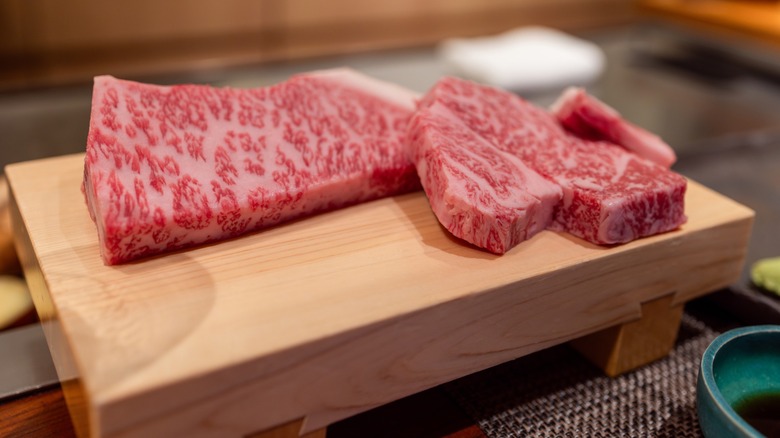
If there's anything about Wagyu beef that Chef Gordon Ramsay can't stand, it's disrespecting it. What exactly is Wagyu beef? It is a kind of Japanese luxury beef ("Wagyu" means Japanese cow), and A5 Kobe is a particularly special type. You could say that A5 Kobe is the standard that most everything else is compared to in the Wagyu world. The meat hails from meticulously raised cattle in Japan's Hyogo Prefecture (think low stress and controlled diets), and is the absolute top when it comes to the Wagyu grading system.
Only a tiny percentage of cattle ever qualify for Kobe certification, which would explain the high demand and price tag (Kobe can reach hundreds of dollars per pound). In order for a meat to reach this level, it must conform to several factors. Exceptional marbling is a requirement, as is a certain color and texture.
Now, about that marbling. A5 Kobe is known for its finely wound rivets of fat that make their way throughout the meat so evenly that it appears more pink than red. This fat softens at room temp, which explains why people say it melts before even getting to that first sizzle in the pan. Once A5 Kobe is prepared and plated, diners can expect an incredibly rich and buttery texture paired with an appealing and decadent umami-esque flavor profile that your run-of-the-mill steak dinner from a local restaurant or chain just can't touch.
2. Olive Wagyu
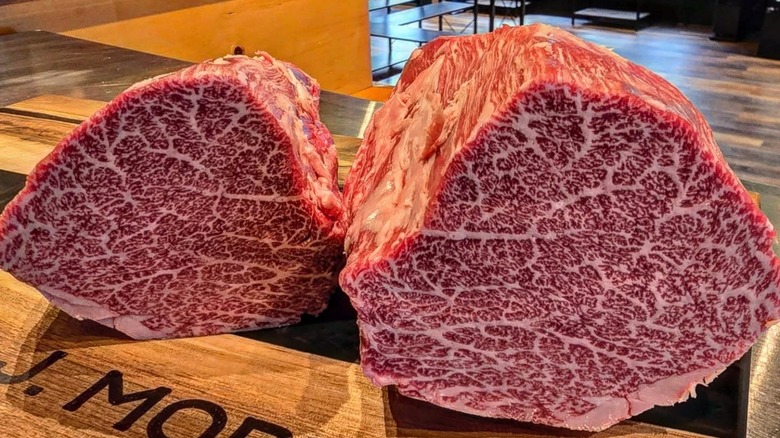
Olive Wagyu is yet another type of elite Wagyu beef. In fact, Olive Wagyu is among the rarest cuts of beef in the world. Hailing from Japan's Shodoshima Island, Olive Wagyu is so select that only a tiny number of cows meeting its criteria exist, and only a mere handful of product is produced yearly. Even in its home nation of Japan, the meat remains something of a hidden treasure (one for which serious meat aficionados and hard-core foodies have astound respect and adoration).
It all started when a few Japanese farmers got a pretty wild idea. These farmers decided that toasted olive pressings (a readily available byproduct of the island's olive oil industry) would be a great menu choice to feed their cows. Fast forward several years (and much experimentation) later, and the result is an impeccably refined process and feeding method that produces insanely tasty meat, particularly when speaking of its beautifully marbled texture and incomparable flavor.
And that flavor? There's apparently a scientific explanation for it. The combination of the meat containing higher levels of oleic acid with the cows' olive-based meals leads to the oh-so-smooth, rich and buttery mouthfeel, plus side note of nuttiness that is Olive Wagyu's trademark. As for the small volume of product? It's that exclusivity that make the supply incredibly limited, exponentially desirable, and pricey. Even high-end restaurants struggle to offer it to customers consistently.
3. Matsusaka Wagyu Beef
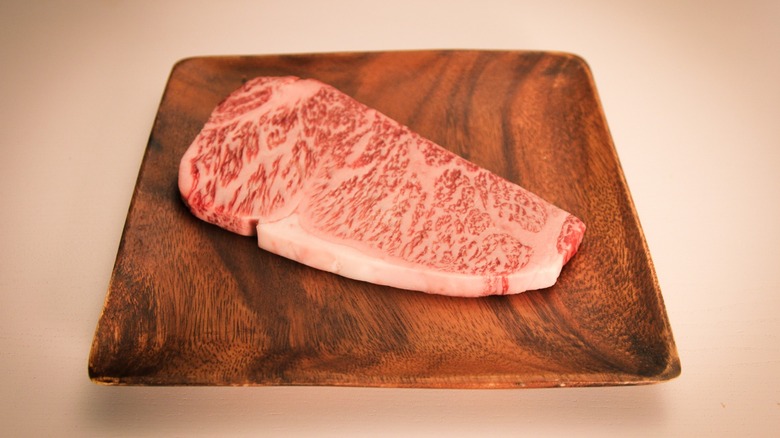
We have been on a Wagyu streak so far, and for good reason. People go crazy for it, and recognize its quality, even rolling out Wagyu hot dogs at barbecues (and considering the cost worth the splurge). But have you heard of the "Queen of Wagyu," aka Matsusaka Wagyu beef? While Japan has many luxurious meats that vie for attention, Matsusaka Wagyu beef is decidedly among the most primo cuts that foodies seek out (dare we say, clamor for). It is up there with the ranks of the beloved Kobe (even surpassing it in price at times). What makes it so special?
One thing is that Matsusaka Wagyu, which originates from the Matsusaka region in Japan's Mie Prefecture, uses only virgin female cows (known as heifers) that have never given birth. This unique breeding practice is believed to result in meat that possesses a far superior texture, especially with regard to tenderness, plus a greater elegance of flavor. Not only are the cattle virgins, but they're also raised for greater amounts of time than most (upward of 42 months). This supposedly gives time for the marbling to develop further, resulting in the ultra-fine, intricate latticework Matsusaka Wagyu is known for having.
Once cooked, the silky fat melts, leaving diners with a rich, buttery, and near transcendent taste. Its rarity only adds to the appeal, with strict production standards and limited numbers making it not widely accessible, particularly beyond Japan.
4. Vintage Côte de Boeuf
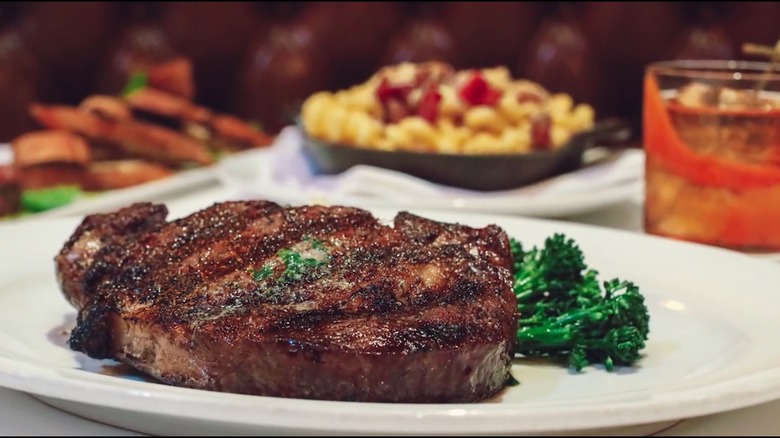
When it comes to steaks, you might think what arrives on your plate has been aged for a few weeks or so. This may be the case for most run-of-the-mill steakhouses, but what if we told you there was a steak that is aged for years (sometimes a mind-boggling 15)? It's called the Vintage Côte de Boeuf, and it was created by acclaimed French butcher Alexandre Polmard. This impressively lengthy aging process (dubbed "hibernation"), is chosen to preserve the meat in a stage of suspended perfection. Precision is the key here, with every step measured to the most minute detail.
Once the beef is butchered, it is exposed to blasts of extremely frigid air at super high speeds (we're talking subzero numbers, like -45 degrees Fahrenheit). Apparently, this shock locks in the finest qualities of the meat, thus allowing it to maintain its peak condition in comparison to standard dry aging, which is mostly focused on intensifying taste.
As for the cows, they are carefully raised and free to roam in open environs, which is said to minimize stress and believed to be integral for optimal tenderness and quality. This meticulous control is the signature of Polmard and his Vintage Côte de Boeuf, resulting in a highly praised and costly steak (a single rib can be thousands of dollars, and the famed butcher trusts only a select number of chefs in the world to prepare it).
5. Ōmi beef
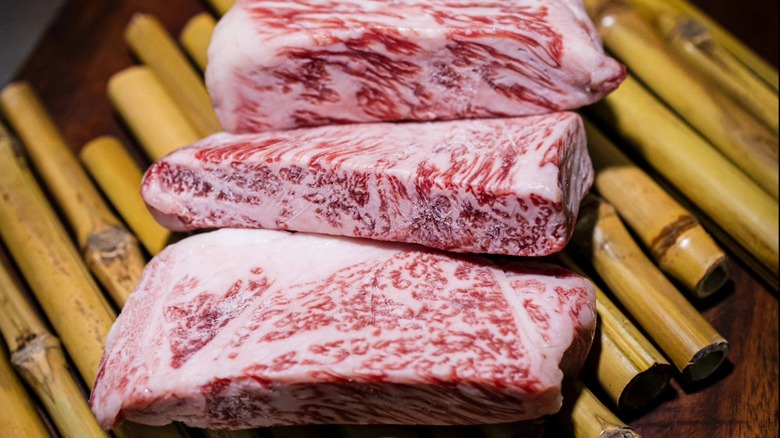
One more Wagyu beef that sets itself apart from the rest, and won't be found at your neighborhood butcher, is Ōmi beef. The oldest recognized type of Wagyu, Ōmi beef has been around more than four centuries. The luxury beef is created in Japan's Shiga Prefecture. Impressively, it even predates the famed Kobe beef, and remains one of Japan's most respected "Top Three" Wagyu varieties. As well as the prestige of being in such a trio, Ōmi beef is quite rare, with only a tiny percent ever leaving its home nation of Japan.
It all started back in the Edo period, when cows from the region were transported to feed the elite rulers of the time. This was a period when beef was forbidden for most, so Ōmi beef was seen as a true luxury reserved for nobility (sometimes even given to shoguns as a treasured offering of sorts). From those historical roots to today, Ōmi beef has remained highly prized, and even maintains its role as an integral cuisine in Japan's Imperial Household.
Wagyu fans that crave the telltale marbling the beef is famous for will be glad to know that Ōmi beef has that in spades, but it's the flavor that makes it so phenomenal. Described as being a bit more refined and elegant than some other types of Wagyu, Ōmi beef has a subtler quality that rewards diners with a more polished taste on the palate.
6. Jamón Ibérico de Bellota
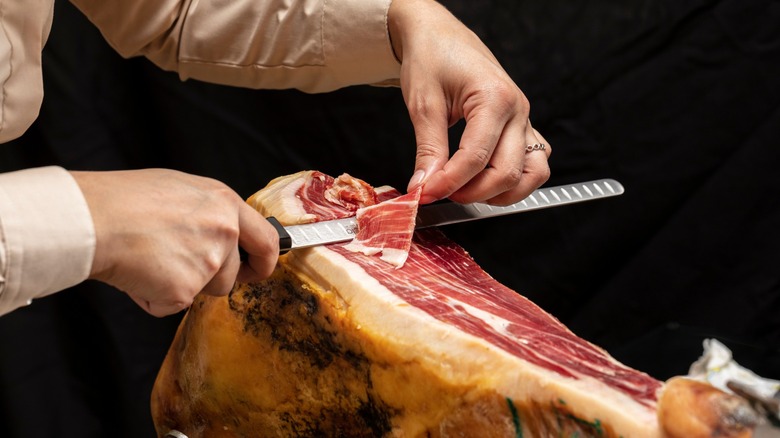
If you want to talk about the queen bee of Spanish cured meats, you have to talk about Jamón Ibérico de Bellota. It's a painstaking process to produce this Spanish meat, which is known for its excellent flavor. Ibérico de Bellota is derived solely from purebred Ibérico pigs (a heritage that is considered the highest tier of Spanish ham). The story of Ibérico de Bellota starts in a unique ecosystem of oak-dotted pastureland, where pigs are able to roam freely.
At the end of their lives, the pigs consume large amounts of acorns. It's said that this natural diet, paired with the pigs' ability to store fat inside their muscle tissue, makes the meat so tender and flavor-filled (think a nutty richness that's far beyond your run-of-the-mill cured pork).
This process isn't rushed, and everything from rearing the pigs to the final curing of the ham may take years (upward of six at times). Each region has its own unique iterations, as the varying climates and altitudes affect subtle nuances in the taste. The good news is that there is a highly stringent labeling system in place, which ensures the absolute authenticity of the meat. One final note is that Jamón Ibérico de Bellota is traditionally sliced very thinly, as even a small amount delivers quite a satisfying taste punch.
7. Ayam Cemani Chicken
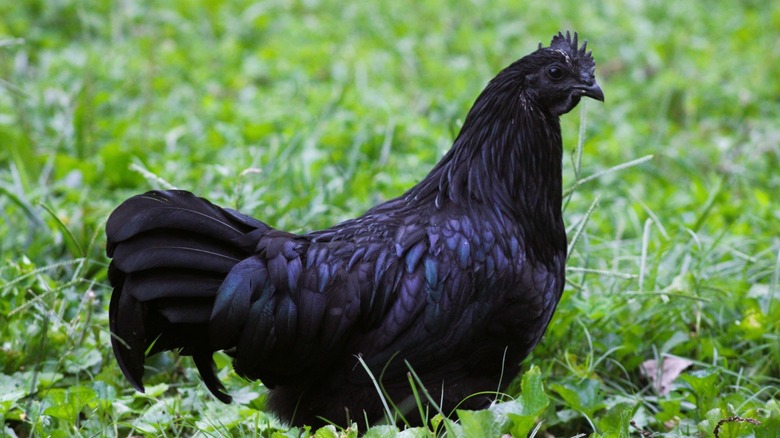
Upon first glance, Ayam Cemani can be shocking. These rare, Indonesian chickens almost don't seem real, as they're entirely black in color. And we are not just talking about the exterior of their feathers; the dark hue covers everything from their skin and beak to their tongue, muscles, and bones. It is definitely rare and unusual, and can be explained through science.
Apparently, Ayam Cemani have a natural genetic condition (fibromelanosis), which causes this extreme pigmentation to be prevalent throughout their entire body. While there are a scattered few breeds that also have this characteristic, none are as intensely dark as Ayam Cemani. In fact, the meat is said to be so dark, it appears almost dyed. But it is not just the strange appearance that makes Ayam Cemani so famed, as the chickens' culinary prowess is equally praised.
Those who've tasted the rare meat describe it as being richer and having far more depth than most birds found at the butcher. It's this stellar flavor (plus the obvious visual appeal) that has made Ayam Cemani a popular pick among everyone from collectors to breeders, and of course, chefs looking for bold, new menu items. Due to the limited supply and high demand, these chickens can get pricey (and a real pain to source). So, for diners willing to step out of their comfort zones and give it a go (if they can find it), it's sure to be an unforgettable experience.
8. Poularde de Bresse
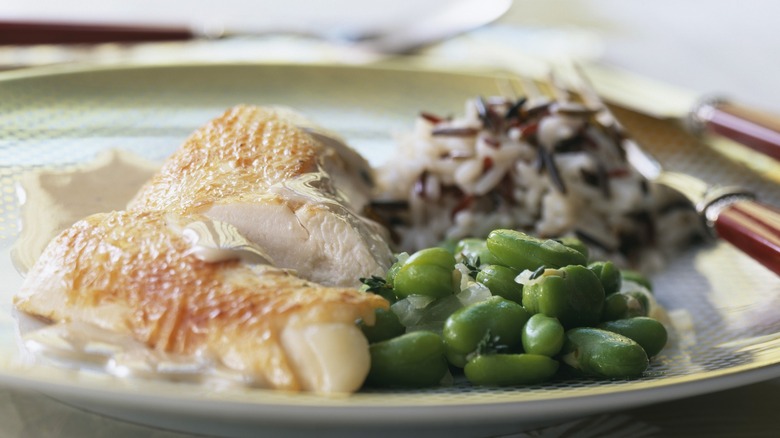
There's chicken, and then there's fancy chicken. Poularde de Bresse is a member of the latter category. In fact, this French poultry is among the nation's most celebrated meats. What makes these bougie birds so ooh-la-la? Firstly, they come from the right neighborhood and are raised in a certain region of eastern France, where the poultry is fiercely protected by specific regulations. Basically, this means that truly authentic Bresse birds can only come from this region. Talk about exclusive, which only makes these birds all the more sought after.
The conditions Poularde de Bresse is raised within are also elite, as the poultry is known to roam freely within a carefully controlled environment marked by ample space, with great care given to its daily diet. As well as the various insects and grass, Poularde de Bresse also eats fare enriched with high-quality grains and milk (this is said to aid in achieving the chicken's distinctive flavor, both rich and slightly gamey).
As for the name itself, poularde specifically refers to a young female chicken that hasn't laid eggs yet. They are raised longer (with a final period of rest, which allows extra tenderness and fat to develop, enhancing both flavor and juiciness). This process requires patience, with each bird receiving highly individualized care. As such, it's no surprise that Bresse poultry was once presented to nobility, and even now enjoys a starring role in French cuisine and high-end dining.
9. Foie Gras
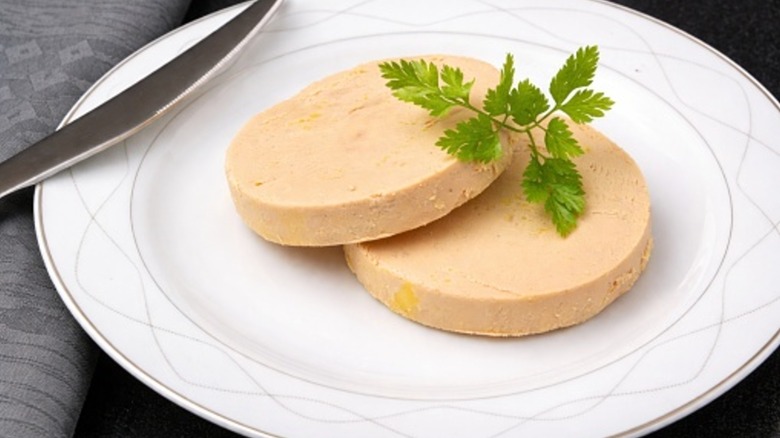
Foie gras is undoubtedly among the most famous and controversial luxury foods in the world. While many, King Charles of England included, refuse to eat foie gras, some have even gone so far as to try and ban it entirely. So, what's all the fuss about? Well, the name foie gras is literally translated as "fatty liver," which is pretty self explanatory. Specifically, it's the enlarged liver of a duck or goose that has become highly prized for both its indulgent and rich flavor profile and its divinely silky consistency (some even compare it to creamy custard).
Sounds amazing, right? But it's the way foie gras is produced that's giving so many people pause. The actual process for this melt-in-your-mouth delicacy starts with the birds being fed a corn-rich diet (specifically designed to increase both the fat content and general size of their livers, increasing them exponentially). While being responsible for the utter deliciousness of the meat, it's this ancient method that's ruffling so many feathers (many deem it undue cruelty).
As for serving it, foie gras is highly versatile, with uses for its velvety richness ranging from mousse to pâté, or even served whole. It's common to see this delicacy paired with tasty, simple items, such as toasted bread or fruit preserves. And despite the controversy, foie gras continues to garner a loyal following, featured in high-end dining restaurants and beyond.
10. Moose
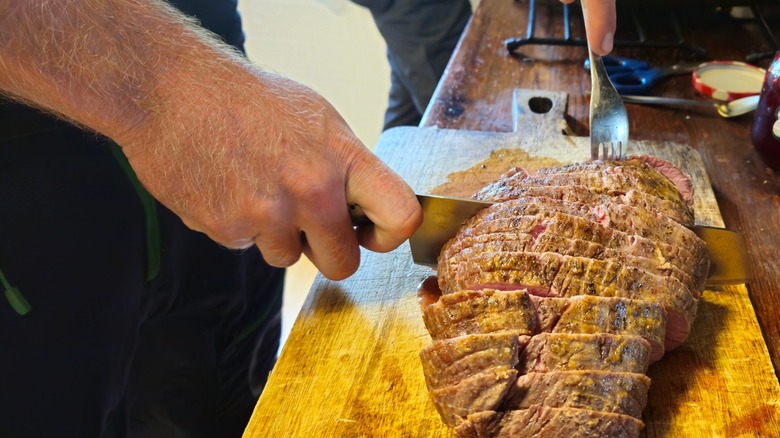
It may surprise you to learn that moose meat is one of the most difficult wild game options to find in the world. This is because, unlike farm-raised meat (think beef, chicken, or pork), moose are not commercially bred in most regions, especially in North America. Instead, the meat typically comes from regulated hunting, which makes it nearly impossible to find in standard butcher shops or grocery stores. This limited availability is a big part of its appeal.
For those who do get the chance to try it, moose meat offers an entirely different experience from conventional red meats. For one thing, moose meat is incredibly lean. This lack of fat gives it a dense consistency, as well as a strong, earth-forward flavor, which many consider to be a testament to the animal's natural diet and wild environment. From a nutrition standpoint, moose meat knocks it out of the park, thanks to its high levels of protein, vitamins, and minerals compared to more common meats.
It also can toot its own horn for remaining on the lower side of the saturated fat and cholesterol scales. This is a winning combination that only furthers its appeal. Due to strict regulations and laws, those seeking to get a taste of elusive moose meat often have to look to specialized restaurants, or set their sights upon regions where it is legally available, such as parts of Europe.
11. Hanwoo Beef
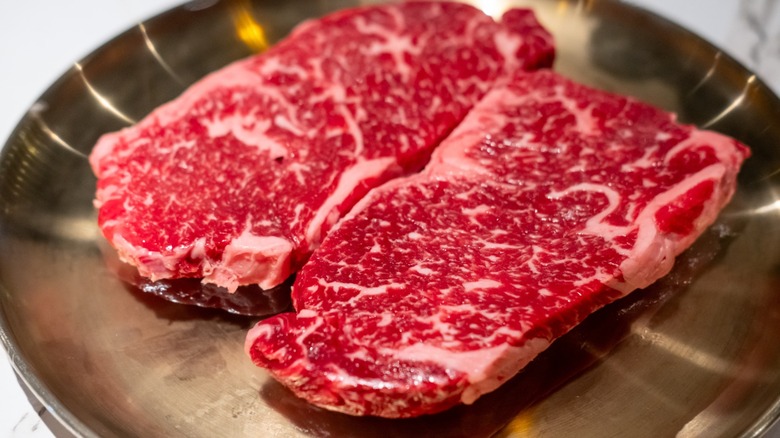
For those who adore all things Wagyu, we point your attention to Hanwoo beef. While Japan is known for its stellar Wagyu, South Korea has this more under the radar, yet equally adored version. A native cattle of Korea is responsible for this delicacy, which is considered to be among the most rare and expensive in the entire world. A big reason for its scarcity is due to the fact that this Korean treasure rarely leaves the country. With such limited export, the majority of Hanwoo beef is enjoyed domestically.
As for its taste, Hanwoo beef struts its stuff by showcasing impressively eye-catching, melt-in-your-mouth marbling. Interesting fact, however, while it shares this same marbling feature with Wagyu, Hanwoo has a bit of an edge by containing less fat overall, which is said to result in a rich taste with a unique chewy, beefy quality. As such, many see it as providing a nice balance between the more fat-laden Wagyu and the far leaner Western versions of beef found on steakhouse menus.
Sufficient marbling but without all the extra fat? Sounds as close to perfect as one can get. After all, who doesn't love the best of both worlds? Apart from the amazing taste, Hanwoo is rich in cultural significance to the Korean people, and is often seen in celebrations or marking holidays in a delicious way.