

13 Mistakes That Are Ruining Your Biscuits And Gravy
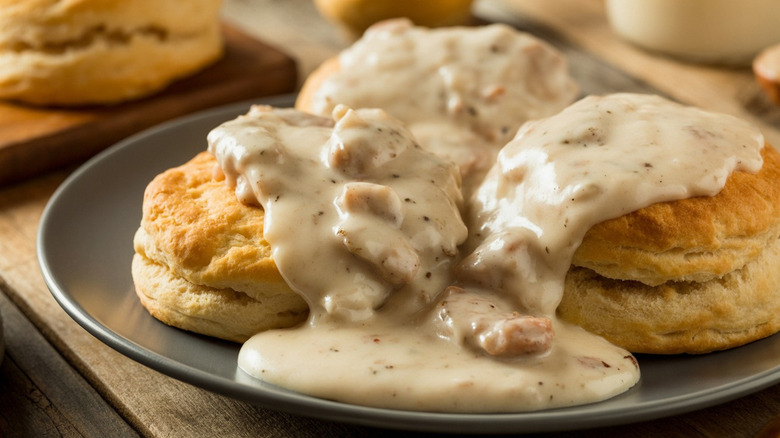
Who doesn't love a rib-sticking, ultra-satisfying, and comforting plate of biscuits and gravy? If this is a dish that you frequently order, however, you've probably come across your fair share of sub-par biscuits and a decent amount of lackluster gravy. The fact is, getting this combo right can be challenging — and that's especially the case at home. You want your biscuits to be fluffy, decadent, melt-in-your-mouth buttery, and your gravy to be savory, succulent, and smooth. No one asks for clumpy, bland gravy or hard, dense, and flat biscuits that might as well be hockey pucks. So how can you achieve biscuits-and-gravy greatness in your own kitchen?
To crack the code behind a truly impressive plate of biscuits and gravy, we spoke to a handful of experts (Southern chefs, of course) to get their top tips regarding this breakfast staple. According to them, these are the mistakes you could be making that are ultimately ruining your biscuits and gravy endeavors — and what you need to do instead.
Being afraid of using lard
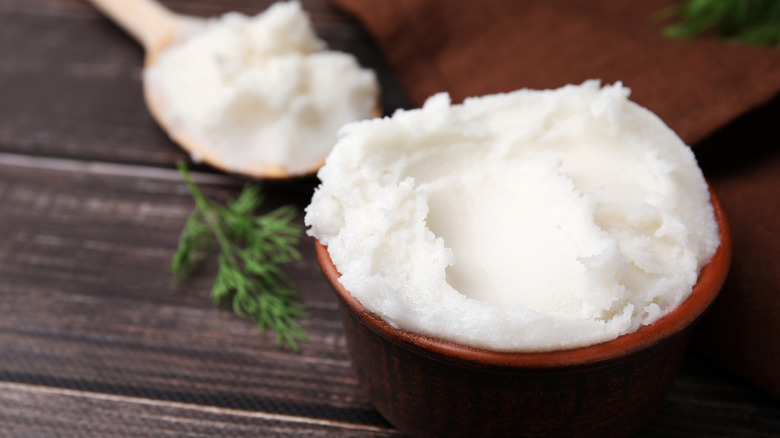
If you don't frequently use lard in your kitchen (or if you've never used it at all), it may seem a little scary. It sounds old-fashioned, unhealthy, and like something that might clog your arteries. However, despite the misconceptions, lard is nothing to fear. Rendered pork fat, or lard, was highly popular throughout much of history, though it fell out of favor in the 20th century. More recently, both home cooks and culinary professionals alike are reviving the fat and recognizing its many benefits, including its high smoke point and excellence when it comes to making perfectly flaky pastries and biscuits. Plus, lard actually contains less saturated fat than butter.
As Loveless Cafe's Chef Scott Peck, in Nashville, told us: "Where I see people getting it wrong with Southern food is trying to adjust the recipe to remove that scary ingredient, fat." He added, "Lard, butter, oil, grease, and tallow are used in some capacity in many famous Southern dishes. Whether it be folding lard into biscuits, frying up chicken in a skillet, or using the grease run off to make a roux for gravy, fat is the key base ingredient in most Southern cooking. People are programmed to crave those high-calorie fatty foods."
So the next time you're making biscuits at home, look for a recipe that contains lard. Then, go out and grab some and discover all the wonders of this underutilized ingredient.
Not buying good-quality sausage
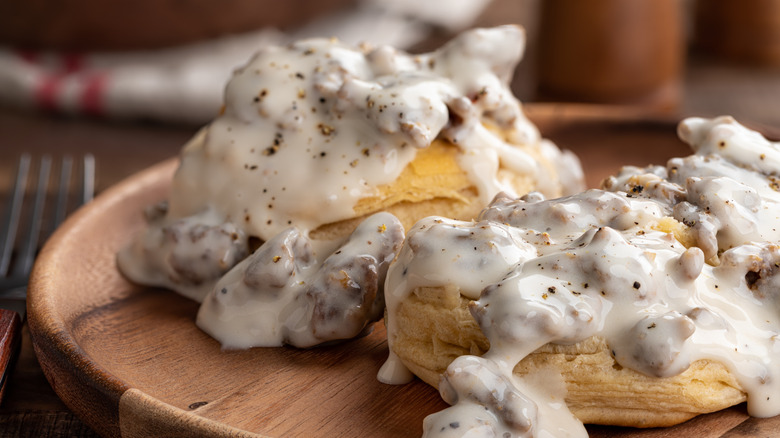
Yes, you could make the gravy for your biscuits-and-gravy combo without sausage ... but why would you want to? Sausage brings another level of flavor to your gravy. However, it's key that you purchase the right sausage, not just whatever's on sale in the meat cooler. According to Chef Scott Peck, "You need to start with a good-quality sausage. This is a whole-hog, cloth-bagged, hickory-smoked, and cured sausage, with a good amount of salt, pepper, red pepper flakes, and sage."
If you want to deviate from the classic breakfast sausage, you have some options, but keep in mind that you won't get that traditional biscuits-and-gravy flavor profile. For example, you could use chorizo if you want a spicier gravy. You could also go a little more unique with 'nduja. What exactly is 'nduja? It's a spreadable, Italian sausage with spice (thanks to the Calabrian chiles, which also give it a bright red hue) that doesn't even need to be cooked, as it's already cured and fermented.
Not using a cast iron skillet
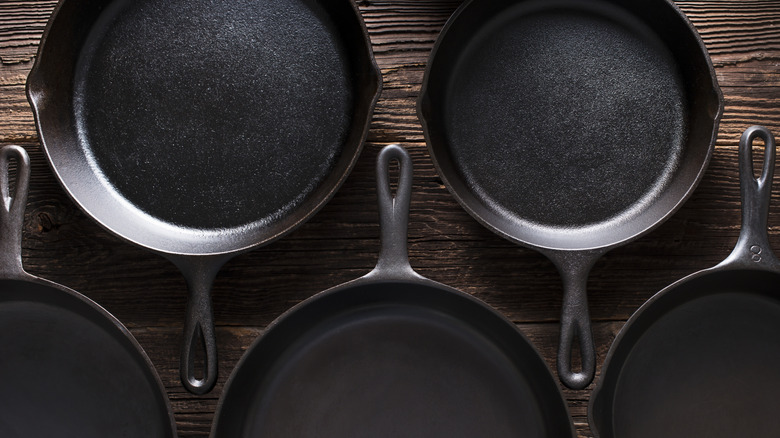
Cast iron skillets offer so many benefits. Yes, people portray them as a piece of cookware that's particularly finicky and difficult to work with, but they're really not. You can't pop them into the dishwasher, of course, but seasoning them and cleaning them by hand is a breeze. If you go through the (minimal) trouble, you'll have a long-lasting skillet that's a pro for searing and cooking at high temps — and for making biscuits and gravy.
Chef Scott Peck said that browning the sausage for your gravy is always best done in a cast iron skillet — just make sure that you pick the correct size of cast iron skillet, as it needs to be big enough to not only brown all your breakfast sausage, but make your gravy in, too. "When browning your sausage, I like to break it down into small chunks with my spoon, almost like you are breaking down ground beef for tacos or a chopped cheese," he added.
Throwing out your sausage grease
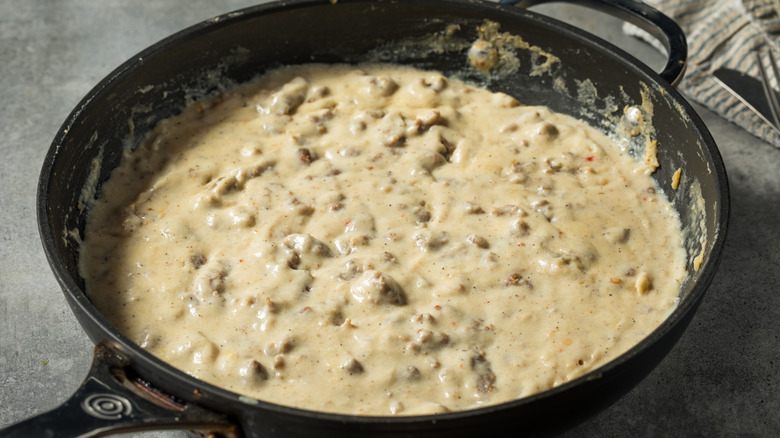
Once you've cooked the sausage for your gravy, don't automatically drain off that grease and trash it. Chef Scott Peck recommends you use it to make your gravy roux for greater flavor.
While you might think that making any roux requires butter, that's not the case here. Many actually agree that tossing the butter aside in favor of your sausage grease is the "proper" way to make southern-style sausage gravy. All you have to do is leave the cooked sausage and all its greasy glory in the pan, then add in your flour. Let the grease soak it up and sizzle for a few minutes, then incorporate your milk.
If the type of sausage you purchased doesn't offer enough fat to make the roux, consider another sausage next time — but also think about your cooking time and temperature. Cooking the sausage more slowly can allow more fat to seep out of the meat and into the pan, without overcooking the sausage. If you make that adjustment and still don't see enough fat for your roux, still hesitate before reaching for the butter. You can use reserved bacon grease instead.
Relying on store-bought biscuits
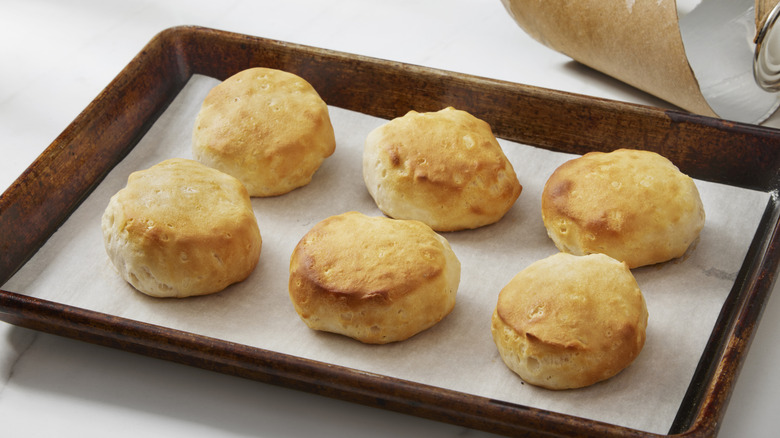
There's nothing necessarily wrong with store-bought biscuits, per se. Sometimes, they can be exactly what you're craving (looking at you, Pillsbury Flaky Layers). However, if you want to make the best possible homemade biscuits and gravy, you're going to need to start from scratch — especially if you've already handmade the gravy. As Chef Scott Peck said, "It would be a pity to go through all this trouble to make the perfect sausage gravy just to pair it with a premade puck-style biscuit, or even those sad ones that come out of a can."
Chef Nick Jennings at Season in Marietta, Georgia, concurred. He said, "Nothing ruins a dish like poorly and carelessly manufactured pre-made items. Biscuits have three ingredients, so making your own biscuits using three quality ingredients is better than the pre-made."
And what are those three ingredients? All you need is flour, butter, and milk. Though if you're going Southern-style, you'll want specific variations for each of these. Many Southern cooks swear by White Lily flour for their biscuits and, as already mentioned, butter. That said, the second ingredient in many biscuit recipes isn't this Southern go-to, but lard instead. As for your milk, buttermilk is preferred. If that wasn't easy enough, guess what: You can make sausage gravy with just three ingredients, too.
Using dairy other than buttermilk
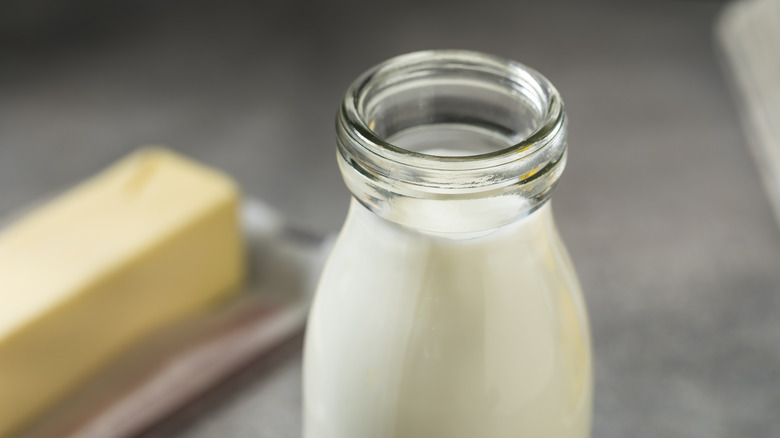
Now we address the issue of using dairy other than buttermilk in your biscuits. Chef John Engle at Ovide and the Hotel Effie Sandestin in Florida says that the only dairy he uses in his biscuits is cold buttermilk — period. In a pinch, he might use heavy cream.
Is there really all that much of a difference? Yes, as Chef Engle noted, heavy cream won't give you the same tang and structure that buttermilk provides. See, buttermilk is cultured, and contains a characteristic acidity that not only impacts flavor, but also how well your biscuit dough rises when the acidity meets your leavening agents. This is only if you're using them, of course, as baking soda and baking powder both frequently appear in biscuit recipes that utilize more than just the requisite three ingredients. In short, biscuits that bring in the buttermilk are fluffier and taller, and they also provide a more interesting flavor profile.
Making your gravy too thick
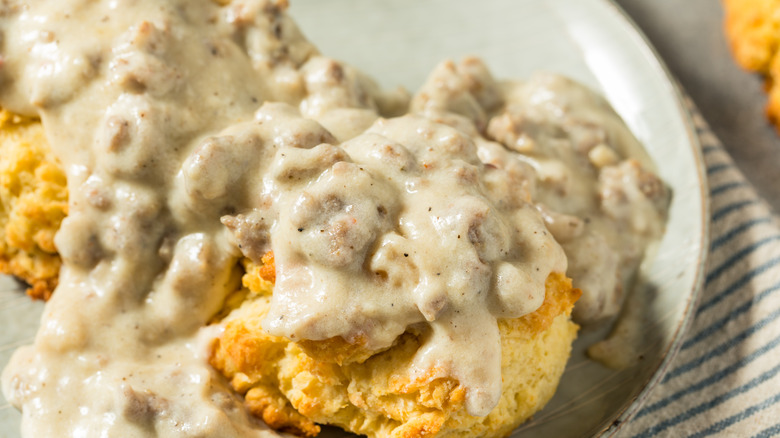
One of the worst mistakes you can make to ruin your biscuits and gravy? Serving up a gravy that's way too thick. As Chef Nick Jennings said, "It's all too common to be served a bowl of gravy that you feel like you need to chew a few times just to get it down." Instead of a thick and gloppy consistency, Jennings states you need to aim for what's known in the culinary world as "nappe." When a sauce or soup has reached nappe consistency, it means that it's just thick enough to coat the backside of a spoon. "Think silky [and] smooth," described Jennings.
If you've found that your gravy is far too thick, you can try to thin it out by adding extra dairy or water (or even stock). However, keep in mind that you may be thinning out the flavor as you do. Instead, prevent a too-thick texture in the first place by using the right ratio of roux to milk.
Jennings explained: "The key to this is to use the proper amount of roux to whole milk. A recipe I recommend as a baseline [is] 48 grams flour, 48 grams butter, 3 cups of milk, 1 cup half and half, 2 teaspoons of salt, 1 teaspoon pepper. Let it simmer for about 10 minutes on low before serving. That will give you a great texture."
Scorching the gravy
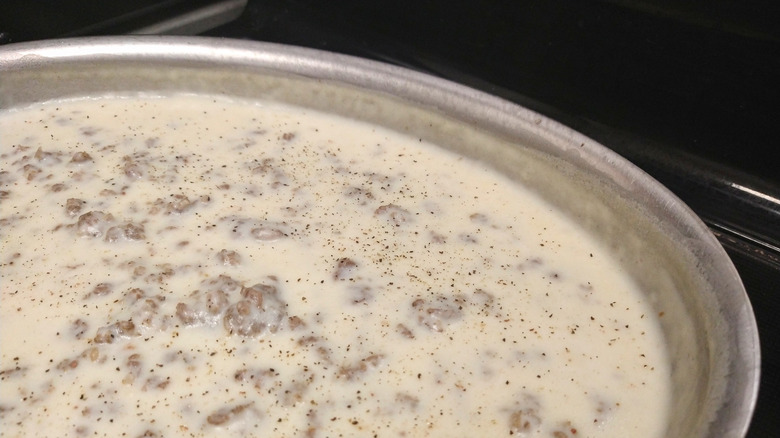
Chef Nick Jennings noted that while you're waiting 10 minutes for your gravy to simmer, you need to make sure that you don't inadvertently scorch the gravy on the bottom of the pan. This is a surefire way to ruin your gravy too. Scorching a sauce or gravy can occur in a few different ways. For example, if you've cranked up the heat too much, the bottom layer of your gravy can quickly burn and stick to the bottom of the pan. Scorching can also happen if you leave your gravy and don't stir it at all while it's cooking.
If you realize that you've scorched that bottom layer of gravy, you can still try to salvage the rest of it. First, transfer all of the unburnt gravy to a new pan. Ditch the pan with the scorched bottom. The leftover gravy may still have a tinge of burnt flavor though, so you'll need to try a few hacks that — while a bit dubious — do apparently work. You can either take a quarter of any type of melon, peel it, chunk it, and drop that into your gravy, or you can mix in some peanut butter. Either option will soak up the undesirable flavors (just be sure to remove the melon before you use the gravy).
Letting the biscuit ingredients get warm
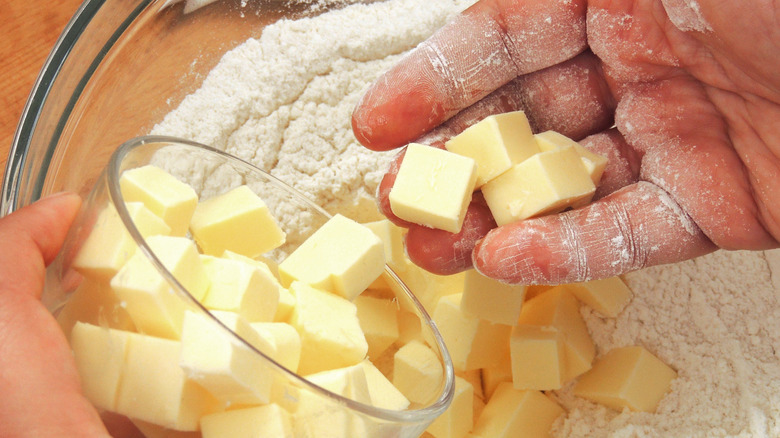
Temperature is a big deal when it comes to baking. You've probably read through and made quite a few recipes that tell you to bring your butter or eggs up to room temperature before embarking on a baking endeavor. When it comes to biscuits, however, the key is to keep everything cold.
As Chef John Engle said, "When creating homestyle biscuits, keeping everything cold is non-negotiable." That means the butter needs to be cold. The milk? Cold too.
You'll see this requirement applied to pastry items as well. It's because for items like biscuits and pastries, whatever fat you're using needs to be suspended in the flour. The fat cannot be suspended if it begins melting. As such, cold fat is a must. In fact, some say that you need to take things even further by mixing your biscuit ingredients in a refrigerated bowl, and that your flour should be chilled ahead of time too.
Ignoring Crisco
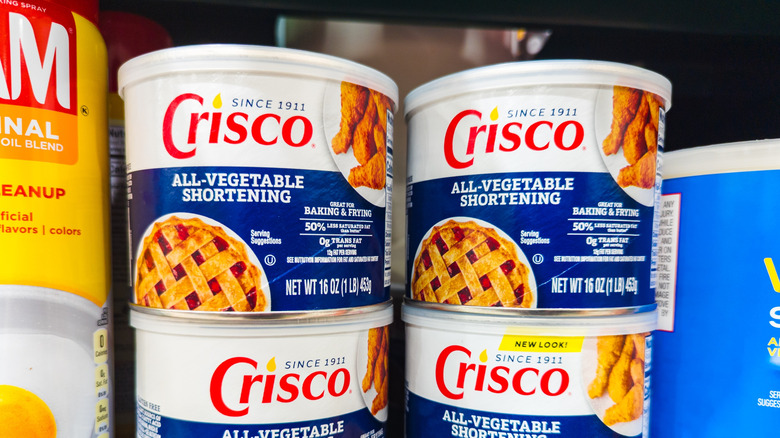
Like lard, Crisco may get a bit of a bad rap. It has a reputation for being unhealthy. In fact, the Environmental Working Group (EWG) — which rates a range of ingredients and consumer products, and gives out "scores" based on their nutrition, ingredients, and processing — awards Crisco an 8 out of 10 (with 10 being the worst score a food can get). The reasoning? EWG says Crisco is classified as ultra-processed, while containing TBHQ (a synthetic antioxidant that prevents the Crisco from turning rancid and which has been debated in terms of safety), and featuring very small amounts of trans fats and high levels of saturated fat as well.
That said, shortening like Crisco no longer contains measurable amounts of trans fat (at least not enough that it can be listed on the nutrition label). While it's not exactly healthy, it's generally considered safe to eat in limited quantities. As such, don't overlook it for your biscuits. Rather than lard, it's what Chef John Engle uses for his biscuits alongside butter, a combo that he says provides "extra flaky, layered results."
Not using your hands
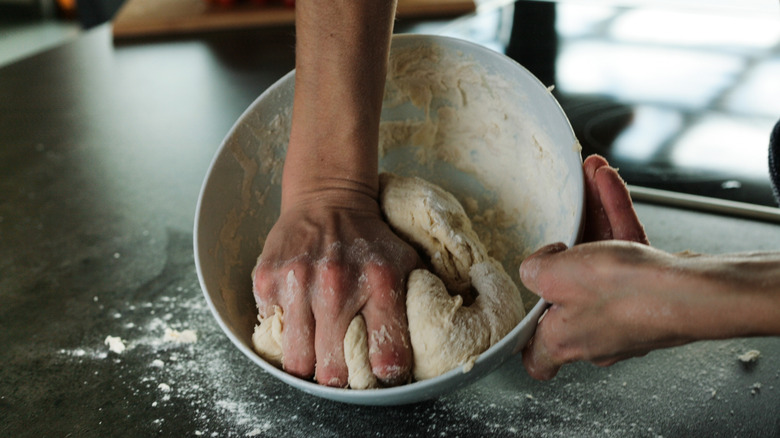
With some foods, you just gotta get in there and get messy. Meatloaf is one of them, as the ingredients have to be woven into the raw meat with just your fingers. Biscuits are another. As Chef John Engle told us, "Cold butter should be worked in with your fingers, and if your hands don't ache, you're not doing it right." You can work the cold butter into the flour by using a quick pinching motion until you've reached a crumbly consistency.
If you absolutely don't want to use your hands, some home cooks will use a food processor or even just a fork to work in the butter, saying that that will ensure your cold butter actually stays cold — but wouldn't you just want to take the experts' advice and use your own two hands? After you've achieved your crumbly butter-and-flour mix, add in your buttermilk or other dairy and avoid over-mixing from there. You want a somewhat sticky, kind of ragged-looking dough — not the smooth, perfect-looking dough that you might get when making bread.
Rolling the biscuit dough more than once
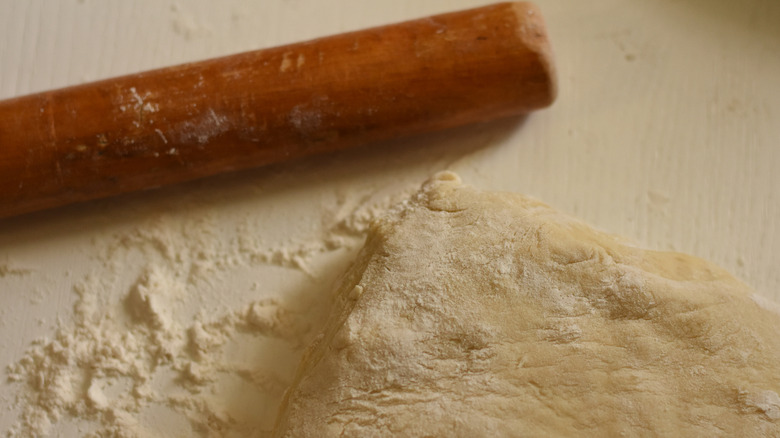
When rolling out dough for cutting out your biscuits, Chef John Engle says that you get one re-roll, max. That means that you roll the dough out once, cut the biscuits out, and re-roll the dough a second time for another round of biscuits — and that's your limit.
For instance, unlike making sugar cookies — which you can roll and re-roll over and over again, cutting out shapes until you've used up all your dough — doing the same with biscuit dough will leave you with biscuits that are less than desirable in texture. The more you touch your biscuit dough at all, the more the final product will be negatively impacted. Overworking the dough can impede the way the biscuits rise. Meanwhile, overworking the dough will warm that fat that needs to remain cold.
To help you avoid re-rolling and re-rolling, look for biscuit recipes that specifically tell you how thick to roll out your biscuit dough the first time, as well as how many biscuits you should get from that dough. This should help ensure you cut the proper amount of biscuits from the amount of dough you have on hand, with less re-rolling and no wasted dough required.
Twisting the biscuit cutter
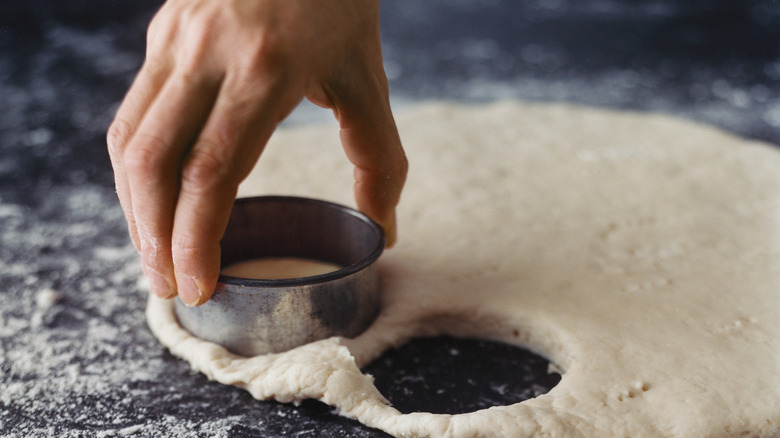
As you cut biscuits from your rolled dough, you may have a natural instinct to twist the biscuit cutter as you remove each perfect circle to lay the biscuits out on your baking sheet. However, make a concentrated effort to simply push the biscuit cutter straight down before lifting it straight up. As Chef John Engle advised, "When it comes to shaping, work the dough by hand and cut straight down. Never twist the cutter, or you'll kill the rise."
The reason why? When you twist the cutter, you're essentially manipulating the dough layers so that they seal up on themselves. They can't rise properly, and you end up with a squished, puck-like biscuit.
No proper biscuit cutter on your hands? Use a pint glass to achieve similar circles or a bench scraper to cut the biscuits into squares. Whatever you use, just remember — straight up and down; no twisting.