

11 Tips For Tender Flavorful Meatballs That'll Make Nonna Proud
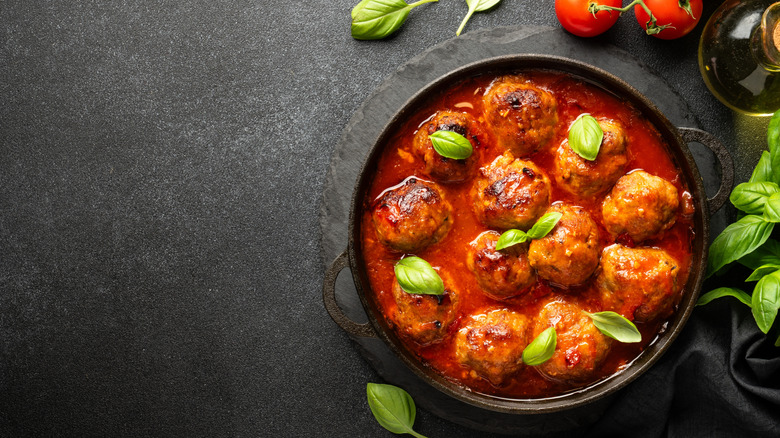
The nonna is a formidable figure in the culinary landscape. A time-honored, perhaps even ancient, symbol of authority in the Italian kitchen, nonnas the world over have formed an almost collective, unseen hive mind (almost like that fungus that supposedly networks all trees) which guides sauce-tasters and pasta-makers everywhere — be they Italian or not. And, nowhere is this more apparent than when making meatballs.
Bless anyone who's attempting to ball up meat and create flavor-packed spheroids to mangia on. But, someone attempting this art form is going to feel those eyes over their shoulder. They might be the actual eyes of a blood relation or they might be figments of psychological pressure. But, they belong to nonna. And, nonna is watching every step. Every, little, tiny step.
Good thing we rounded up a murderer's row of meatball mavens to offer us some expertise: Former head chef at the Italian Embassy in London, Danilo Cortellini; chef Michael King of Brooklyn's Sungold; chef Fabrizio Carro of Miami's Da Angelino Cucina Italiana; chef Rocco Carulli of another Miami eatery, R House Wynwood; and chef Alex Martinez of Miami Beach's Donatella Restaurant. Here are their pointers for making the ideal, tender, flavorful meatball. Nonnas, eat your hearts out.
Prepare your ingredients accordingly
Making elite meatballs begins well before you dig into any of the meat. What you do with your ingredients before the balls are getting made in earnest is hugely important. "Make sure all your meat and other ingredients are cold before you start mixing," chef Michael King recommends. When the elements are cold the mixture becomes much simpler to assemble and will "help the meatballs hold together."
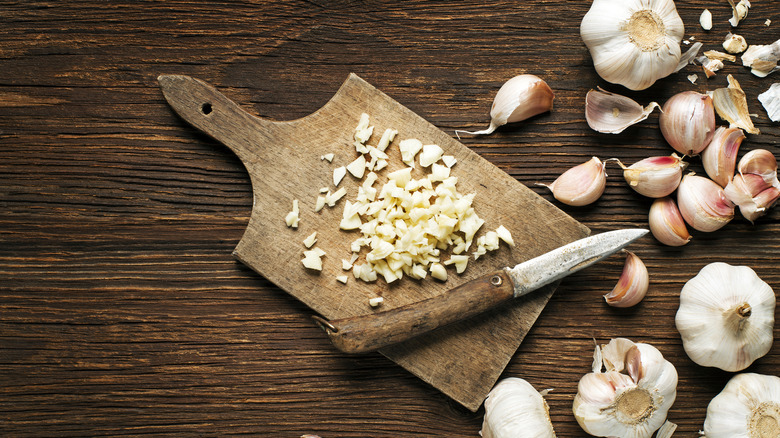
He also likes to cook his aromatics beforehand. "Some recipes call for raw garlic or onions, but sautéing them first gives you a smoother texture and a more balanced flavor." This is something chef Alex Martinez like to preach as well. "Sautéing your veggies ... before you add them to the meat mixture helps achieve a very flavorful meatball."
Calibrating the ingredients is important, as per chef Fabrizio Carro, a native of Piedmont with extensive mainland restaurant experience: "Keep the seasoning balanced and fresh. A blend of herbs, a touch of garlic, basil, ricotta, and Parmigiano Reggiano brings richness and depth without overpowering the meat." Essentially, you don't want one flavor to usurp the others. This is a team game.
Choose the right bread, and the right way to soak it
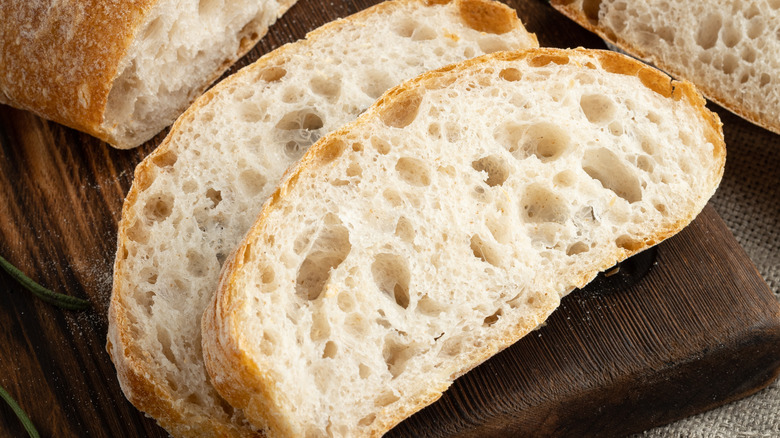
As many nonnas will tell you (and nonnas, don't forget the no-no's): Don't skip the bread when making homemade meatballs, you stunad. Okay, maybe not that last part (unless you've been a real scooch around the kitchen). But, seriously, avoid going in blind with the bread incorporation. You have to make sure you have the right kind. A lot of sources seem to be okay with enlisting plain old white bread to do the job. And, although you can still fashion a solid meatball in this way, you want to go more than solid, don't you?
Chef Danilo Cortellini suggests using the mollica — the inner, soft part of the bread. You want that crustless component to be "soaked in milk" in preparation for it to make up "about 20% ration to the meat." It reduces the chance that your meatball will shrink, and "helps absorb the releasing juices."
Virtually all the chefs agree that milk is the liquid to use here. "It's a traditional Italian technique that keeps the meatballs soft and moist," says chef Rocco Carulli, who also suggests using stale bread. So forget about using that old loaf for your innovative French toast bakes. The meatball is calling.
Use a trio of meats, if possible
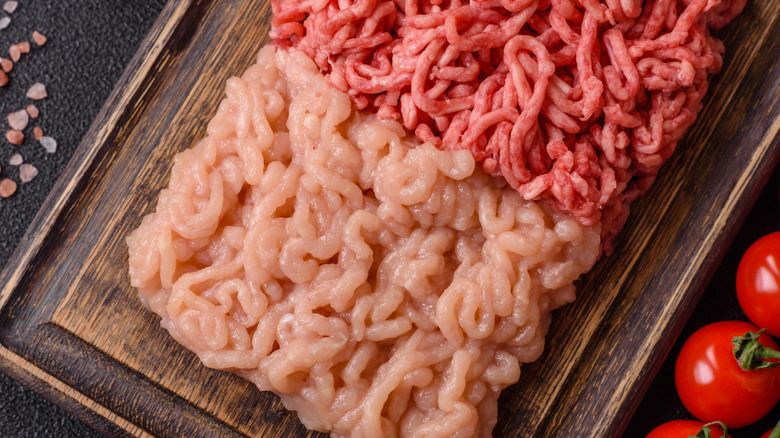
Meat. Balls. Balls ... of meat. It's not a stretch to say the meat itself is kind of important in this equation. Ask yourself: What meat am I using? You might assume it's just beef. You might have heard something about a 50/50 mixture between beef and pork. You may have even gotten wind that emu makes the best meatball. Ignore that guy, he's just Australian.
But, it's a method closer to the hybridization of option B that chef Danilo Cortellini (a cookbook author with a Michelin-star background) posits. "I usually use a larger part of beef for body and flavor, a smaller part of chicken for binding and tenderness, and a little kick of pork for gluttony." Veal is okay too, he adds. And, chef Alex Martinez more than agrees: "I personally prefer ... ground beef, ground pork, and ground veal."
You don't want your meatballs to just be beefy sponge cakes. The pork provides the umami and the balance, while veal adds that lean, delicate nature. In essence, you want the meatball to be a rocking power trio, like Rush. Hey, you can even play Rush while making them. But, what if pork or veal isn't an option, for whatever reason? Chef Rocco Carulli says you can "choose a higher-fat ground beef like 80/20 so the meatballs stay juicy."
To knead or not to knead?
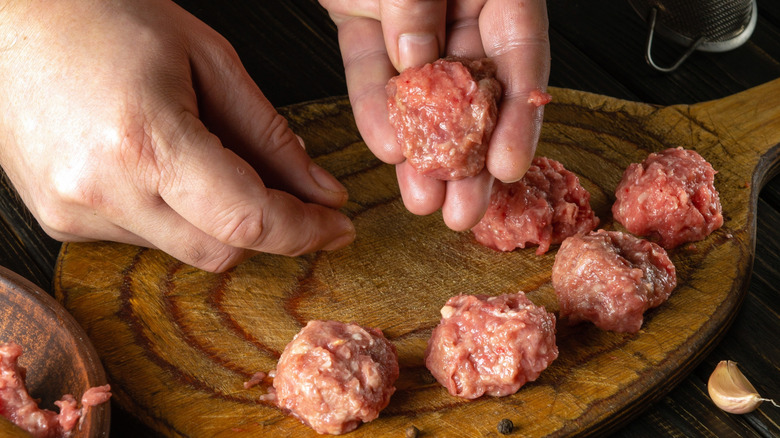
Two of the experts have conflicting viewpoints on this matter of kneading, respectively. Chef Danilo Cortellini wants you to lean into the work. "Knead the mixture like you mean it," he implores. He believes this is where the smoothing and tenderizing happens. The more you work it, the more you can achieve that feel. Duly noted.
On the other hand, there's chef Rocco Carrulli, whose parents brought their techniques directly from Puglia. "Mix the meatball mixture just until everything is combined. Overworking the meat makes the meatballs dense and tough instead of light and tender." Also duly noted.
So what do you do? Who do you listen to? It's a good thing we have a third expert to bring some Solomon-like wisdom to the matter — via Williamsburg-based chef, Michael King. "Before you roll the whole batch, make a test meatball. Fry a small pinch of the mixture in a pan so you can check the seasoning and texture. It's the easiest way to adjust before committing to the whole recipe." Try Chef Carulli's approach, then try Chef Cortellini's approach. Or vice versa. Then see which meatball works for you.
Utilize egg wash as the ideal binder
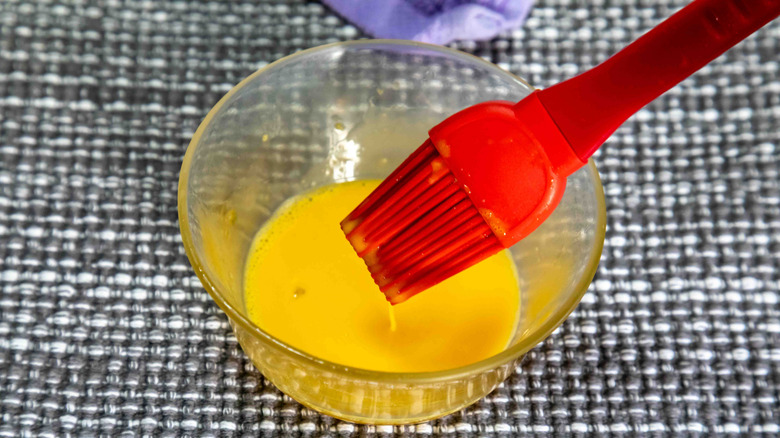
"A little egg wash goes a long way," says chef Danilo Cortellini. If there ever was a magical food, it would be eggs. The versatility and utility is astonishing: As fluffy scrambled eggs, as an omelet that acts a canvas for yummy ingredients, or as any other kind of standalone center of a meal — they are a star. Equally, as an addition, as a special supporting actor, they also excel. Like in the case of a fried egg over ramen. That's Laura Dern-level creative support.
But, it's also as a binding ingredient that eggs shine, effectively bringing together bread and minced meat in a way that will construct your meatballs into an awe-inspiring edifice. Or, at least make you the talk of impressed, happily burping guests, staggering in a toothpick-wielding daze.
According to chef Cortellini, eggs can "bind to perfection" in the meatballing process. It's because eggs effortlessly gel when worked into ground meat of any kind. It's a crucial component for the ball to maintain its shape and integrity. The same level of integrity that a nonna has when she dons the apron. Using egg wash in your meatball will make that apron proud.
Be generous with seasoning, herbs and spices
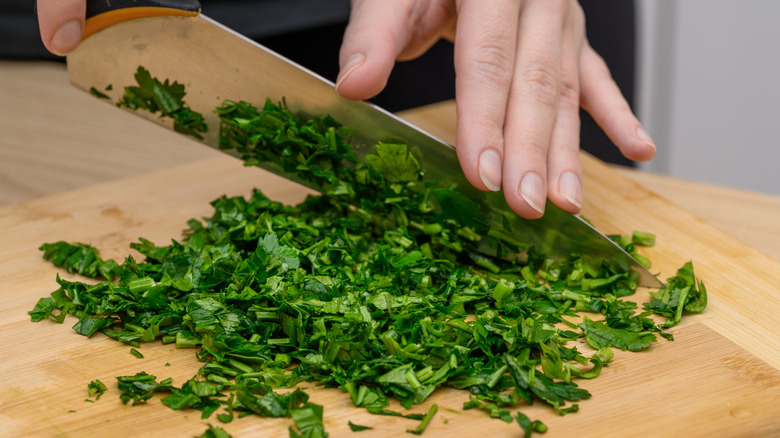
There's a tendency for a lot of us to hold back when we're seasoning our meals. We're afraid of over-salting, over-peppering, over-tarragoning, whatever. Rest assured that, with meatballs, you can drop all your inhibitions. The experts have a consensus when it comes to seasoning and flavoring meatballs with herbs and spices: Don't be shy. This is practically Studio 54-level of letting loose.
"The meatballs have to flavor the sauce, not the other way around," declares chef Danilo Cortellini. He's all about garlic and parsley in the mix, as well as good grated cheese. Chef Rocco Carulli generally backs him up on this. "Season generously with salt, garlic, grated Parmesan, and herbs."
There's reason to err on the side of overdoing it, adds the executive chef and owner. "Because the bread and eggs dilute the flavor." And, there's no reason to get out of your comfort zone with these suggestions: They're staple seasonings and flavor enhancements that almost any kitchen should have anyway. It's not like you're going crazy and making grape jelly meatballs or something (Yes, that really is a thing).
Mold those meatballs consistently and coolly
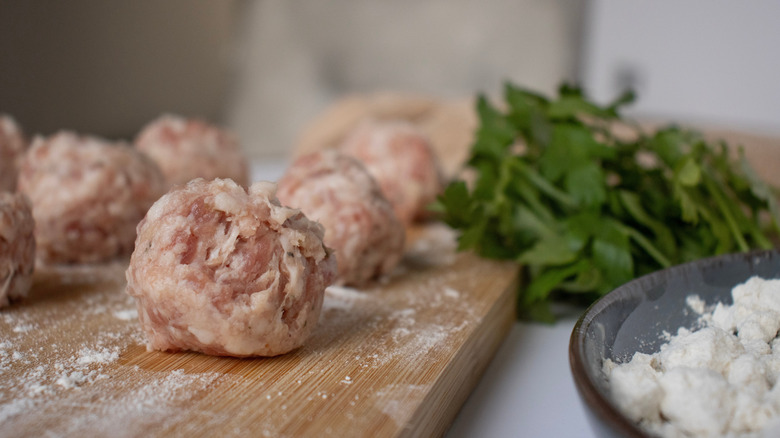
It's time to sculpt your masterpiece. And, like Bernini molding his "Apollo and Daphne", you too can experience your own artistic Golden Age — with meat. It's all in how you shape your meatballs. "Consistency is key for even cooking," insists chef Fabrizio Carro. "Portion the meatballs so they are uniform in size. Around fifty grams per meatball is a reliable benchmark." So, don't go chasing baseball-sized meatballs, like Guy Fieri.
Chef Michael King has got a bonus tip, too, for your reasonably volumed orbs: "Once you've rolled the meatballs, chill them. If they're at room temperature, they'll quickly lose their shape when cooked. Let them cool completely and cook them straight from the fridge in batches." Efficiency and effectiveness all rolled into one. What more can you ask?
And, lowering the temperature of meatballs in general, even after they've been cooked, can be extremely beneficial — even going all in by freezing them. Take advantage of this move, nudges chef King. "Meatballs freeze incredibly well. They take time to make, so I always recommend making a larger batch and freezing the extras. It's one of the easiest ways to have a great dinner ready on a busy night."
Pan-fry for a perfect exterior
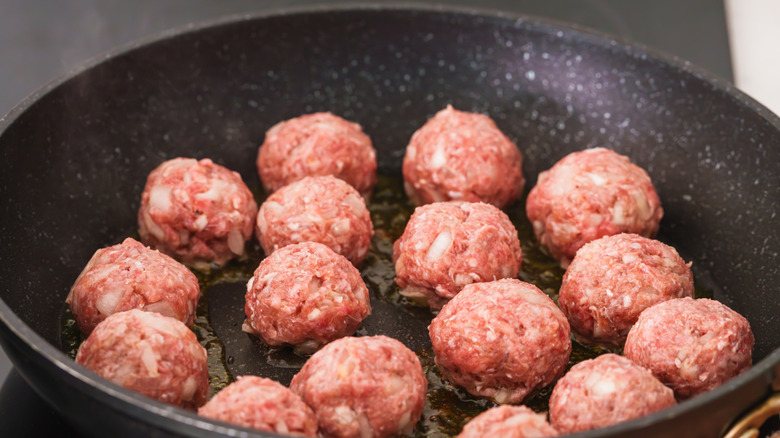
You can sometimes tell a great meatball just by looking at it, forget biting into it. You can observe a hardened exterior that you know is encasing a tender, sensitive interior (kind of like Dave Bautista in his eclectic screen work). That doesn't happen by accident. It takes a little step before you either start cooking your meatballs in the sauce or baking them. "Pan-fry the meatballs first to create a nice crust," chef Rocco Carrulli urges.
Chef Danilo Cortellini agrees, but likes to add a little something before doing as such. "Coat the meatballs with a little flour and fry them off on hight heat 'fast and furious'." Vin Diesel would be proud of that reference. He would also undoubtedly enjoy the end product. "The golden crust on the outer part is where most of the flavor will develop." Yeah, it will. But, be careful not to overcook it here. "Keep them almost raw in the middle in this first stage," chef Cortellini caveats.
And, although there is a school of thought that suggests ditching the frying pan and opting for the oven, this just feels too right to ignore. In fact, chef Alex Martinez suggests taking it a step further, controversial as it may be: "Deep-frying meatballs gives a full, 360-degree cover of caramelized surface." Hey, we won't tell nonna. We'll just feed it to her.
Slowly simmer in tomato sauce, once you deglaze
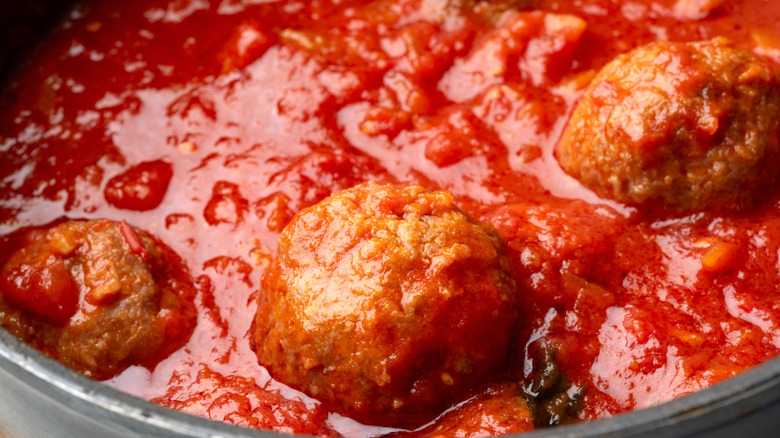
Piggybacking on chef Danilo Cortellini's emphasis to not overcook the meatballs, this still applies once they're being finished. If you're making them in a sauce, says chef Rocco Carulli, go with a marinara "where they slowly simmer until tender and full of flavor." Finishing the meatballs in a tomato sauce is something chef Alex Martinez is on board with as well. No surprise there, considering his restaurant's tomatoes come directly from the soil of Mount Vesuvius.
But, even if you can't get your produce from the volcano that took out Pompeii, it seems a gravy bake is the way to go. "Use a good passata or San Marzano," says chef Cortellini, utilizing a rather lyrical analogy. "Let the meatballs simmer in that low and slow. This is like a marriage, both complementing each other." Chef Fabrizio Carro chimes in to reiterate: "To keep meatballs from drying out, cook them at a steady, controlled temperature. Gentle baking helps them cook through evenly without overcooking the exterior." Otherwise, you're producing overdone, crumbly meatballs, which is an Italian food crime, alongside mushy pasta and letting Uncle Enzo into the wine.
Plus, chef Cortellini also has another trick up his sleeve, before you get saucy. "Deglaze the pan with wine, better if white. The depth you can obtain by catching the brown bits on the pan is incredible and the mild acidity of white wine once reduce works wonder with the garlic and parsley."
The work isn't over once the cooking starts ... it's only begun
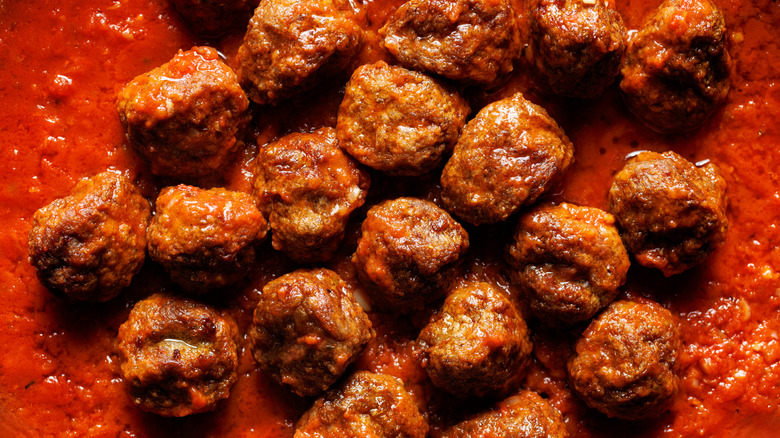
Even though your now perfectly sculpted, sized-out, seasoned, and seared meatballs are simmering, it doesn't mean you can just fuhgeddaboudit. As has been accentuated twice-over, you do not want to overcook the meatballs under any circumstance. You can bet there is at least one petrified body in Pompeii of a guy who insisted on keeping an eye on his meatballs as Vesuvius erupted.
For example, if you find your sauce requires more time, but your meatballs don't, it's simple: Remove them. "If the sauce needs more cooking to concentrate its flavor," says chef Danilo Cortellini, "you can drain the balls from it and ... place the meatballs back in once ready." You can also drain the meatballs themselves to remove any excess grease. Basically, care for your balls during this process as you did for the preparation.
Chef Cortellini also likes to finish things off with a flavor flourish before cooking finalizes. "Add basil and oregano only towards the end or the gentle aromatic notes will be lost." Lost? Hell no. This tip should very much be heeded.
Eschew pasta for mashed potatoes
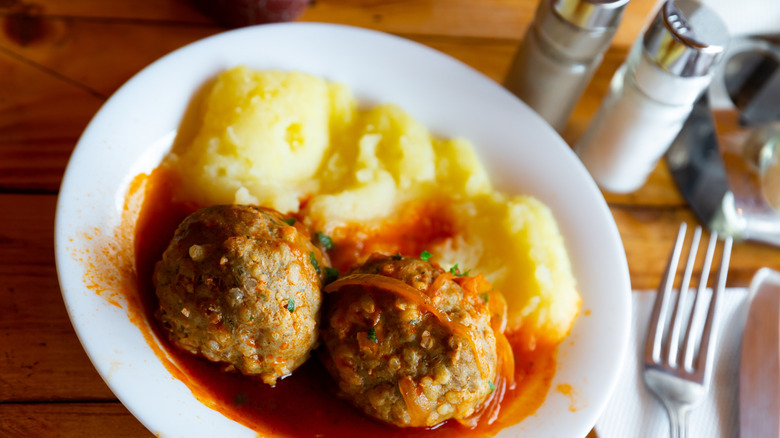
Now, you might assume that the natural pairing for meatballs is pasta, specifically spaghetti. Even Frank Sinatra had his own recipe of the iconic Italian dish you'll find nowhere in Italy. And, listen, you're never really going to go wrong with a well-made pasta as an accompaniment. But, if you want the meatballs to stand out (since you put all this expertly advised work into them), then rigatoni, penne, tagliatelle, fettuccine, farfalle, or any of their cousins probably isn't the way to go.
"Avoid pasta unless the meatballs are very tiny," chef Danilo Cortellini advises. "A giant meatball isn't a great condiment to be eaten along pasta." He's calling the pile of meat a condiment because that's how much pasta should be the focal point of a noodle dish — at least in authentic Italian terms.
So, what to partner it with instead? "Enjoy them with crusty warm bread or mash potatoes," he asserts. Yes, the man from Abruzzo, the "MasterChef" participant, the "Stanley Tucci in Italy" guest star is telling you to choose mashed potatoes over pasta. This may or may not surprise a nonna. But, serving her a meatball that heeds all this knowledge will not let her down.