

The Salsa Red Flag That Shows A Mexican Restaurant Is Doing Too Much
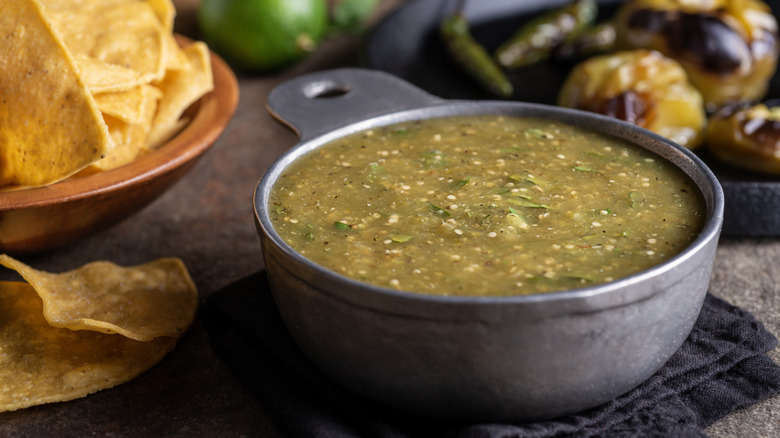
Those who love Mexican cuisine but don't visit new Mexican restaurants frequently can often get confused about what to look for in the wide genre of restaurants. Unfortunately, there are plenty of signs that you're dining at a bad Mexican restaurant. When it comes to salsa, one thing to watch for is a restaurant offering too many variations for customers to choose from. According to Laurence Cohen, the corporate brand chef at Thompson Restaurants, including Austin Grill in Potomac Falls, Virginia, this is as major of a red flag as being served cold salsa since it can indicate a lack of confidence in the standard salsas every Mexican restaurant should provide.
Some people might actually prefer it, as having a wide array of salsas can make it seem as though the establishment has expansive knowledge of sauces which other restaurants don't, but Cohen explained that these restaurants tend to favor quantity over quality — as far as the salsa is concerned, anyway. "There are a lot of restaurants that I feel try to do too much," he said. "It is better to streamline a menu to produce items you do well all the time. Having a large and diverse menu can be good; it can also cause a challenge with consistency and quality."
The sauces you'll find at most great Mexican restaurants
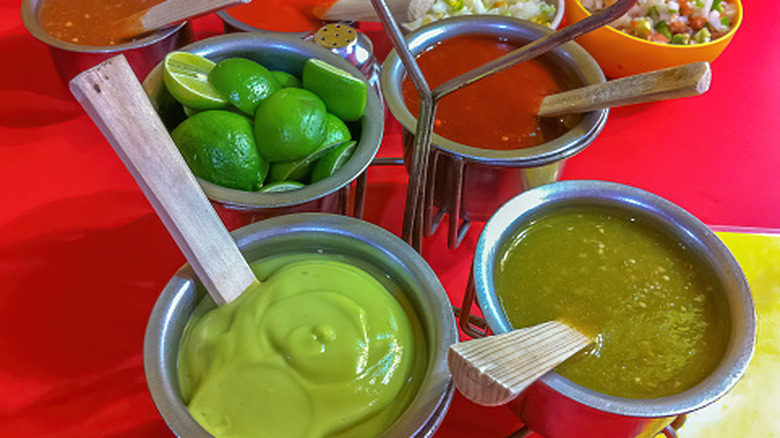
Although too many salsas can indicate low quality, that doesn't inherently mean seeing three or four versions of the classic Mexican sauce should send you running. In fact, Cohen noted that two types of salsa absolutely need to be on every Mexican restaurant's menu, saying, " There should be a green and a red sauce minimally." Beyond those two classic sauces, a Mexican restaurant that also serves fresh pico de gallo isn't automatically unreliable, as the chunky salsa is arguably just as popular as its two pureed peers and has its own handful of great uses. That said, it's important to avoid overusing salsa at Mexican restaurants, as the sauces' strong flavors can easily overpower nuanced dishes.
While these three styles of salsa are likely to be found at authentic as well as Americanized Mexican restaurants, there are a few other sauces that fall outside of the realm of traditional salsa that could indicate a restaurant still knows what it's doing and is likely highly authentic. They often come in the form of dish-specific sauces like mole — which is often referred to as the national dish of Mexico — or enchilada sauce. Cohen praised the latter in particular, complimenting the sauce for its "rich, earthy tones with hints of chocolate and spice."