

11 Liquid Ingredients That'll Take Scrambled Eggs To Another Level
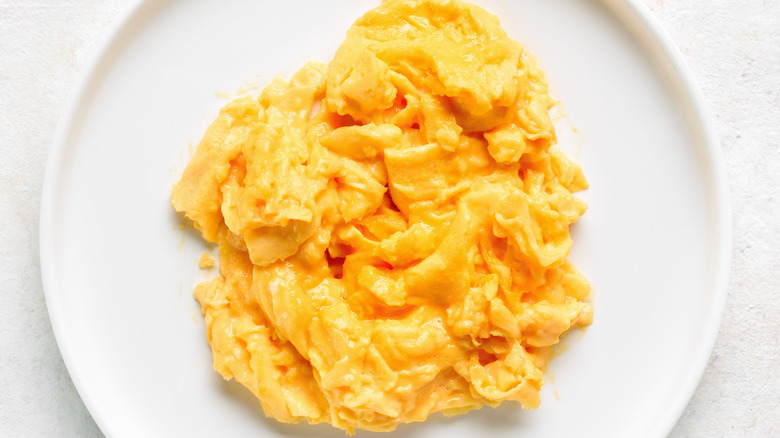
Something as ordinary as eating scrambled eggs is a surprisingly sensory experience. Think of your ideal scrambled eggs. The big, fluffy curds are yellow and glossy. They smell buttery and taste rich. Scrambled eggs that are slimy, rubbery, bitter, or dry can ruin a good breakfast. Cooking method plays a big role in how well scrambled eggs turn out, yet according to many celebrity chefs, food scientists, and grandmas, one of the best ways to ensure good flavor and texture is to add liquid to the eggs before they hit the pan.
To perfect our scrambled eggs, we spoke to celebrity chef Stephanie Izard and certified culinary scientist Jessica Gavin about their experience with adding liquids to the mix. Scientifically, liquid affects flavor and texture. Gavin explains, "When you add a small amount of liquid like milk, cream, or even water, you dilute the concentration of proteins. This slows down how quickly they find each other and bond during heating. As a result, coagulation is slightly delayed, and the protein network forms more gently. That creates softer, more delicate curds instead of tightly packed, rubbery ones."
With that in mind, we've compiled a list of liquids — many of which are potentially already in your kitchen — that can elevate scrambled eggs from simple diner fare to a fine dining experience. Once you begin to experiment with flavorful fluids, juices, and brines that take scrambled eggs to another level, you'll never settle for plain eggs again.
Upgrade water to seltzer for the fluffiest scrambled eggs

The easiest liquid to add to scrambled eggs is also Jessica Gavin's favorite. "I like to keep it simple with a small splash of water because it gives me light, fluffy curds without changing the classic savory egg flavor," she says. "I'd rather add richness by cooking the eggs in butter, then finish with salt, freshly cracked pepper, finely grated parmesan, or fine herbs like chives so the eggs stay the star."
It's best to be light-handed when it comes to adding any liquid to eggs. A bit of liquid keeps eggs tender, but too much can compromise the texture. Gavin recommends 1 to 2 teaspoons of water per egg. The right water-to-egg ratio keeps proteins apart so they unfold before the heat bonds them into curds. As the water evaporates, pockets of air remain, creating light and airy eggs.
For a luxurious upgrade, substitute carbonated water. This will take the airy texture to the next level. "Seltzer introduces carbon dioxide air bubbles that create a slightly puffier, more airy texture," Gavin says. Unflavored seltzer or sparkling water is ideal for scrambled eggs because, unlike tonic water and club soda, it shouldn't leave behind an unpleasant aftertaste.
Explore liquid dairy for the creamiest scrambled eggs
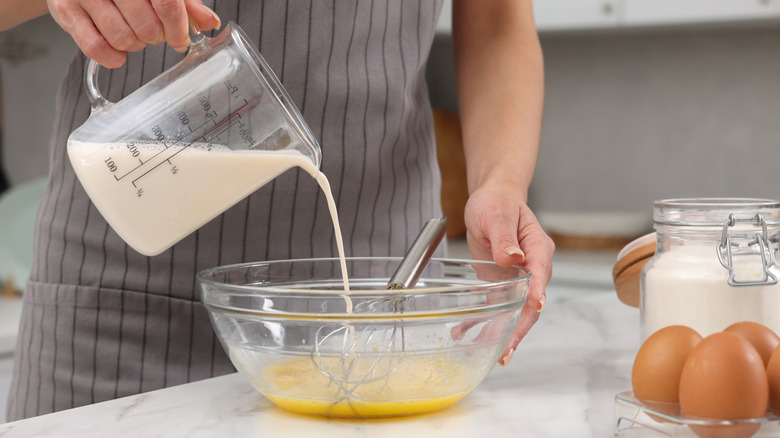
Many egg scramblers believe milk makes the best scrambled eggs. Sometimes it's used to stretch the eggs to feed more people. But the best reason to add milk to scrambled eggs is that its fat content helps soften eggs and creates a rich, creamy texture. Even in small amounts, whole milk and 2% milk — or even certain milk alternatives – produce a creamier texture, which varies depending on fat content.
Jessica Gavin, who has degrees in culinary arts, food science, and agriculture, uses milk to soften eggs but upgrades to cream for more luxurious, silky eggs. "Cream adds richness and a velvety mouthfeel from increased amounts of milk fat," she says. But she warns that too much fat can make eggs heavy and overly rich. She recommends up to 2 teaspoons of milk or half-and-half per egg, but no more than 1 teaspoon of heavy cream.
Milk alternatives like soy, almond, and oat milk contain less fat but are still generally thicker than water, making them an ideal liquid for a moist curd without the risk of too much fat. Milk alternatives can adjust the flavor, so it's best to use unsweetened varieties. Dairy can dilute the egg's natural flavor more than water, so be sure to season well.
Improve the taste and texture of eggs with a splash of vinegar
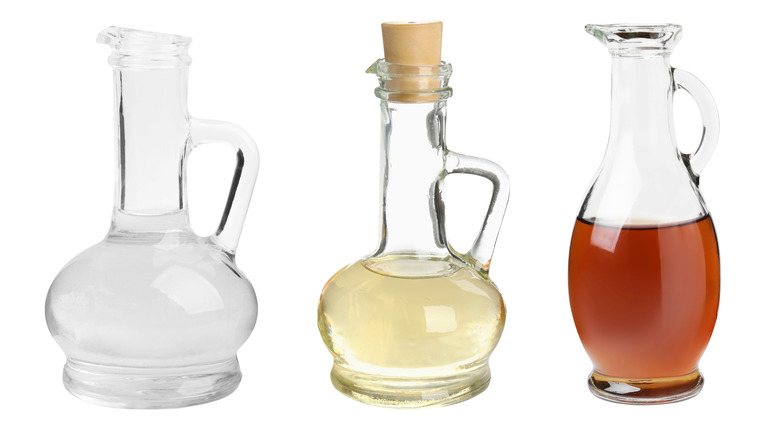
Different liquids have different effects on eggs. Adding vinegar to scrambled eggs can brighten the taste. Jessica Gavin explains that the changes in flavor and texture are due to chemical changes that cause the proteins to coagulate into firm curds very quickly. Thanks to its acidity, vinegar "potentially [makes] curds firmer or slightly weepy if overused," says Gavin, so only a small amount should be used. A single teaspoon per two to four eggs is a good place to start experimenting.
These moist and tangy eggs are a great choice for breakfast sandwiches, where the mild acidity can balance the salty meats and cut through rich cheeses. Ingredients added to vinegar-enriched scrambled eggs, like spinach, will also benefit from the brightening effect. But award-winning restaurateur and "Top Chef" winner Stephanie Izard warns that adding acidic liquids isn't always the right move. "You want to avoid adding very acidic liquids, which can cause curdling," she says. That means you may want to go in with a light hand. Depending on your flavor preferences, you may also want to stick to milder vinegars, such as apple cider, malt, and rice vinegar.
Just to be clear, if eggs are curdled, it's a bad thing. This happens when eggs cook too quickly, so the water is squeezed out and the proteins clump into rubbery pieces. The process is also called overcoagulation. In contrast, when scrambled eggs coagulate slowly over low heat, they form moist, tender curds — and that's a good thing.
Infuse eggs with a pop of pickle juice
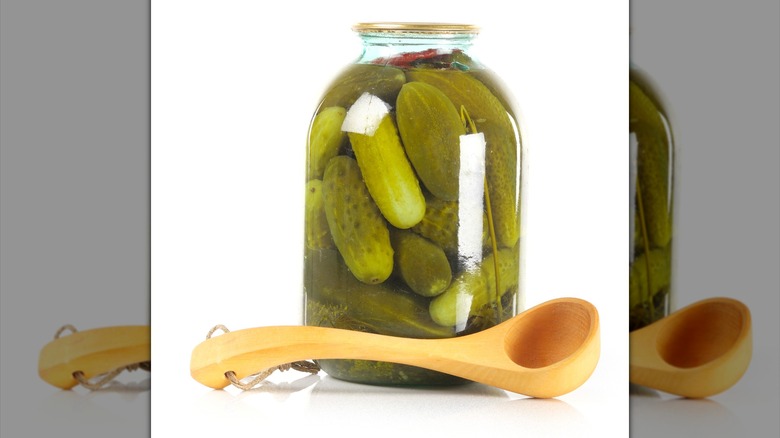
People who love to snack on pickles, pickle-flavored snacks, pickle-centric sandwiches, and pickle popsicles need no convincing to add pickle brine to scrambled eggs. It's one of the many clever uses for leftover pickle juice. But the truly pickle-passionate who expect a sour pickle power punch will be disappointed with the results.
Since adding too much vinegar can make scrambled eggs resemble a shredded kitchen sponge, no more than 1 teaspoon of pickle juice should be added to each beaten egg. At that ratio, the juice will create tender curds, but even though your kitchen will smell strongly of pickles while the eggs are cooking, the actual pickle taste is subtle. What will get your taste buds' attention is the garlic, salt, and spices from the pickle brine. It is a delicious add-in, no matter your pickle preference. Pickle peeps can add fresh dill to bring out the pickle flavor, and non-pickle people can substitute brine from a jar of pickled jalapeños or banana peppers instead to get the same texture but a different flavor.
Some store-bought pickles contain food dye. This might add a slightly odd color to the eggs, but it would be barely noticeable when the scrambled eggs are mixed into a breakfast hash, where the bright taste and color would complement the potatoes. Their tangy flavor would also be at home on a breakfast sandwich with the classic combo of ham and cheese.
Take eggs to a healthier level with fermented liquids
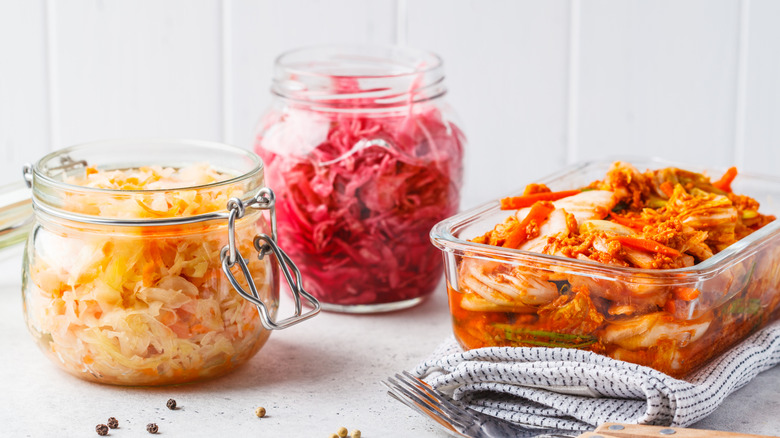
If you're feeling adventurous, and the pickle juice eggs didn't make you pucker and run, you may be ready to go down the rabbit hole of other liquids you can harvest from the various jars in your refrigerator. For example, how about spooning out some flavorful, gut-healthy, acidic juices from fermented sauerkraut or kimchi?
The promised health benefits of fermented foods are impressive. However, the nutritional perks and in-your-face flavors of these fermented veggies will be significantly reduced due to the recommended low liquid-to-egg ratio. Instead, they primarily impact flavor and texture. "In small amounts, you'll notice more of a tangy, salty flavor boost than a major texture change," explains Jessica Gavin. "They still encourage the eggs to set a bit faster and slightly tighten the curds," Gavin says, "but the effect is more subtle."
Gavin stresses caution to those tempted to add more liquid to increase the flavor or benefits. "As always, too much can make the curds firmer and a little watery as the proteins contract," she warns.
Elevate the texture of scrambled eggs with pasta water
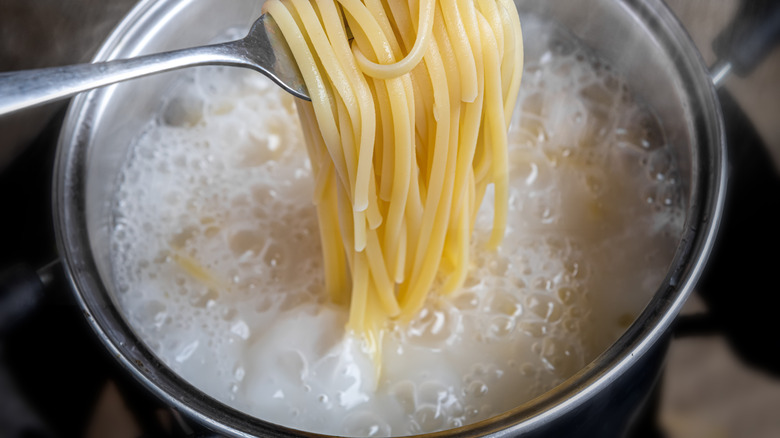
The starch in pasta water can help create silky sauces and soften bread texture, so why not apply its chemical magic to scrambled eggs? The resulting curds will be fluffier and lighter. Assuming the pasta water was prepared with the correct amount of salt, the eggs will also have a richer, more savory flavor.
Pasta water can be saved from the previous night's dinner for the next morning's eggs. You can also freeze pasta water in ice cube trays for later use. Just don't be tempted to overdo it; more is not always better. Jessica Gavin says that maintaining a balance between moisture and temperature is critical for starch to do its job. "The amount of liquid and the heat level work together to control texture," she explains. "Using no more than 2 teaspoons of liquid per egg lightly dilutes the mixture, helping create tender curds without making them watery."
Some chefs swear by using a starch slurry to add moisture to eggs and safeguard against chewy and dry curds. When a slurry is used correctly, it works just as well as pasta water, but some think the latter is much easier to use.
Boost flavor with a splash of soy sauce
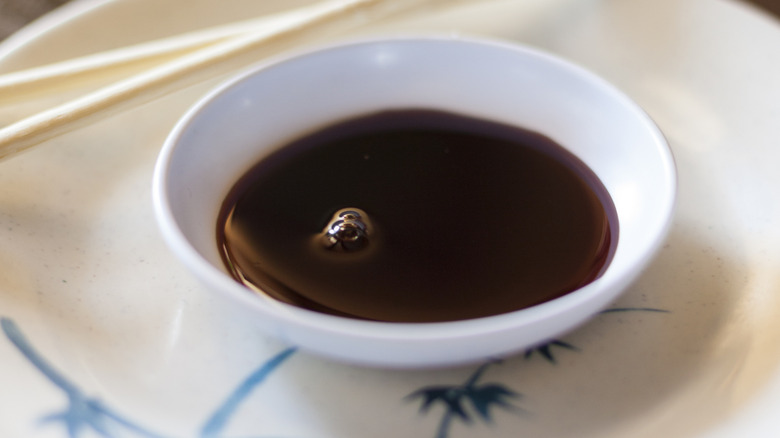
If you're looking for a liquid add-in that will add texture and bold flavor to your scrambled eggs, reach for soy sauce. Stephanie Izard, who has plenty of experience when it comes to cooking with bold flavors, grabs the salty sauce when seeking a punch of umami flavor. "Sometimes I'll add a splash of soy sauce to eggs before scrambling, which seasons them from the inside out and gives a little extra depth of flavor," she says.
Jessica Gavin explains that it is soy sauce's acidity that affects the eggs' flavor, but it is primarily its sodium content that changes the eggs' texture. "Soy sauce contributes salt and umami, helping proteins bond more evenly for tender curds and a deeper savory taste," she says. "Salt helps loosen the egg proteins before cooking so they bond more evenly when heated, creating tender, uniform curds."
Tamari and fish sauce are alternative salty sauces. Eggs scrambled with these deeply rich flavors are delicious served with rice, mixed with other umami-boosting ingredients, or as a briny complement to avocado toast.
Get a two-for-one scrambled egg upgrade with broth
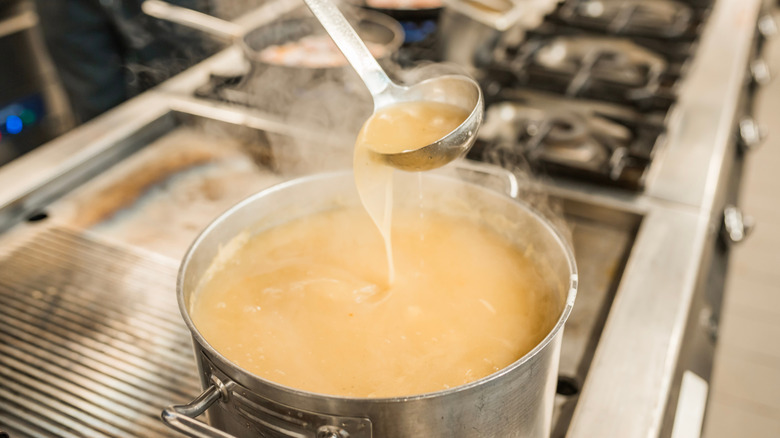
Eggs are a good source of protein and a relatively cheap ingredient (at least currently), which is almost always in your refrigerator. It's also easy to take eggs to the next level with just one ingredient. So, when adding liquid to make scrambled eggs more moist and tender, why not use a liquid that is already richly flavored, like broth?
As a chef and restaurateur, Stephanie Izard is known for her unique flavor combinations, many influenced by global cuisines. She often adds flavored liquids to her egg dishes — for example, soy sauce and fish sauce – as a creative enhancement. "When I'm making Chinese or Japanese-style steamed eggs, I'll use stock or hondashi powder to layer in different flavors," she says.
Using savory broth in scrambled eggs has two benefits, says Jessica Gavin. "Broth enhances tenderness with dilution while layering in savory flavor." Broth is more subtle than some of the other liquids you could use, but don't be tempted to add more to intensify the flavor, Gavin warns. "A splash of liquid can help keep scrambled eggs tender, but more isn't better," she explains. "About 1 to 2 teaspoons per egg is plenty. Too much can make them watery instead of fluffy."
Brighten up scrambled eggs with citrus juice

It's breakfast time. You pour a glass of orange juice to sip as you whip up some scrambled eggs. You pause before adding your usual teaspoon of water to consider the liquid sunshine in your hand. Would the acidic juice really make the eggs fluffier? And what about the flavor?
Jessica Gavin explains that it isn't such a crazy idea. "Acidic ingredients like citrus juice lower pH, causing eggs to set faster and more tightly." Used in small amounts — just a teaspoon per egg — orange or lemon juice adds a bright and subtly zesty flavor. These are the scrambled eggs to serve alongside bacon and toast or with muffins.
If you're concerned about a sweet citrus intrusion in your eggs, try a combo of OJ and milk to play around with the texture and dilute the fruity notes. However, just adequately salting the eggs should mute the citrus flavor, and adding cream or butter will coat the mouth against the acidic tartness. If you need more convincing, consider the fact that eggs and orange juice have a dynamic nutritional relationship. The iron in eggs is better absorbed by the body when eaten with the vitamin C in orange juice than when eaten without.
Enhance eggs with Worcestershire sauce
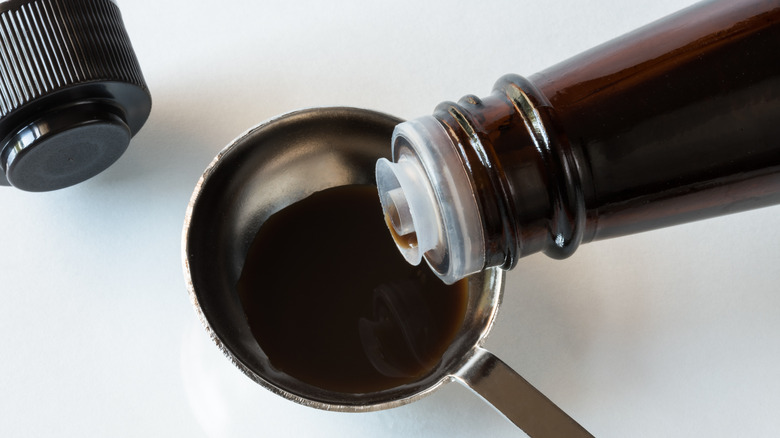
If your scrambled eggs are bordering on bland, use the popular flavor enhancer with the hard-to-pronounce name. Worcestershire (there's only three syllables, folks) sauce is a versatile seasoning because it has a balance of salty, acidic, sweet, and umami ingredients, such as vinegar, molasses, sugar, salt, tamarind, onions, anchovies, and garlic.
It doesn't take much of this sharp and salty sauce to add a savory tang to scrambled eggs. A mere ¼ teaspoon for every two eggs is enough to let its presence be known. You can add more if you're a sucker for the flavor. Just keep in mind that the more you add, the more discolored your eggs will become, which can be unappetizing to some.
With such a diverse flavor profile, Worcestershire sauce plays well with nearly any subtle or savory ingredients. Worcestershire will not only enhance the taste of scrambled eggs but also other mix-ins, such as sautéed zucchini or mushrooms. Here's an idea: Serve the tangy eggs on toast with bacon and a slice of tomato. For a rich and decadent flavor, you also can't go wrong with adding cheddar to these eggs. Just be sure to add the cheese to your scrambled eggs at just the right time for a perfectly creamy, briny forkful.
Punch up your egg game with layers of hot sauce

Some people brag about putting hot sauce on everything they eat, but it's really not unusual to shake hot sauce or Tabasco on a plate of scrambled eggs. Because of that magic chemistry between protein and acid, adding the sauce improves scrambled eggs in multiple ways, according to Jessica Gavin. "Hot sauce adds mild acidity for softness plus heat and subtle color," she says. Just don't overdo it. If you add too much sauce, the extra liquid will make the eggs watery.
If you want more heat and flavor than a teaspoon of hot sauce can deliver, wait until after the eggs are finished cooking. Then you can layer on as much hot sauce, sriracha, and chili oil as you need to get the smoke coming out of your ears. If you want the flavor of hot sauce but not as much heat, add both hot sauce and milk before whisking the eggs.
Use your favorite sauce, or stick with Tabasco, which is arguably the best hot sauce to put on eggs. Eggs scrambled with hot sauce will also enrich the flavor of breakfast burritos, one of the best make-ahead breakfast foods. Turn up the heat even more with chorizo and pepper jack cheese, or tame it with some avocado and sour cream.