

11 Tips For Crafting The Best Pulled Pork Sandwiches
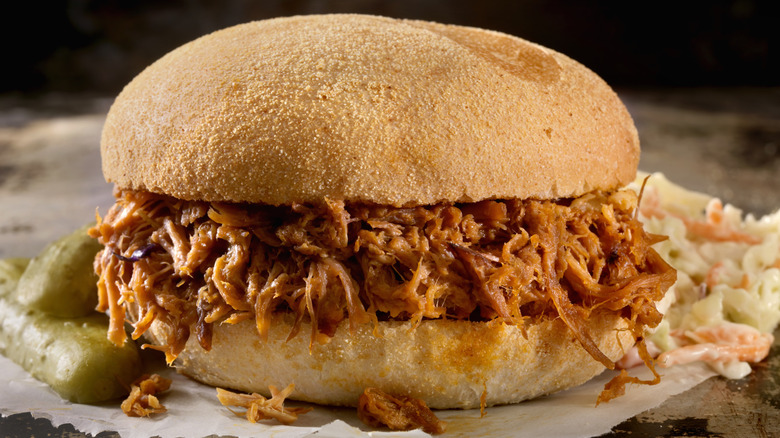
If you are looking for a topic guaranteed to spark debate and strong opinions, the do's and don'ts of a great barbecue is a safe bet. It inspires loyalty and pride, with everyone having a "right way to do it." For an unforgettable sandwich, who better to turn to than experts with years of fire management, recipe experimentation, and kitchen leadership behind them?
We asked for tips and tricks and boy did we get them! Our pros held nothing back in sharing their expertise. Justin Spencer is founder of Junebug's and a 2023 Memphis in May World Champion pitmaster. Chef Alex Reznik is a nationally recognized chef and now with SMKD BBQ and Hayworth. Chef Brandon Edwards is executive chef of Smokehouse Social at Okana Resort. Chef Jarle Saupstad is a Michelin-trained chef and former owner of Smoke & Salt, now with CBar at Carlsbad. While, Nicole Buysse is brand leader at Cody's Original Roadhouse and a Purdue-trained restaurant leader. Our experts all bring decades of operational and culinary experience to the table. They each break down the essentials to help you perfect your in-house pulled pork sandwich recipe.
1. Choose pork butt (Boston butt) for the best results
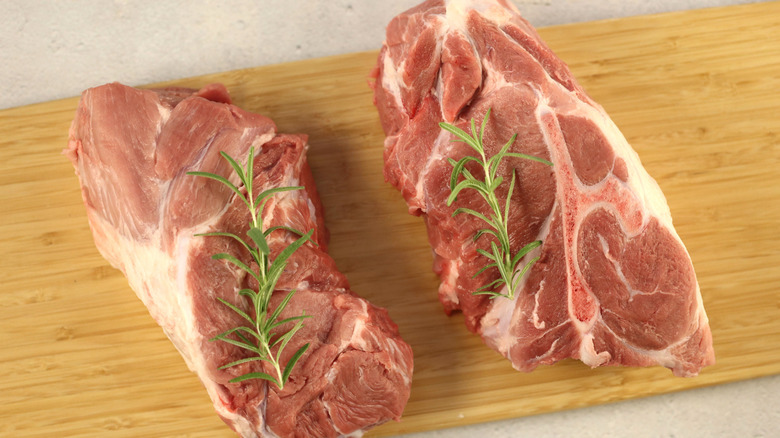
When it comes to pulled pork sandwiches, your choice of cut is what decides the direction your sandwich is going to take. "Boston butt or don't bother," chef Alex Reznik insists. Pork shoulder, also known as Boston butt, is the cut to reach for thanks to its tough connective tissue. When this type of meat is subject to long, slow cooking, it transforms into tender, juicy meat. "Pork shoulder is built for abuse — fat, collagen, and time. I want a big, ugly, heavily marbled piece of meat. If your pork looks lean and 'pretty,' it's going to eat dry and boring. Fat is flavor. Period," says chef Reznik. Nicole Buysse notes that at Cody's Original Roadhouse, pork butts are prioritized for their consistent size and fat content. Chef Brandon Edwards agrees, especially since, when well executed, the fat melts perfectly into the meat.
Chef Jarle Saupstad encourages seeking out heritage breeds when possible, like Iberico or Berkshire, for the superior color and flavor of the meat. "But let's say all you have access to is store-bought pork, shoulder still is the way to go." Even at the supermarket level, you can be assured of tender perfection when the cooking is low and slow. To sum it up, look for a cut with ample fat and collagen, uniform size, and preferably with the bone intact to create a sandwich that is flavorful and worth the effort.
2. Look for strong marbling and fat content
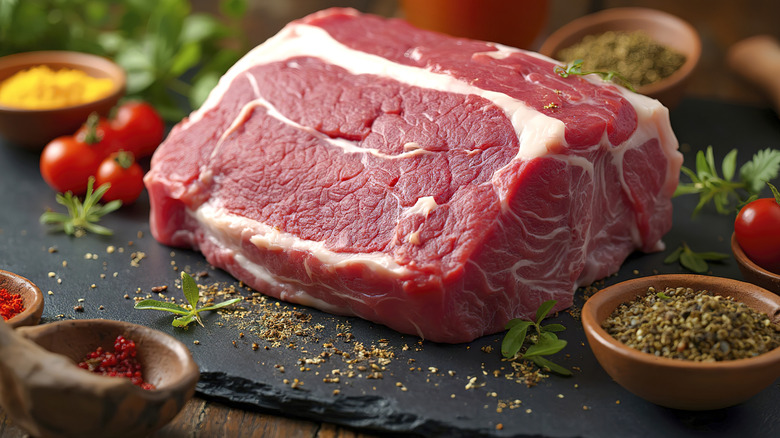
So, you've chosen the right cut — what comes next? Our experts all agree that marbling and fat content are critical when it comes to pulled pork that tastes rich and juicy. The last thing you want for your sandwich are layers of dry and bland meat. Now that you understand that the fat and collagen in a pork shoulder melts best during slow cooking, you need to choose a cut that ensures moisture and taste. Justin Spencer highlights the benefits of uniform marbling and bone-in cuts: "We try to source ones that have great marbling, consistent sizing and with the bone still in, so that it helps retain better moisture." This ensures each bite has a balance of meat and fat, while the bone adds another layer of juiciness during cooking.
Chef Jarle Saupstad points out that while heritage breeds have superior fat distribution, even store-bought pork shoulder can shine with proper technique. "It has a tendency to have large deposits or sections of fat and not a ton of fine marbling, though you do get some marbled veins of fat that run through ... you'd be hard pressed to tell the difference once it's slow cooked for 14-plus hours." In short, our experts stress that there is no need to shy away from any extra fatty or a slightly irregular-looking shoulder. Strong marbling and the right fat distribution are the secret weapons for tender, flavorful pulled pork.
3. Select the right seasoning method
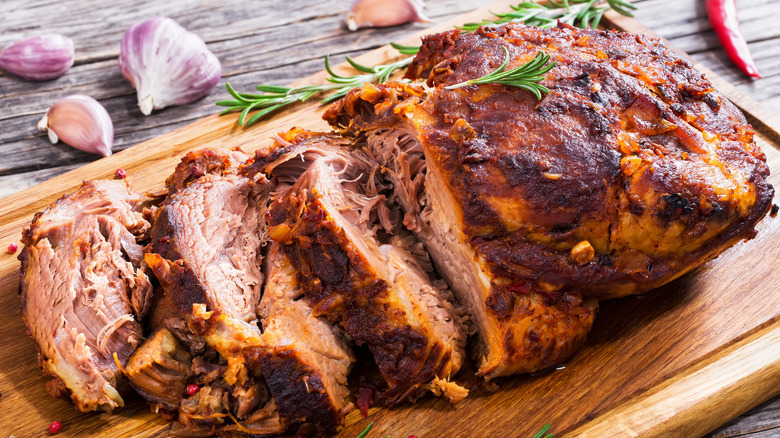
The next step is crucial to developing the personality of your sandwich. The correct seasoning at this early stage is what creates your final bite, in ways that no finishing sauce can achieve. Chef Alex Reznik puts it bluntly: "Dry rub, for bark and attitude. Injection for flavor where people forget to season. ... Season it like you mean it, then leave it alone."
Nicole Buysse explains that at Cody's Original Roadhouse, the chefs take a slightly different approach: "We use a combination of using our Cody's Rib Rub and a wet brine process. This is our original recipe which allows the meat to cook in our special brine sealing in the flavor." It's a method that works especially well for high-volume cooking, but where consistency is imperative.
Chef Brandon Edwards focuses on how seasoning interacts with the final presentation of the pork. "Seasoning the top of the pork and bark is critical for the end result," he says. "I break the butt down and the bark incorporates flavor on top of the pork." In this way, the flavor penetrates each strand of meat, ensuring that every bite is layered and complex. Ultimately, the seasoning method you choose must work toward complementing the meat and not mask it. Whether you go with a classic dry rub, a hybrid brine approach, or a meticulous top-of-bark application, the goal is the same: to set the stage for the perfect pulled pork sandwich.
4. Choose a cooking method you can control
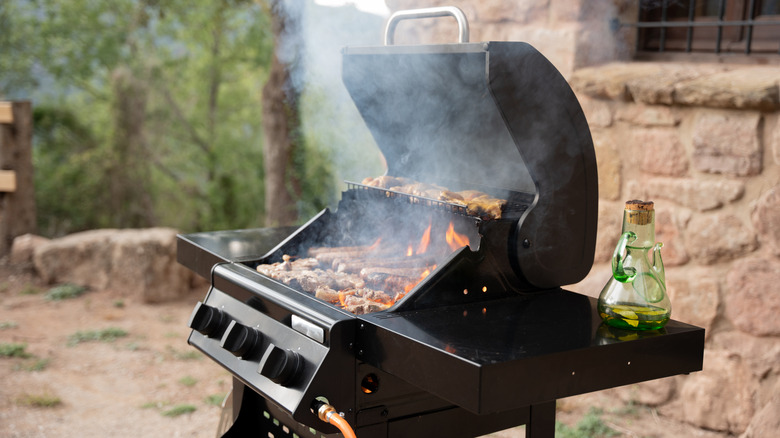
There is no "one" perfect technique for cooking the best pulled pork. Instead, as all our experts agree, it's more about choosing the one you can manage with the most confidence. Chef Jarle Saupstad explains, "as far as cooking method, they're all the same if your cooking temp is constant. Roasting, smoking, and slow cooking are all methodically identical; however, if you're smoking you need to know how to control your coal and fire temp to keep the temp consistent. Consistent temp equals consistent results." The key is patience and practice along with a healthy dose of precision. This is not the time for shortcuts.
Chef Alex Reznik adds, "Real smoke. Fire, wood, patience. Ovens work when you have to pay rent and it's raining. Slow cookers make shredded pork, not barbecue." His input highlights the difference between traditional barbecue, which involves constant management, and other less stressful methods like oven-roasting or slow cooking. These options are more passive, for sure, but they can still yield tender results if monitored carefully.
Ultimately, you should match your skill level and equipment with the method you choose. And don't forget to account for your patience levels — the best techniques rarely reward impatience. Smoking can produce unmatched depth of flavor but requires attentiveness. Oven-roasting is reliable for consistency, and slow cooking works if you are willing to compromise on bark development over tenderness.
5. Cook to the proper internal temperature
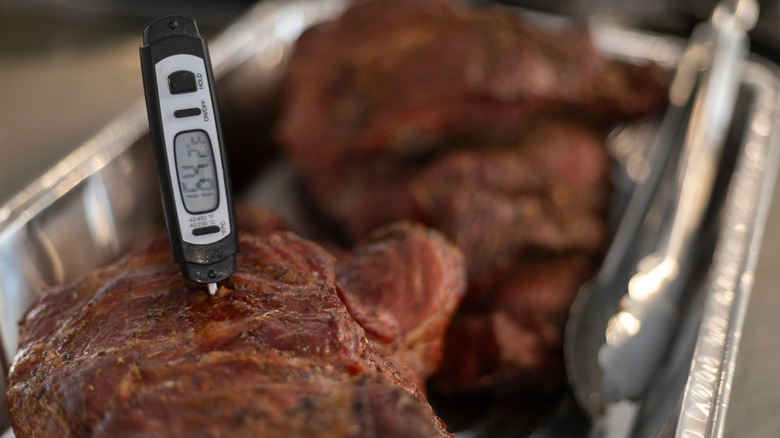
You know that juicy mouthful of tender pulled pork? Well, that sort of perfect tenderness is not a given. As you cook your pork shoulder, it is necessary to monitor the internal temperature of the meat throughout the process. This is why an internal probe thermometer is non-negotiable for home cooks as well. Reading and monitoring internal temperature allows you to track the pork's progress and remove it at the optimal moment.
If you choose to barbecue your pork, chef Alex Reznik warns, "BBQ is about managing fire and not panicking when it stalls. That's where most people lose their nerve." Keep going and trust the process to ensure that you don't end up with stringy undercooked meat. A fine balance indeed and one that will only come with regular practice.
Chef Brandon Edwards provides a practical approach: "Smoking the pork to 164 degrees [Fahrenheit], and then moving it over to the oven to seal it at 205 degrees [Fahrenheit]." Switching over cooking methods and allowing the pork to finish with a blast of high heat allows the collagen in the meat to break down and create pull-apart strands that do not collapse into mush. Chef Jarle Saupstad adds, "if your cooking temp stays closer to 200 degrees [Fahrenheit], the collagen stays intramuscular along with a lot more of the intramuscular fat, which gives you that super moist and rich mouthfeel that doesn't require a sauce or beverage to swallow."
6. Rest meat before pulling
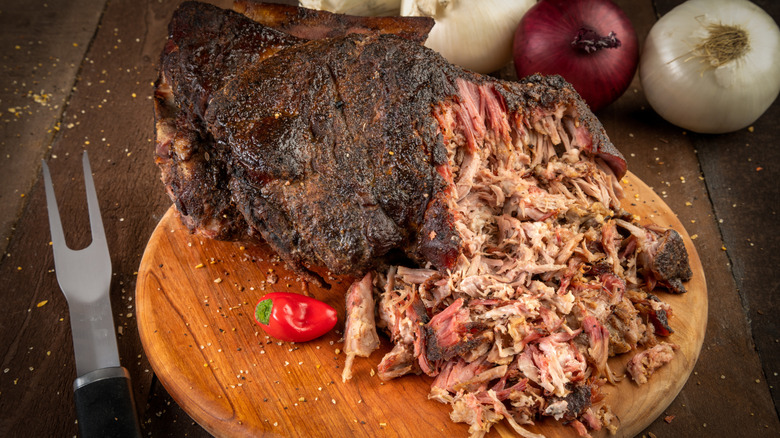
Our experts urge you to not miss out on this next step when making your perfect pulled pork sandwich — letting the meat rest after cooking. Resting is the easiest way to allow all those delicious juices to be released during cooking to redistribute throughout the pork. In turn, this ensures that every strand is moist and flavorful.
Justin Spencer emphasizes the impact of texture after resting: "We like to have all of those textures present in our pulled pork as it adds a ton of layers and different flavors to the sandwich." Nicole Buysse agrees, highlighting how rest affects the overall eating experience. "We love the silky strands for our pulled pork," she says. "Each of those strands are mixed with our signature BBQ sauce and pile high on a bun for the perfect sandwich." Without allowing the pork to rest, if you shred the meat when still hot, the natural juices escape, leaving the meat stringy and dry. All that effort you put into getting the perfect flavor? Gone in a second unfortunately.
Resting is especially important if you're using large pork butts or shoulders with a ton of marbling and high fat content. Pulling meat when it is still hot, does not allow the fat to firm up slightly and causes it to spill out during the pulling process. Tent the pork with foil, let it rest for anywhere between 30 to 45 minutes after cooking for the best results and cleaner and easier pulling.
7. Aim for the right texture
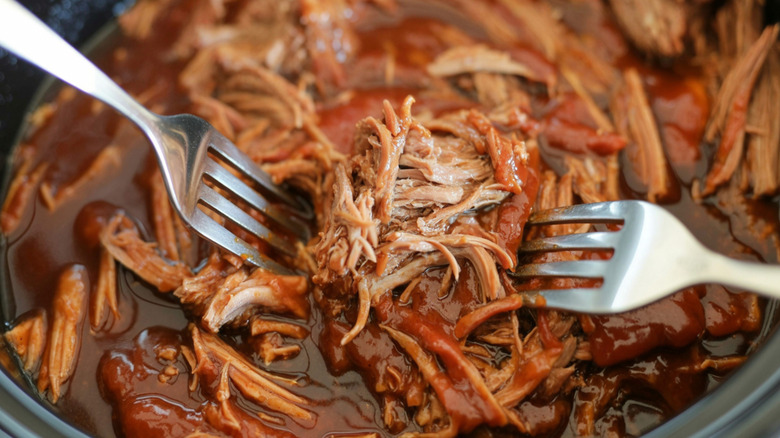
Texture is everything in a pulled pork sandwich. Chef Alex Reznik sums it up perfectly: "Long, juicy strands with chunks of bark that hit you like little flavor bombs. If it's baby food, you overcooked it. If it's chewy, you rushed it. I want it messy, sexy, and dangerous to eat in a white shirt."
Ideally, your pulled pork should have a mix of textures. There must be silky strands of meat that pull away easily along with chunky bites that offer contrast and finally, a scattering of flavorful, smoky bark. All this in each glorious mouthful. Chef Jarle Saupstad adds: "The ideal consistency of the finished product is all about the texture." The balance of collagen, fat, and slow cooking is what turns pork shoulder into a tender, luscious filling.
As we have seen, this ideal texture is the result of precise temperature control during cooking. Too hot, and the fat and collagen render out, leaving the pork dry and too low, and the connective tissue doesn't fully break down, resulting in chewy, unappealing strands. Beyond temperature, the cut of meat, marbling, and cooking method all contribute to the final effect as well. A well textured finished product ensures that the pork can stand on its own and any sauce added is more of an added attraction rather than a crutch that disguises.
8. Season the pork properly before adding sauce
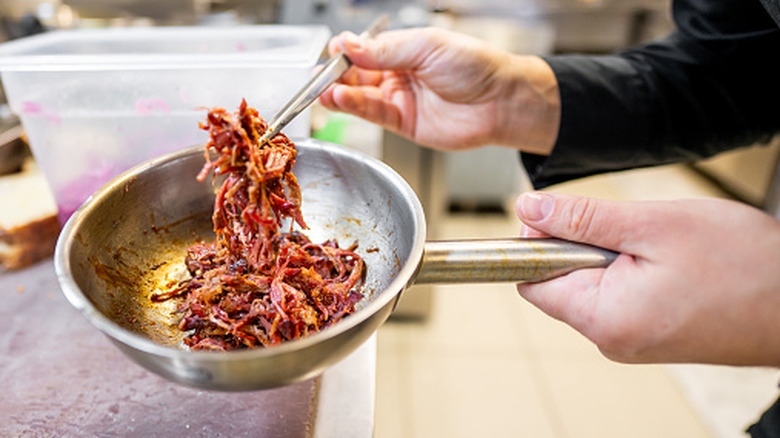
The foundation of a great pulled pork sandwich is seasoning the meat so it shines on its own with no need for any extra sauces or toppings to steal the show. Chef Jarle Saupstad notes, "I personally like a heavy bark on my pulled pork and that ends up in the chop or 'pull.' I like to taste the pork on its own once it's cooked and I like to leave it as a bit of a canvas for the sauce."
Chef Alex Reznik bluntly agrees: "If your pork needs sauce to be good, you failed the assignment. The meat should slap by itself. Sauce is the hype man — it's there to amplify, not carry the whole show." Justin Spencer adds a practical perspective: "We like to season our pulled pork to stand on its own. The sauce, condiments, and bread certainly bring extra flavor to the party, but we like to have a finished product that you can enjoy as is or between bread. ... I think that adding too much sauce is a common mistake. ... After you've spent hours coaxing the flavors and getting the perfect bark on your pork, don't cover all of that up by adding a ton of sauce!" In other words, the pork should be flavorful and perfectly seasoned. The BBQ sauce, if you do choose to use it, should be the perfect blend of sweet, salty, and spicy to work as an enhancement rather than the main attraction.
9. Choose a soft but sturdy bun
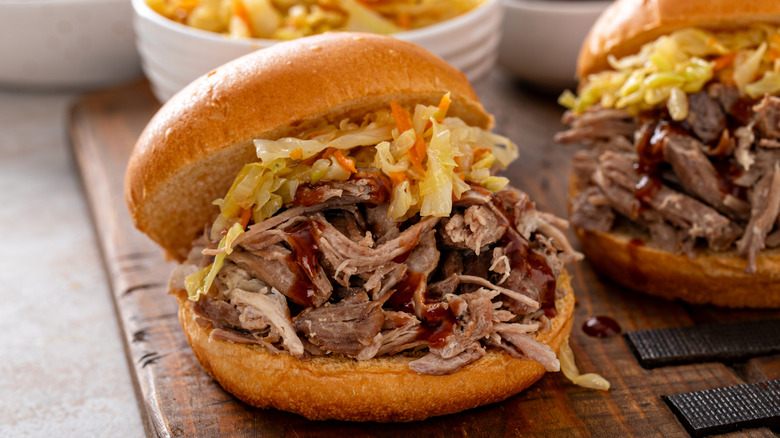
Now that our pork is done and ready, we need to tackle some very important elements. First on this list is the vehicle for the sandwich — the bun. The best pulled pork sandwiches are only as good as the bread that holds it all together. According to chef Alex Reznik, "the ideal bun is soft, squishy, slightly sweet. The bun's job is to hold the party together, not steal the spotlight. Hard bread is for soup." Similarly, chef Brandon Edwards prefers buns that resist sogginess while still adding richness: "I prefer brioche for the butter content and firmness. I find the traditional sesame seed buns become soggy too quickly." So far, the message we are getting from our experts is that the bread choice should act as a vessel for flavor and texture without overpowering the pork or collapsing after the first bite.
Chef Jarle Saupstad embraces a classic approach: "When it comes to buns, I love brioche. Many would disagree, don't care. I love a wet sloppy brioche bun." And from a professional kitchen perspective, Nicole Buysse highlights the advantages of a toasted, high-quality brioche bun but warns that "you must find a great brand in which the heel of the bun must be sturdy enough to handle the weight of the pork that we put on it."
10. Add acid and crunch for balance
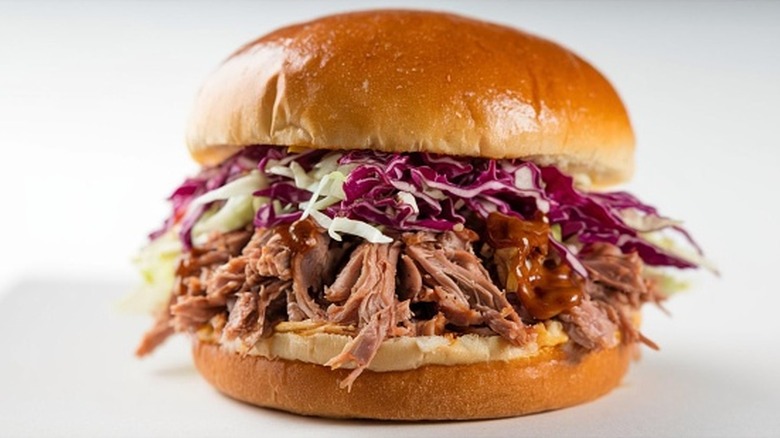
When it comes to balance in a pulled pork sandwich, chef Jarle Saupstad says it best: "Toppings for a pulled pork sandwich, to me, are super important. Pulled pork is very mono-textured along with a soft bun. A little boring in my opinion. I love crunchy and tangy toppings on pulled pork. Give me a bright, spicy, and tangy slaw, pickles and I'm game."
Acidity is crucial to balance the pork's richness. Chef Alex Reznik explains it is "non-negotiable. Pork is rich and fatty, it needs something sharp to wake it up. Acid cuts the fat. Crunch keeps it from eating like a nap. No acid equals one bite and you're done. That's not a sandwich, that's a sedative." We say, slaw or coleslaw (yes, there is a difference) or even lightly pickled veggies can add that much needed hit of brightness and zest to your sandwich.
Chefs also like to play with inventive toppings. Nicole Buysse notes that, in her kitchen, they add "hand-breaded, deep fried, and seasoned onion straws" for crunch, showing that texture can come in many forms beyond traditional slaw. At the end of the day, the goal is balance. A bite that is too soft or rich is monotonous, while too acidic or crunchy will only overpower the meat. Think carefully before choosing the toppings that make your sandwich a perfect medley of flavors and textures.
11. Keep it simple
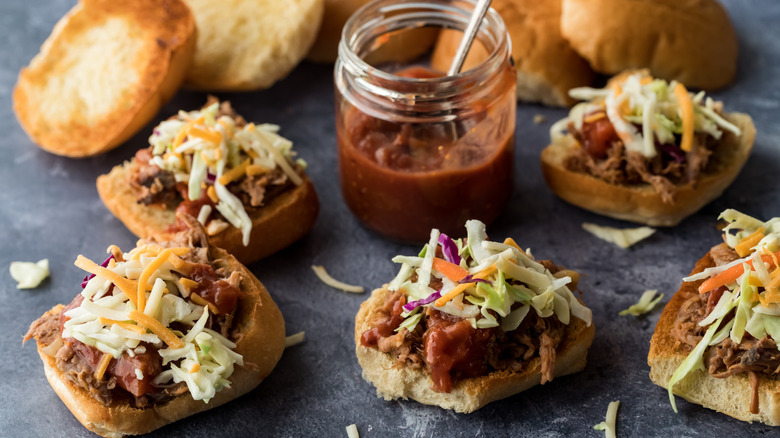
Collating all the lessons we have learned from our experts, it's evident that the ultimate pulled pork sandwich thrives on restraint. While it's tempting to fuss over every detail and second guess your seasoning, sauce, topping, and bread choices — too much interference dilutes what makes the sandwich magical in the first place.
Chef Jarle Saupstad captures this perfectly: "Personally, regionality tends to inspire me, but at the end of the day BBQ to me is about the perfect cook, balanced fat, salt, and acid." Rushing the cook or overcomplicating seasoning is another common trap. Chef Alex Reznik warns, "rush the cook, drown it in sugar sauce, and wonder why it tastes flat. Pork shoulder is stubborn, you don't rush it, you earn it. Let it rest. Pull it warm. Season after pulling. If you're in a hurry, order takeout. BBQ doesn't reward impatience."
Ultimately, keeping it simple is about letting each element shine. For example, Justin Spencer points out that something as small as, "using an un-toasted bun would be a common mistake as you miss out on an opportunity to bring some extra texture to the dish." A well-cooked pork shoulder that's rested properly, paired with the right bun, a hint of sauce, and carefully chosen toppings can result in the holy grail of a perfect pulled pork sandwich — one that is flavorful, balanced, and oh so joyfully messy!