

How To Make Oatmeal As Tasty And Healthy As Possible
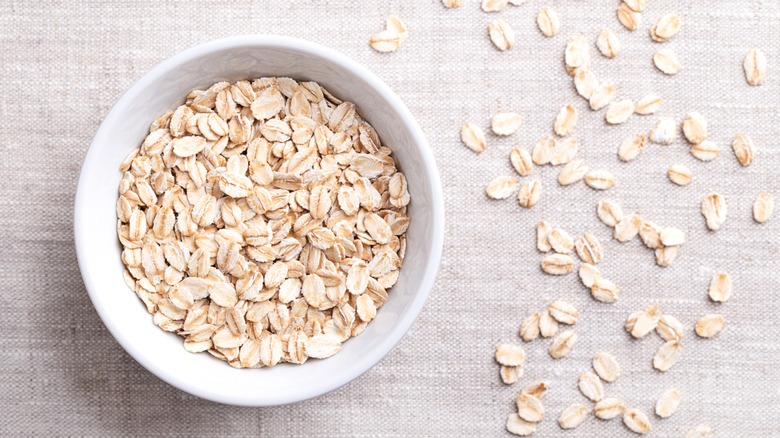
Did you know, oatmeal is Willie Nelson's favorite breakfast? In fact, it's been reported that the musician has it every morning. Nelson is not alone in his affection for the meal, as oatmeal has earned an excellent reputation for being a top healthy breakfast pick.
The health benefits of oatmeal seem to know no bounds. The popular cereal brings fiber and key nutrients to the table to help fuel your entire day. But oatmeal's nutrition facts aren't what we are here to discuss. We already know it is a powerhouse in that regard. The issue we are addressing today is how to make this superfood exciting and yummy enough to hold our interests, bowl after bowl, day after day.
We want everyday oats that we actually look forward to eating when we wake up. Luckily for us, oatmeal is a queen when it comes to versatility. Each bowl is like a blank canvas, just waiting to be made into your morning masterpiece. This means we are essentially being tasked with donning our inventor hats to come up with creative flavor combinations, play with different textures, and even tinker with various prep processes to find the ideal oatmeal recipes that will ensure our daily spoonfuls stay interesting, and not go stale. After all, the last thing any of us want is to begin the day with a big, old bowl of boring. In this article, we explore ways to make oatmeal as tasty and healthy as possible.
Opt for minimally processed oats
Have you ever stood in the grains aisle at the grocery store, overwhelmed by all the options? You might be tempted to just grab the first thing you see, doubting it really matters what kind of oats make it into your morning bowl. But resist that temptation, fam. It does matter, indeed.
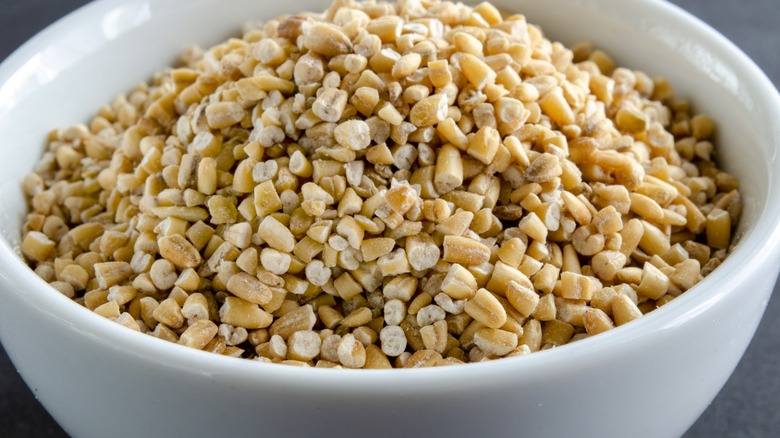
Since all oats come from the same plant, Avena sativa, one would think they're basically interchangeable — but not so fast. All oats start as whole seeds, but the ways in which they're processed after being harvested make a real difference. Once the outside husk is removed, you are left with oat groats. These are the least processed oats. They digest more slowly, allowing you to stay fuller for longer. Groats also have a lower glycemic index than the rest. This means that (spoiler alert) when you opt for minimally processed oats, you are picking a winner.
Steel-cut oats are the next best choice in the least-processed progression. These are made by chopping oat groats into smaller pieces rather than steaming or flattening them. While the nutritional value remains, steel-cut oats are much easier to cook with than groats. Rolled oats, also called old-fashioned oats, have been steamed and flattened, but they are still considered minimally processed. They are the third in line. From there, other oats (including instant forms, which digest faster and often come with unwanted, added ingredients) become increasingly processed, and thus lighter on both flavor and nutrition.
Swap water for milk
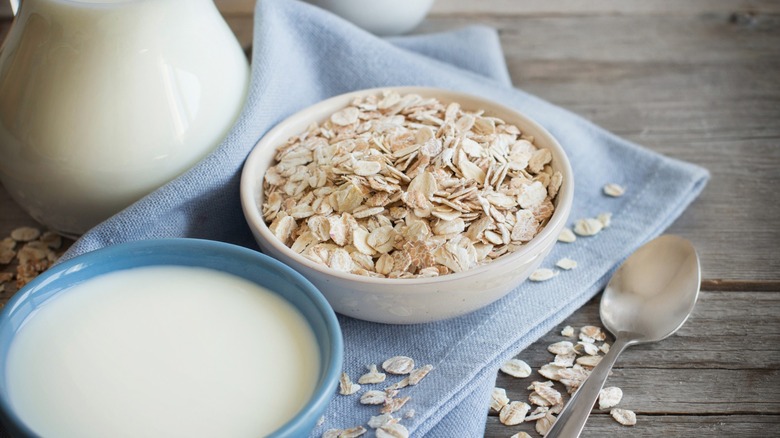
While preparing oats in water certainly gets the job done, swapping that water for milk is an easy way to upgrade your oatmeal. Any type of milk — be it old-school dairy, soy, or something else — will naturally add a creamy element to your oats that water just can't compete with. Oats that have been cooked in milk or a plant-based alternative will yield far creamier, more satisfying results. You'll get a velvety, smooth finish instead of one that is too thin, or the dreaded gummy texture that is a known pitfall of cooking oats in water alone.
Milk will also add some real advantages when it comes to the nutrition profile of your sunrise spoonfuls. The satiety factor alone earns big brownie points, since (dairy) milk will rev up the overall protein content, making the meal more filling. Also added to the morning mix are generous doses of calcium and vitamin D — both key ingredients that water just won't deliver.
If you're not a huge fan of using all that milk, that's okay. Even if you opt for a half-milk, half-water solution, your bowl is still going to be way better (from both a texture and nutrition standpoint) than if you stick to your original water-only approach. By making this one simple swap, and choosing a more substantial milk base for your bowl of oatmeal, you can easily give your morning routine a tasty, healthy makeover.
Toast oats before cooking
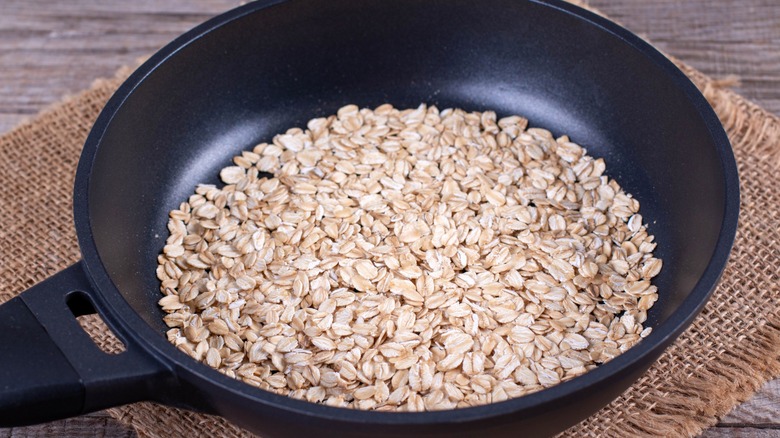
What if we told you that you could take that bowl of oatmeal to a whole new level, and that it would only cost you mere minutes of your precious morning? We're taking about one simple step you can take to elevate your whole grain breakfast: toasting oats before cooking them to make a better oatmeal.
Trust us when we say, those few extra minutes will really make a difference. From elevating the taste and texture of your oatmeal, to even upgrading how it (and your entire kitchen) smells, toasting your oats first has some major benefits. You don't even need to buy any fancy equipment to conduct this transformative feat. All it takes is time — and just a wee bit at that.
Not a Michelin chef? No biggie. All you have to do is heat your dry oats before adding your preferred liquid. You can do this on the stovetop in a skillet. If you go that route, add some butter or heart-healthy oil, and stir often to keep the oats from burning. Alternatively, you could brown the oats on a sheet pan in the oven for tastier, toasty oatmeal. Either way, you'll be rewarded with a nuttier flavor profile, plus a texture that has a bit more chew than you'd enjoy otherwise.
Add a pinch of salt
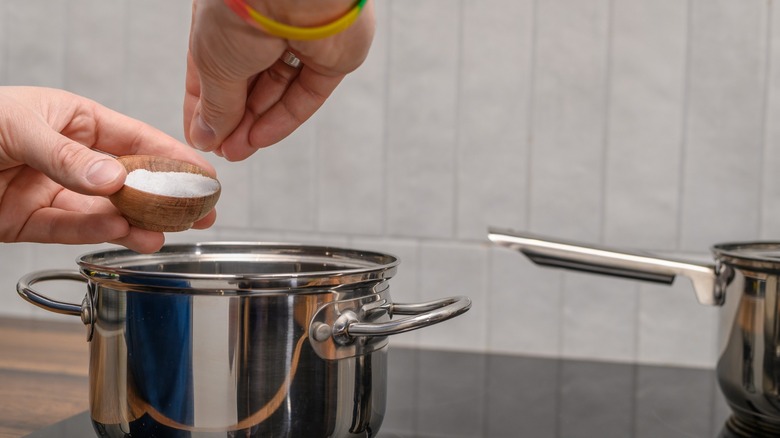
Adding salt to your oatmeal might not sound appealing, especially if you're planing on making your morning bowl a sweet affair. But you might be surprised to learn how much this one step really steps up your flavor game. And to address any concerns about adding what most see as a savory spice to your oats: You can rest assured that, when incorporated correctly, salt won't make your meal too salty. With just one small pinch, this addition can work its magic, totally incognito.
Think of salt as a supporting actor in a theater troupe. Its role might be small, but it makes the other actors look good, and might even help one of them deliver an Oscar-worthy performance. When salt does its job correctly, it blends into the background, allowing the real stars — oats, fruits, and other toppings — to shine. But don't just take our word for it. Professional chefs rely heavily on salt in myriad dishes, both savory and sweet, for this very same reason.
Sold on salt? Fantastic. Now, the standard rule of thumb when preparing your oats — whether you're cooking them on the stovetop, baking them, or even soaking them overnight — is to add salt early, during the actual preparation process, instead of sprinkling it on top at the end. This allows the salt to season the oats without having to fight with any other added ingredients.
Incorporate healthy fats
There was a time in pop culture history when we collectively went on a rampage against fats in food, lambasting them as near-evil, fueled by the likes of Snackwell's cookies. Thankfully, experts have since debunked the belief behind that trend, and we now know that heart-healthy fats can actually work wonders for our overall health, and also for our morning bowl of oatmeal.
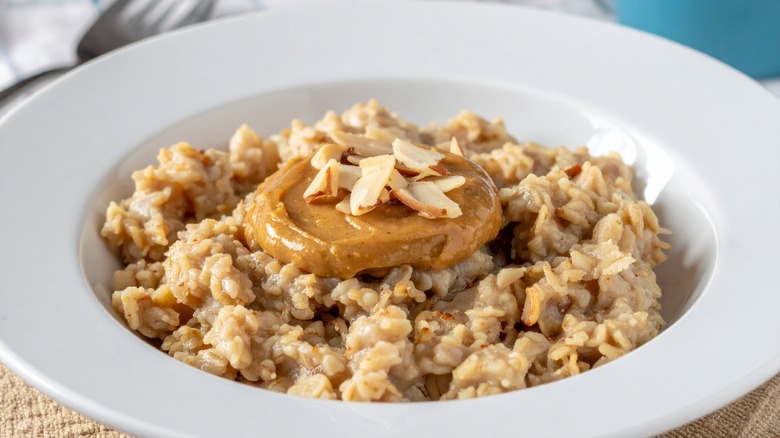
While oatmeal itself offers healthy carbohydrates and vital fiber, it does not bring more than a wee bit of fat to the table. This is not necessarily good or bad, per se, but opting to add healthy fats to the bowl can exponentially improve your oats on multiple levels. First, there is the increased satiety to speak to. Fat is known to slow digestion, which helps you feel full for longer, and avoid the dreaded energy crash that can occur mid-day. Then there's the taste to consider. Plain oatmeal may be a nutrient powerhouse, but it doesn't always pack a punch in the flavor category. Adding healthy, yummy sources of fat like nuts and nut butters is a nearly effortless way to up the ante, resulting in a far more enjoyable breakfast.
Speaking of nut butters, they are perhaps the easiest route to take here. Simply adding a spoonful of your preferred spread (peanut, almond, cashew, the list goes on) will give your oatmeal a rich, nutty layer of flavor, plus the staying power needed to get you to lunch without losing steam.
Boost protein content

While oatmeal is often praised as a satisfying way to fill you up in the mornings, thanks to its ample amount of dietary fiber, just plain oats will only take you so far. Those with more physically demanding lifestyles (athletes in training, for example) may need a bit more of a boost. And even if you're not an elite athlete, you may find that oatmeal does not keep you sated for as long as you'd like. This really comes down to a few factors, with protein being among them. Although plain oats do contain some protein, it is minimal at best; not really enough to push the meter to "making a huge difference" territory.
Swapping milk for water will definitely add some protein, and so will a spoonful of nut butter. But for those looking to further up the ante, there are a few easy additions to consider. One winning way to increase the protein of your oatmeal is to stir in an egg (or an egg white) near the end of your cooking process. You may be surprised at how this small tweak can take your (now fluffier) oatmeal to the next level.
Not a big egg fan? A dollop of Greek yogurt is a great choice, too. And those who need a far greater amount of protein should consider reaching for a low-sugar protein powder. For inspiration, check out this big batch protein oatmeal recipe.
Sweeten with whole fruit
If you're a reader with a sweet tooth who is looking to stick to a healthy routine, but is just not satisfied with a plain bowl of oatmeal, we have good news: Your oatmeal can be healthy and sweet at the same time. A common mistake many make is thinking that only refined sugar will work to sweeten their morning meal. While it will definitely do the trick, it will also bring a whole slew of less-than-stellar grams of sugar that aren't doing you any favors nutritionally.
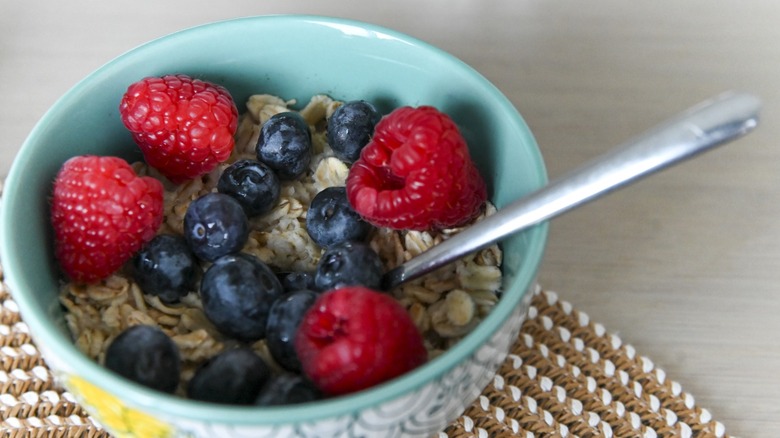
All hope is not lost, however. Consider, if you will, reaching for whole fruits instead. These can lend natural sweetness to satisfy sugar cravings, without derailing your diet. And the good news doesn't end there. Not only do fresh fruits add the sweetness your heart desires, but they also bring generous amounts of fiber, antioxidants, and other health benefits to the table.
Experts advocate for adding fresh fruit to your oats as the optimal way to make things sweet naturally. Similarly to salt, fresh fruit can act in a supporting role to elevate the dish as a whole, enhancing instead of overpowering your oatmeal. To get you started, think about adding ripe bananas, grated or sliced apples or fresh berries to your bowl. All of those are tasty, no-fuss ways to save the day (or at least the morning) with natural sweetness.
Use spices and extracts
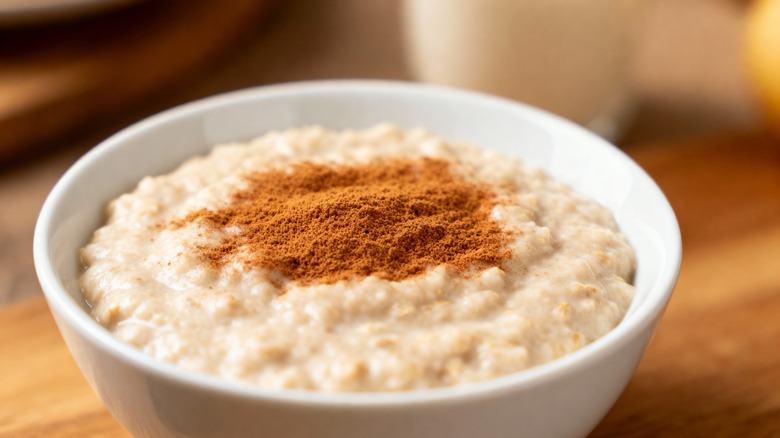
Are you looking for an epic way to exponentially improve the taste of your oatmeal without adding a boatload of unwanted sugar or calories? Consider the spices and extracts in your pantry. They will add a bit of sparkle and pizazz to your oat porridge, and since oats are pretty mild in flavor by themselves, even the smallest amount can make a big, delicious difference.
Just one sprinkling of certain spices can take your oatmeal from Plain Jane to Jazzy Jane. These ingredients can increase the sweetness without the sugar or calories, and can also add layers of warmth, richness, and depth. Nutmeg, cinnamon, and ginger are all popular choices for this, as is a ready-made pumpkin spice blend that can bring an autumnal feeling to your morning routine any time of year. You don't have to wait until your favorite coffee shop rolls out its limited-edition fall flavors. You can simply make your own.
Likewise, extracts (vanilla and almond, in particular) make great infusions for oatmeal. The aroma that these mix-ins offer is incredible, topped only by the flavor. Just a few drops of your preferred extract can bring a bakery-like breakfast experience to your kitchen. Close your eyes, dig in, and be surprised by how little you miss added sugars.
Sprinkle on superfood seeds
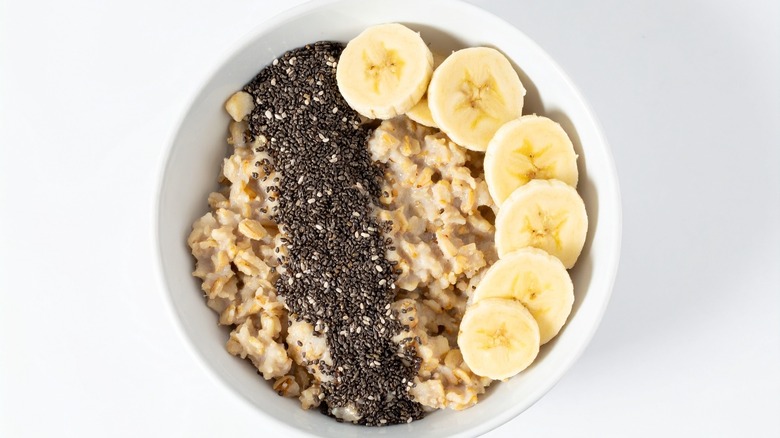
When your oatmeal doesn't keep you feeling full for as long as you'd like, we've got yet another remedy. This next secret ingredient is a way to pack oatmeal full of protein, and it might just surprise you: seeds.
Adding a variety of seeds to your bowl of oatmeal can completely change the vibe of the day, infusing it with energy — literally. We recommend trying a nutritious trio of chia seeds, ground flaxseeds, and hemp hearts, each of which packs a seriously impressive punch. According to experts, a tablespoon of these seeds can increase your fiber, protein, and healthy fat levels enough to make a significant difference, while transforming your humble bowl of porridge into a complete, balanced breakfast.
Chia seeds add excellent amounts of fiber and plant-based protein, as well as a bit of crunch and texture. They're also an incredible source of omega-3 fatty acids, which are known to aid in heart and brain health. Flaxseeds, meanwhile, are similarly beneficial. (But it is important to note that they must be ground in order to allow for optimum digestion and nutrient absorption.) The nutty flavor that flax offers is an undeniable bonus for your bowl as well. And hemp hearts? Well, they also make for a healthy source of plant protein and healthy fat, and are known to have a buttery flavor that feels especially fitting for oatmeal.
Experiment with savory flavors
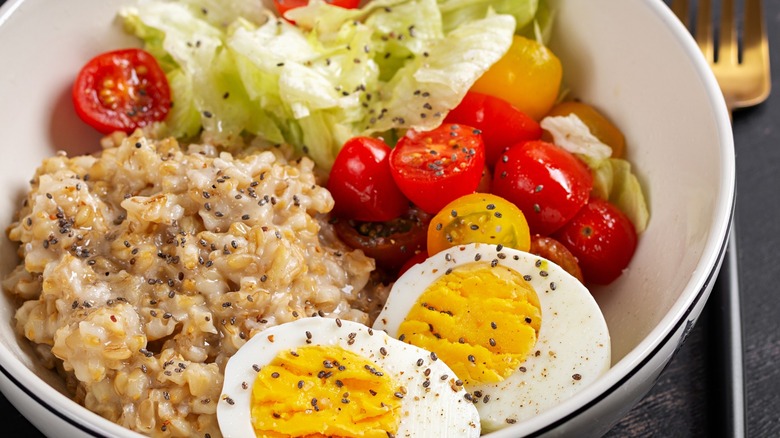
Have you ever thought to add chili crunch to oatmeal? No? Contrary to popular belief, oatmeal does not have to fall into the sweet category. In fact, it may surprise you to learn just how well suited oats are to savory preparations. You can simply cook oatmeal as you usually would, then top it with savory ingredients to turn a run-of-the-mill breakfast into something more like a proper gourmet meal.
Oatmeal's identity as a blank canvas makes it extremely versatile. The sky is the limit when it comes to what kind of savory options you can incorporate to make it outstanding. Imagine the beloved flavors that, until now, were relegated to the lunch and dinner category: miso, soy sauce, pesto, cheese. Now, open your mind to the delicious possibilities you could create if only you spooned them over oatmeal.
Stir some miso paste, soy sauce, tamari, or dashi into your oatmeal, and reap the umami-packed benefits. Spice things up with chili oil, hot sauce, or a sprinkle of crushed red pepper. A dash of furikake, a pinch of curry powder, a spoonful of basil pesto ... The list of potential mix-ins goes on, and we haven't even gotten to more substantial toppings like roasted veggies, hard boiled eggs, or crumbled bacon. (Yes, those would work in oatmeal, too.)
Control your portions
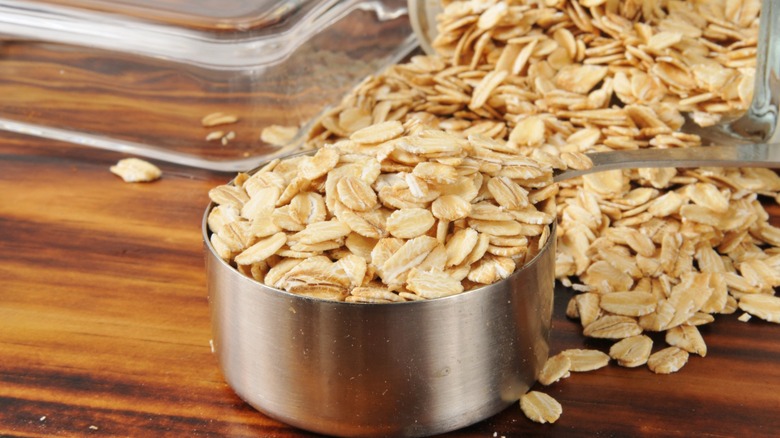
We've covered the flavorful upgrades that'll make your oatmeal work for you. Now, let's talk about how to ensure that hearty breakfast is really in your corner when it comes to keeping levels of consumption in check. Even the healthiest bowl of oatmeal can become a barrier to reaching your health goals if the portion sizes don't add up. If you're not measuring how much you're eating, that serving in your bowl could be bringing a lot more to the table than you realize. That's why watching portion sizes is so important.
Just to give you a general idea, a standard serving size of oatmeal is about half a cup of dry oats. Depending on your process of preparation, and the amount of liquid added, this should yield around one cup of prepared oatmeal. (Again, exact recipes vary.) Even if you want or require more than one serving, measuring is a great way to ensure that you are getting exactly what you expect from your breakfast.
While measuring can seem like a real pain, after the first few times, you may be surprised by how quickly it becomes habit, easily incorporated into your daily routine. After a while, you will likely get to a point where you feel confident eyeballing your amount of oats — without having to use a measuring cup, and also without the danger of going overboard unawares.