

How To Get The Most Bang For Your Buck At Buffets (Without Wasting Food)
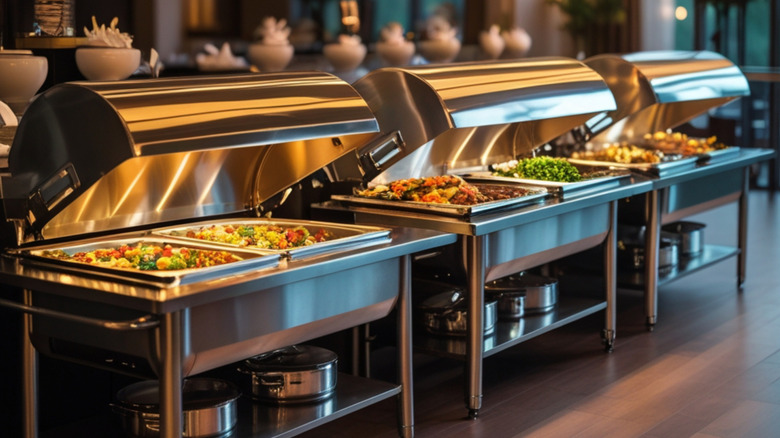
All-you-can-eat restaurants and buffets are among the most remarkable phenomena in the food world, as they present an eating experience unlike any other and are (theoretically) a dream come true for those devoted to saving money. However, not every all-you-can-eat restaurant is ideal for your wallet; with spreads like Fogo de Chão — our top-ranked all-you-can-eat buffet — costing about $50 per adult for lunch and $65 or more for dinner, getting your money's worth has become increasingly difficult in some cases. This is why picking out the food that would cost the most if you weren't paying a fixed rate is so crucial to saving money at these restaurants.
While a strategy of getting your money's worth seems obvious, buffets are strategically designed to discourage you from doing so. In fact, the first items in a buffet line are often the cheapest, encouraging diners to fill up before reaching higher-priced options further down the line. Now, this isn't to say that you should outright deny yourself those delicious, simple foods like biscuits and gravy when visiting the largest buffet in America, or that you can't order a California roll at your favorite sushi buffet. But ensuring you're eating food that equals the price of admission at the very least is absolutely crucial, especially as restaurant prices across the board continue to increase, making it harder to eat out without overspending.
The three main factors to getting your money's worth at a buffet
While there are plenty of tips and tricks to help you get the most out of your favorite buffets, choosing higher-cost items can help you get more value. However, this strategy only works if you choose foods you enjoy and that won't fill you up too quickly. Indulging in too many carb-heavy foods like bread rolls or pasta can cut your outing short by satiating your hunger too quickly, resulting in a less optimal buffet experience. Furthermore, eating food you don't like just because it's expensive is a bit foolish (and wasteful) — your goal should be a long and fruitful meal that truly delivers value.
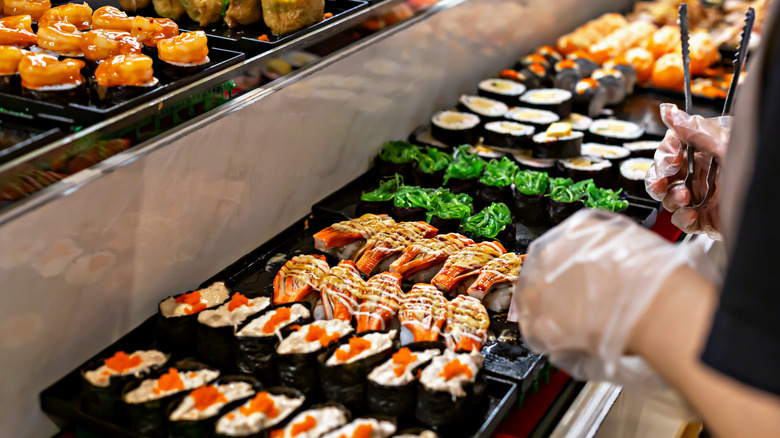
Sushi buffets are one of the clearest examples of how to eat intentionally without filling up too quickly. Nigiri rolls include fish and rice — which is notoriously filling — while specialty rolls include both those and other rich sauces and toppings. Alternatively, sashimi is simply the fish on its own, so it's less likely to fill you up after only a few servings. Instead of loading up on specialty rolls, opting for sashimi allows you to eat more overall while racking up far more in value, since sashimi is often more expensive outside of the all-you-can-eat setting. You can even select higher-priced fish, but this is an instance where your personal preference should have some input, as well.