

The 12 Best Ways To Upgrade Store-Bought Bagged Salads
We may receive a commission on purchases made from links.
When you need something fast that's relatively healthy to eat, but don't want to chop a bunch of ingredients, there's nothing necessarily wrong with store-bought bagged salads, per se. They do their job well. They're there for you, and, in some cases, you don't even need to wash the greens before eating them. You can eat the salad right from the bag, like a throwback to the much-missed McDonald's McSalad Shakers.
However, if you've ever looked at yet another bagged salad and thought, "Hm, this is kind of boring," then there's good news: You can easily upgrade store-bought bagged salads with ingredients that you already likely have on hand at home. Additionally, these upgrades often aren't even going to add all that much time or effort to your dinner prep. Whether you want to improve the nutritional value, protein content, or fiber intake you're getting, turn it into something unrecognizably different, or simply want it to be tastier and more interesting, these are some of the best ways to upgrade a store-bought bagged salad.
Add a protein
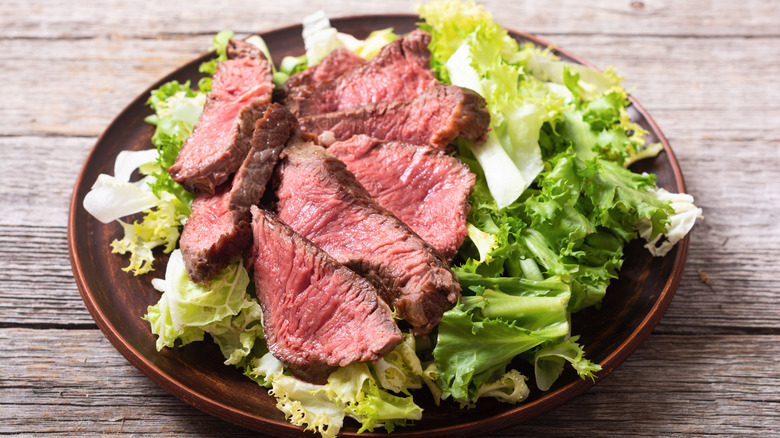
Bagged salads typically come with greens, dressing, cheese, and maybe a few extra toppings, like croutons or sunflower seeds. However, they're not likely going to contain any protein, which some might argue is the best part of any salad. Whether you're trying to up your protein intake or you just want a more delicious and filling salad, consider adding some to your bag of lettuce. You have plenty of options, and they go beyond sliced chicken breast or steak, either of which might be the first thing you reach for.
Want something that's going to be extra-convenient? Pop open a can of tuna or another favorite tinned fish, like sardines or crabmeat. If you don't care for fish, canned chicken is within easy reach, too. If you're a vegetarian, but not a vegan, slice up some hard-boiled eggs or toss on a few spoonfuls of cottage cheese. When following a vegan diet, opt for cooked lentils or beans, like chickpeas. If you want a hot protein without any work, pick up a rotisserie chicken at the grocery store and then shred it atop your bagged salad. So long as the protein you're picking isn't already sauced in some way, it should work with just about any salad mix.
Mix in some fruit
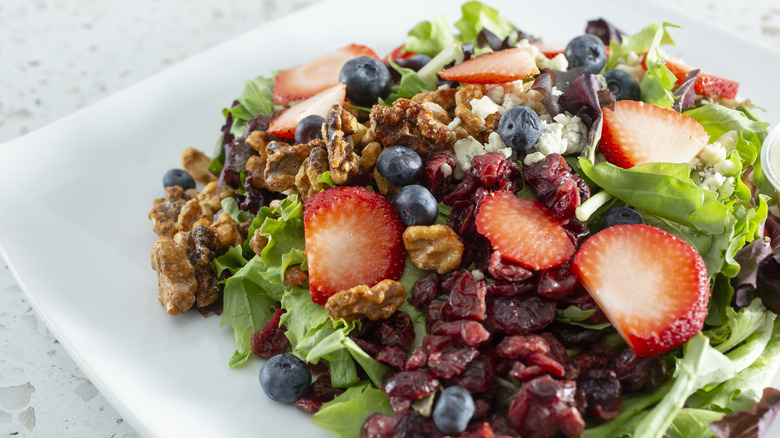
Similarly to how bagged salad mixes don't typically contain protein, you're not going to readily find an offering that contains fruit. This is generally for the simple reason that sliced fruit doesn't hold up over time and would shorten the shelf-life of the bagged salad mix. However, there's nothing stopping you from adding in some fruit after you have brought your bagged salad mix home.
Just about any fruit is game, includingberries, chopped apples, sliced pears, or pomegranate seeds. Southwest salads go well with avocado (yes, avocados are a fruit). And, if you don't want to do any peeling, slicing, or dicing, open a can of mandarin oranges, drain them, and toss them onto an Asian salad mix. Just make sure to add your fruit right before serving or eating your salad, not far in advance, to prevent the salad from becoming soggy. If you are meal prepping and still want to cut the fruit ahead of time, just make sure you don't leave it at room temperature for more than two hours. Transfer the prepared fruit to an airtight container and place it in the refrigerator for safekeeping.
Throw on some crunchy nuts or seeds
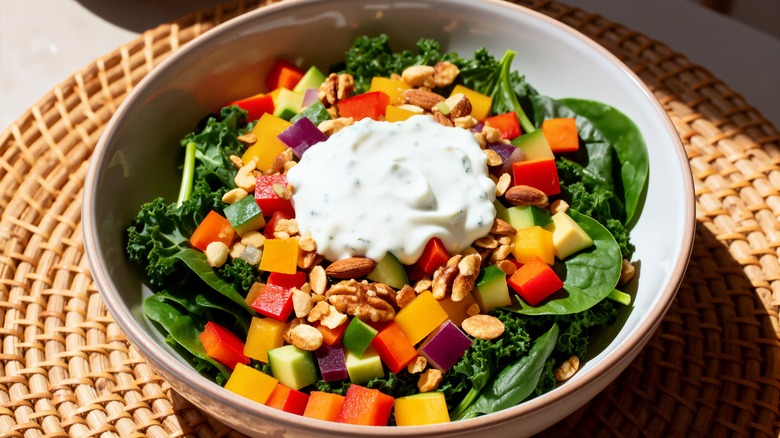
Some bagged salads can feel like they're a little lacking in the texture department. While some ingredients were once crunchy, they may have spent so long in a little plastic bag in the fridge that they lost all of their bite. Others, like lettuce, can become soggy once the dressing has been added. To combat this, take matters into your own hands and throw on some crunchy nuts or seeds.
Seeds that can add both healthy benefits and textural interest to your salad include pumpkin seeds, sesame seeds, sunflower seeds, or poppy seeds. Meanwhile, consider nuts such as peanuts, walnuts, pistachios, cashews, pine nuts, or hazelnuts. Alternatively, combine nuts and seeds together into one amazing combo, namely the Middle Eastern nut and seed blend known as dukkah. All you have to do is blend roasted nuts, toasted coriander, sesame, and cumin seeds in a food processor and season with a dash of salt and pepper. Sprinkle this crumbly mixture onto salads or virtually anything that needs a kick of flavor and texture.
If none of these suggestions spark your interest, keep in mind that there are plenty of other crunchy items likely lying around your kitchen or pantry that might make for a good salad topper. Among the best are crushed-up chips, ramen noodles, or pulverized, dehydrated vegetables or fruits.
Make your own salad dressing
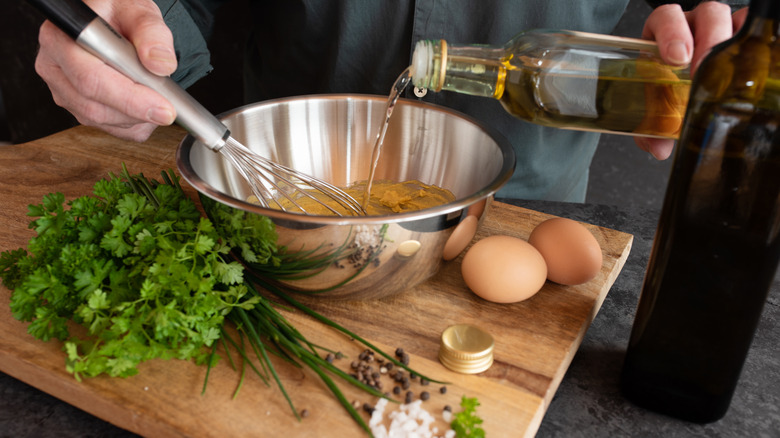
It might seem like a lot of effort at first to go through the trouble of making your own salad dressing, especially when there's a packet of ready-to-go stuff right in the bag. However, not only is making your own salad dressing at home infinitely easier than you're likely expecting, but it also simply tastes better and fresher. As an added bonus, you can customize your dressing any way you like.
When you make your own salad dressing, the important thing to remember is that a basic vinaigrette is one part acid, like vinegar or lemon juice, and two or three parts fat, such as olive oil. However, don't just toss some oil and vinegar together and expect to get a superior salad dressing. You need to add some extra seasonings in there, even if it's just salt and sugar. Additionally, consider enhancing the texture by adding a creamy ingredient that you already have on hand, such as mustard or tahini, which will help emulsify the oil and vinegar. Then, once you're ready to test your concoction, give it a go using Ina Garten's genius way to test homemade salad dressing. Dip a salad leaf in the dressing, which will give you a clue as to how it will actually taste once you've poured it on your salad.
Incorporate some on-hand leftovers

For those who purchase bagged salad kits for their convenience, this upgrade option will likely appeal to you. Rather than cooking something new, like a chicken breast, or opening up a pack of something in your pantry, like a bag of nuts, look to the leftovers in your fridge. What could be hiding there that you might just be able to use to level up your salad in a new way? Could the chicken, peppers, and onions you fried up for fajita night find a home in your Mexican-themed salad kit? Could that lonely piece of leftover salmon grace the top of your bagged Caesar salad?
You might even use incorporating leftovers into a bagged salad as an excuse to clean out your fridge and cut down on your food waste. For example, buy a big bag of plain mixed greens and pull out all your leftovers and those random condiments or toppings that have yet to be used, and let the family go at it. Those last few handfuls of shredded cheese in the bottom of the bag that you didn't have a use for? Suddenly gone. The last few pepperoni slices leftover after pizza night? Demolished. A few spoonfuls of hummus that no one ever ate or a bell pepper that was slowly turning brown? Consumed.
Raid your spice rack
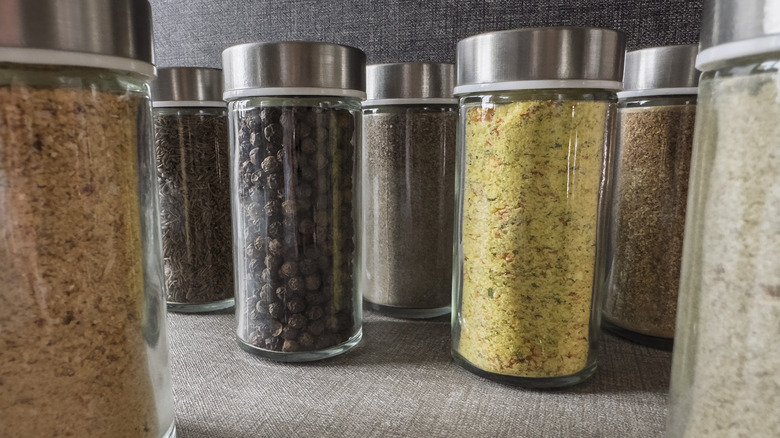
Sometimes, improving your bagged salad is as simple as raiding your spice rack. You don't need to do any extra cooking or even reheating. You just need to take a gander at the spices you have on hand, make some good choices, and then give those seasonings a little shake.
You may find that this easy enhancement is more impactful than you think. After all, one Reddit user did say that seasoning salad had literally changed their life. They note that even just the simple addition of salt, pepper, and garlic powder made their typical salad immensely more tasty.
If you're not sure which spices or seasonings are going to be best for your salad, you can start simple, like our Reddit friend did, with the basics. Some options that are typically universally considered tasty include everything bagel seasoning, seasoning salt, or smoked salt. However, you can also reach for ranch powder seasoning if you're making a salad that you might typically cover with ranch dressing, or chipotle powder or taco seasoning if you're making a salad with a Mexican flavor profile.
Add more cheese
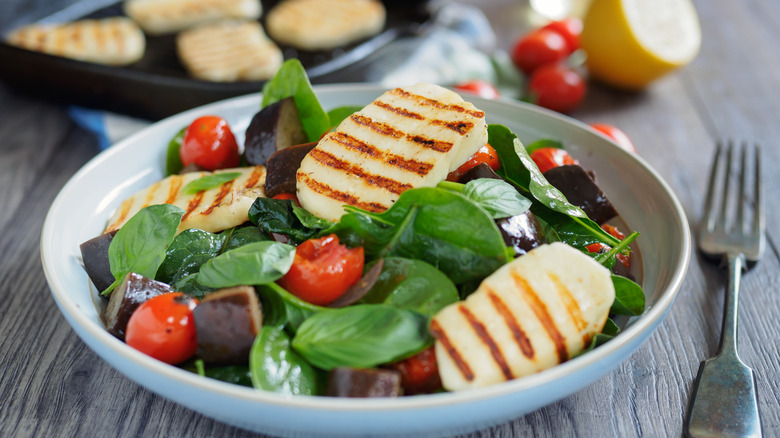
If your favorite part of any meal is the cheese, then you're not going to argue with this suggestion. Rather than just relying on that tiny included packet of lackluster Parmesan or cheddar to get you through the bagged salad, add on your own cheese selections.
The best cheeses to incorporate into the bagged salad will, of course, differ according to your preferences and the type of salad you're making, but consider using varieties that will add not just flavor, but also extra texture. For example, if you've already filled your bagged salad with plenty of crunchy toppings, use a softer cheese, such as goat, feta, mozzarella pearls, or blue cheeses. If you have a little extra time on your hands, you might want to grill some halloumi until it's golden on both sides and beginning to melt, then use it as a salad topping.
If you're going dairy-free, but still crave a cheesy upgrade? There's a cheesy topping that's totally dairy-free that you're going to want to check out: Nutritional yeast. The yellow flakes add a savory, cheesy, umami-rich touch that can greatly enhance any salad.
Top it with homemade croutons
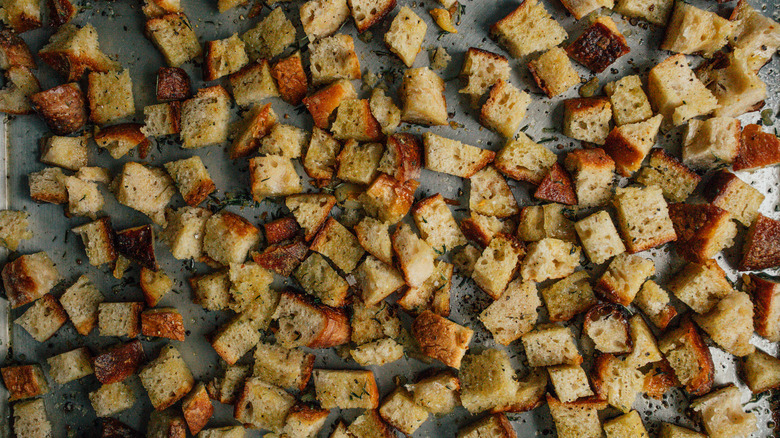
Just like you might hesitate to make your own homemade dressing for a bagged salad, you might likewise hesitate to make croutons from scratch for it, too. After all, the croutons that came with the kit are literally right there! That said, homemade croutons are tastier and cheaper than the store-bought variety, and they're exceptionally easy to make.
You can use just about any type of bread for homemade croutons, but whatever you pick, rather than cutting it into even cubes before baking, tear it into relatively equal, bite-sized pieces by hand instead. This will result in croutons that offer a little more textural variety, with uneven edges that turn crunchier and crispier during the baking process. Plus, the varying textures will soak up your salad dressing all the better. From there, coat the bread in butter or olive oil and add some seasonings or herbs. Next, bake the croutons on a rimmed baking sheet at 350 degrees Fahrenheit until they're golden and crispy. The croutons will be delicious consumed right out of the oven, warm, but will keep fresh in an airtight container at room temperature for a week or longer.
Incorporate umami-rich toppings
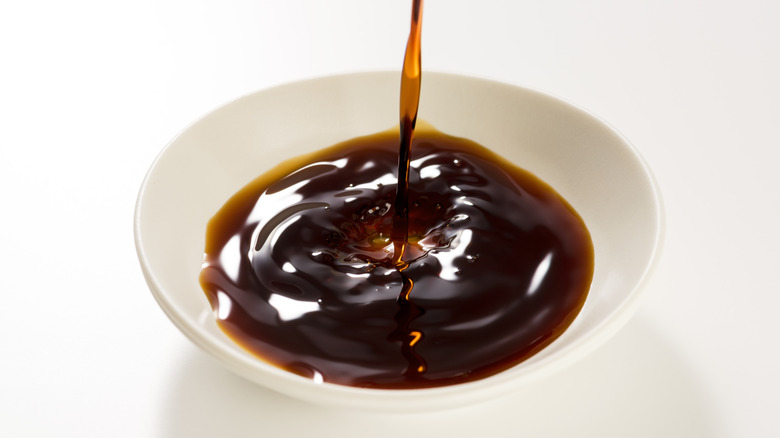
While somewhat difficult to describe, once you've experienced the fifth flavor known as umami, you'll recognize it everywhere. Savory and sharp, meaty and succulent, you can taste umami notes in soy sauce, miso, MSG, and parmesan. Whenever you're working on a dish — or preparing a bagged salad — and you think it could use just a little more oomph, reach for an umami-rich topping.
If you're not sure where to start when adding a bit of umami love to your bagged salad, go with an easy option. When you're making that homemade salad dressing, add a spoonful or two of soy sauce. If you don't have any soy sauce on hand, you can sprinkle a little MSG into your homemade salad dressing.
If you're not making salad dressing from-scratch, you might try to take a tip from Reddit. One user described how they've been leveling up their salads by making what they call "umami bombs" — essentially a blend of chopped vegetables that have been soaked in an umami-rich mixture. A spoonful or two of the chopped veggies adds flavor and texture to any salad. Some of the user's recommendations include beans, black-eyed peas, bell peppers, tomatoes, jalapeño, and onion soaked in a cumin-y, chili powder-rich mixture of balsamic vinegar and oil. Another option is to steep chopped cucumbers, peppers, tomatoes, onions, feta, and olives in oil, vinegar, and mustard.
Toss in some fresh herbs
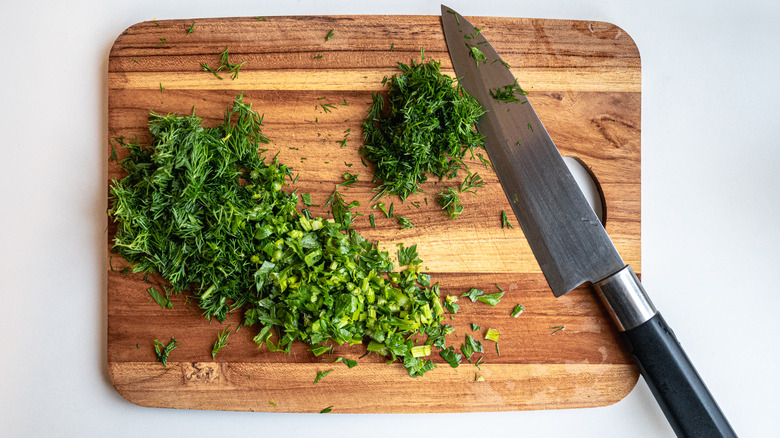
Adding fresh herbs to your bagged salad will make it feel a little more gourmet and will elevate the flavor, while only requiring a minimal amount of time. Plus, it's a good excuse to use up any leftover herbs that would otherwise go to waste.
There are so many fresh herbs you can incorporate into salads. Add basil to an Italian or Mediterranean-inspired salad. Toss some fresh cilantro into a Latin, Indian, or Asian-inspired salad. Chives are excellent in a classic American salad that might also include a little ranch or blue cheese dressing. You can also let your herbs soak a bit in some white or red wine vinegar for an even greater flavor enhancement.
Whichever ones you choose, though, aim to use soft herbs, not those with woody stems. Rosemary, thyme, and oregano are not really great fits, unless you want to be pulling the herbs out of your teeth as you're noshing away.
Turn the salad into a wrap
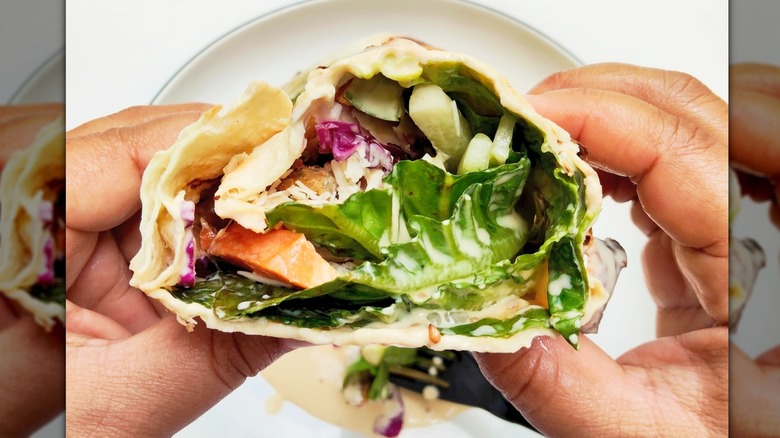
If you love a good veggie wrap or a Caesar salad wrap, but you really only eat them when you're dining out, why? You can easily make these wraps at home by utilizing your favorite bagged salad kit.
For the simplest wrap, all you need to do is mix together the salad's ingredients and then spoon these onto a tortilla or flatbread before wrapping. However, if you want to do something extra, you can add more protein or other toppings to the wrap, such as rotisserie chicken, hummus, or freshly sliced avocado.
If you're not eating your wrap right away and are instead prepping it to eat later or the next day, you may want to hold off on adding the dressing to the salad. It can end up making the wrap soggy. Instead, prep the wrap and use your dressing as a dip when you finally do get around to eating it. Another solution is to layer some large lettuce leaves, like romaine, between the tortilla or flatbread and the dressed salad, so the dressing never comes into contact with the bread component.
Turn the salad into a soup
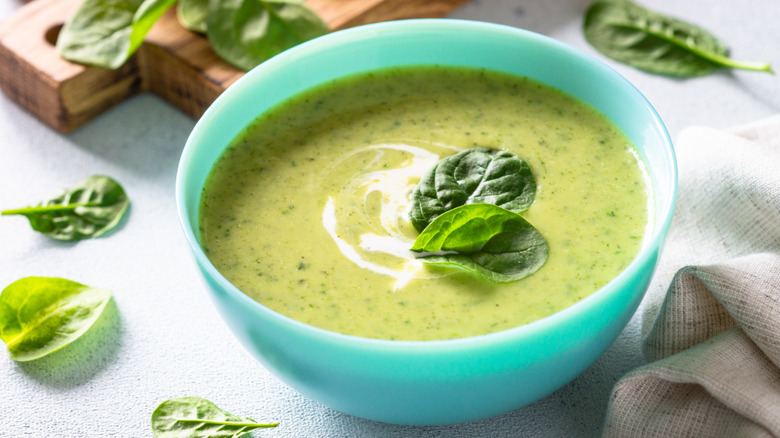
If you're just firmly not interested in eating your bagged salad as-is, there's one interesting thing you can do that will turn that salad into something entirely different. You can literally transform the salad into a soup. It's going to take more work than just throwing the salad mix into a tortilla or flatbread, but no more effort than you'd spend making any other quick soup.
To start, sauté aromatics in your favorite soup pot, alongside any extra vegetables that you might want to incorporate into your recipe. Be flexible! Whatever you have on hand is fair game. Then, toss in the greens from your salad mix, add in some broth, and, when the whole thing is nicely cooked, puree the mixture until it's smooth using an immersion blender. This type of handheld blender, like the one from the Ninja brand, is the secret weapon for thicker soups. You can then use the toppings and dressing from the salad kit to garnish your soup. Go ahead and toss some homemade croutons on there while you're at it for a more layered textural experience.