

You Can Stop Believing These 11 Myths About Fried Food
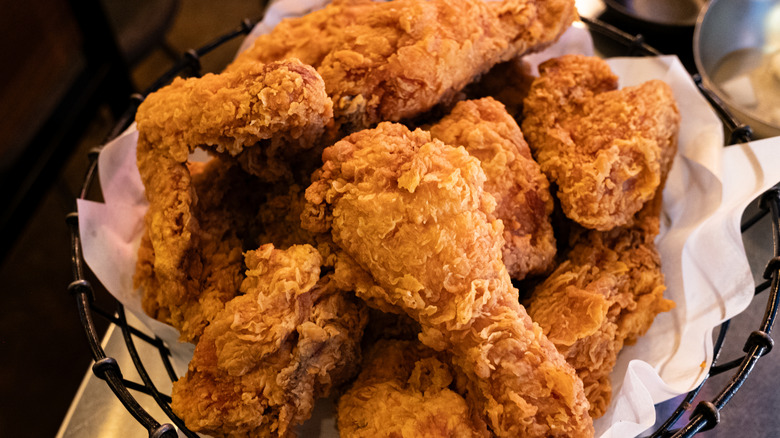
Fried food is an indelible part of our eating culture. Despite the rise in nutritional awareness and dietary conscientiousness, the oil-drenched, crunch-ifying method of cooking doesn't seem to be going anywhere. As of 2024, almost three-quarters of restaurants in the U.S. still had fried items on their menu, staying strong across cultures and cuisine styles. It seems every state has its signature fried chicken or deep-fried dessert. Even as a matter of internet discourse, fried food remains evergreen and relevant.
It seems there's a realization that, despite the justifiable health concerns, fried food will always be part of our collective gastronomy. How can you remove standards like French fries, chicken and waffles, empanadas, falafel, and onion rings from our finger-lickin' landscape? However, there are movements to change either how we fry food or what we're frying. Annual air fryer sales have surged, while fried vegan meals and snacks are on the up. It all feels part of this big zeitgeisty rethink of what we consume.
That said, reevaluations require facts — not stigmas. There are many common perceptions about fried food, some of which are based in truth, and some that aren't. Folks may even abstain from fried favorites altogether just to play it safe. But why deny yourself some soul satisfaction based on faulty intel? Myths are made to be dispelled. To start, here are 11 misconceptions about fried food.
Fried food is always unhealthy no matter what
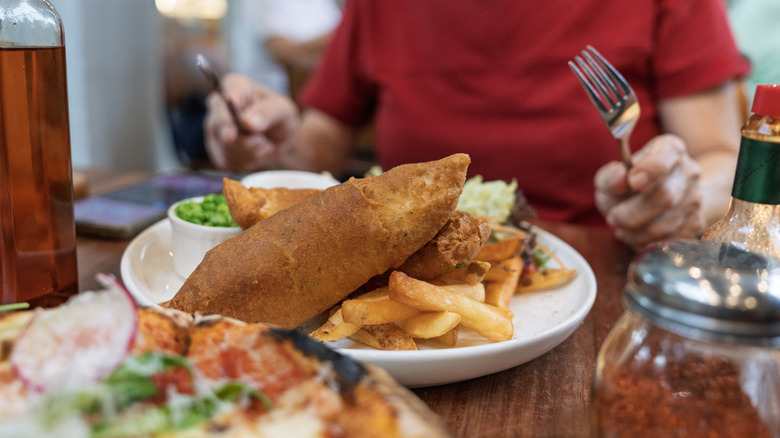
The perception that fried food is always bad is rooted in a few things. First off, the foods we often fry or associate with frying are highly caloric: chicken, rice, potatoes, and so on. So yes, adding a bath of vegetable oil to robust proteins and carbs can drive up the calorie count. Secondly, the experience of eating fried foods can feel unhealthy. The crunch, the grease, and the heaviness can send unflattering signals to our brains.
Some of that reaction is legitimate. The Maillard effect, which is the chemical process that browns food when it's cooked at high temperatures (among other yummy-fying things), is a fundamental part of frying. Although this is what makes wings or pork fried rice so tasty, the process also has negative effects. Acrylamide, for example, is released from the heated amino acids in fried food, and can be a health risk –- especially when consumed in substantial, regular quantities.
However, recent studies have busted long-held myths about frying food. It seems that the amount of oil you ingest from, say, a piece of fried fish, is ultimately minimal. Most of the oil stays on the crispy, crater-y skin and doesn't make its way into the meat itself, lowering your body's absorption. Additionally, the fat from cooking oil isn't necessarily bad. Fat helps manage nutrients and metabolism, for example. If you're still not sure, change up the oil to a less fatty kind, such as olive oil.
Fried foods have to be greasy
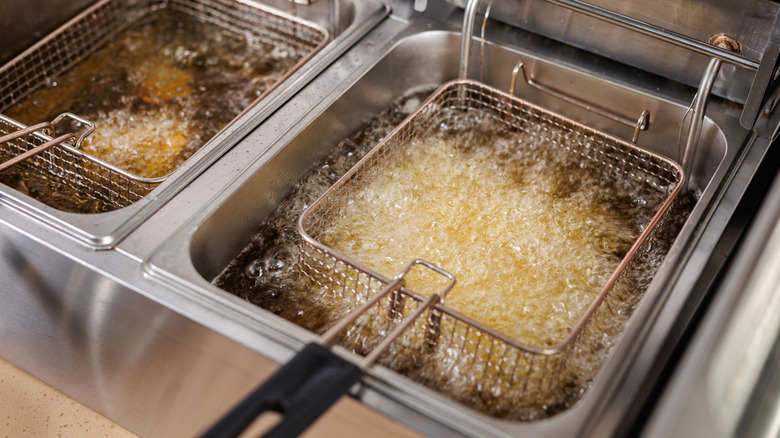
When it comes to fried foods, "grease" might be the first word you think of. It coats your face when digging into some fried calamari, bastes your fingers when munching on funnel cake, and somehow might get in your hair when eating Popeye's. However, fried food is not universally greasy. In fact, it shouldn't be greasy at all.
Fried food that's done right shouldn't require wearing a tarp over your clothes. Sure, there's always going to be some degree of unavoidable oiliness. That said, there's a difference between a little oil and an unwanted, unappetizing grease bath. How to get the former and not the latter? A lot of it comes down to the temperature of the cooking oil. If the oil isn't hot enough, it'll be absorbed into the food as opposed to steaming out or staying on the skin. That surviving moisture will lead to grease.
Using lighter oils such as coconut oil – which is also great for fried eggs – helps as well. Don't forget about the all-important paper towel either. Removing the cooked food from oil and placing it on a bed of Bounty (or on a rack that allows for the excess oil to strain out) will prevent a total grease-fest. Not only will the meal be a bit healthier, but it'll taste better too. Double rainbow.
One French fry is equivalent to one cigarette
Some misconceptions gain such traction that they enter the realm of the old wives' tale, or even the urban myth. This is especially true when spouted by people who don't really know what they're talking about, yet have a platform nonetheless (thanks, TikTok). Cue personalities such as Paul Saladino. He's a meat-forward, convention-smearing, science-dubious food and nutrition influencer who has disseminated a lot of unfounded information about what's good and bad for you.
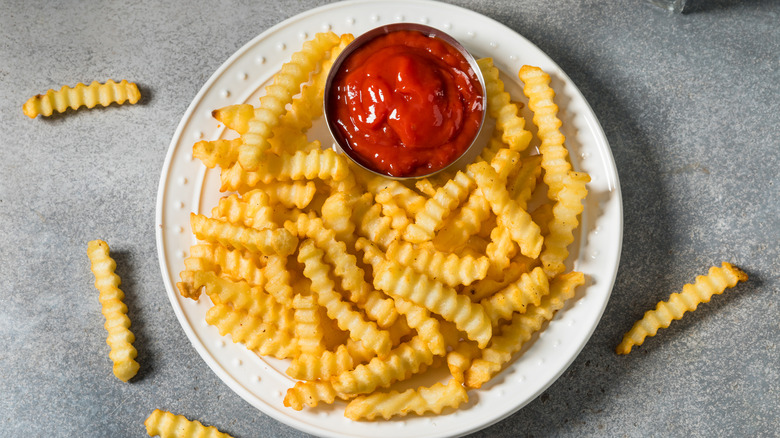
One of his bold claims: Eating a side of McDonald's fries is the same as smoking an entire pack of cigarettes. Due to his many viewers and followers, the idea caught fire and spread. However, it's based on a fundamental misread. Yes, French fries can carry a similar amount of carcinogens as cigarette smoke. However, a comparable risk (or more accurately, scare) is nowhere near proven. Firstly, ingesting and inhaling are two different things. One goes through a process of digestion that mitigates what you take in; the other goes right into your bloodstream, unaltered. Additionally, the most dangerous carcinogenic elements in cigarettes are not the same ones found in French fries. So don't worry: Making French fries at home is not equivalent to rolling your own tobacco.
Frying food kills any and all harmful bacteria
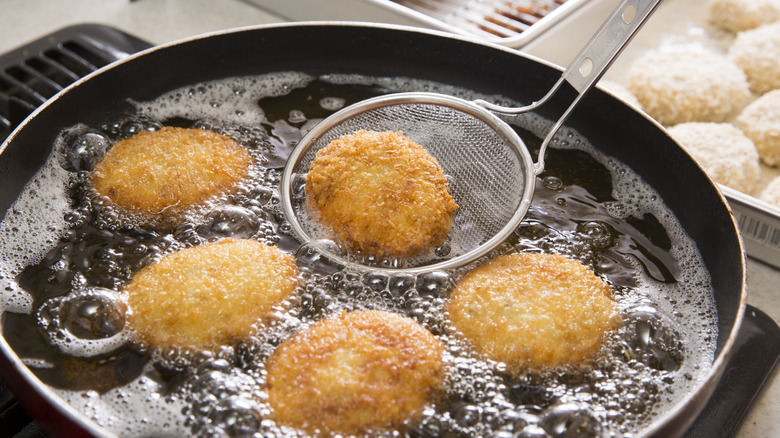
We all love a good "yes or no" answer. Do I look before crossing a busy street? Yes. Should I bungee jump without double-checking the cord? No. Are Komodo dragons real? Yes. Should I punch a bear? No. However, even though nuance can be annoying, most of the world's questions require a bit more elucidation. One such query: Does frying eliminate possible harmful bacteria from food? Well, yes. But ...
It's assumed that frying food acts in a similar way as alcohol does for liquid. Before modern, sanitary water conditions, people –- even kids –- would drink alcoholic beverages to quench thirst because they knew alcohol would eliminate all the horrible, sometimes deadly stuff in unclean water. Although frying, being a process of sustained high-heat, can cook out any unwanted bacteria (including Salmonella — which has had more than a few outbreaks in this country's history), the temperature is what matters. Specifically, the internal temperature.
At almost any level, frying will probably get rid of contamination on the surface – which, thankfully, is where most harmful bacteria reside. That said, if the food isn't cooked high enough internally, any contamination is staying put. You want chicken to be at least 165 degrees in the middle and fish to be at least 145 degrees for the heat to do its cleansing work. Otherwise, you're putting yourself at risk with any dicey meat, fried or not.
Frying food is a new-ish thing for humans
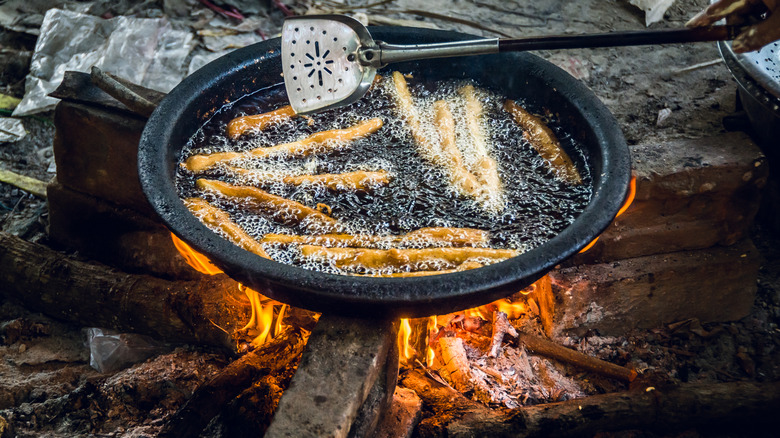
It may seem like frying food is, historically, still a novel thing. Seminal fried-food events like the invention of the Friolator (1918), the mass production of potato chips (1926), the franchising of KFC (1952), and the creation of Buffalo wings (1964) have all occurred within the past 150 years. Don't let recency bias fool you, though. Frying food is nothing new. In fact, it's old as hell (almost literally).
Mesopotamians were apparently deep-frying almost 4,000 years ago, while deep-fried dough appears not long after in the ancient Levant. We also know that ancient Egyptians were definitely frying plenty of food. Using palm oil and animal fats, they made things like bean patties, honey cakes, and even fried onions. What better to accompany the vast amounts of beer the Egyptians drank? Classical Greeks and Romans took cues from the Egyptians and munched on a kind of fried proto-fritter, as outlined in B.C.E. texts from the region.
The first deep-fried fish (in a recognizable flour-and-eggs batter) can be found in an Iberian cookbook from the 1100s A.D. Sure, mozzarella sticks as we know them (whether you're dipping them in classic marinara sauce or not) didn't come around till the mid-20th century, but batter-coated fried cheese goes back as far as late 14th-century France.
Deep-fried vegetables are still very healthy
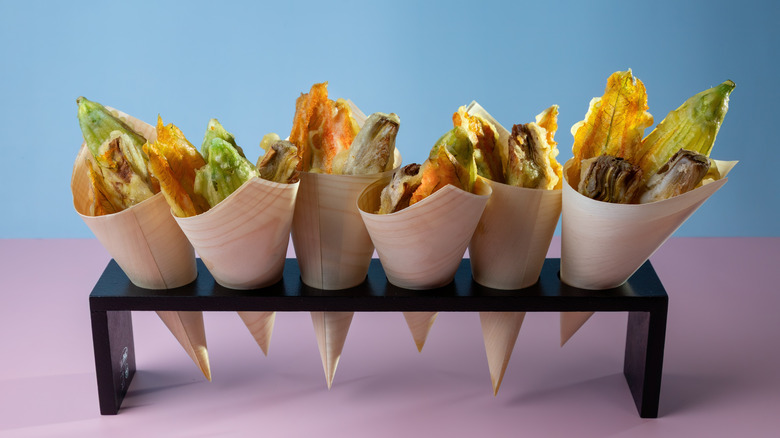
The short answer: Ehhh. The long answer? Ehhh ... hhh. Comparatively speaking, a deep-fried piece of cauliflower would be a healthier choice than a deep-fried Oreo, considering an Oreo is worse for you than cauliflower (you're here for the mind-bending revelations, we know). However, if you're asking whether a fried vegetable is anywhere near the nutrition-level of a non-fried vegetable, the answer is generally no.
When you're frying food, fats and oils are oxidized, which creates atoms called free radicals. These are unstable molecules that are damaging to your health, and they're let loose when you fry vegetables or anything else. There's also the caloric content you pile onto a vegetable by frying it. A raw zucchini is about 30 calories. An order of fried zucchini? Up to 300 calories.
Additionally, some vegetables are worse for frying than others. Eggplant absorbs a ton of oil, okra's positive compounds disappear when fried, and tomatoes and leafy greens lose valuable vitamins. Even the most popular fried vegetable in the world — the potato — loses all kinds of inherent nutrition when dunked in hot oil.
Fried foods aren't gourmet
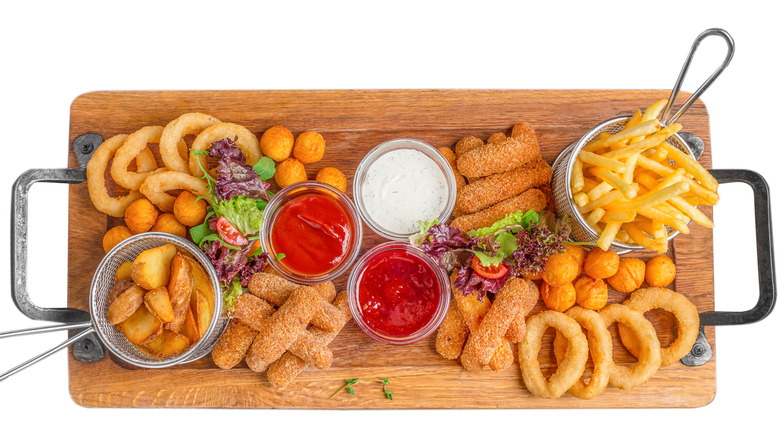
It's one thing to address health and nutrition when talking about fried food myths. It's another, less scientific thing to address cultural attitudes toward fried food –- and it's sometimes a bit trickier. It's difficult to argue that fast food, junk food, and low-brow eats are often associated with frying: crinkle-cuts, potato chips, chicken tenders, and more. As a result, we often exclude fried food from being a part of gourmet or high-end cuisine. After all, how often do you see Michelin-starred kitchen artisans sweat over a vat of bubbling oil?
The truth is that refinement, technique, and skill can be applied to frying food as much as any other culinary approach. This is especially true when unconventional ingredients get the fried treatment –- items like lobster tail and artichoke hearts, or stuffed olives and sushi rolls. The use of truffle oil is a sophisticated touch (like you might see with Parmesan fries), while tempura is a clean, light method of frying that can be used for fresh and exotic produce. A lot of modern, reputable restaurants are switching up types of oil as well, opting for the likes of grapeseed, coconut, and avocado oil.
You need oil or an air fryer to fry food
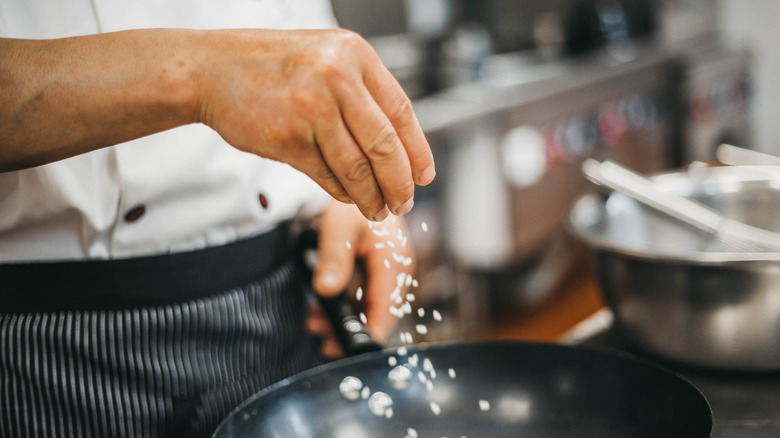
Certain things just seem to be a given. Tautologies, you might say. The Earth rotates around the sun. Gravity makes you fall over. Mosquito bites are annoying. Orange juice tastes bad after brushing your teeth. These truths are held to be self-evident. One that many of us would add to that list: You need oil or an air fryer to fry food, because of course you do. Trying to fry food in any other way is like trying to fish in a swimming pool: it's a seemingly impossible task. Well, reexamine your long-held truths, because cutting out the oil is more than possible.
Salt is the key element in this process. You take iodized salt like Morton's, and fill up a pan enough to envelope the food. You can even mix ingredients and spices into your salt to create flavorful seasoning. Then cook that panned salt at about 300 degrees until it's a golden-brown color, and almost looks like sand. That's when you know it's good to go. Salt heated to this level acts kind of like a liquid, and submerging dry food will essentially fry it. This provides all the requisite characteristics, like a crispy, browned exterior. Bonus points: You also avoid any possible deep-frying disasters by frying with salt.
Deep frying removes nutrients
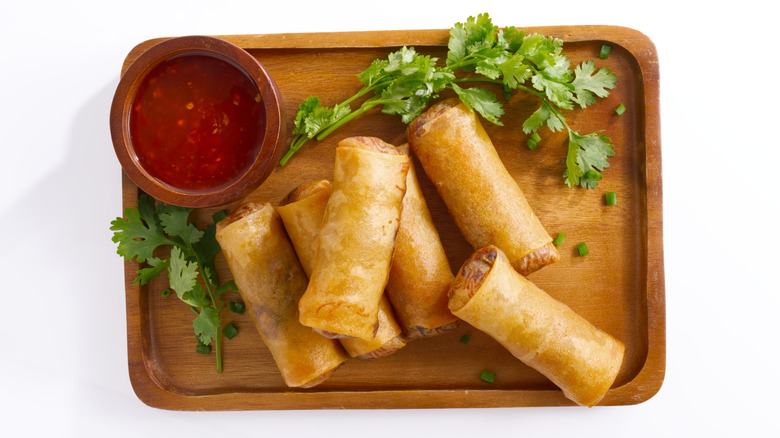
There's an alchemy that happens when oil is heated to a certain temperature and food is dunked in. Chemical and molecular changes alter the makeup of the food, for better or worse. The debate over the unhealthiness of fried food will probably never die, because what's healthy or not is always malleable and dependent on overall habits and personal lifestyle. However, the idea that deep-frying food will automatically destroy all that is good and nutritious in a meal is not necessarily true.
The caveat is that the deep-frying needs to be done the right way. Using quality oil, for example, and making sure the temperature is high enough to eliminate excess oil in the food's interior. Surprisingly, frying can actually maintain certain vitamins better than boiling, such as vitamins B and C. In fact, deep-frying might maintain vitamin C better than frying in a shallow pan. Minerals and proteins in food also seem unaffected by the frying process, and even making French fries converts some of the fiber from the potato into healthful resistant starch.
The U.S. eats the most French fries in the world
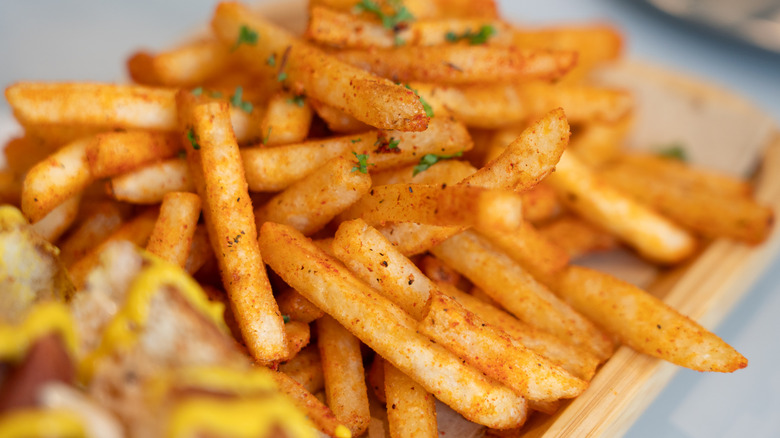
Despite the moniker, French fries are part of the fabric of America and its image around the world. McDonald's and many other fast-food chains born in this country are a major part of American culture overseas. This then indelibly links the French fries served at these places with the U.S., which might lead one to assume the U.S. is the leading French fry nation in the world. Assume again.
It seems that Belgium takes the title. This should shock no one, as Belgians have been frying potatoes since at least the 18th century, and are one of the cultures credited with inventing and popularizing the French fry (the exact claim is an ongoing and lively debate). On top of all that, Belgians eat more fries per capita than anywhere else on the planet, the U.S. included. With a population of just under 12 million, Belgium boasts a staggering 5,000 French fry stands (called either frietkots or freteries, depending on whether you're leaning German or French with the language). Belgium is also the world's largest exporter of frozen fries.
Fried chicken is a totally American invention
Many might assume –- including Americans themselves –- that fried chicken (like the cheeseburger, baseball, and Jazz music) was invented right here, between sea and shining sea. It's true that the type of fried chicken the U.S. is most familiar with has roots in the Deep South, a region that the food is closely — even spiritually — identified with. However, like the roots of the country itself, the truth about fried chicken is much more complex.
It actually originates from combining the Scottish tradition of frying chicken with West African cooking. Through the transatlantic slave trade, these approaches met in the American Deep South. Many Scots were slaveowners, which — alongside the profound human suffering of the dynamic — saw Scottish cooking forced into the kitchens of the indentured West Africans. They were already familiar with a pre-European dish from their home continent that involved a lightly fried and deeply seasoned chicken. Through time, origin detachment, and assimilation, this eventually morphed into the Southern fried chicken we know today.