

7 Things To Buy And 6 To Avoid At Whole Foods
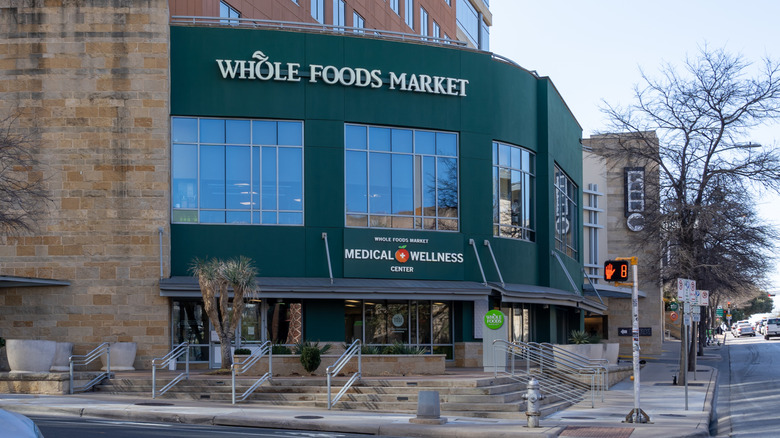
The original Whole Foods Market opened in Austin, Texas, in 1980 when there were only a handful of natural grocery supermarkets in the U.S. That local health food store continued to expand until it became a global behemoth and eventually a member of Amazon. As a major player in the natural and organic foods market, it plays a pivotal role in the growth of many of the brands featured on its shelves. In addition, Whole Foods sells exclusive items and markets its own private label, 365 brand, products.
There are polarizing opinions on Whole Foods. It famously earned the derisive nickname Whole Paycheck due to its higher prices compared to conventional grocery stores. Even though the perception persists, it's debatable whether the label is still applicable since the company has focused on adding more value items since the Amazon acquisition in 2017. Love it or hate it, here is a guide to some of the items to buy, and some to avoid, at Whole Foods.
Buy: Jesse & Ben's Beef Tallow Fries
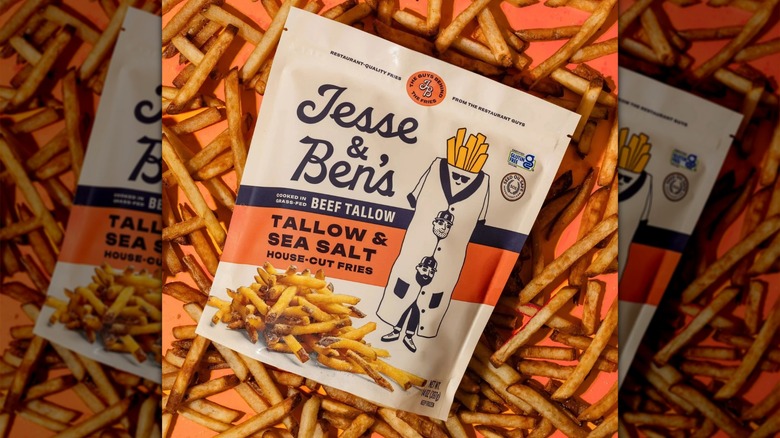
Jesse & Ben's Beef Tallow Fries sit at the intersection of two of Whole Foods' projected top food trends of 2026, a tallow takeover and freezer aisle fine dining. The frozen fries are still a new venture that launched in June 2024. While the brand is young, the founders, Jesse Konig and Ben Johnson, are veterans of the food industry. They started with a food truck in 2014 before opening a brick-and-mortar restaurant — Swizzler's — that was hailed as one of Washington, D.C.'s best burger joints.
The duo first dipped their toes in the commercial fry business during the COVID-19 pandemic when they converted the food truck into a fry factory that sold to other restaurants. They froze the fries out of necessity, but quickly realized they were onto a winning formula. Grocery store options not only didn't match the quality of what they were making, but also contained additives. They revolutionized the market by bringing restaurant-quality fries made from simple ingredients to the frozen aisle. The beef tallow fries are made with three ingredients (potatoes, tallow, and sea salt) and taste like they came from a burger joint. They can be made in the oven, but we recommend cooking them in an air fryer.
Avoid: 365 paper products
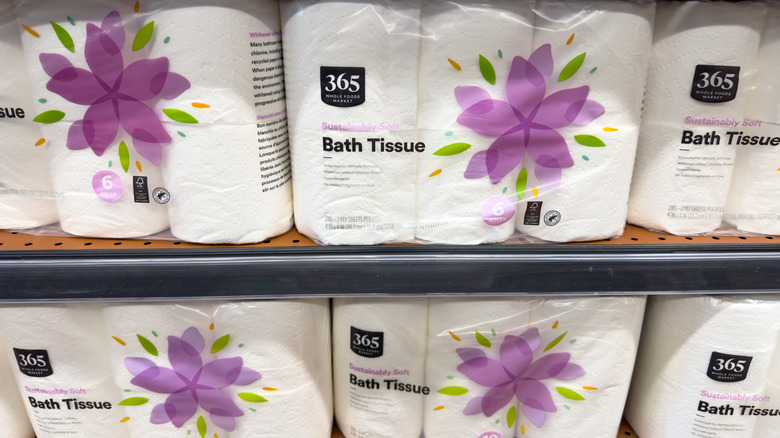
Whole Foods is not the place for paper products. Granted, single-use cutlery and styrofoam plates run counter to the company's ethos and environmental principles, so it's not surprising to find a limited selection of these products. However, there are plenty of other paper products available, such as toilet paper and paper towels, that are commonly used in most households. Many customers find the quality of these products lacking.
"My household made the mistake of buying 365 brand paper towels from Whole Foods. They are not soft, not absorbent, super flimsy, and I end up using more paper towels because they suck," one person wrote on Threads. The toilet paper receives similar reviews, albeit many of them are too inappropriate to include here. "The Whole Foods toilet paper is like sandpaper," one Redditor opens with. Since it has a price point similar to name-brand products, we suggest sticking with brands you prefer.
Buy: Berry Chantilly Cake
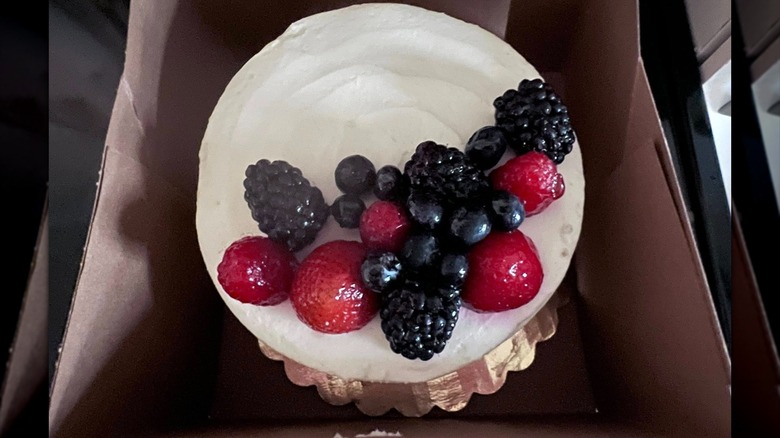
Imitation is the sincerest form of flattery, and while similar cakes can be found at other bakeries now, the original Berry Chantilly Cake was a Whole Foods creation. It even registered "Berry Chantilly" as a trademark, meaning cakes sold elsewhere can't legally use the name. The Whole Foods website touts the cake as one of its top products, and it has a loyal fan base.
The original recipe was developed by a baker at the Arabella Station store in New Orleans who based it on their grandmother's creation. The cake consists of layers of vanilla cake, Chantilly cream frosting, and fresh berries. A single serving contains 660 calories, 48 grams of sugar, and 40 grams of fat. On the bright side, it's made with cage-free eggs and contains no hydrogenated fats or high-fructose corn syrup.
The great skimpflation debacle of 2024 underscores the sway this cake has over its devoted fans. When the fresh berries were replaced by a thin layer of jam, the internet went wild. Under pressure from a deluge of cake-loving TikTokers, the company reversed course and announced the cake was returning to the shelves with the original recipe intact. It's on the buy list both as a decadent splurge and as an iconic Whole Foods offering.
Avoid: The Clean 15
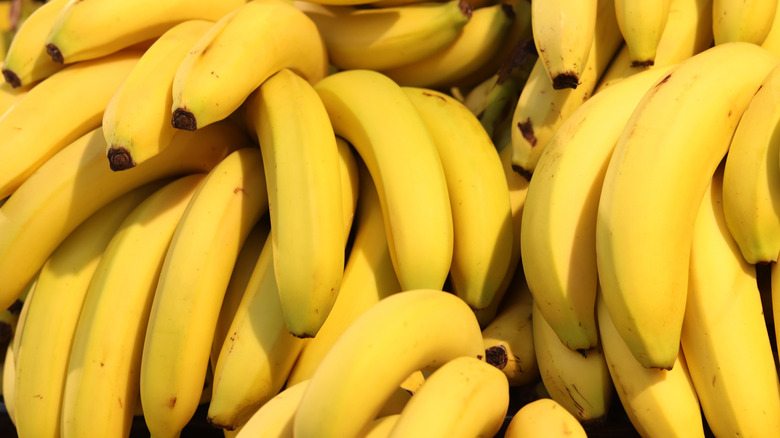
The Clean 15 represent the other end of the spectrum. These are the fruits and vegetables that contained the least number of pesticides in the EWG guide. As we mentioned in the previous section, both conventional and organic produce are tested and deemed safe as part of a regular diet. However, for those aiming to limit exposure to pesticide residue and include fruits and vegetables in their diets, purchasing conventional produce from the Clean 15 can be a budget-friendly strategy.
It's not that there is anything wrong with Whole Foods' conventional produce, but the Whole Paycheck moniker didn't come about because it has the lowest prices in town. An online comparison between prices of conventional produce at our local store and a nearby H.E.B. showed that prices are typically around 5% to 10% higher at Whole Foods. There is less of an incentive, from a health and nutrition viewpoint, to pay a premium for these items.
There is certainly no reason to pay a premium if the motivation is avoiding pesticide residue. Not only do the Clean 15 register low numbers of pesticides, many of the fruits and vegetables, such as avocados, bananas, and watermelons, also have thick rinds that surround the part we eat. So, no need to go organic when making a crispy air-fried watermelon snack.
Buy: Organic produce from the Dirty Dozen
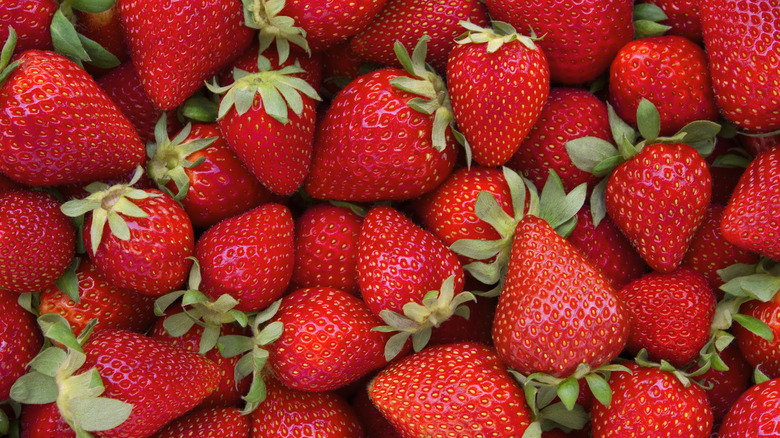
Every year the Environment Working Group (EWG) publishes a list of the "Dirty Dozen" — the fruits and vegetables that contain high quantities of pesticide residues. There is some criticism of the list, primarily centered on the argument that risks from pesticide residues are overblown and shouldn't discourage people from consuming fresh produce. The Mayo Clinic agrees, and advises that the choice between organic and conventional produce should come down to whichever puts the highest amount of fruits and vegetables in your diet. However, it also notes that there appears to be a reduction in certain types of cancer among the people who eat the highest amount of organic foods, and that contact with pesticides may be linked to pregnancy complications. Whole Foods has a large selection of organic produce.
But what is organic food, and how is it different from non-GMO? GMO stands for Genetically Modified Organism, which means the genes have been altered in a way that typically makes the produce easier to grow, such as being drought-resistant. USDA certified organic products must meet federal guidelines that include using all non-GMO products and banning most synthetic fertilizers and pesticides. Eating organic produce is a way to limit exposure to pesticides, and focusing on the Dirty Dozen can provide the most bang for the buck.
Avoid: 365 Veggie Chips
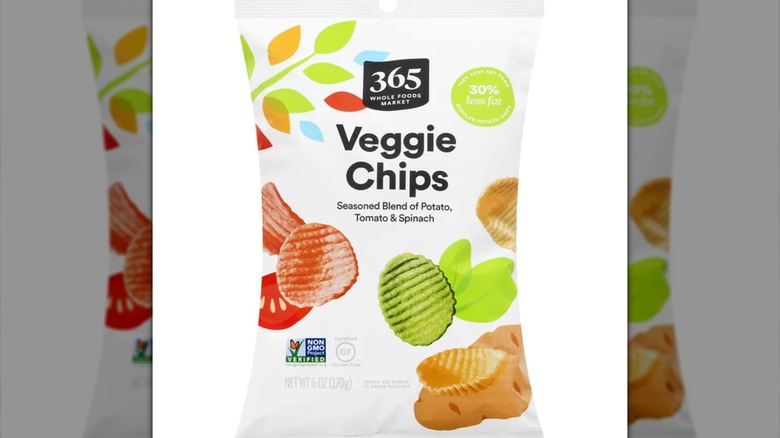
Some things in life sound too good to be true, and veggie chips fall in that camp. The salty, crunchy flavor of potato chips is nearly irresistible, even knowing they are full of calories and fat. Veggie chips are marketed as a healthy alternative. It's a mouthwatering proposition to eat your vegetable servings with the delightful crunch of a potato chip. But a closer look reveals there is not a ton of difference in the two products.
A serving of 365 Veggie Chips contains 130 calories and 7 grams of fat. That's remarkably similar to the 130 calories and 8 grams of fat that are found in a serving of Lay's potato chips. The similarities don't end there. The primary ingredient in 365 Veggie Chips is potato flour, with small amounts of vegetable powders rounding out the ingredient list. There are other options in the snack aisle, such as chips made from real sliced vegetables, that might provide more nutritional value. But it's worth scrutinizing the label on those too since they are typically still fried and high in fat. If eliminating fat is a primary concern, consider an air-fried chip, like the ones from Kettle, that provide a satisfying crunch without the saturated fat.
Buy: Bob's Red Mill Stone Ground Flour
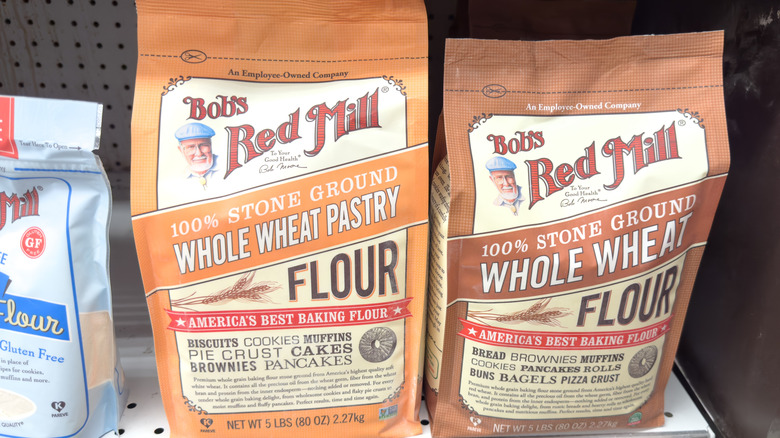
Bob Moore and his wife started Bob's Red Mill in 1978 and the company produces a wide selection of flours and cereals. The brand's Stone Ground Flour is an example of how the company's traditional milling techniques produce high-quality products. A stone mill is a traditional method for milling flour. It uses concrete wheels to grind at a low speed and cool temperature that helps preserve the nutrients and the grain's flavor. The process also maintains the husks of the flour, making it high in fiber and micronutrients. The coarser texture results in a denser bread or crust with a robust flavor that some bakers and pizza-makers praise.
Not only does the company make tasty milled goods, it is also a feel-good business story in a world where corporate greed grabs most of the headlines. Moore turned down lucrative offers from food giants to purchase the company. Instead, on his 81st birthday, he announced he was implementing an Employee Stock Ownership Plan with a goal of transferring 100% ownership to the employees — a goal that was achieved in 2020.
Avoid: Rotisserie chicken
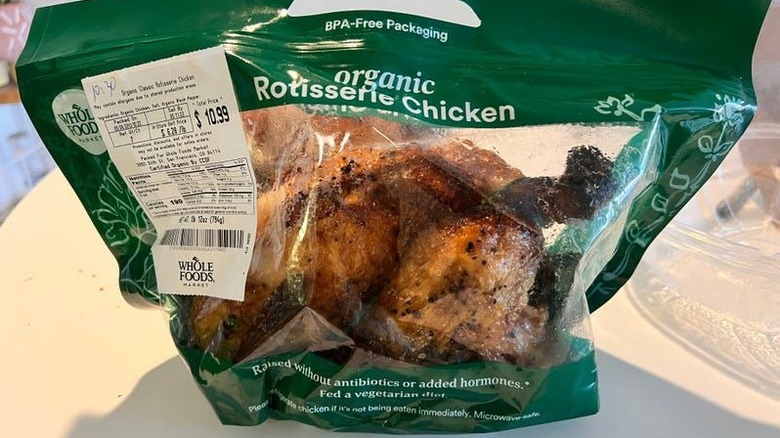
Rotisserie chicken is one of the great joys of the modern American grocery store. What's better than a hot, ready-to-eat bird with crispy skin encasing the juicy meat? As an added bonus, the roasted poultry usually comes with a price tag that doesn't break the bank. It's a great meal by itself or as the main ingredient in easy weeknight dinners. The Whole Foods rotisserie chicken is fine, but it's a crowded market, and "fine" is not good enough.
Let's examine the pros and cons. On the positive side, this bird is only seasoned with salt and pepper and avoids any confusing ingredients. Additionally, it's available in both conventional and organic varieties. For the negatives, the flavor leaves a bit to be desired and the price is slightly higher than competitors. (The plain rotisserie chicken costs $7.99 at our local store, compared to $4.99 at Costco, and $5.99 at Target).
Despite the higher price, the Whole Foods rotisserie chicken routinely ranks near the bottom of consumer reviews. A reviewer for Business Insider called it a "sad, overcooked chicken that lacked moisture." Customers on a Reddit thread about the best rotisserie chicken weren't any kinder, with many commenters complaining about the lack of flavor. Or, as one shopper wrote in a simple answer to the question: "Not Whole Foods."
Buy: ¡Ya Oaxaca! salsas and mole sauces
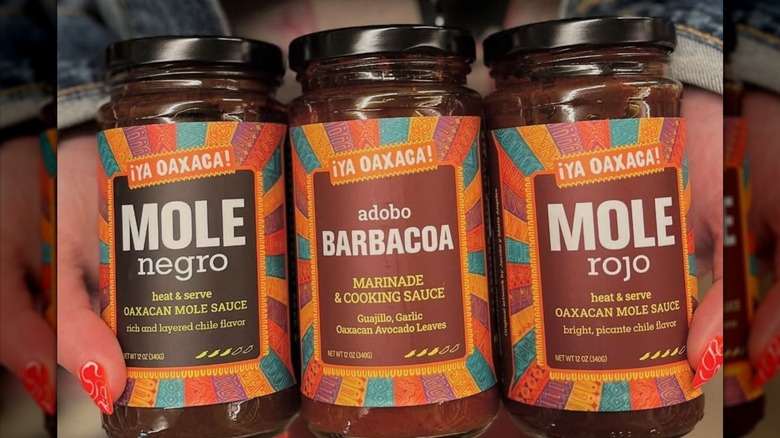
¡Ya Oaxaca! is a brand started by chef, author, and cooking instructor Susana Trilling. Like Whole Foods, her professional journey started in Austin, Texas. In 1974, she was sous-chef at Sweetish Hill Bakery, a neighborhood institution located a few blocks from where the original Whole Foods opened. She went on to work at Fonda San Miguel, another Austin culinary landmark, before moving to Oaxaca in 1988. She was an ambassador for Oaxacan cuisine, and in the '90s opened the acclaimed Seasons of My Heart cooking school. The ¡Ya Oaxaca! brand she started brings a full range of traditional Mexican flavors to American pantries now.
The website states the company's mission is "to share the flavors of Oaxaca with the world through transforming traditional Mexican cuisine into an extraordinary at-home culinary experience." Its sauces and moles are made from all-natural non-GMO ingredients sourced from Oaxacan farmers. The company touts that success for them is not just about their own growth, but also the positive impact they can have on the community, such as the farmers that are scaling alongside them. The salsas, sauces, and moles are a great way to enjoy the vibrant flavors of Mexico without the labor intensive chore of making them yourself.
Avoid: 365 Sports Drink
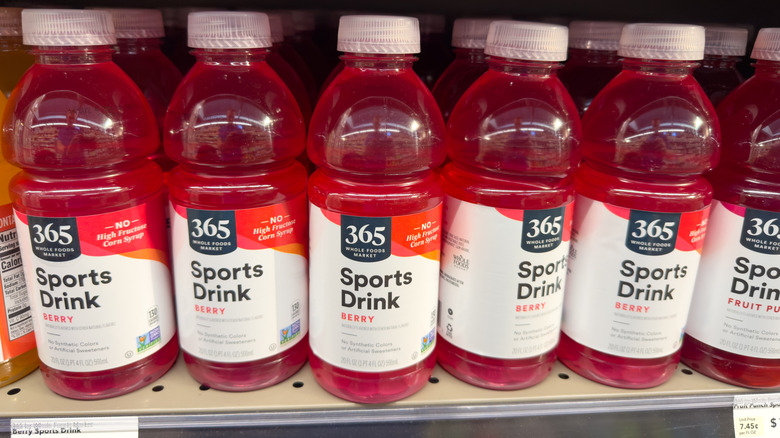
The 365 Sports Drink contains all-natural ingredients and sells for $1.49 at our local Whole Foods. Despite this, we still recommend leaving it on the shelf. In general, sports drinks might not be the best source of hydration. While they are advertised to replenish fluids and electrolytes, the science is a bit murky. The Nutrition Source claims that seeing benefits typically requires strenuous exercise lasting for more than an hour. Anything less than that and it is not likely there has been sufficient nutrient depletion. And that's for adults — the case for children is less convincing.
While the 365 Sports Drink contains all-natural ingredients, it also has a whopping 31 grams of sugar in every bottle. For reference, there are 39 grams of sugar in a 12-ounce can of Coke. Most Americans consume too many added sugars, and sugary sodas and sports drinks are some of the primary contributors. All these added sugars have an impact on obesity, diabetes, and heart disease. Bottom line, while there may be some benefits to sports drinks for serious athletes, there are more risks than benefits for most people. The additional electrolytes don't outweigh the high-sugar content, and it's usually best to opt for water.
Buy: Wedges of fresh cracked Parmigiano-Reggiano
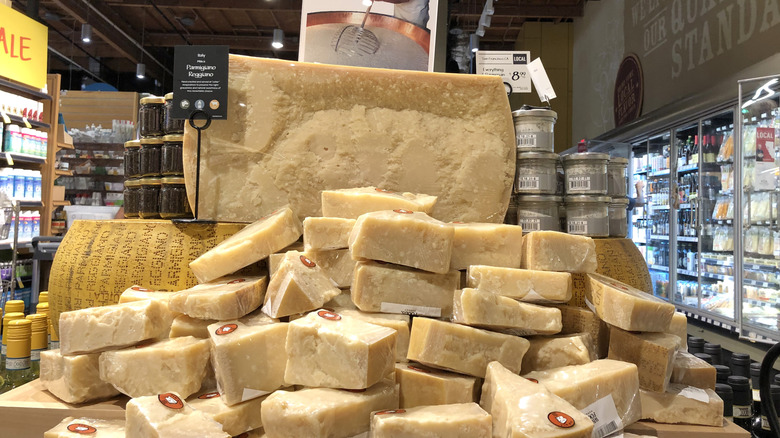
Parmigiano-Reggiano, which is not just a fancy way of saying Parmesan cheese, is the top-selling cheese at Whole Foods — which has an impressive cheese department. Due to strict regulations, only authentic Italian cheese made in Emilia-Romagna, Italy, and adhering to additional regulations, can carry the Parmigiano-Reggiano name. In the U.S., most of what is sold with a Parmesan label is a completely different product. The authentic cheese has a rich umami flavor that adds a welcome boost to a variety of dishes.
Whole Foods sends representatives to Northern Italy every year to hand-select the wheels of cheese with the flavor profiles it prefers. They purchase from a handful of producers that they have worked with for more than 20 years to select cheeses that have been graded in the top 1% of quality standards. These giant wheels of cheese (up to 90 pounds per wheel) are aged for 24 months before being imported to stores. They remain sealed in wax to preserve flavor before being hand-cracked in store using traditional tools and sold to customers. It's a rigorous process, and one most customers appreciate when tasting "the king of cheese."
Avoid: Salad bar
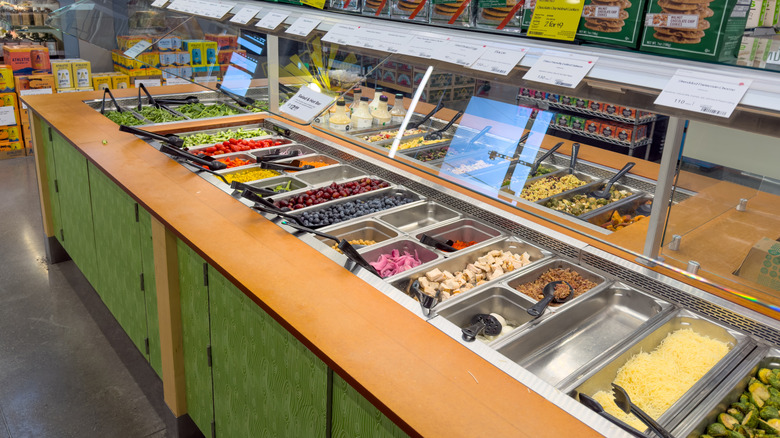
It's somewhat surprising to advise avoiding the salad bar at a grocery chain that prides itself on fresh, organic produce. So, let's clear a few things up. In many ways, the Whole Foods salad bar is great. There is an assortment of greens to use as a base and bins of fresh and pickled vegetables, meats, nuts, and cheeses. In addition, the salad bar is almost always situated near an entrance, and the grab-and-go nature makes it an efficient use of time on a limited lunch break.
While there are anecdotal comments in online forums about the quality slipping in recent years, that's not why we are advising to stay away. It's the value aspect. At our local Whole Foods, the salad bar costs $11.99 per pound. That might not sound like much, but it's a slippery slope that even the initiated have trouble navigating. One Redditor called it an endless source of joy, but also mentioned that it leaves them financially ruined.
Since it's priced by weight, the cost can be particularly egregious based on the ingredients selected. For example, an average large egg weighs 1.73 ounces, meaning it costs roughly $1.32 to add a hard-boiled egg from the salad bar. The same egg costs 37 cents in the dairy aisle. That amounts to a 257% up-charge versus boiling it at home. Given margins like that, we advise skipping the Whole Foods salad bar and making your own at home.
Buy: Upton's Naturals Shredded Jackfruit
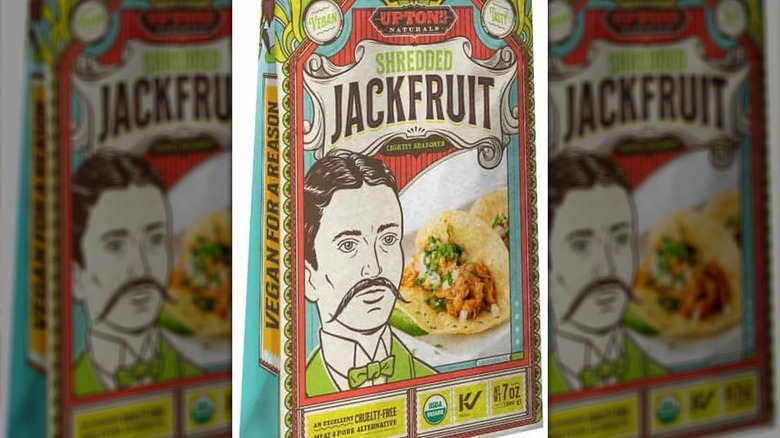
Jackfruit, or Artocarpus heterophyllus for the scientifically astute, is a massive tropical tree fruit that can weigh up to 40 pounds. It has a thick, bumpy rind that, combined with the size, makes for an intimidating piece of fruit when it is encountered in the produce department. When ripe, it has a sweet flavor that is similar to other tropical fruits such as pineapples or bananas. But when raw, it has a neutral flavor that soaks in sauces and spices and a soft, stringy texture that is remarkably similar to BBQ pork or carnitas.
Upton's Naturals, a Chicago-based vegan food company, sells a packaged version of the shredded jackfruit that eliminates wrestling with the giant fruit and makes it easy to throw together a quick, healthy dinner. While it's high on flavor, one serving contains only 60 calories and no sugar or fat. In addition, it is high in vitamins and minerals, making it a heart-healthy meat-alternative.
Upton's Naturals started as a small business in the early 2000s and grew into the top-seller of seitan in the U.S. in 2023. The company has avoided outside investment and remains independently owned, something that owner Dan Staackmann credits with contributing to the success of the brand. He told FoodNavigator that while many competitors have been gobbled up by large companies that lose sight of what vegans want, Upton's Naturals remains guided by first-hand experience.
Methodology
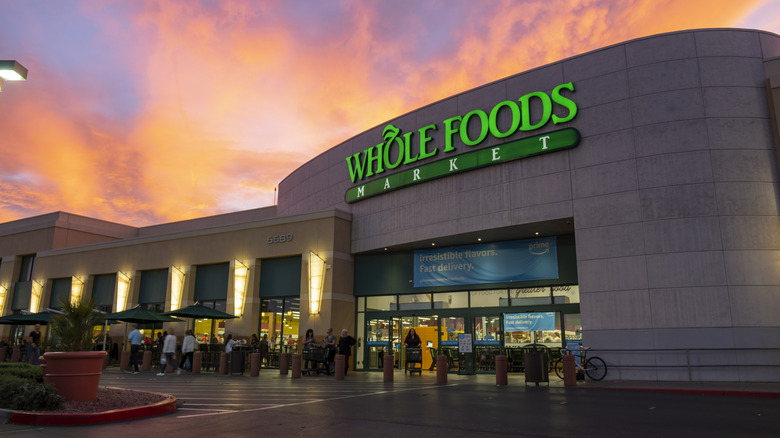
For this article, we primarily focused on products that are exclusive to Whole Foods, or come from companies that have a significant association with the brand. Many of the recommended products are featured on the store's website, either as a cult-favorite item or on its annual list of emerging food trends. We scoured online forums and product reviews to determine customer sentiment on the items. We used the store's website to determine current prices at our local location, and price comparisons were made using the non-sale price of items at other grocery stores in the same area on the same day.