

How Wolfgang Puck Used To Serve Espresso To His Young Son
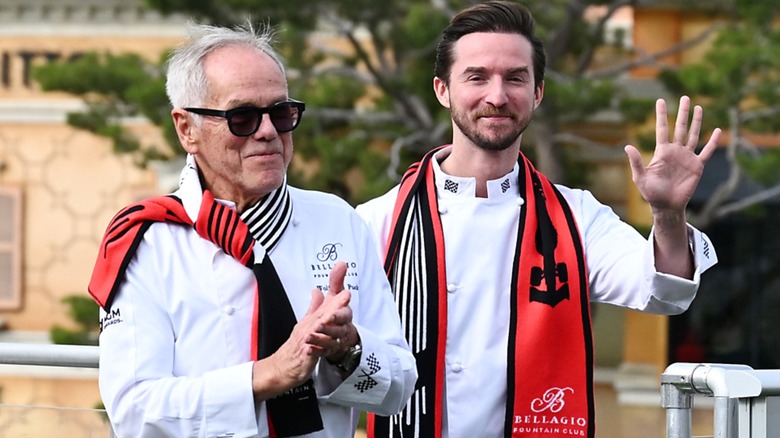
When The Takeout spoke with Wolfgang Puck and his son Byron at the Bellagio Fountain Club in Las Vegas, Nevada, it seemed unlikely that a conversation about coffee would come up. Handcrafted cocktails and fine wines were being served alongside dishes prepared by Michelin star chefs while attendees were treated to live entertainment and adrenaline-pumping Formula 1 racing. Yet, Byron was inclined to share a story about how his famous father would serve him espresso at a young age with a creamer swap for coffee –- chocolate milk.
"One of my favorite things growing up was I used to wake up early with my dad and he'd end up at the fish market, I'd be getting ready for school," Byron Puck said. "But the thing that I would always indulge in in the morning with my dad was just very simply espresso. And I was very young at that time, so he used to make it for me with a little bit of chocolate milk."
Specifically, Wolfgang Puck added Nesquik to make the taste of espresso more appealing. The pairing of chocolate and espresso isn't all that shocking. After all, plenty of Starbucks handcrafted drinks that folks enjoy feature that duo. As Wolfgang himself stated, "Coffee and chocolate is a good marriage." Still, it's the espresso itself that might turn some heads, considering that allowing children to drink coffee is a controversial topic.
Should kids be drinking espresso?

Given Europe's somewhat liberal views on allowing children to imbibe small amounts of alcohol under supervision, one might assume the same goes for espresso; meaning Wolfgang Puck was just staying true to his Austrian roots. But American children tend to start drinking coffee around the same age as kids across the pond. Every household has different rules regarding this, but on average American kiddos start sipping coffee around nine years old, similar to Sweden, Italy, and Germany.
It's not uncommon for parents to recoil at the notion of giving children coffee. However, the common misconception that the drink stunts growth isn't based on fact. It could be that the myth originated as a simple way of not having to share their precious java juice with the little ones, but there's simply no substance to the assertion that caffeine consumption keeps children small. If that were true, giving chocolate to kids would also be vilified as it also contains caffeine (especially dark chocolate bars).
It's worth noting that espresso contains less caffeine than your average cup of coffee. One shot of espresso boasts roughly 63 milligrams of caffeine while an 8-ounce cup of coffee clocks in at nearly 100, the maximum recommended amount of caffeine for people aged 12 to 18. A bit of chocolate or espresso in moderation isn't detrimental to children by most accounts. Byron Puck relished both at the same time as a youth and the experience shaped his appreciation of the culinary world. "I was obsessed with the smell of coffee growing up," he said. "It's one of my first memories of truly enjoying food and beverage."