

5 Costco Rotisserie Chicken Hacks Everyone Should Know
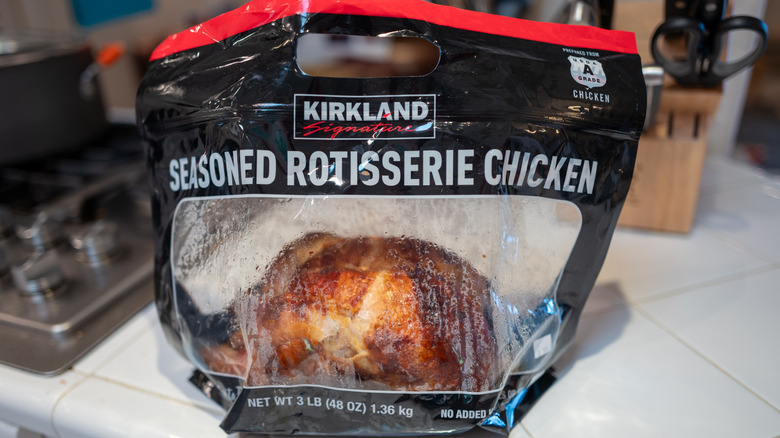
We may receive a commission on purchases made from links.
One of the best time-saving hacks for home cooks — especially Costco members — is to pick up a rotisserie chicken whenever you're shopping. Not only are these pre-roasted chickens often cheaper than raw, but with the right ingredients, they can be used to assemble a week's worth of dinners. (Or at least a few days' worth, depending on how meaty you want your meals to be.) While there are approximately one jillion and six recipes for leftover rotisserie chicken, we won't delve into them now. Instead, we present a selection of hacks to help you make better use of your bird.
Several of these tips involve prepping it because, unless you're trying to emulate a cartoon version of Henry VIII, surely you won't be biting into a whole bird. Others have to do with storage, since you might not want to eat chicken every night until it's gone. We also have a few suggestions for squeezing every last drop of goodness out of the bird, beak to tail. (Metaphorically speaking, that is, since as far as we know, only Costco Taiwan sells rotisserie chickens with their heads still on.)
Shred it easily
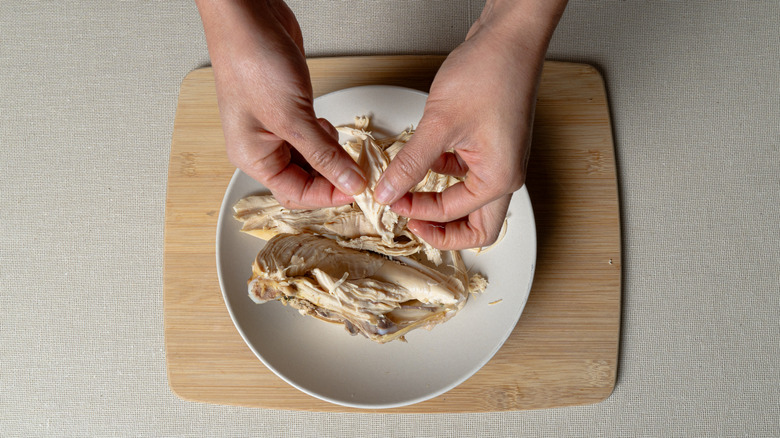
Many rotisserie chicken recipes call for shredded meat, which is all very well and good, but what if you don't like sticking your hands in there and getting them all gunky as you pull it apart? Sure, you could use meat claws — this is one single-purpose kitchen tool that's actually worth buying. (We recommend the BBQtrips shredder claws, which can be bought for under $7.) Another kitchen gadget that also does a good job of shredding chicken is a stand mixer. You'll need to pull the chicken off the bones first, but once you plop it into the bowl, a minute or less of whacking it with the paddle attachment will give you neat, fluffy shreds.
If you don't own a stand mixer, you can perform the same shredding trick with a hand mixer, or go ultra-low-tech with a plastic bag. The benefit of doing it this way is that you don't need to debone first. Just put the warm chicken (it does need to be warm) into a gallon-sized resealable plastic bag, then rub it every which way until the meat comes off the bones and falls apart into shreds. Sure, you'll still need to stick your hands in to pick out the bones, but it's easier to do once most of the meat is off. As an added bonus, you can store the chicken in the same bag you used to shred it.
Separate the pieces with kitchen shears
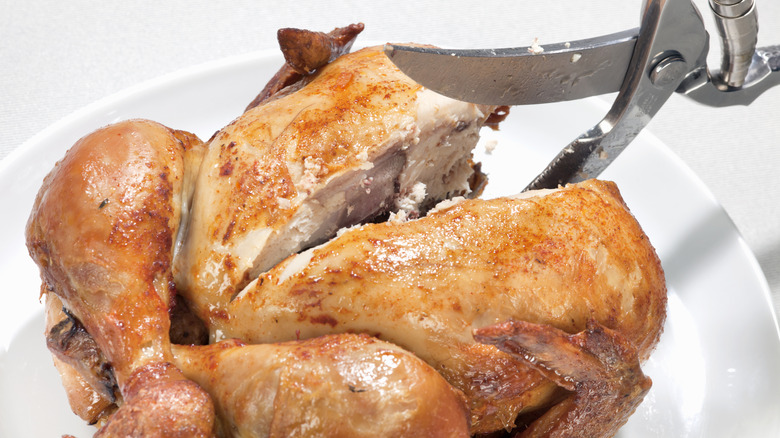
Unless you're using the "massage in a bag" technique described above, you'll probably need to separate your chicken into smaller, more manageable pieces before you start shredding it. Or perhaps you don't want shredded chicken at all, but would rather have it chopped or chunked. (Even when you're making chicken salad, you shouldn't always shred the meat.) Instead of pulling the chicken apart or even separating it with a knife, though, we have two words to offer: kitchen shears. Now that Costco has switched from selling rotisserie chickens in rigid clamshell containers to plastic bags, you can first employ those shears to open the package.
Bag-opening prowess aside, kitchen shears are far more versatile than you might think. They're often employed to separate or spatchcock raw chicken, but they work just as well with the cooked kind. Spatchcocking a pre-cooked chicken and then popping it into a hot oven for a few minutes will crisp up all the skin, while cutting it into pieces will let you chomp on a chicken leg like cartoon Henry VIII's mini-me. You can also rip off a large chunk of chicken meat, plop it on top of your salad or noodles, then use kitchen shears to chop it right in the bowl.
Freeze the meat for later
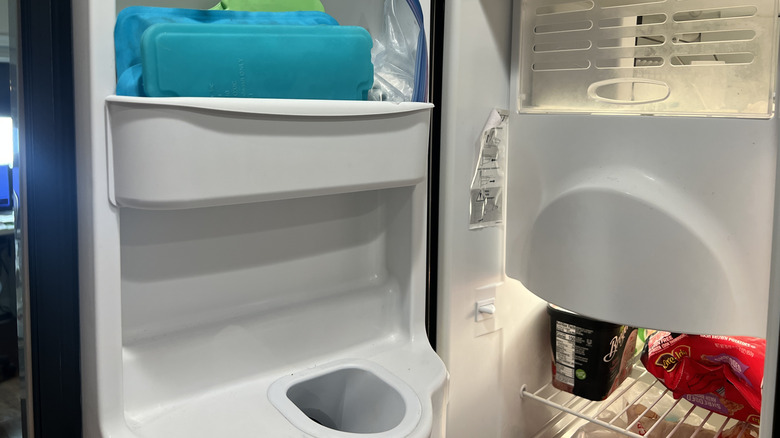
If you don't live anywhere near a Costco, you may only shop there once a month or so. In that case, why not buy two (or more) rotisserie chickens and then freeze the surplus for later? The lazy way to do so is to freeze an entire chicken, but it's recommended that you take it out of the bag it comes in and repackage it in foil and a freezer-safe bag. Be aware, too, that you'll probably need to defrost it overnight in the fridge before you can reheat and eat it. If you don't finish the entire thing, it is safe to refreeze the uneaten portion, but the more times meat repeats the freeze-and-thaw cycle, the drier it will be.
A more convenient way to freeze rotisserie chicken may be to either cut it into pieces or go all the way and shred or chop it. If you freeze single-portion amounts in separate plastic bags, you can then defrost only as much as you'll need at one time. This method also works well for leftover rotisserie chicken, since the USDA recommends storing cooked poultry in the refrigerator for no longer than four days.
Use the bones for stock
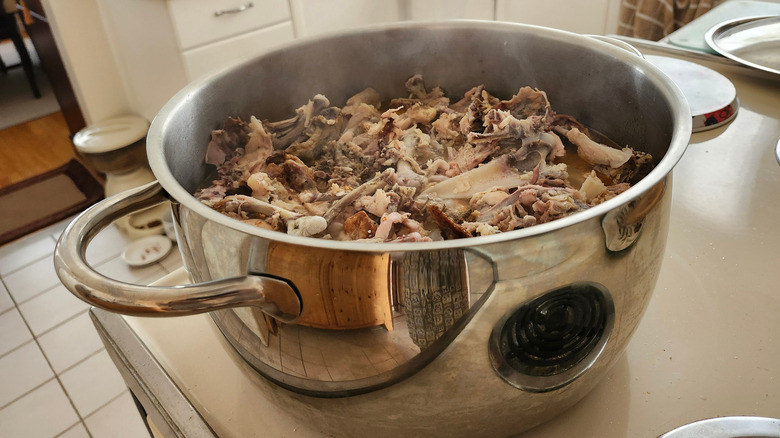
When you strip the meat from the bones of your Costco chicken, don't toss the latter into the trash. Instead, stash them in your freezer along with your stock bag. If you don't have such a thing, now's as good a time as any to start keeping one — not just meat bones, but wilted greens, carrot tops, onion peels, and not-so-fresh herbs can all go in there. Just add liquid and heat, and you'll be well on your way to making homemade chicken stock.
When you've got the time for stock-making, toss the chicken bones and produce into a pot, add water, and simmer everything for as long as you've got. All day, if you can manage it. If you want to simmer it overnight, you can use a slow cooker, or else put everything in an ovenproof pot and stick it in the oven. If you set the temperature gauge at 200 to 250 degrees Fahrenheit, an oven can successfully mimic a crockpot without taking up countertop space. The longer you cook the bones, the deeper the flavor, and the more collagen they'll provide. (Bone broth simmers for up to 48 hours.)
Making stock also lets you use up any juices and fat that may have accumulated in the bag by pouring them into the pot as well. Once the stock is done cooking, refrigerate it, then remove any solidified fat from the top. Save this schmaltz, too, as it can be used for cooking and baking. (Try it in biscuits in place of the butter, or use it as the base of a roux.)
Don't let the skin go to waste
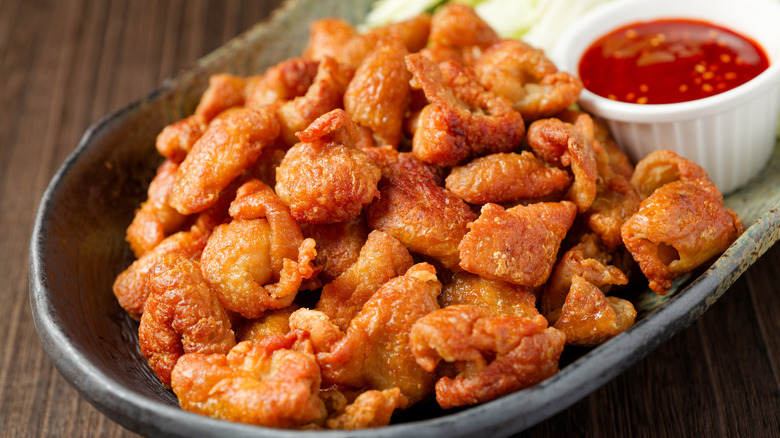
Some people think the skin is the tastiest part of the chicken, but if you're using your rotisserie bird to make taco filling or chicken salad, you'll probably want to remove it. If you have the self-control not to eat it then and there, you can use it to make a tasty (and slightly less fatty) snack we like to call chicken chicharonnes. While many recipes call for cooking raw chicken skin until it dries out and becomes crispy, it can also be done with cooked chicken skin, since it's usually still quite soft.
Peel the skin off your rotisserie chicken and put it in a slow oven — 200 degrees Fahrenheit works. As it bakes, it will gradually turn crunchy as most of the fat drips out. (As above, save the fat for cooking.) Since Costco chicken is pre-seasoned, you won't even need to add anything to it, though you can always sprinkle on a little garlic powder or cayenne if you want extra flavor.
Yet another thing you can do with leftover chicken skin is to make gribenes. This snack may have fallen out of favor, but the Ashkenazi dish sometimes known as "Jewish bacon" isn't any unhealthier than a lot of other things we put in our bodies. It consists of diced chicken skin fried in schmaltz, although you could supplement the latter with bacon grease or butter to make a very non-kosher version if your bagged Costco chicken doesn't supply sufficient fat. To keep kosher, stick with oil instead.