

Yes, You Can Fry Food In The Microwave, But There's A Catch
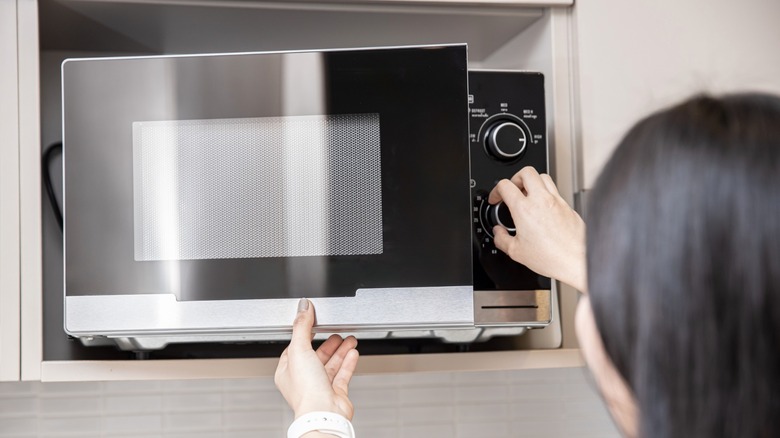
Aside from thawing meat, preparing frozen meals, and using a glass of water to reheat food for a first-day taste, the microwave doesn't get much use in many homes today. Folks allow the stove and oven to reap all the glory for exceptional cuisine, in large part because they are unaware of what this common kitchen appliance is capable of. Yet, the truth is, a microwave has a wealth of potential as not only a time-saving device but also as a tool that simplifies some gastronomic endeavors. For instance, with a little know-how, you can save yourself the messy experience of frying some foods and get the same result by popping them in the microwave.
That's right, you can fry certain foods right in your microwave. Looking for the easy way to make crispy onions to top a salad? Chef Mic has you covered. The same goes for shallots, olives, capers, and other similar ingredients that you don't need much of but put the chef's kiss on various meals.
Just reach for a deep microwave-safe bowl and submerge the ingredients in a modest amount of oil. Microwave them for about five minutes, then stir and continue to heat them in 30-second increments until they start to take on a darker color. They become crispy when they are removed from the oil and allowed to drain and cool on paper towels. However, a microwave does have its limitations, so you shouldn't get too excited about making fried entrees in the appliance.
Why microwaves can fry garnishes but not entrees

Folks may wonder why the concept of frying small portions in the microwave doesn't translate to larger ingredients, and it all comes down to how the device operates. Microwaves, the electromagnetic radiation that cooks food, only scratch the surface of whatever is inside. They penetrate food roughly half an inch into the interior, leaving the center unscathed. Over time, and typically multiple rounds of stopping to turn the food, the residual heat will eventually get to the middle, but not before the surface has been subjected to plenty of microwaves.
So let's say you have a substantial piece of chicken that's begging to be fried. You may be able to attain the golden brown exterior emblematic of perfectly fried chicken. However, that's likely to occur before the center reaches 165 degrees Fahrenheit, the minimal internal temperature needed to ensure the poultry is safe to consume. You can cook chicken in the microwave, but fried chicken will never reach its full potential when made in the appliance.
Still, there's no need to break out a heavy-bottomed pan to fry light garnishes for soups, salads, and various other dishes that are instantly leveled up with a crunchy fried accent topping the dish. Utilizing the microwave saves time and may reduce the amount of oil typically needed to grant simple ingredients a crispy exterior. It's also one more way to get the most value out of the microwave rather than using it solely for straightforward tasks like reheating last night's dinner.