

The Fool-Proof Way To Tell When Your Bread Is Done Proofing
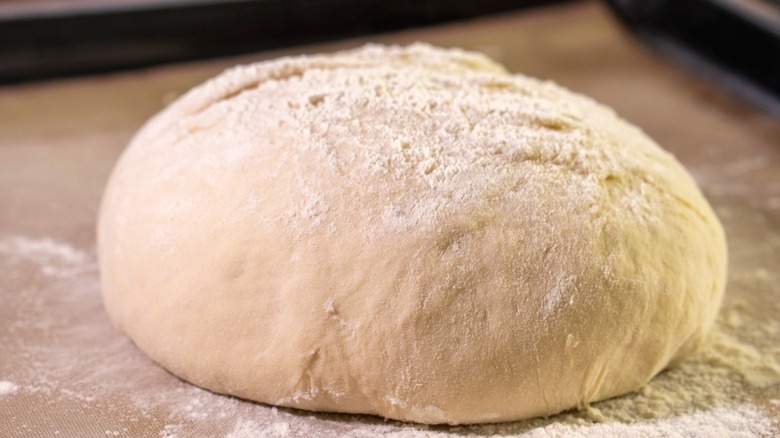
Unless you're making some kind of flatbread, like Indian roti (made in a tandoor) or Mexican tortillas, you're probably going to need your bread dough to proof before baking. "Proofing" is just another way to say "rising," since that's all it really is: the dough ferments, yeast releases carbon dioxide into the dough, and it puffs up nice and pretty to let you know it's ready to go in the oven. But where, exactly, is the line between "99% ready" and "100% ready"? Baking can be a fussy, frustrating thing, especially when you're making something like bread. Luckily, there's an easy way to tell when your dough is done proofing: give it a good poke.
That's right! Just as you don't need a special proofer to proof your bread, you don't need any fancy equipment to figure out if your dough is ready — just give it the ol' Pillsbury prod. If your dough is proofed just right, it'll bounce back, but very slowly. By contrast, if it's underproofed, it'll bounce back immediately, filling the indent right back in, meaning it still needs a little bit more time proofing. If it doesn't bounce back at all, it's overproofed, and you'll have to reshape the loaf and let it proof again.
There are two different proofing processes
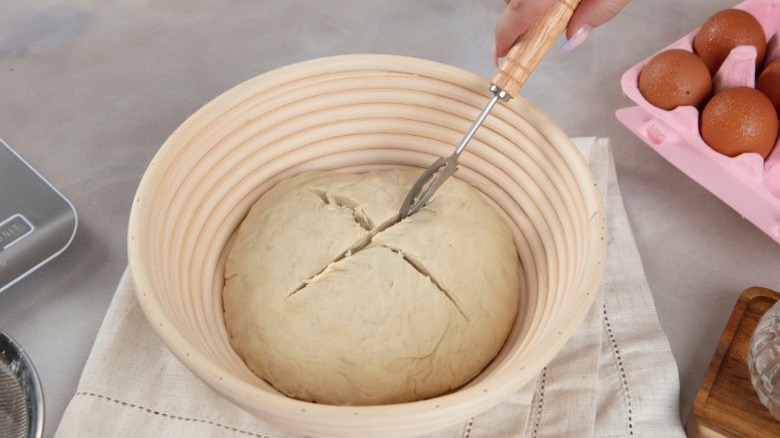
Something interesting you may not know is that there are actually two proofs bread dough undergoes — although, technically, only the second can be considered a "proof." The first comes after you mix your dough and knead it, usually in a big bowl covered up with a linen towel. This step is sometimes called "bulk fermentation." Once the dough has doubled in size, it's time to put it in whatever baking receptacle you plan on using, whether that's a loaf pan, a dutch oven, or another pan you might have on hand. That's where the second rise, or the proof, occurs.
Proofing can be tricky, especially if you're a beginning baker — it's only natural that you'll make some mistakes when it comes to baking with yeast. But don't get discouraged, stick with it, and maybe use an unexpected part of your oven to help proof your baking project, and you'll be poking your dough with the best of them in no time flat.